Loading...
Al-Walid I vs Napoleon Bonaparte
Napoleon Bonaparte leads by 2.3 pts · 2 figures compared
…
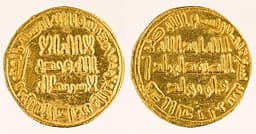
Al-Walid I
Emperor · Medieval
68.6Total

Napoleon Bonaparte
General · Modern
70.9Total
Basic Information
Born
668
1769
Died
715
1821
Era
Medieval
Modern
Nationality
Umayyad Caliphate
France
Occupation
Emperor
General
Civilization
Middle Eastern
Western
Score Comparison
Military (10%)
76.0
94.0
Political (20%)
70.0
72.0
Influence (20%)
88.0
40.0
Legacy (20%)
40.0
80.0
Leadership (15%)
80.0
78.0
Strategy (15%)
65.4
90.0
TOTAL
68.6
70.9
Al-Walid I — Complete Timeline
700 AD
Patronage of Arabic language and administrationReform◆ Major
Al-Walid I made Arabic the official language of administration across the caliphate, replacing Greek and Persian. This standardized governance and promoted the spread of Arabic culture and Islam.
LanguageAdministrationArabization
Impact: globalprogressive
705 AD
Expansion of the Umayyad CaliphateWar
Al-Walid I oversaw the expansion of the Umayyad Caliphate to its greatest territorial extent. Conquests included Transoxiana, Sindh, and parts of Spain, making the caliphate one of the largest empires in history.
ConquestExpansionEmpire
Impact: global
706 AD
Construction of the Great Mosque of DamascusCultural◆ Major
Al-Walid I commissioned the construction of the Umayyad Mosque in Damascus, transforming a Christian basilica into a grand mosque. It became a masterpiece of Islamic architecture and a major pilgrimage site.
ArchitectureMosqueDamascus
Impact: globalconstructive
Napoleon Bonaparte — Complete Timeline
1799 AD
Coup of 18 BrumaireOther◆ Major
Napoleon Bonaparte, with support from his brother Lucien and key political figures, overthrew the Directory in a bloodless coup. He established the Consulate with himself as First Consul, effectively becoming the ruler of France. This event ended the French Revolution's most unstable period.
French RevolutionCoupRise to Power
Impact: regional
1804 AD
Promulgation of the Napoleonic CodeOther◆ Major
Napoleon enacted the Civil Code of the French, known as the Napoleonic Code, a comprehensive set of laws that replaced the fragmented feudal legal systems. The code established legal equality, protected property rights, and secularized law. It became the basis for legal systems in many European and world countries.
Legal ReformNapoleonic CodeCivil Law
Impact: globalconstructive
1805 AD
Battle of AusterlitzWar◆ Major
Napoleon's Grande Arm
Napoleonic WarsBattleDecisive Victory
Impact: global
1812 AD
Invasion of RussiaWar◆ Major
Napoleon led the Grande Arm
Napoleonic WarsInvasionDisaster
Impact: globaldestructive
1815 AD
Battle of WaterlooWar◆ Major
Napoleon's French army was defeated by the combined forces of the Duke of Wellington's Anglo-Allied army and Gebhard Leberecht von Bl
Napoleonic WarsBattleFinal Defeat
Impact: globaldestructive
Expert Analysis
al-walid-i-vs-napoleon-bonaparte
# The Emperor and the Caliph: Two Paths to Power, Two Visions of Empire
On a June morning in 1815, Napoleon Bonaparte stood on a muddy field near Waterloo, watching his dreams of European dominion dissolve into cannon smoke and cavalry charges. Less than a century earlier and a world away, another ruler had stood in the courtyard of a Christian basilica in Damascus, watching workers transform it into the Great Mosque that would bear his name. One conquered through iron and blood; the other through stone and faith. Both sought to reshape their worlds. Only one succeeded in building something that would outlast the fall of his empire.
Origins
Napoleon was born in 1769 on the island of Corsica, a year after France had purchased the island from Genoa. His family was minor nobility—impoverished, resentful, and fiercely proud. Young Napoleon spoke Italian before French, and his schoolmates mocked his accent. That outsider’s hunger for acceptance would drive him for decades. He attended military school in Brienne, where he devoured history and mathematics, learning to think in patterns of strategy while nursing grievances against his French classmates.
Al-Walid ibn Abd al-Malik, born in 668, knew no such marginality. He was the son of a caliph, raised in the palace of the Umayyad dynasty in Damascus. The caliphate he inherited in 705 was already the largest empire the world had ever seen, stretching from Spain to India. Where Napoleon would have to claw his way to power, Al-Walid was born into it. But this very security gave him a different kind of ambition—not to prove himself, but to leave a mark upon eternity.
Rise to Power
Napoleon’s ascent was a masterpiece of opportunism. During the chaos of the French Revolution, he recognized that talent could now trump birth. At twenty-four, he cleared the streets of Paris of royalist rioters with a “whiff of grapeshot”—a brutal, decisive act that made him a national hero. His Italian campaign of 1796-1797 was a revelation: he marched his starving army over the Alps, outflanked Austrian generals who underestimated him, and carved out a reputation as Europe’s most brilliant commander. By 1799, when he overthrew the Directory in a coup, he had remade himself from Corsican outsider to First Consul of France.
Al-Walid’s path was quieter, but no less decisive. He became caliph in 705 after the death of his father, Abd al-Malik. The machinery of succession was already in place. Yet Al-Walid understood that political power required cultural foundations. His first major act was to make Arabic the official language of administration across the caliphate, replacing Greek in Syria and Persian in Iraq. This was not merely bureaucratic—it was revolutionary. A unified language meant unified law, unified faith, and unified identity.
Leadership & Governance
Napoleon governed through sheer force of personality. He worked eighteen-hour days, read reports by candlelight, and expected absolute loyalty. His Napoleonic Code, enacted in 1804, standardized French law, abolished feudal privileges, and established merit-based advancement. It was his most enduring achievement—a legal framework that would influence civil law across Europe and beyond. Yet his governance was also autocratic. He suppressed dissent, controlled the press, and crowned himself emperor in 1804, taking the crown from Pope Pius VII’s hands and placing it on his own head.
Al-Walid governed through patronage and piety. He poured the caliphate’s vast wealth into building projects that would glorify God and the Umayyad dynasty. The Great Mosque of Damascus, begun in 706, was his masterpiece. Workers dismantled a Christian basilica dedicated to John the Baptist, incorporating Roman columns, Byzantine mosaics, and Persian tiles into a structure that announced Islam’s permanence. He also built roads, hospitals, and irrigation systems. Where Napoleon conquered men, Al-Walid conquered stone.
Triumph & Tragedy
Napoleon’s greatest triumph was Austerlitz, December 2, 1805. He lured the combined armies of Russia and Austria into a trap, feigning weakness on his right flank before smashing their center. The battle ended in hours. The Holy Roman Empire dissolved. Napoleon stood at the peak of his power.
His greatest tragedy was the invasion of Russia in 1812. He marched 600,000 men into a frozen emptiness. The Russians refused to fight a decisive battle, burned their own crops, and retreated. By the time Napoleon reached Moscow, the city was ablaze. His army retreated through snow and starvation. Only 40,000 returned. It was a catastrophe from which his empire never recovered.
Al-Walid’s tragedy was subtler. He expanded the caliphate to its greatest territorial extent, pushing into Transoxiana and Sindh. But his health failed early. He died in 715 at the age of forty-seven, and his successors lacked his vision. The Umayyad dynasty collapsed thirty-five years later, overthrown by the Abbasids who slaughtered his family and built Baghdad as a rival to his Damascus.
Character & Destiny
Napoleon was driven by an insatiable need for validation. “Glory is fleeting,” he once said, “but obscurity is forever.” He could not stop. Every victory demanded another. Every conquest required consolidation. His genius was his curse: he saw the world as a chessboard, but forgot that human beings are not pieces. His exile to Elba in 1814 should have ended his story, but he escaped, raised another army, and met his final defeat at Waterloo in 1815.
Al-Walid was driven by permanence. He understood that empires of conquest crumble, but empires of culture endure. He did not need to be loved—he needed to be remembered. The Great Mosque of Damascus still stands today, one of the oldest and most important mosques in the world. Napoleon’s empire vanished within a decade of his death.
Legacy
Napoleon’s legacy is paradoxical. He is remembered as a military genius whose campaigns are still studied in war colleges. He spread revolutionary ideals of nationalism and meritocracy across Europe, yet he also restored slavery in French colonies and crowned himself emperor. His name evokes both glory and tragedy.
Al-Walid’s legacy is quieter but more durable. The Arabic language unified an empire that still speaks it. The Great Mosque of Damascus remains a pilgrimage site and a masterpiece of Islamic architecture. He built not for his own lifetime, but for centuries.
Conclusion
Standing before the Great Mosque of Damascus, one feels the weight of centuries. Standing on the battlefield of Waterloo, one feels the weight of a single day. Napoleon and Al-Walid both sought to shape their worlds. Napoleon tried to conquer time through action; Al-Walid tried to conquer time through stone. In the end, stone outlasts action. But perhaps both understood something essential: that power, however vast, is always borrowed. The question is what you build while you have it.
Rankings
🥇
Napoleon BonaparteLeader
Mil: 94.0Pol: 72.0Inf: 40.0
70.9
🥈
Al-Walid I
Mil: 76.0Pol: 70.0Inf: 88.0
68.6
+2.3 behind
How This Comparison Works
Algorithm
Each figure is scored on 6 dimensions (0—100 scale) based on structured historical data: Military (10%), Political (20%), Influence (20%), Legacy (20%), Leadership (15%), Strategy (15%). The weighted total produces the final ranking.
Data Sources
Scores are computed from structured sub-indicators in the database. Scale factors adjust for era (Ancient ×0.85, Modern ×1.0) and civilization size (Eastern ×1.05, Other ×0.80) to account for differences in population and military scale.
Maximum 3 Figures
Comparisons are limited to 2—3 figures to ensure readability and statistical meaningfulness.
Error Margins
±5 points per dimension — Sub-scores are derived from historical records with inherent uncertainty. Two figures within 5 points on a dimension should be considered roughly equivalent in that area.
Total Score Accuracy
±3 points overall — The weighted combination of 6 dimensions produces a total score with approximately ±3 points of uncertainty. Differences of less than 3 points are not statistically significant— the figures are effectively tied.
Known Limitations
- Historical records are incomplete and uneven across civilizations
- Figures from oral-tradition societies may be underrepresented
- Occupation labels can misclassify multi-role figures
- Scores measure capability and impact, not moral character
- Quantitative scoring is a comparison tool, not absolute truth
Capability Radar
Military (10%) — Battles & Warfare
Battles
75
95
Win Rate
80
90
Expansion
85
95
Political (20%) — Governance & Reform
Reform
85
95
Diplomacy
70
80
Economy
80
85
Influence (20%) — Cultural & Global Reach
Cultural
85
85
Global
70
90
Legacy (20%) — Historical Impact
Historical
80
95
Longevity
75
90
Leadership (15%) — Power & Stability
Tenure
80
85
Stability
75
70
Strategy (15%) — Tactics & Innovation
Strategy
75
95
Tactics
70
98
Reform
65
92
Similar Comparisons
Comments & Discussion
尘封史官6/17/2026
拿粉喜欢吹拿破仑“重塑欧洲”,但他那大陆体系活了几年?滑铁卢后不到二十年,波旁王朝又坐回王座,革命成果被砍得七零八落。瓦利德一世呢?他把倭马亚王朝推到鼎盛,从西班牙一直夯到印度,然后在清真寺上用马赛克刻下“真主永恒”。拿破仑的帝国像烟花——亮得刺眼,灭得干净;瓦利德的遗产像沙漠里的泉水,干涸了王朝仍被世代朝拜。历史不记谁跑得快,只记谁站得久。
SkepticalSabre6/17/2026
Let’s not romanticize "stone and faith"—al-Walid's construction projects were bankrolled by crushing taxation on non-Muslim subjects. The Great Mosque of Damascus was built on confiscated Christian land after a forced conversion campaign. Napoleon at least exported meritocracy and legal equality (however imperfectly) across Europe. One taxed dhimmis into submission; the other crowned himself Emperor of the French but codified civil rights. I’ll take the Coriscan’s hypocrisy over the caliph’s swo
古卷新读6/17/2026
你们总拿拿破仑的“现代性”说事,但他本质上就是个穿了新衣的专制暴君——用自由哄百姓,用军靴踩邻国。瓦利德一世的内政沉稳得多:他修水渠、建医院、统一货币、推广阿拉伯语作为行政语言,让大马士革成为文明熔炉。拿破仑搞得是短期打鸡血,瓦利德铺的是长期制度网。谁更“进步”?一个让欧洲血流成河十年,一个让帝国繁荣四十年——答案写在废墟和城墙里。
ClassicistEcho6/17/2026
Al-Walid wasn't just a conqueror; he was a cultural synthesizer who repurposed Roman and Byzantine craftsmanship into Islamic identity. The mosaics of the Great Mosque of Damascus—gold-leafed trees and empty thrones—symbolize paradise and empire simultaneously. Napoleon? He looted Italian art for the Louvre. One built a mosque that scholars still analyze for its blend of Greco-Roman techniques and Arab aesthetics; the other built a museum that screams "I
Chronicler37986/17/2026
Calling Napoleon a "builder" of anything lasting? The Napoleonic Code was a legislative masterpiece, sure, but Waterloo undid his empire in a single day. Al-Walid I expanded the Umayyad Caliphate to its peak, and the Great Mosque of Damascus still stands as a testament to his vision. Napoleon’s legacy squeaked through legal reforms; al-Walid’s is carved into stone and faith. One crumbled with a musket volley; the other survives in a prayer echo. Builders bet on centuries, not coronations.