Loading...
Al-Wathiq vs Maha Thammaracha II
Al-Wathiq leads by 11.4 pts · 2 figures compared
…
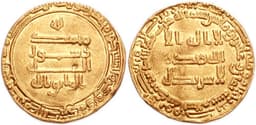
Al-Wathiq
Emperor · Medieval
47.9Total

Maha Thammaracha II
Emperor · Medieval
36.5Total
Basic Information
Born
812
1350
Died
847
1399
Era
Medieval
Medieval
Nationality
Abbasid Caliphate
Thailand
Occupation
Emperor
Emperor
Civilization
Middle Eastern
Eastern
Score Comparison
Military (10%)
50.0
20.0
Political (20%)
42.3
30.7
Influence (20%)
51.8
46.3
Legacy (20%)
40.8
36.7
Leadership (15%)
65.7
31.2
Strategy (15%)
35.7
45.0
TOTAL
47.9
36.5
Al-Wathiq — Complete Timeline
842 AD
Reign during the Abbasid Golden AgeCultural◆ Major
Al-Wathiq's reign (842-847) occurred during the peak of the Abbasid Golden Age. He continued the patronage of scholars and the translation movement, though his rule was short and marked by internal stability.
Golden AgePatronage
Impact: globalconstructive
845 AD
Suppression of the Bedouin RevoltWar
Al-Wathiq sent forces to suppress a Bedouin revolt in the Arabian Peninsula. The rebellion was crushed, reaffirming Abbasid authority over the region.
RevoltInternal Conflict
Impact: regionaldestructive
Maha Thammaracha II — Complete Timeline
1378 AD
Vassalage to AyutthayaPolitical Action◆ Major
Maha Thammaracha II became a vassal king of Sukhothai under the rising Ayutthaya Kingdom. He accepted Ayutthayan suzerainty, paying tribute and acknowledging the authority of King Borommaracha I of Ayutthaya.
VassalageAyutthayaSukhothai Decline
Impact: regional
Loss of Sukhothai IndependencePolitical Action◆ Major
Under Maha Thammaracha II, Sukhothai lost its status as an independent kingdom and became a tributary state of Ayutthaya. This marked the beginning of Sukhothai's absorption into the expanding Ayutthayan empire.
Loss of SovereigntyAyutthayaSukhothai
Impact: regionaltragic
Expert Analysis
Origins
Al-Wathiq (born 812 CE) was the son of Caliph al-Mu'tasim and a Greek slave concubine. He grew up in the Abbasid court in Samarra, receiving a thorough education in Islamic theology, poetry, and the sciences. His father's reign had strengthened the caliphate's military with Turkish slave soldiers, a legacy al-Wathiq inherited.
Maha Thammaracha II (also known as Maha Thammaracha II of Sukhothai) was born around the early 14th century, likely in Sukhothai. He was a descendant of King Ram Khamhaeng, the great Sukhothai ruler. However, by his time, the kingdom had weakened. His exact birth year and parentage are poorly documented, but he ascended to the throne in 1399 after the death of his father, Maha Thammaracha I.
Rise to Power
Al-Wathiq became caliph in 842 CE upon the death of his father. His succession was smooth, as he was the designated heir. He immediately faced challenges from the Turkish military elite, who had grown powerful under al-Mu'tasim. Al-Wathiq attempted to assert his authority by continuing his father's policies but struggled to control the Turkish commanders.
Maha Thammaracha II became king of Sukhothai in 1399. However, his rise was overshadowed by the expanding Ayutthaya Kingdom under King Intharacha. Sukhothai had already been weakened by internal strife and pressure from neighboring states. Maha Thammaracha II inherited a kingdom that was already a tributary of Ayutthaya, a status formalized during his predecessor's reign.
Leadership & Governance
Al-Wathiq's leadership score of 65.7 reflects his efforts to patronize culture and religion. He continued the translation movement, sponsoring scholars like Hunayn ibn Ishaq. He also enforced religious orthodoxy, supporting the Mu'tazili doctrine and persecuting dissidents. His governance was marked by reliance on Turkish generals, which limited his political power (scoring 42.3). He failed to establish a stable succession, leading to turmoil after his death.
Maha Thammaracha II's political score of 30.7 indicates his limited authority. As a vassal, he ruled Sukhothai under Ayutthayan oversight. He paid tribute and acknowledged Ayutthayan suzerainty. His governance was constrained, focusing on local administration rather than independent policy. He lacked military strength (20.0) and strategic initiative (45.0), as he did not challenge Ayutthayan dominance.
Triumph & Tragedy
Al-Wathiq's greatest success was maintaining the Abbasid Golden Age's cultural output. His patronage of scholarship produced lasting works in medicine, astronomy, and philosophy. His military score of 50.0 reflects the suppression of the Bedouin revolt in 845, which temporarily secured Arabian routes. However, his reign saw the growing power of Turkish soldiers, which culminated in the assassination of his successor. His failure to control the military led to the caliphate's decline.
Maha Thammaracha II's tragedy was the loss of Sukhothai independence. While he maintained his title, his kingdom became effectively a province of Ayutthaya. His triumph, if any, was preserving Sukhothai's cultural identity under vassalage. He avoided outright conflict, which might have led to destruction. However, his passive rule accelerated Sukhothai's absorption.
Character & Destiny
Al-Wathiq was known for his intellectual curiosity and religious zeal. He enjoyed debates with scholars but was intolerant of opposing views. His character—intelligent but inflexible—led him to rely on Turkish generals, whom he could not control. This dependency sealed his dynasty's fate, as later caliphs became puppets.
Maha Thammaracha II appears as a pragmatic but weak ruler. He accepted vassalage to preserve his throne, prioritizing survival over independence. His character was cautious, avoiding risks. This ensured a peaceful reign but cemented Sukhothai's subordination.
Legacy
Al-Wathiq's legacy scores 40.8, reflecting his role in the Abbasid Golden Age. The translation movement he supported influenced European Renaissance. However, his military and political weaknesses set precedents for caliphal decline. He is remembered as a cultured but ineffective ruler.
Maha Thammaracha II's legacy score of 36.7 is tied to Sukhothai's end. He is often overlooked in Thai history, overshadowed by Ayutthaya's rise. His reign marked the transition from Sukhothai independence to vassalage. Today, Sukhothai is celebrated as a cultural symbol, but his role is minor.
Conclusion
Al-Wathiq had greater impact than Maha Thammaracha II, despite a total score of 47.9 vs. 36.5. Al-Wathiq's patronage of scholarship influenced Islamic and world civilization, while Maha Thammaracha II's reign merely marked a political transition. Al-Wathiq's failures also contributed to the Abbasid decline, a significant historical shift. Maha Thammaracha II's passivity ensured Sukhothai's absorption, but the consequences were local. Thus, Al-Wathiq's legacy, though mixed, is more consequential.
Rankings
🥇
Al-WathiqLeader
Mil: 50.0Pol: 42.3Inf: 51.8
47.9
🥈
Maha Thammaracha II
Mil: 20.0Pol: 30.7Inf: 46.3
36.5
+11.4 behind
How This Comparison Works
Algorithm
Each figure is scored on 6 dimensions (0—100 scale) based on structured historical data: Military (10%), Political (20%), Influence (20%), Legacy (20%), Leadership (15%), Strategy (15%). The weighted total produces the final ranking.
Data Sources
Scores are computed from structured sub-indicators in the database. Scale factors adjust for era (Ancient ×0.85, Modern ×1.0) and civilization size (Eastern ×1.05, Other ×0.80) to account for differences in population and military scale.
Maximum 3 Figures
Comparisons are limited to 2—3 figures to ensure readability and statistical meaningfulness.
Error Margins
±5 points per dimension — Sub-scores are derived from historical records with inherent uncertainty. Two figures within 5 points on a dimension should be considered roughly equivalent in that area.
Total Score Accuracy
±3 points overall — The weighted combination of 6 dimensions produces a total score with approximately ±3 points of uncertainty. Differences of less than 3 points are not statistically significant— the figures are effectively tied.
Known Limitations
- Historical records are incomplete and uneven across civilizations
- Figures from oral-tradition societies may be underrepresented
- Occupation labels can misclassify multi-role figures
- Scores measure capability and impact, not moral character
- Quantitative scoring is a comparison tool, not absolute truth
Capability Radar
Military (10%) — Battles & Warfare
Battles
20
5
Win Rate
25
5
Expansion
10
5
Political (20%) — Governance & Reform
Reform
30
10
Diplomacy
35
15
Economy
50
10
Influence (20%) — Cultural & Global Reach
Cultural
30
10
Global
20
5
Legacy (20%) — Historical Impact
Historical
25
10
Longevity
20
10
Leadership (15%) — Power & Stability
Tenure
40
20
Stability
45
15
Strategy (15%) — Tactics & Innovation
Strategy
20
5
Tactics
15
5
Reform
10
5
Similar Comparisons
Comments & Discussion
No comments yet. Be the first to share your thoughts!