Loading...
Al-Wathiq vs Man Singh Tomar
Man Singh Tomar leads by 6.7 pts · 2 figures compared
…
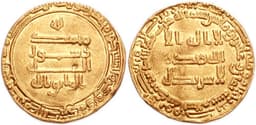
Al-Wathiq
Emperor · Medieval
47.9Total

Man Singh Tomar
Emperor · Medieval
54.6Total
Basic Information
Born
812
1486
Died
847
1516
Era
Medieval
Medieval
Nationality
Abbasid Caliphate
India
Occupation
Emperor
Emperor
Civilization
Middle Eastern
Indian
Score Comparison
Military (10%)
50.0
40.0
Political (20%)
42.3
68.0
Influence (20%)
51.8
59.0
Legacy (20%)
40.8
49.2
Leadership (15%)
65.7
66.0
Strategy (15%)
35.7
35.0
TOTAL
47.9
54.6
Al-Wathiq — Complete Timeline
842 AD
Reign during the Abbasid Golden AgeCultural◆ Major
Al-Wathiq's reign (842-847) occurred during the peak of the Abbasid Golden Age. He continued the patronage of scholars and the translation movement, though his rule was short and marked by internal stability.
Golden AgePatronage
Impact: globalconstructive
845 AD
Suppression of the Bedouin RevoltWar
Al-Wathiq sent forces to suppress a Bedouin revolt in the Arabian Peninsula. The rebellion was crushed, reaffirming Abbasid authority over the region.
RevoltInternal Conflict
Impact: regionaldestructive
Man Singh Tomar — Complete Timeline
1500 AD
Patronage of Dhrupad musicCultural◆ Major
Man Singh Tomar was a major patron of Dhrupad, a classical vocal style in Hindustani music. He invited musicians like Nayak Bakshu and Nayak Gopal to his court. His patronage helped develop and popularize Dhrupad as a distinct musical form.
MusicPatronageDhrupad
Impact: regionalconstructive
Construction of Gujari MahalCultural◆ Major
Man Singh Tomar built the Gujari Mahal in Gwalior for his wife Mrignayani, a Gujar princess. The palace was constructed in the Gujarati architectural style. It later served as a museum and is a notable example of Rajput architecture.
ArchitecturePalaceRomance
Impact: regionalconstructive
Construction of Man Mandir PalaceCultural◆ Major
Man Singh Tomar built the Man Mandir Palace within the Gwalior Fort. The palace featured intricate carvings and blue-tiled decorations. It became a symbol of Tomar power and architectural achievement.
ArchitectureFortPalace
Impact: regionalconstructive
1505 AD
Battle against Sikandar LodiWar◆ Major
Man Singh Tomar fought against the Delhi Sultanate under Sikandar Lodi. The conflict arose over territorial disputes. Man Singh successfully defended Gwalior from Lodi's attacks, maintaining Tomar independence.
DefenseDelhi SultanateRajput Resistance
Impact: regional
Expert Analysis
Origins
Al-Wathiq ibn al-Mu'tasim was born in 812 CE in Baghdad, the son of Caliph al-Mu'tasim and a Greek concubine, Qaratis. He grew up in the opulent Abbasid court, receiving a thorough education in Islamic theology, poetry, and administration. His father's reign emphasized military reforms and reliance on Turkish slave soldiers, shaping Al-Wathiq's worldview. In contrast, Man Singh Tomar was born around 1450 CE into the Tomar Rajput clan, rulers of the Gwalior region in central India. He succeeded his father, Kalyan Singh, as king of Gwalior. Man Singh was trained in martial arts and statecraft, but his early life was also marked by exposure to the rich musical traditions of the region, particularly the Dhrupad style.
Rise to Power
Al-Wathiq became caliph in 842 CE upon the death of his father al-Mu'tasim. His accession was smooth, as he was the designated heir and faced no serious opposition. He quickly consolidated power by maintaining the Turkish military elite that his father had cultivated. His reign saw the continuation of the Abbasid Golden Age, with flourishing trade, scholarship, and the translation of Greek works into Arabic. Man Singh Tomar ascended the throne of Gwalior around 1480 CE, inheriting a kingdom that was a vassal of the Delhi Sultanate. He skillfully navigated the turbulent politics of the time, balancing between the Lodi sultans of Delhi and the rising Mughal power. His major turning point came when he decided to fortify Gwalior Fort, building the Man Mandir Palace and asserting his independence. He successfully defended Gwalior against Sikandar Lodi in 1505 CE, securing his reputation as a capable warrior king.
Leadership & Governance
Al-Wathiq's leadership style was characterized by a hands-off approach, delegating administration to his viziers and military commanders. He focused on patronizing scholars and poets, continuing the translation movement that had begun under his grandfather Harun al-Rashid. He was known for his theological inquisitiveness, engaging in debates about the createdness of the Quran. However, his reliance on Turkish guards led to growing factionalism. Man Singh Tomar, by contrast, was a hands-on ruler who personally oversaw construction projects and musical patronage. He reformed the Gwalior court by inviting artists and musicians, creating a cultural renaissance. His governance was marked by strategic alliances and military preparedness, but he did not implement major administrative reforms. His political score of 68.0 reflects his ability to maintain autonomy in a hostile environment, while Al-Wathiq's political score of 42.3 indicates his limited agency.
Triumph & Tragedy
Al-Wathiq's greatest triumph was presiding over a period of cultural efflorescence. He commissioned the translation of Ptolemy's Almagest and supported the philosopher al-Kindi. His reign also saw the suppression of the Bedouin revolt in 845 CE, reaffirming Abbasid control over Arabia. However, his greatest failure was the increasing power of Turkish military commanders, which sowed the seeds for the caliphate's decline. He died unexpectedly in 847 CE, possibly from illness, leaving no strong successors. Man Singh Tomar's triumphs include the construction of the Gujari Mahal and Man Mandir Palace, architectural marvels that still stand. His patronage of Dhrupad music, including inviting musicians like Nayak Bakshu, laid the foundation for Hindustani classical music. His greatest failure was his eventual defeat by the Mughal emperor Babur in 1526 CE, leading to the loss of Gwalior. He died soon after, his kingdom absorbed into the Mughal Empire.
Character & Destiny
Al-Wathiq was known for his intellectual curiosity but also his aloofness. He was more interested in theological debates than statecraft, which allowed his viziers to wield significant power. His character was shaped by the luxurious court environment, leading to a disconnect from the realities of governance. His destiny was to be a figurehead during the golden age, but his passivity contributed to the caliphate's eventual fragmentation. Man Singh Tomar was a patron of the arts and a capable warrior, but his strategic decisions were sometimes flawed. His decision to oppose both the Lodi and Mughal forces ultimately led to his downfall. He scored 66.0 in leadership, reflecting his ability to inspire loyalty, but his strategy score of 35.0 indicates poor long-term planning. Historical assessments note his cultural contributions overshadow his military failures.
Legacy
Al-Wathiq's legacy is tied to the Abbasid Golden Age, but his personal impact is limited. He is remembered as a patron of learning, but his reign is often overshadowed by that of his father and grandfather. His influence score of 51.8 reflects his role in a broader cultural movement. Man Singh Tomar's legacy is more tangible: the Man Mandir Palace is a UNESCO World Heritage site, and his patronage of Dhrupad music continues to influence Indian classical music. He is remembered as a cultural hero in Gwalior. His legacy score of 49.2 is modest, but his influence on music endures.
Conclusion
While Al-Wathiq reigned during a golden age, his personal contributions were minimal, with a total score of 47.9. Man Singh Tomar, with a total score of 54.6, had a more direct and lasting impact through architecture and music. His political acumen and cultural patronage outweigh Al-Wathiq's passive role. Therefore, Man Singh Tomar had greater historical impact.
Rankings
🥇
Man Singh TomarLeader
Mil: 40.0Pol: 68.0Inf: 59.0
54.6
🥈
Al-Wathiq
Mil: 50.0Pol: 42.3Inf: 51.8
47.9
+6.7 behind
How This Comparison Works
Algorithm
Each figure is scored on 6 dimensions (0—100 scale) based on structured historical data: Military (10%), Political (20%), Influence (20%), Legacy (20%), Leadership (15%), Strategy (15%). The weighted total produces the final ranking.
Data Sources
Scores are computed from structured sub-indicators in the database. Scale factors adjust for era (Ancient ×0.85, Modern ×1.0) and civilization size (Eastern ×1.05, Other ×0.80) to account for differences in population and military scale.
Maximum 3 Figures
Comparisons are limited to 2—3 figures to ensure readability and statistical meaningfulness.
Error Margins
±5 points per dimension — Sub-scores are derived from historical records with inherent uncertainty. Two figures within 5 points on a dimension should be considered roughly equivalent in that area.
Total Score Accuracy
±3 points overall — The weighted combination of 6 dimensions produces a total score with approximately ±3 points of uncertainty. Differences of less than 3 points are not statistically significant— the figures are effectively tied.
Known Limitations
- Historical records are incomplete and uneven across civilizations
- Figures from oral-tradition societies may be underrepresented
- Occupation labels can misclassify multi-role figures
- Scores measure capability and impact, not moral character
- Quantitative scoring is a comparison tool, not absolute truth
Capability Radar
Military (10%) — Battles & Warfare
Battles
20
35
Win Rate
25
40
Expansion
10
35
Political (20%) — Governance & Reform
Reform
30
45
Diplomacy
35
50
Economy
50
55
Influence (20%) — Cultural & Global Reach
Cultural
30
65
Global
20
30
Legacy (20%) — Historical Impact
Historical
25
55
Longevity
20
50
Leadership (15%) — Power & Stability
Tenure
40
60
Stability
45
55
Strategy (15%) — Tactics & Innovation
Strategy
20
40
Tactics
15
45
Reform
10
30
Similar Comparisons
Comments & Discussion
No comments yet. Be the first to share your thoughts!