Loading...
Al-Wathiq vs Tode Mongke
Al-Wathiq leads by 7.7 pts · 2 figures compared
…
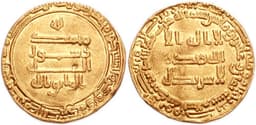
Al-Wathiq
Emperor · Medieval
47.9Total

Tode Mongke
Emperor · Medieval
40.2Total
Basic Information
Born
812
1245
Died
847
1287
Era
Medieval
Medieval
Nationality
Abbasid Caliphate
Golden Horde
Occupation
Emperor
Emperor
Civilization
Middle Eastern
Eastern
Score Comparison
Military (10%)
50.0
21.2
Political (20%)
42.3
29.3
Influence (20%)
51.8
53.3
Legacy (20%)
40.8
41.7
Leadership (15%)
65.7
41.5
Strategy (15%)
35.7
36.8
TOTAL
47.9
40.2
Al-Wathiq — Complete Timeline
842 AD
Reign during the Abbasid Golden AgeCultural◆ Major
Al-Wathiq's reign (842-847) occurred during the peak of the Abbasid Golden Age. He continued the patronage of scholars and the translation movement, though his rule was short and marked by internal stability.
Golden AgePatronage
Impact: globalconstructive
845 AD
Suppression of the Bedouin RevoltWar
Al-Wathiq sent forces to suppress a Bedouin revolt in the Arabian Peninsula. The rebellion was crushed, reaffirming Abbasid authority over the region.
RevoltInternal Conflict
Impact: regionaldestructive
Tode Mongke — Complete Timeline
1280 AD
Became Khan of the Golden HordePolitical Action◆ Major
Tode Mongke ascended to the throne of the Golden Horde in 1280, succeeding his brother Mengu-Timur. His reign marked a period of internal consolidation and religious transformation within the Mongol khanate.
Golden HordeKhanMengu-Timur
Impact: regional
1283 AD
Converted to IslamCultural◆ Major
Tode Mongke converted to Islam in 1283, becoming the first Golden Horde khan to adopt the religion. He promoted Islamic practices among the Mongol elite, though the majority of the population remained shamanist or Buddhist.
IslamConversionGolden Horde
Impact: regionalconstructive
1287 AD
Abdicated the ThronePolitical Action
Tode Mongke abdicated the throne of the Golden Horde in 1287, possibly due to religious devotion or political pressure. He was succeeded by his nephew Talabuga, and Tode Mongke retired to a Sufi monastery, where he lived until his death.
AbdicationSufismTalabuga
Impact: regional
Expert Analysis
Origins
Al-Wathiq (full name: Abu Ja'far Harun al-Wathiq ibn al-Mu'tasim) was born in 812 in Baghdad, the capital of the Abbasid Caliphate. He was the son of Caliph al-Mu'tasim and a Greek slave concubine, Qaratis. His early life was immersed in the court's intellectual and cultural vibrancy, receiving education in Islamic jurisprudence, poetry, and the sciences. The Abbasid court at this time was a hub of the Translation Movement, translating Greek, Persian, and Indian works into Arabic. Al-Wathiq's father, al-Mu'tasim, had moved the capital to Samarra in 836, but Baghdad remained the cultural center.
Tode Mongke (also spelled Töde Möngke) was born around 1240 as a member of the Borjigin clan, grandson of Batu Khan, the founder of the Golden Horde. He was a descendant of Genghis Khan through his son Jochi. Little is known about his early life; he grew up in the nomadic steppe traditions of the Mongol Empire, with a strong emphasis on horsemanship, warfare, and shamanistic beliefs. The Golden Horde, a khanate of the Mongol Empire, controlled vast territories from the Caspian Sea to the Black Sea, including parts of modern-day Russia and Ukraine.
Rise to Power
Al-Wathiq became Caliph in 842 upon the death of his father, al-Mu'tasim. His succession was smooth, as he was the designated heir. At the time, the Abbasid Caliphate was at its territorial zenith, but the caliphs had become increasingly reliant on Turkish slave soldiers (ghilman) for military power. Al-Wathiq's reign began with a continuation of his father's policies, including patronage of scholars and the suppression of religious dissent, particularly the Mu'tazilite inquisition (mihna) which enforced the doctrine of the createdness of the Quran.
Tode Mongke ascended to the throne of the Golden Horde in 1280, succeeding his brother Mengu-Timur. His rise was not without contest; the Golden Horde was experiencing internal strife between factions loyal to the traditional Mongol shamanism and those embracing Islam. Tode Mongke initially maintained the status quo but soon began to lean toward Islam. His conversion in 1283 was a pivotal moment, marking the first time a Golden Horde khan adopted Islam. This move was likely influenced by the growing Muslim population within the khanate and the influence of Sufi missionaries.
Leadership & Governance
Al-Wathiq's leadership style was autocratic but intellectually engaged. He continued the mihna, persecuting those who rejected the Mu'tazilite doctrine. He also maintained the system of Turkish military commanders who held significant power. His governance focused on centralizing authority, but he delegated much to his vizier, Muhammad ibn al-Zayyat. Al-Wathiq showed interest in poetry and theology, often debating scholars. His reign saw the construction of the Great Mosque of Samarra, though it was completed after his death.
Tode Mongke's governance was more decentralized, typical of Mongol khans. After converting to Islam, he began promoting Islamic practices, building mosques, and inviting Muslim scholars to his court. He attempted to consolidate his authority by balancing the interests of the Muslim and traditionalist Mongol factions. However, his religious fervor led to tensions with non-Muslim Mongols. He abdicated in 1287, possibly due to pressure from those opposed to his Islamization policies or a desire to devote himself to religious life. His successor, his nephew Talabuga, reversed some of his reforms.
Triumph & Tragedy
Al-Wathiq's greatest success was maintaining the stability and cultural flourishing of the Abbasid Caliphate during his five-year reign. He continued the Translation Movement, patronizing scholars like Hunayn ibn Ishaq. His suppression of the Bedouin revolt in the Arabian Peninsula (around 845) reaffirmed Abbasid control. However, his insistence on the mihna alienated many Sunni scholars, including Ahmad ibn Hanbal, who was persecuted. His reliance on Turkish generals sowed seeds for future caliphal weakness, as the military increasingly dominated politics.
Tode Mongke's triumph was his conversion to Islam and its lasting impact on the Golden Horde. By embracing Islam, he set a precedent that eventually led to the Islamization of the Mongol elite in the region. His reign also saw a period of relative peace within the khanate. However, his abdication was a failure of leadership; he could not maintain his position or fully implement his vision. His successor's reversal of his policies shows the fragility of his reforms. In terms of military or political achievements, he scored low: Military 21.2, Political 29.3.
Character & Destiny
Al-Wathiq was known for his intellectual curiosity but also his stubbornness in religious matters. He was a patron of the arts but also a persecutor of dissenting views. His character—a mix of scholar and autocrat—shaped his reign. He died suddenly in 847 at age 35, possibly from illness or poisoning, leaving a mixed legacy. His early death prevented him from seeing the decline that followed under his brother al-Mutawakkil, who reversed the mihna.
Tode Mongke was deeply religious after his conversion, perhaps to the point of neglecting statecraft. His decision to abdicate suggests a contemplative nature, valuing spiritual devotion over power. Historical assessments note his piety but also his lack of political acumen. His total score of 40.2, with low military (21.2) and political (29.3) scores, reflects his limited impact as a ruler.
Legacy
Al-Wathiq's legacy is tied to the Abbasid Golden Age, though his specific contributions are overshadowed by his father and brother. The mihna he enforced was soon abandoned, but his patronage of translation helped preserve classical knowledge. His total score of 47.9 reflects moderate influence (51.8) and leadership (65.7) but low strategy (35.7).
Tode Mongke's legacy is more significant in religious history. As the first Muslim khan of the Golden Horde, he paved the way for the Islamization of the Mongol successor states. The Golden Horde eventually became a Muslim khanate, influencing the development of Islam in the Volga region and Central Asia. His influence score (53.3) and legacy (41.7) are comparable to Al-Wathiq's, despite his lower overall score.
Conclusion
Al-Wathiq, with a total score of 47.9, had a more impactful reign in terms of immediate political and cultural influence, presiding over the Abbasid Golden Age. However, his policies were largely continuations of his predecessors, and his reign was short. Tode Mongke, scoring 40.2, had a transformative effect on the religious identity of the Golden Horde, a change that endured long after his abdication. While Al-Wathiq's cultural contributions are notable, Tode Mongke's conversion had a more profound and lasting impact on the course of history for the Mongol Empire and Islam. Taking a stance: Tode Mongke's influence, though less in total score, was more consequential in reshaping the religious landscape of Eurasia.
Rankings
🥇
Al-WathiqLeader
Mil: 50.0Pol: 42.3Inf: 51.8
47.9
🥈
Tode Mongke
Mil: 21.2Pol: 29.3Inf: 53.3
40.2
+7.7 behind
How This Comparison Works
Algorithm
Each figure is scored on 6 dimensions (0—100 scale) based on structured historical data: Military (10%), Political (20%), Influence (20%), Legacy (20%), Leadership (15%), Strategy (15%). The weighted total produces the final ranking.
Data Sources
Scores are computed from structured sub-indicators in the database. Scale factors adjust for era (Ancient ×0.85, Modern ×1.0) and civilization size (Eastern ×1.05, Other ×0.80) to account for differences in population and military scale.
Maximum 3 Figures
Comparisons are limited to 2—3 figures to ensure readability and statistical meaningfulness.
Error Margins
±5 points per dimension — Sub-scores are derived from historical records with inherent uncertainty. Two figures within 5 points on a dimension should be considered roughly equivalent in that area.
Total Score Accuracy
±3 points overall — The weighted combination of 6 dimensions produces a total score with approximately ±3 points of uncertainty. Differences of less than 3 points are not statistically significant— the figures are effectively tied.
Known Limitations
- Historical records are incomplete and uneven across civilizations
- Figures from oral-tradition societies may be underrepresented
- Occupation labels can misclassify multi-role figures
- Scores measure capability and impact, not moral character
- Quantitative scoring is a comparison tool, not absolute truth
Capability Radar
Military (10%) — Battles & Warfare
Battles
20
10
Win Rate
25
10
Expansion
10
10
Political (20%) — Governance & Reform
Reform
30
20
Diplomacy
35
30
Economy
50
20
Influence (20%) — Cultural & Global Reach
Cultural
30
30
Global
20
20
Legacy (20%) — Historical Impact
Historical
25
30
Longevity
20
20
Leadership (15%) — Power & Stability
Tenure
40
30
Stability
45
20
Strategy (15%) — Tactics & Innovation
Strategy
20
10
Tactics
15
10
Reform
10
10
Similar Comparisons
Comments & Discussion
No comments yet. Be the first to share your thoughts!