Loading...
Al-Zahir vs Gyeongjong of Goryeo
Gyeongjong of Goryeo leads by 9.8 pts · 2 figures compared
…
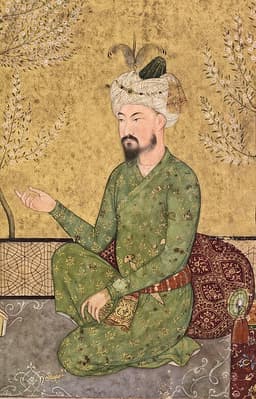
Al-Zahir
Emperor · Medieval
37.3Total
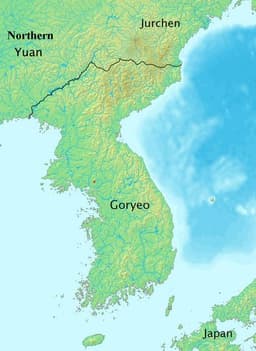
Gyeongjong of Goryeo
Emperor · Medieval
47.1Total
Basic Information
Born
1176
955
Died
1226
981
Era
Medieval
Medieval
Nationality
Abbasid Caliphate
Korea
Occupation
Emperor
Emperor
Civilization
Middle Eastern
Eastern
Score Comparison
Military (10%)
20.0
20.0
Political (20%)
32.1
53.8
Influence (20%)
46.3
53.3
Legacy (20%)
36.7
47.5
Leadership (15%)
34.6
48.8
Strategy (15%)
45.0
45.0
TOTAL
37.3
47.1
Gyeongjong of Goryeo — Complete Timeline
976 AD
Institution of the Jeonsigwa Land SystemReform◆ Major
King Gyeongjong established the jeonsigwa, a land distribution system that allocated state-owned farmland to government officials based on their rank. This reform aimed to secure royal revenue and control over land, while providing a stable income for the bureaucracy.
Impact: nationalconstructive
Expert Analysis
Origins
Al-Zahir (born 1175 CE) was the son of the long-reigning Abbasid caliph al-Nasir. Raised in the opulent yet unstable court of Baghdad, he inherited the caliphate at a time of growing external threats from the Mongol Empire. His early life was overshadowed by his father's political maneuvers, and he had little opportunity to develop independent leadership.
Gyeongjong of Goryeo (born 955 CE) was the fourth king of the Goryeo dynasty, succeeding his father King Gwangjong. Gyeongjong grew up in a period of consolidation after his father's centralizing reforms. His education focused on Confucian governance principles, and he was groomed to maintain stability in a kingdom still integrating regional elites.
Rise to Power
Al-Zahir became caliph in 1225 CE after his father's death. His accession was peaceful but came during a period of declining Abbasid authority. He inherited a caliphate that was a shadow of its former self, with real power held by military commanders and provincial governors. His reign lasted only one year before his death, offering no time for significant action.
Gyeongjong ascended the throne in 975 CE after his father's death. He faced immediate challenges from powerful aristocratic families who had been suppressed under Gwangjong. His rise was marked by careful negotiation rather than military force, as he sought to balance competing interests to secure his rule.
Leadership & Governance
Al-Zahir's leadership is difficult to assess due to his brief reign. He scored 34.6 in leadership, reflecting minimal impact. He did not initiate any known reforms or military campaigns. His governance was largely passive, continuing his father's policies without innovation.
Gyeongjong's governance is defined by the Jeonsigwa land system, instituted in 976 CE. This reform allocated state-owned farmland to officials based on rank, aiming to reduce aristocratic power and create a loyal bureaucracy. His political score of 53.8 reflects this systematic approach. He also maintained diplomatic relations with Song China, balancing internal consolidation with external recognition.
Triumph & Tragedy
Al-Zahir's greatest success was simply maintaining the caliphate's existence during a turbulent era. His failure was the lack of any lasting achievement; his death in 1226 CE left the throne to his son al-Mustansir, who faced the Mongol invasion. His legacy score of 36.7 highlights his obscurity.
Gyeongjong's triumph was the Jeonsigwa system, which influenced Goryeo's land administration for centuries. However, the system was not fully implemented due to aristocratic resistance, and later kings had to refine it. His failure was inability to permanently curb elite power, leading to periodic instability. He died in 981 CE after a reign of six years.
Character & Destiny
Al-Zahir appears as a passive figure, a product of his environment. His brief rule suggests he was unprepared for the challenges of the crumbling Abbasid state. Historians note his reign as a footnote, with no records of personal initiative.
Gyeongjong is seen as a pragmatic reformer. He understood the need for systemic change but lacked the ruthlessness of his father. His character combined Confucian ideals with political realism, though his early death prevented full realization of his vision.
Legacy
Al-Zahir's legacy is minimal. He is remembered primarily as a transitional figure between his father and the Mongol onslaught. His caliphate scored 46.3 in influence, largely due to the symbolic office rather than his actions.
Gyeongjong's legacy is more substantial. The Jeonsigwa system became a model for land reform in later Korean dynasties. His reign set precedents for bureaucratic governance. His influence score of 53.3 reflects his lasting impact on Korean administrative history.
Conclusion
Gyeongjong of Goryeo had a clearly greater impact than Al-Zahir. His political score of 53.8 versus Al-Zahir's 32.1, and legacy score of 47.5 versus 36.7, demonstrate his more substantial contributions. While Al-Zahir ruled a more historically significant empire, his personal achievements were negligible. Gyeongjong's land reform addressed structural issues and influenced Korean governance for centuries. The overall score gap of 9.8 points supports this assessment. Gyeongjong's focused reformism outweighs Al-Zahir's passive inheritance of power.
Rankings
🥇
Gyeongjong of GoryeoLeader
Mil: 20.0Pol: 53.8Inf: 53.3
47.1
🥈
Al-Zahir
Mil: 20.0Pol: 32.1Inf: 46.3
37.3
+9.8 behind
How This Comparison Works
Algorithm
Each figure is scored on 6 dimensions (0—100 scale) based on structured historical data: Military (10%), Political (20%), Influence (20%), Legacy (20%), Leadership (15%), Strategy (15%). The weighted total produces the final ranking.
Data Sources
Scores are computed from structured sub-indicators in the database. Scale factors adjust for era (Ancient ×0.85, Modern ×1.0) and civilization size (Eastern ×1.05, Other ×0.80) to account for differences in population and military scale.
Maximum 3 Figures
Comparisons are limited to 2—3 figures to ensure readability and statistical meaningfulness.
Error Margins
±5 points per dimension — Sub-scores are derived from historical records with inherent uncertainty. Two figures within 5 points on a dimension should be considered roughly equivalent in that area.
Total Score Accuracy
±3 points overall — The weighted combination of 6 dimensions produces a total score with approximately ±3 points of uncertainty. Differences of less than 3 points are not statistically significant— the figures are effectively tied.
Known Limitations
- Historical records are incomplete and uneven across civilizations
- Figures from oral-tradition societies may be underrepresented
- Occupation labels can misclassify multi-role figures
- Scores measure capability and impact, not moral character
- Quantitative scoring is a comparison tool, not absolute truth
Capability Radar
Military (10%) — Battles & Warfare
Battles
5
5
Win Rate
5
5
Expansion
5
5
Political (20%) — Governance & Reform
Reform
10
70
Diplomacy
10
40
Economy
10
65
Influence (20%) — Cultural & Global Reach
Cultural
10
30
Global
5
20
Legacy (20%) — Historical Impact
Historical
10
45
Longevity
10
40
Leadership (15%) — Power & Stability
Tenure
30
55
Stability
10
50
Strategy (15%) — Tactics & Innovation
Strategy
5
5
Tactics
5
5
Reform
5
5
Similar Comparisons
Comments & Discussion
No comments yet. Be the first to share your thoughts!