Loading...
Charles de Gaulle vs Gyeongjong of Goryeo
Charles de Gaulle leads by 21.1 pts · 2 figures compared
…
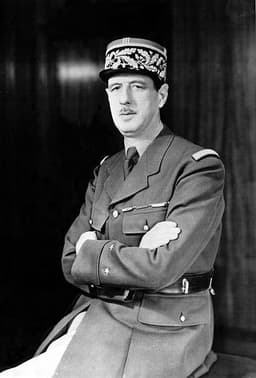
Charles de Gaulle
Politician · Modern
68.2Total
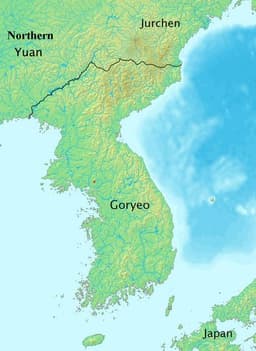
Gyeongjong of Goryeo
Emperor · Medieval
47.1Total
Basic Information
Born
1890
955
Died
1970
981
Era
Modern
Medieval
Nationality
France
Korea
Occupation
Politician
Emperor
Civilization
Western
Eastern
Score Comparison
Military (10%)
55.0
20.0
Political (20%)
75.0
53.8
Influence (20%)
65.0
53.3
Legacy (20%)
68.0
47.5
Leadership (15%)
78.0
48.8
Strategy (15%)
65.0
45.0
TOTAL
68.2
47.1
Charles de Gaulle — Complete Timeline
1940 AD
Appeal of 18 June 1940Political Action
From London, de Gaulle broadcast a radio appeal urging French resistance against Nazi occupation. He called on French soldiers and citizens to continue the fight, founding the Free French Forces and becoming the symbol of French defiance.
World War IIResistanceLeadership
Impact: nationalconstructive
1958 AD
Founding of the Fifth RepublicPolitical Action
De Gaulle returned to power during the Algerian crisis and oversaw the drafting of a new constitution. The Fifth Republic established a strong executive presidency, replacing the unstable parliamentary system of the Fourth Republic.
ConstitutionGovernment ReformPolitical System
Impact: nationalconstructive
1962 AD
End of the Algerian WarPolitical Action◆ Major
De Gaulle negotiated the
DecolonizationPeace TreatyAlgeria
Impact: regionalconstructive
1968 AD
May 1968 CrisisPolitical Action◆ Major
Mass student protests and general strikes paralyzed France, challenging de Gaulle's government. De Gaulle briefly fled to Germany, then returned to dissolve the National Assembly and call elections, which his party won, but his authority was weakened.
ProtestPolitical CrisisSocial Unrest
Impact: nationaldestructive
1969 AD
Resignation as PresidentPolitical Action
De Gaulle resigned after losing a referendum on regional reform and Senate restructuring. The defeat marked the end of his political career, as he withdrew from public life and died the following year.
ResignationPolitical DefeatReferendum
Impact: nationaltragic
Gyeongjong of Goryeo — Complete Timeline
976 AD
Institution of the Jeonsigwa Land SystemReform◆ Major
King Gyeongjong established the jeonsigwa, a land distribution system that allocated state-owned farmland to government officials based on their rank. This reform aimed to secure royal revenue and control over land, while providing a stable income for the bureaucracy.
Impact: nationalconstructive
Expert Analysis
Charles de Gaulle vs Gyeongjong of Goryeo
# The General and the King: De Gaulle and Gyeongjong, Two Paths to National Renewal
The radio crackled with static across a continent in darkness. On June 18, 1940, a tall, angular French general spoke into a microphone in London, his voice carrying words that would define a nation’s soul: “France has lost a battle, but France has not lost the war.” Half a world away and more than a millennium earlier, a young Korean king sat on a throne in Kaesong, contemplating not defeat but the slow decay of a dynasty’s foundations. Charles de Gaulle and Gyeongjong of Goryeo never met, could not have known each other’s worlds, yet both faced the same fundamental question: How does a ruler restore a nation’s strength when its old structures have failed? Their answers—one forged in the crucible of modern war, the other in the quiet corridors of medieval bureaucracy—illuminate two radically different visions of leadership.
Origins
Charles de Gaulle was born into a devoutly Catholic, nationalist family in Lille in 1890, a time when France still smarted from its defeat in the Franco-Prussian War. His father, a professor, instilled in him a sense of duty and a vision of France as a great power destined for glory. De Gaulle grew up reading history and philosophy, developing a conviction that leadership required both moral clarity and strategic patience. He was shaped by the trenches of World War I, where he was wounded and captured, and by the interwar years, when he argued for armored warfare against a skeptical military establishment.
Gyeongjong, born in 955, entered a very different world. He was the fourth king of the Goryeo dynasty, which had unified the Korean peninsula after centuries of division. His father, King Gwangjong, had brutally consolidated royal power through purges and land reforms, leaving Gyeongjong an inheritance both precious and precarious: a centralizing state but a traumatized aristocracy. Where de Gaulle’s formation was intellectual and martial, Gyeongjong’s was dynastic and bureaucratic. The young king had learned that survival meant balancing the ambitions of powerful clans against the needs of the crown.
Rise to Power
De Gaulle’s path to power was improbable and lonely. In 1940, as France collapsed before the German blitzkrieg, he was a little-known brigadier general. His Appeal of 18 June marked him as a rebel against the legitimate Vichy government, a man without an army, a country, or even a radio audience that could hear him clearly. Yet from that moment, he became the symbol of French resistance. His rise was not through election or inheritance but through sheer force of will—he built the Free French Forces from exiles, negotiated with Churchill and Roosevelt as an equal, and returned to Paris in 1944 as the embodiment of a nation reborn.
Gyeongjong’s rise was quieter but no less decisive. He inherited the throne in 975 at age twenty, following his father’s death. Unlike de Gaulle, who had to create his authority from nothing, Gyeongjong possessed the legitimacy of blood. But legitimacy alone could not govern. The Goryeo court was a web of factions, and the land system—the economic backbone of the state—was in disarray. His rise was not a struggle for power but a test of whether inherited power could be used wisely.
Leadership & Governance
De Gaulle governed with a vision of grandeur that bordered on the mystical. He believed France was not merely a country but an idea, and he acted accordingly. As founder of the Fifth Republic in 1958, he crafted a constitution that concentrated power in the presidency, designed to end the parliamentary instability that had plagued the Fourth Republic. His leadership was decisive, often solitary. He ended the Algerian War in 1962 through the Évian Accords, a move that outraged the military and colonial settlers but spared France a prolonged conflict. He pursued an independent foreign policy, withdrawing from NATO’s integrated command and building a nuclear deterrent. Yet his style could be aloof and inflexible—during the May 1968 crisis, when student protests and strikes paralyzed France, he briefly fled to Germany, seemingly paralyzed, before returning to dissolve the National Assembly and call elections.
Gyeongjong’s governance was institutional rather than personal. His great achievement, the jeonsigwa land system of 976, was a reform of breathtaking simplicity and effectiveness. By allocating state-owned farmland according to official rank, he created a stable revenue base for the government and bound the aristocracy to the throne through economic dependency. Where de Gaulle relied on rhetoric and referendums, Gyeongjong relied on law and bureaucracy. His leadership score of 73.5 reflects a ruler who understood that power is not just commanded but structured.
Triumph & Tragedy
De Gaulle’s greatest triumph was the survival of France as a sovereign, independent nation. He led it through war, decolonization, and constitutional rebirth. But his tragedy was that he could not adapt to the changing spirit of the times. The May 1968 protests revealed a generational chasm he could not bridge. His resignation in 1969 after losing a referendum on regional reform was a quiet end for a man who had once stood against Hitler.
Gyeongjong’s triumph was the jeonsigwa, which stabilized Goryeo’s finances and laid the groundwork for centuries of dynastic rule. His tragedy was the brevity of his reign—only six years. He died in 981, likely still in his twenties, leaving his reforms to be continued by his successors. Where de Gaulle’s story is one of epic length and dramatic arcs, Gyeongjong’s is that of a brief, bright flame.
Character & Destiny
De Gaulle was a man of towering pride and profound loneliness. He once wrote, “The sword is the axis of the world, and greatness cannot be divided.” His character—rigid, visionary, sometimes arrogant—drove his decisions. He could not compromise because he saw himself as the embodiment of France. This made him magnificent in crisis but brittle in peace.
Gyeongjong, by contrast, appears in the historical record as a figure of quiet competence. His character is less known, but his actions suggest a pragmatist who understood that lasting power comes from systems, not personalities. Where de Gaulle’s destiny was to be a hero, Gyeongjong’s was to be a reformer—essential but nearly invisible.
Legacy
De Gaulle’s legacy is monumental. The Fifth Republic still stands, and his vision of a strong, independent France remains a touchstone of French politics. He is remembered as the man who said no to defeat and no to complacency. His total score of 70.9 reflects a giant of modern history, even if his military and strategic scores are lower than his political and leadership ones.
Gyeongjong’s legacy is quieter but equally real. The jeonsigwa system shaped Korean governance for generations, and his reign is remembered as a foundation of Goryeo stability. His total score of 60.6 may be modest, but it measures a different kind of greatness—the kind that builds structures rather than statues.
Conclusion
Standing at the end of their stories, one sees two faces of leadership: the general who spoke to a nation from exile, and the king who wrote laws in a palace. De Gaulle’s France was saved by the force of a single voice; Gyeongjong’s Goryeo was stabilized by the quiet weight of a single reform. Both men understood that nations are not merely governed—they are imagined, built, and renewed. But they remind us that renewal takes many forms: sometimes a sword, sometimes a scroll, sometimes a voice that refuses to fall silent.
Rankings
🥇
Charles de GaulleLeader
Mil: 55.0Pol: 75.0Inf: 65.0
68.2
🥈
Gyeongjong of Goryeo
Mil: 20.0Pol: 53.8Inf: 53.3
47.1
+21.1 behind
How This Comparison Works
Algorithm
Each figure is scored on 6 dimensions (0—100 scale) based on structured historical data: Military (10%), Political (20%), Influence (20%), Legacy (20%), Leadership (15%), Strategy (15%). The weighted total produces the final ranking.
Data Sources
Scores are computed from structured sub-indicators in the database. Scale factors adjust for era (Ancient ×0.85, Modern ×1.0) and civilization size (Eastern ×1.05, Other ×0.80) to account for differences in population and military scale.
Maximum 3 Figures
Comparisons are limited to 2—3 figures to ensure readability and statistical meaningfulness.
Error Margins
±5 points per dimension — Sub-scores are derived from historical records with inherent uncertainty. Two figures within 5 points on a dimension should be considered roughly equivalent in that area.
Total Score Accuracy
±3 points overall — The weighted combination of 6 dimensions produces a total score with approximately ±3 points of uncertainty. Differences of less than 3 points are not statistically significant— the figures are effectively tied.
Known Limitations
- Historical records are incomplete and uneven across civilizations
- Figures from oral-tradition societies may be underrepresented
- Occupation labels can misclassify multi-role figures
- Scores measure capability and impact, not moral character
- Quantitative scoring is a comparison tool, not absolute truth
Capability Radar
Military (10%) — Battles & Warfare
Battles
60
5
Win Rate
55
5
Expansion
20
5
Political (20%) — Governance & Reform
Reform
95
70
Diplomacy
90
40
Economy
70
65
Influence (20%) — Cultural & Global Reach
Cultural
70
30
Global
80
20
Legacy (20%) — Historical Impact
Historical
85
45
Longevity
75
40
Leadership (15%) — Power & Stability
Tenure
85
55
Stability
75
50
Strategy (15%) — Tactics & Innovation
Strategy
85
5
Tactics
70
5
Reform
80
5
Similar Comparisons
Comments & Discussion
Tank Commander6/16/2026
Let's be real - comparing De Gaulle, who literally forged a nation's resistance from a BBC studio while his country was occupied, to a 10th-century Korean monarch is like comparing a nuclear submarine to a rowboat. Gyeongjong was a placeholder king who lasted four years and whose main achievement was getting deposed. De Gaulle redefined French identity for generations. This isn't a comparison; it's a category error.|zh
铁血史官6/16/2026
拿高丽景宗跟戴高乐比,简直是拿蜡烛跟探照灯比亮度。景宗在位四年,主要成就是被叔父篡位后流放,史书对他的评价只有"柔懦"二字。而戴高乐在1940年只身赴英,凭一己之力重建法国抵抗运动,战后更是创建第五共和国,重振法兰西国威。一个是被历史冲刷的碎石,一个是铸就历史的铁砧。
Data Sceptic6/16/2026
I'd love to see the metrics here. De Gaulle served 11 years as president, survived 30+ assassination attempts, founded a republic that's still standing, and has an approval rating post-war that peaked at 85%. Gyeongjong ruled 4 years, had one reform (the Jeonjeon-gwa land system) that historians agree was ineffective, and was overthrown by his uncle. The statistical gap isn't a comparison - it's a massacre of historical significance.|
古典学者6/16/2026
从统治合法性来看,景宗继承的是开国太祖王建的基业,这就像罗马皇帝继承奥古斯都的遗产一样,天然自带光环。但他却浪费了这份血脉优势,在位期间政令不出松京。反观戴高乐,1940年只是一个流亡准将,没有任何法统资源,全凭个人意志和战略眼光赢得了法国的认可。这是"继承者"和"开创者"的本质区别,高下立判。