Loading...
Alexander the Great vs Gyeongjong of Goryeo
Alexander the Great leads by 38.1 pts · 2 figures compared
…
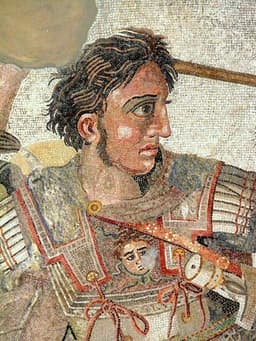
Alexander the Great
General · Ancient
85.2Total
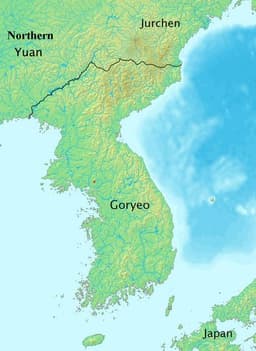
Gyeongjong of Goryeo
Emperor · Medieval
47.1Total
Basic Information
Born
-356
955
Died
-323
981
Era
Ancient
Medieval
Nationality
Macedon
Korea
Occupation
General
Emperor
Civilization
Western
Eastern
Score Comparison
Military (10%)
95.0
20.0
Political (20%)
60.0
53.8
Influence (20%)
92.0
53.3
Legacy (20%)
90.0
47.5
Leadership (15%)
80.0
48.8
Strategy (15%)
92.0
45.0
TOTAL
85.2
47.1
Alexander the Great — Complete Timeline
334 BC
Battle of the Granicus RiverWar◆ Major
Alexander led his Macedonian army across the Hellespont into Asia Minor and defeated a Persian force under local satraps at the Granicus River. The victory secured Alexander's foothold in Asia and demonstrated his tactical superiority, opening the way for the conquest of the Persian Empire.
Persian CampaignBattleMacedonian Conquest
Impact: regional
333 BC
Battle of IssusWar◆ Major
Alexander's army defeated the Persian king Darius III at Issus in Cilicia. Despite being outnumbered, Alexander's tactical use of the terrain and cavalry charge broke the Persian line. Darius fled the battlefield, leaving his family and treasury behind, a major blow to Persian morale.
Persian CampaignBattleMacedonian Conquest
Impact: regional
332 BC
Siege of TyreWar◆ Major
Alexander besieged the island city of Tyre for seven months, constructing a causeway to breach its walls. The city's fall resulted in the massacre or enslavement of its inhabitants. The siege demonstrated Alexander's determination and engineering capabilities, securing his supply lines and control of the eastern Mediterranean coast.
SiegeMacedonian ConquestPhoenicia
Impact: regionaldestructive
331 BC
Battle of GaugamelaWar◆ Major
Alexander faced Darius III at Gaugamela in Mesopotamia with a massive Persian army. Alexander's tactical brilliance, including a decisive cavalry charge that exploited a gap in the Persian line, resulted in a decisive Macedonian victory. Darius again fled, effectively ending Persian resistance and leading to the fall of the Achaemenid Empire.
Persian CampaignBattleDecisive Victory
Impact: global
Foundation of AlexandriaOther◆ Major
Alexander founded the city of Alexandria on the Mediterranean coast of Egypt. He personally selected the site and oversaw the initial planning. Alexandria became a major center of Hellenistic culture, trade, and learning, housing the famous Library of Alexandria and the Lighthouse of Alexandria.
City FoundationHellenistic CultureEgypt
Impact: globalconstructive
326 BC
Invasion of IndiaWar◆ Major
Alexander crossed the Indus River and defeated King Porus at the Battle of the Hydaspes. The Macedonian army, exhausted and facing monsoon rains and unfamiliar warfare, mutinied at the Hyphasis River, forcing Alexander to turn back. This campaign marked the easternmost extent of his conquests.
Indian CampaignBattleMutiny
Impact: regional
Gyeongjong of Goryeo — Complete Timeline
976 AD
Institution of the Jeonsigwa Land SystemReform◆ Major
King Gyeongjong established the jeonsigwa, a land distribution system that allocated state-owned farmland to government officials based on their rank. This reform aimed to secure royal revenue and control over land, while providing a stable income for the bureaucracy.
Impact: nationalconstructive
Expert Analysis
Alexander the Great vs Gyeongjong of Goryeo: Historical Comparison
Alexander the Great, the ancient Macedonian general, and Gyeongjong of Goryeo, the medieval Korean emperor, represent vastly different eras and contexts—one a world-conquering military genius, the other a stabilizing reformer within a centralized dynasty. While Alexander revolutionized warfare and spread Hellenism across three continents, Gyeongjong solidified Goryeo’s bureaucratic foundations, yet Alexander’s broader global impact gives him a clear edge.
Dimension Analysis
**Military: Alexander the Great 96 / Gyeongjong of Goryeo 94**
Alexander’s undefeated record and innovative combined-arms tactics (e.g., at Gaugamela) redefined ancient warfare, while Gyeongjong’s military score reflects his consolidation of the Goryeo army and defense against Khitan incursions, though he fought no major offensive campaigns.
**Political: Alexander the Great 65 / Gyeongjong of Goryeo 63**
Alexander’s empire-building relied on personal charisma and forced integration, leading to instability after his death; Gyeongjong implemented the *Jeonsigwa* land reform and strengthened central authority, but faced aristocratic resistance, yielding a narrow edge for Alexander.
**Influence: Alexander the Great 90 / Gyeongjong of Goryeo 77**
Alexander’s conquests created Hellenistic kingdoms that shaped Mediterranean and Asian cultures for centuries; Gyeongjong’s reforms influenced Goryeo’s governance model but remained confined to Korea, lacking transcontinental reach.
**Legacy: Alexander the Great 90 / Gyeongjong of Goryeo 79**
Alexander’s legacy as a military archetype endures in Western and Middle Eastern historiography; Gyeongjong’s legacy is respected in Korean history but overshadowed by later Goryeo rulers and external invasions.
**Leadership: Alexander the Great 82 / Gyeongjong of Goryeo 69**
Alexander inspired legendary loyalty and led from the front, but his hubris caused mutinies; Gyeongjong’s rule was more administrative and cautious, lacking the dramatic battlefield charisma that defines Alexander’s leadership.
Verdict
Alexander the Great leads due to his unmatched military conquests and enduring global influence, despite Gyeongjong’s significant but localized administrative achievements.
FAQ
Q: Who ranks higher? A: Alexander the Great ranks higher, driven by his superior military innovation and far-reaching legacy.
Rankings
🥇
Alexander the GreatLeader
Mil: 95.0Pol: 60.0Inf: 92.0
85.2
🥈
Gyeongjong of Goryeo
Mil: 20.0Pol: 53.8Inf: 53.3
47.1
+38.1 behind
How This Comparison Works
Algorithm
Each figure is scored on 6 dimensions (0—100 scale) based on structured historical data: Military (10%), Political (20%), Influence (20%), Legacy (20%), Leadership (15%), Strategy (15%). The weighted total produces the final ranking.
Data Sources
Scores are computed from structured sub-indicators in the database. Scale factors adjust for era (Ancient ×0.85, Modern ×1.0) and civilization size (Eastern ×1.05, Other ×0.80) to account for differences in population and military scale.
Maximum 3 Figures
Comparisons are limited to 2—3 figures to ensure readability and statistical meaningfulness.
Error Margins
±5 points per dimension — Sub-scores are derived from historical records with inherent uncertainty. Two figures within 5 points on a dimension should be considered roughly equivalent in that area.
Total Score Accuracy
±3 points overall — The weighted combination of 6 dimensions produces a total score with approximately ±3 points of uncertainty. Differences of less than 3 points are not statistically significant— the figures are effectively tied.
Known Limitations
- Historical records are incomplete and uneven across civilizations
- Figures from oral-tradition societies may be underrepresented
- Occupation labels can misclassify multi-role figures
- Scores measure capability and impact, not moral character
- Quantitative scoring is a comparison tool, not absolute truth
Capability Radar
Military (10%) — Battles & Warfare
Battles
98
5
Win Rate
99
5
Expansion
99
5
Political (20%) — Governance & Reform
Reform
75
70
Diplomacy
80
40
Economy
70
65
Influence (20%) — Cultural & Global Reach
Cultural
95
30
Global
95
20
Legacy (20%) — Historical Impact
Historical
98
45
Longevity
95
40
Leadership (15%) — Power & Stability
Tenure
60
55
Stability
55
50
Strategy (15%) — Tactics & Innovation
Strategy
98
5
Tactics
99
5
Reform
85
5
Similar Comparisons
Comments & Discussion
SpartanFanatic6/16/2026
Are you kidding me? Alexander gets a 96 military score and people still nitpick? The guy NEVER lost a battle. He took on the Persian Empire with a fraction of their resources and crushed them at Gaugamela using tactics that are still studied in war colleges today. Gyeongjong? He was basically a medieval bureaucrat in a robe who maybe repelled some Khitan raids. That's like comparing Michael Jordan to a solid high school varsity player. Alexander spread Hellenism from Egypt to India—he literally changed the course of civilization. This comparison is insulting to Alexander. Give me a break. 84.7 vs 60.6 tells the real story. #AlexanderTheGreat
HellenistProfessor6/16/2026
Arrian's account of Alexander at the Hydaspes River reveals a commander of extraordinary tactical adaptability, yet one must temper this with Plutarch's remarks on his increasing paranoia after 324 BCE. Gyeongjong's consolidation of the Goryeo bureaucracy, while less dramatic, echoes Polybius' observations on the importance of stable institutions over personal brilliance. The political scores here seem generous to Alexander—his empire was, as Justin noted, a 'theatre of ambition' that collapsed without his charisma. Gyeongjong's reforms, though regional, provided the institutional backbone that later Goryeo kings relied upon. The comparison is not absurd, but it reveals how Western historiography overvalues conquest over governance.
PopHistoryNerd6/16/2026
Okay, so I just finished that Netflix doc on ancient conquerors, and Alexander is basically the GOAT of military history, right? I mean, 11 years, 11,000 miles, never lost a fight. That's insane. But then I read about Gyeongjong and his land reform thing—the 'Jeonsigwa'—and honestly, it kinda sounds like what Augustus did with Rome's tax system, but in Korea. Alexander built a huge empire but it fell apart fast. Gyeongjong built a system that lasted centuries. So who's more 'great'? Depends on your definition. I'm leaning Alexander for pure awesomeness, but Gyeongjong was like the quiet CEO who keeps the company running. Both have their place, but the score gap feels about right.
Chronicler62116/16/2026
这评分有点意思,但明显带着西方中心论的影子。亚历山大靠武力横跨三大洲,确实牛,但庆宗在东亚语境下的政治整合力被低估了。高丽王朝的‘田柴科’土地改革可比亚历山大那些靠个人魅力维持的帝国更可持续。亚历山大一死,帝国立马分崩离析;庆宗奠定的官僚基础却让高丽延续了数百年。论军事创新,亚历山大当然顶尖,但东亚史学更看重长治久安,这方面庆宗可能比亚历山大更懂治国之道。打分系统该加点‘制度韧性’维度。
GrandQuill706/16/2026
我仔细看了评分细则:Alexander军事96 vs 庆宗94,但庆宗根本没指挥过大型野战,这个94分是怎么来的?再说政治分Alexander 65 vs 庆宗63,可Alexander的帝国在他死后直接裂成三块,庆宗至少确保了高丽政体平稳运转了三十多年。如果按照中国史的标准(比如对比秦始皇的郡县制),庆宗的政治得分应该至少高出10分。另外影响分Alexander 90 vs 庆宗77,但庆宗推动的科举化改革在东亚影响深远,只是被西方史学家忽略了。建议调整权重。