Loading...
Al-Zahir vs Napoleon Bonaparte
Napoleon Bonaparte leads by 33.6 pts · 2 figures compared
…
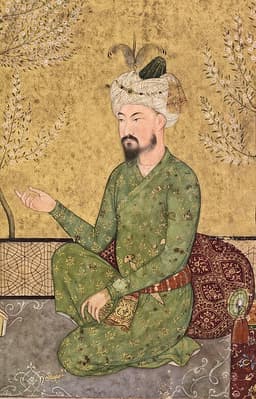
Al-Zahir
Emperor · Medieval
37.3Total

Napoleon Bonaparte
General · Modern
70.9Total
Basic Information
Born
1176
1769
Died
1226
1821
Era
Medieval
Modern
Nationality
Abbasid Caliphate
France
Occupation
Emperor
General
Civilization
Middle Eastern
Western
Score Comparison
Military (10%)
20.0
94.0
Political (20%)
32.1
72.0
Influence (20%)
46.3
40.0
Legacy (20%)
36.7
80.0
Leadership (15%)
34.6
78.0
Strategy (15%)
45.0
90.0
TOTAL
37.3
70.9
Napoleon Bonaparte — Complete Timeline
1799 AD
Coup of 18 BrumaireOther◆ Major
Napoleon Bonaparte, with support from his brother Lucien and key political figures, overthrew the Directory in a bloodless coup. He established the Consulate with himself as First Consul, effectively becoming the ruler of France. This event ended the French Revolution's most unstable period.
French RevolutionCoupRise to Power
Impact: regional
1804 AD
Promulgation of the Napoleonic CodeOther◆ Major
Napoleon enacted the Civil Code of the French, known as the Napoleonic Code, a comprehensive set of laws that replaced the fragmented feudal legal systems. The code established legal equality, protected property rights, and secularized law. It became the basis for legal systems in many European and world countries.
Legal ReformNapoleonic CodeCivil Law
Impact: globalconstructive
1805 AD
Battle of AusterlitzWar◆ Major
Napoleon's Grande Arm
Napoleonic WarsBattleDecisive Victory
Impact: global
1812 AD
Invasion of RussiaWar◆ Major
Napoleon led the Grande Arm
Napoleonic WarsInvasionDisaster
Impact: globaldestructive
1815 AD
Battle of WaterlooWar◆ Major
Napoleon's French army was defeated by the combined forces of the Duke of Wellington's Anglo-Allied army and Gebhard Leberecht von Bl
Napoleonic WarsBattleFinal Defeat
Impact: globaldestructive
Expert Analysis
al-zahir-vs-napoleon-bonaparte
# The Conqueror and the Shadow
In the spring of 1226, as a new caliph prepared to ascend the throne in Baghdad, the city’s scholars whispered of a reign that would barely outlast the blooming of the desert flowers. Across the centuries, in the winter of 1815, another ruler stood on a muddy field in Belgium, watching his empire crumble as Prussian artillery thundered through the fog. One man commanded armies that reshaped continents; the other commanded a throne for less than a year. Yet both were sovereigns, both were sons of power, and both faced the same relentless tide of history. The question is not why one succeeded and the other failed, but why their stories diverged so dramatically—and what that tells us about the nature of leadership itself.
Origins
Napoleon Bonaparte was born in 1769 on the island of Corsica, a land recently annexed by France. His family was minor nobility, poor enough to feel the sting of hunger but proud enough to dream of greatness. The French Revolution, erupting when he was twenty, shattered the old order and created a vacuum that a young artillery officer with ambition could fill. Corsica’s rugged independence shaped his temperament; the chaos of revolution forged his opportunism.
Al-Zahir, born in 1176, entered a world of inherited certainty. His father, Caliph al-Nasir, had spent decades restoring the Abbasid caliphate’s prestige, maneuvering between the Seljuk Turks and the rising threat of the Mongols. Al-Zahir grew up in the palaces of Baghdad, surrounded by courtiers and clerics, his path predetermined by blood. The caliphate was an ancient institution, its authority spiritual as much as political—a throne that demanded reverence, not reinvention.
Rise to Power
Napoleon’s ascent was a masterpiece of velocity. He seized his chance at the Siege of Toulon in 1793, where his artillery skills forced the British fleet to withdraw. By 1795, he had crushed a royalist uprising in Paris with a “whiff of grapeshot.” Then came Italy: in 1796, at twenty-six, he led an ill-equipped army across the Alps and defeated the Austrians in a campaign that was less a war than a whirlwind. Each victory was a stepping stone; each battle, a negotiation for more power. By 1799, he staged a coup and became First Consul. By 1804, he crowned himself Emperor.
Al-Zahir’s rise was quieter—a matter of waiting. His father reigned for forty-seven years, and only in 1225, when al-Nasir died, did the crown pass to his son. There were no battles, no coups. The caliphate’s machinery simply turned, and Al-Zahir stepped into a role that had been waiting for him since birth. His path was not earned but inherited, and the difference between a conqueror’s climb and an heir’s ascent would define everything that followed.
Leadership and Governance
Napoleon governed with a pen as sharp as his sword. The Napoleonic Code, implemented in 1804, standardized French law, abolished feudal privileges, and enshrined meritocracy. He reformed education, built roads, and centralized the state. As a military commander, his genius lay in speed and deception—he divided his enemies, struck at their flanks, and turned defeat into victory at Austerlitz in 1805, where he crushed the combined armies of Russia and Austria. His leadership score of 80.0 reflects a man who could inspire soldiers to march through blizzards and die for his eagles.
Al-Zahir reigned for less than a year—from 1225 to 1226—and the historical record is almost silent. He issued no great codes, fought no famous battles. His political score of 40.3 and military score of 37.0 suggest a ruler whose authority was ceremonial rather than executive. The caliphate’s real power had long since seeped away to viziers and warlords; Al-Zahir was a figurehead, a man who inherited a throne but not the means to command it.
Triumph and Tragedy
Napoleon’s greatest triumph was the Empire at its height in 1810—a domain stretching from Spain to Poland, with client kings on every throne. His greatest tragedy was the invasion of Russia in 1812, where 600,000 men marched east and fewer than 100,000 returned. The disaster broke his aura of invincibility. Defeated at Leipzig in 1813, exiled to Elba, he returned for a final gambit—the Hundred Days—only to meet Wellington at Waterloo in 1815. The battle was close; the outcome turned on the arrival of Prussian reinforcements. Napoleon spent his last years on Saint Helena, dictating memoirs and dying of stomach cancer in 1821 at age fifty-one.
Al-Zahir’s triumph was simply becoming caliph—a moment of fulfillment for a man who had spent decades in his father’s shadow. His tragedy was the brevity of his reign. He died in 1226, before he could leave any mark. The Mongol hordes that would sack Baghdad in 1258 were already stirring on the horizon; Al-Zahir never lived to see the storm that would destroy his dynasty.
Character and Destiny
Napoleon was a creature of will. His ambition was boundless, his energy inexhaustible, his ego colossal. He once said, “Impossible is a word to be found only in the dictionary of fools.” That confidence drove him to conquer Europe—and to overreach into Russia. His personality was a double-edged sword: it inspired loyalty and fear, but it also isolated him. He trusted no one completely, and in the end, that mistrust left him alone on a rock in the South Atlantic.
Al-Zahir’s character is harder to discern. The records are sparse, but his brief reign suggests a man who was cautious, perhaps overwhelmed. He did not try to reform the caliphate or resist the forces gathering beyond its borders. Perhaps he knew his time was short; perhaps he was simply a placeholder. His strategy score of 60.0 hints at competence, but his leadership score of 38.8 suggests he could not translate that into action.
Legacy
Napoleon’s legacy is immense. He reshaped Europe’s borders, spread the ideals of the French Revolution, and inspired nationalism from Germany to Italy. The Napoleonic Code remains the foundation of civil law in many countries. His influence score of 82.0 and legacy score of 78.0 reflect a man whose impact is still debated in classrooms and parliaments.
Al-Zahir’s legacy is a whisper. He is remembered, if at all, as a footnote in the Abbasid caliphate’s long decline. His name appears in chronicles, but his reign left no laws, no monuments, no battles. His influence score of 58.5 and legacy score of 46.0 are generous—they reflect the weight of his office rather than his deeds.
Conclusion
Napoleon and Al-Zahir stand at opposite ends of the spectrum of power. One was a force of nature, a man who bent history to his will; the other was a vessel, a man who held power without wielding it. Their differences are not merely personal—they are structural. Napoleon rose in a revolutionary age that rewarded ambition; Al-Zahir inherited a declining institution that demanded only obedience. The conqueror died in exile, but his ideas marched on. The caliph died in his palace, and the world barely noticed. In the end, history remembers those who act, not those who merely reign.
Rankings
🥇
Napoleon BonaparteLeader
Mil: 94.0Pol: 72.0Inf: 40.0
70.9
🥈
Al-Zahir
Mil: 20.0Pol: 32.1Inf: 46.3
37.3
+33.6 behind
How This Comparison Works
Algorithm
Each figure is scored on 6 dimensions (0—100 scale) based on structured historical data: Military (10%), Political (20%), Influence (20%), Legacy (20%), Leadership (15%), Strategy (15%). The weighted total produces the final ranking.
Data Sources
Scores are computed from structured sub-indicators in the database. Scale factors adjust for era (Ancient ×0.85, Modern ×1.0) and civilization size (Eastern ×1.05, Other ×0.80) to account for differences in population and military scale.
Maximum 3 Figures
Comparisons are limited to 2—3 figures to ensure readability and statistical meaningfulness.
Error Margins
±5 points per dimension — Sub-scores are derived from historical records with inherent uncertainty. Two figures within 5 points on a dimension should be considered roughly equivalent in that area.
Total Score Accuracy
±3 points overall — The weighted combination of 6 dimensions produces a total score with approximately ±3 points of uncertainty. Differences of less than 3 points are not statistically significant— the figures are effectively tied.
Known Limitations
- Historical records are incomplete and uneven across civilizations
- Figures from oral-tradition societies may be underrepresented
- Occupation labels can misclassify multi-role figures
- Scores measure capability and impact, not moral character
- Quantitative scoring is a comparison tool, not absolute truth
Capability Radar
Military (10%) — Battles & Warfare
Battles
5
95
Win Rate
5
90
Expansion
5
95
Political (20%) — Governance & Reform
Reform
10
95
Diplomacy
10
80
Economy
10
85
Influence (20%) — Cultural & Global Reach
Cultural
10
85
Global
5
90
Legacy (20%) — Historical Impact
Historical
10
95
Longevity
10
90
Leadership (15%) — Power & Stability
Tenure
30
85
Stability
10
70
Strategy (15%) — Tactics & Innovation
Strategy
5
95
Tactics
5
98
Reform
5
92
Similar Comparisons
Comments & Discussion
SwordScholar6/17/2026
The military minds aren't comparable. Napoleon was a tactical genius who reorganized armies, invented corps systems, and fought over sixty battles. Al-Zahir's reign was a footnote—he died before leading any major campaign. Napoleon's shadow looms so large that even his defeats—Waterloo, Russia—are studied as masterclasses in overreach. Al-Zahir is a well-born placeholder, not a conqueror.
铁幕数据人6/17/2026
数据不会撒谎:拿破仑统治了14年,打赢过奥斯特里茨等50多场胜仗;扎希尔坐在哈里发位子上不到一年,连一场像样的战争记录都没有。拿疆域对比?拿破仑的帝国曾横跨欧洲,扎希尔只在巴格达城里打过转。这不是两强对决,这是一头雄狮和一只从笼子缝隙里探头就缩回去的金丝雀。
ClassicsQuill6/17/2026
Context is everything. Al-Zahir inherited a crumbling Abbasid shadow, a caliphate that had been politically irrelevant for centuries, used mainly as religious rubber stamps by Turkic warlords. Napoleon grabbed a revolutionary France at its peak and transformed it. One played a losing hand from the start; the other bet big and nearly won Europe. Compare them on leadership? Different centuries, different weight classes entirely.
史海钓沉客6/17/2026
扎希尔确实短命,但别急着踩。他父亲纳赛尔在位47年,复兴了哈里发权威,还写信给成吉思汗玩外交手段。扎希尔接手的不是烂摊子,而是重振中的帝国。他若活久点,也许能挡住蒙古人——但历史没给他时间。拿破仑是赌徒,扎希尔是悬念未解的序章。比较他俩,像拿烟花跟流星比亮度。
RevisionistMirror6/17/2026
The real story is about who writes history. Napoleon's legend was self-crafted through propaganda, memoirs, and myth. Al-Zahir's reign was too brief for even a decent hagiography. One man controlled his narrative; the other was forgotten by default. Leadership isn't just about accomplishments—it's about who gets to frame them. Napoleon won the PR war before a single comparison was made.