Loading...
Ala-ud-din Bahman Shah vs Hongwu Emperor
Hongwu Emperor leads by 11.1 pts · 2 figures compared
…

Ala-ud-din Bahman Shah
Emperor · Medieval
60.9Total
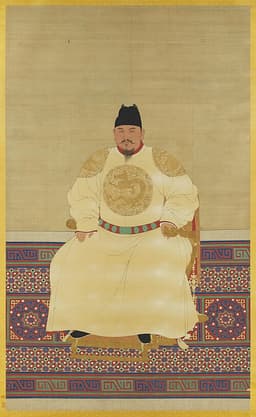
Hongwu Emperor
Emperor · Medieval
72.0Total
Basic Information
Born
1347
1328
Died
1358
1398
Era
Medieval
Medieval
Nationality
India
China
Occupation
Emperor
Emperor
Civilization
Indian
Eastern
Score Comparison
Military (10%)
72.5
85.0
Political (20%)
68.0
78.0
Influence (20%)
57.2
68.0
Legacy (20%)
50.0
65.0
Leadership (15%)
74.0
78.0
Strategy (15%)
55.0
68.0
TOTAL
60.9
72.0
Ala-ud-din Bahman Shah — Complete Timeline
1347 AD
Revolt against the Delhi SultanatePolitical Action
Ala-ud-din Bahman Shah led a rebellion of Deccani nobles against the Tughlaq dynasty, establishing the independent Bahmani Sultanate. This marked the beginning of a new political entity in the Deccan region.
FoundingRebellionDeccan
Impact: regionalconstructive
Coronation as first Bahmani SultanPolitical Action◆ Major
Ala-ud-din Bahman Shah was crowned as the first sultan of the Bahmani Sultanate at Gulbarga. He established the capital at Gulbarga and began consolidating control over the Deccan plateau.
CoronationFounding
Impact: regionalconstructive
1350 AD
Campaign against the Vijayanagara EmpireWar◆ Major
Ala-ud-din Bahman Shah launched military campaigns against the Vijayanagara Empire, capturing territories in the Raichur Doab. These conflicts established the Bahmani Sultanate as a major power in southern India.
WarVijayanagaraTerritorial Expansion
Impact: regional
1355 AD
Consolidation of Bahmani territoryPolitical Action
Ala-ud-din Bahman Shah suppressed rebellions by local Hindu chiefs and rival Muslim factions, securing the borders of the Bahmani Sultanate. He established a stable administrative framework for the new state.
ConsolidationAdministration
Impact: regionalconstructive
Hongwu Emperor — Complete Timeline
1368 AD
Capture of Dadu (Beijing)War◆ Major
Ming forces under Xu Da captured the Yuan capital of Dadu (modern Beijing). The last Yuan emperor fled to the steppes. This conquest ended Mongol rule in China proper and solidified Ming control over the northern heartland.
Yuan Dynasty FallBeijingMilitary Campaign
Impact: national
Agrarian Reforms and Land RedistributionReform◆ Major
Hongwu implemented land surveys and redistributed land from large estates to peasant farmers. He reduced taxes, promoted irrigation projects, and encouraged cultivation of wasteland. These policies revived agriculture after decades of war and famine.
Land ReformAgriculturePeasant Welfare
Impact: nationalprogressive
Founding of the Ming DynastyPolitical Action
Zhu Yuanzhang proclaimed himself the Hongwu Emperor in Nanjing, founding the Ming dynasty. He led rebel forces to expel the Mongol Yuan dynasty from China, restoring Han Chinese rule after nearly a century of foreign domination.
Dynasty FoundingHan RestorationMing Dynasty
Impact: globalconstructive
1380 AD
Execution of Hu Weiyong and Purge of OfficialsPolitical Action◆ Major
Hongwu accused Chancellor Hu Weiyong of treason and had him executed. This triggered a massive purge that killed tens of thousands of officials and their families. The emperor then abolished the position of chancellor, centralizing all power in his own hands.
PurgeCentralizationPolitical Violence
Impact: nationaldestructive
1382 AD
Establishment of the Jinyiwei (Imperial Guard)Political Action◆ Major
Hongwu created the Jinyiwei, a secret police force under his direct control. They spied on officials, investigated corruption, and suppressed dissent. This institution became a tool of political repression, executing thousands during purges.
Secret PoliceRepressionPolitical Control
Impact: nationaldestructive
Expert Analysis
Origins
Ala-ud-din Bahman Shah, originally named Zafar Khan, was born around 1290 in the Deccan region of India. He served as a noble under the Delhi Sultanate, specifically under Muhammad bin Tughlaq. His early life is obscure, but he emerged as a military commander in the Deccan, a region of cultural and religious diversity. His background as a Deccani Muslim noble shaped his ambition to break away from the Tughlaq dynasty, which he saw as oppressive to the Deccan's nobility.
In contrast, the Hongwu Emperor, born Zhu Yuanzhang in 1328 in Haozhou (modern Fengyang, Anhui, China), came from a destitute peasant family. A severe famine in 1344 killed most of his family, forcing him into a Buddhist monastery as a mendicant. Later, he joined a rebel group, the Red Turbans, who opposed the Mongol Yuan dynasty. His rise from extreme poverty to emperor is a remarkable social mobility story.
Rise to Power
Ala-ud-din Bahman Shah's rise began with his revolt against the Delhi Sultanate in 1347. He led a coalition of Deccani nobles who were disaffected by Muhammad bin Tughlaq's policies, including the failed transfer of the capital and heavy taxation. After defeating a Tughlaq army, he declared independence and was crowned as the first Bahmani Sultan in Gulbarga. His turning point was the Battle of Delhi? Actually, his rebellion succeeded without a single decisive battle; rather, it was a political and military consolidation against the weakened Tughlaq state.
Hongwu Emperor's rise was more dramatic. He joined the Red Turbans in 1352 and quickly rose through the ranks due to his military acumen. He married the daughter of a rebel leader, Guo Zixing, and after Guo's death, took control of his forces. By 1356, he captured Nanjing, which became his base. He eliminated rival rebel leaders, including Chen Youliang and Zhang Shicheng, through a series of campaigns. In 1368, he proclaimed the Ming dynasty and captured the Yuan capital Dadu (Beijing), ending Mongol rule over China. His political scores reflect his superior strategy: Hongwu scored 78.0 in politics while Bahman Shah scored 68.0.
Leadership & Governance
Bahman Shah's governance focused on consolidating his new sultanate. He established a centralized administration in Gulbarga, appointed loyal nobles to key posts, and patronized Islamic culture. He faced constant rebellions from local Hindu chiefs and rival Muslim factions. His leadership score of 74.0 indicates effective but limited control, as he failed to create lasting institutions. His military score of 72.5 reflects his success in defending the sultanate but not expanding it significantly.
Hongwu Emperor's governance was transformative. He implemented sweeping agrarian reforms, including land redistribution from large estates to peasants, reducing taxes, and promoting irrigation. He also established the Jinyiwei, a secret police force, to monitor officials and suppress dissent. His leadership score of 78.0 and political score of 78.0 reflect his ability to create a stable, centralized state. However, his purges were brutal: after the Hu Weiyong affair, tens of thousands were executed. His governance style was autocratic but effective in restoring Chinese rule.
Triumph & Tragedy
Bahman Shah's greatest triumph was founding the Bahmani Sultanate, which lasted until 1527 and became a major Deccan power. He successfully defended it against the Vijayanagara Empire and internal revolts. His tragedy was the inability to expand significantly; his campaigns against Vijayanagara yielded limited gains. His influence score of 57.2 and legacy of 50.0 reflect a more regional impact.
Hongwu Emperor's greatest triumph was reunifying China under native rule after nearly a century of Mongol domination. He restored the civil service exam, promoted Confucian education, and revitalized the economy. His tragedy was his paranoia and brutal purges, which killed many capable officials and created a climate of fear. His influence score of 68.0 and legacy of 65.0 indicate a lasting impact on Chinese history.
Character & Destiny
Bahman Shah was pragmatic and adaptable, able to unite diverse Deccani nobles. However, his reliance on personal loyalty rather than institutions meant the sultanate remained fragile. His character shaped his destiny as a founder but not a unifier of a lasting empire.
Hongwu Emperor was ruthless, suspicious, and driven by his peasant background. His distrust of the elite led to extreme measures, but his determination and strategic brilliance allowed him to overcome immense odds. His character created a powerful but oppressive state.
Legacy
Bahman Shah's legacy is the Bahmani Sultanate, which later fragmented into five Deccan sultanates. His dynasty promoted Indo-Islamic culture and architecture in the Deccan, but his direct impact waned after his death. His total score of 60.9 reflects a moderate historical footprint.
Hongwu Emperor's legacy is immense: the Ming dynasty ruled for 276 years, restored Chinese cultural pride, and established patterns of governance that influenced subsequent dynasties. His total score of 72.0 underscores his greater impact.
Conclusion
While both were founders of important states, the Hongwu Emperor had a far greater impact due to the scale of his achievements: reunifying China, creating a long-lasting dynasty, and implementing reforms that shaped Chinese society for centuries. Ala-ud-din Bahman Shah's Bahmani Sultanate was significant regionally but less transformative. The score gap of 11.1 points reflects this disparity. Hongwu Emperor is clearly the more consequential figure.
Rankings
🥇
Hongwu EmperorLeader
Mil: 85.0Pol: 78.0Inf: 68.0
72.0
🥈
Ala-ud-din Bahman Shah
Mil: 72.5Pol: 68.0Inf: 57.2
60.9
+11.1 behind
How This Comparison Works
Algorithm
Each figure is scored on 6 dimensions (0—100 scale) based on structured historical data: Military (10%), Political (20%), Influence (20%), Legacy (20%), Leadership (15%), Strategy (15%). The weighted total produces the final ranking.
Data Sources
Scores are computed from structured sub-indicators in the database. Scale factors adjust for era (Ancient ×0.85, Modern ×1.0) and civilization size (Eastern ×1.05, Other ×0.80) to account for differences in population and military scale.
Maximum 3 Figures
Comparisons are limited to 2—3 figures to ensure readability and statistical meaningfulness.
Error Margins
±5 points per dimension — Sub-scores are derived from historical records with inherent uncertainty. Two figures within 5 points on a dimension should be considered roughly equivalent in that area.
Total Score Accuracy
±3 points overall — The weighted combination of 6 dimensions produces a total score with approximately ±3 points of uncertainty. Differences of less than 3 points are not statistically significant— the figures are effectively tied.
Known Limitations
- Historical records are incomplete and uneven across civilizations
- Figures from oral-tradition societies may be underrepresented
- Occupation labels can misclassify multi-role figures
- Scores measure capability and impact, not moral character
- Quantitative scoring is a comparison tool, not absolute truth
Capability Radar
Military (10%) — Battles & Warfare
Battles
55
85
Win Rate
60
90
Expansion
65
80
Political (20%) — Governance & Reform
Reform
55
90
Diplomacy
50
70
Economy
50
85
Influence (20%) — Cultural & Global Reach
Cultural
40
75
Global
35
70
Legacy (20%) — Historical Impact
Historical
55
85
Longevity
50
80
Leadership (15%) — Power & Stability
Tenure
60
85
Stability
45
80
Strategy (15%) — Tactics & Innovation
Strategy
55
85
Tactics
50
80
Reform
45
75
Similar Comparisons
Comments & Discussion
No comments yet. Be the first to share your thoughts!