Loading...
Feng Yuxiang vs Hau Pei-tsun
Feng Yuxiang leads by 3.7 pts · 2 figures compared
…
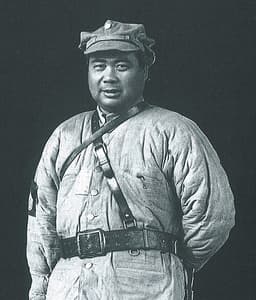
Feng Yuxiang
General · Modern
56.8Total

Hau Pei-tsun
General · Modern
53.1Total
Basic Information
Born
1882
1919
Died
1948
2020
Era
Modern
Modern
Nationality
China
China
Occupation
General
General
Civilization
Eastern
Eastern
Score Comparison
Military (10%)
50.0
47.5
Political (20%)
62.7
45.0
Influence (20%)
58.0
54.9
Legacy (20%)
50.0
48.3
Leadership (15%)
62.0
62.0
Strategy (15%)
60.7
65.4
TOTAL
56.8
53.1
Feng Yuxiang — Complete Timeline
1914 AD
Conversion to ChristianityCultural
Feng Yuxiang converted to Christianity, earning him the nickname 'The Christian General'. He required his soldiers to attend Christian services and promoted Christian ethics within his army. This conversion was unusual among Chinese warlords and influenced his governance style.
ReligionChristianityWarlord
Impact: regionalconstructive
1924 AD
Beijing Coup of 1924Political Action◆ Major
Feng Yuxiang staged the Beijing Coup, overthrowing the Zhili clique government and capturing Beijing. He invited Sun Yat-sen to discuss national unification. The coup led to the establishment of a provisional government under Duan Qirui and temporarily shifted the balance of power among warlords.
CoupWarlord EraBeijing
Impact: national
1927 AD
Defection to the Nationalist GovernmentPolitical Action◆ Major
Feng Yuxiang defected from the Fengtian clique and allied with the Nationalist government under Chiang Kai-shek. He participated in the Northern Expedition, helping to defeat other warlords. This alliance strengthened the Nationalist cause but also led to conflicts with other warlords.
AllianceNationalistNorthern Expedition
Impact: nationalconstructive
1930 AD
Defeat in the Central Plains WarWar◆ Major
Feng Yuxiang joined the anti-Chiang Kai-shek coalition in the Central Plains War. His forces were defeated by Chiang's National Revolutionary Army. The defeat ended Feng's military power and forced him into retirement. He later fled to the Soviet Union.
WarDefeatWarlord
Impact: nationaldestructive
Hau Pei-tsun — Complete Timeline
1990 AD
Appointed Premier of the Republic of ChinaPolitical Action◆ Major
Hau Pei-tsun was appointed Premier of the Republic of China (Taiwan) by President Lee Teng-hui. As a former general, he oversaw the government during a period of political liberalization and economic growth.
PremiershipGovernment Leadership
Impact: national
1993 AD
Resigned as PremierPolitical Action◆ Major
Hau Pei-tsun resigned as Premier after a power struggle with President Lee Teng-hui. His resignation marked the end of his tenure as head of government, and he was succeeded by Lien Chan.
ResignationPolitical Transition
Impact: national
Expert Analysis
Origins
Feng Yuxiang was born in 1882 in Baoding, Hebei, into a poor family. His father was a minor military officer, and Feng grew up in a military camp, learning martial values early. He received little formal education but joined the Qing New Army at age 15, where he was influenced by Christian missionaries, converting in 1914. His religious devotion earned him the nickname 'The Christian General.'
Hau Pei-tsun was born in 1919 in Jiangsu, China, to a scholarly family. He graduated from the Republic of China Military Academy (Whampoa) in 1938, later studying at the Army War College. His early career was shaped by the Second Sino-Japanese War and the Chinese Civil War, where he served as a staff officer and commander.
Rise to Power
Feng Yuxiang rose through the ranks of the Beiyang Army, commanding the 16th Mixed Brigade by 1914. His key turning point came in 1924 when he staged the Beijing Coup, overthrowing the Zhili clique government and capturing Beijing. This act made him a major warlord, and he invited Sun Yat-sen to discuss national unification. However, his power was short-lived as he faced opposition from other warlords.
Hau Pei-tsun rose to prominence during the Chinese Civil War, commanding Nationalist forces in key battles. After the Nationalist retreat to Taiwan, he held various military positions, eventually becoming Chief of the General Staff in 1981. His political ascent culminated in his appointment as Premier in 1990 by President Lee Teng-hui, making him the first military strongman to lead the ROC government in decades.
Leadership & Governance
Feng Yuxiang's leadership was characterized by his Christian faith and populist reforms. He required his soldiers to attend Christian services and promoted literacy and hygiene in his army. Politically, he oscillated between alliances: he defected from the Fengtian clique to join the Nationalist government in 1926, participating in the Northern Expedition. However, his governance was inconsistent; he lacked a stable base and often switched sides.
Hau Pei-tsun governed with a firm military style, emphasizing national security and anti-corruption. As Premier from 1990 to 1993, he focused on infrastructure and economic stability, but his authoritarian tendencies clashed with President Lee's democratization efforts. His leadership scored 62.0 in the comparison, equal to Feng's, but his political score (45.0) lagged behind Feng's (62.7) due to his inability to navigate democratic transitions.
Triumph & Tragedy
Feng Yuxiang's greatest triumph was the Beijing Coup, which temporarily unified northern China under his influence. He also successfully allied with the Nationalists in the Northern Expedition. However, his greatest failure was the Central Plains War (1930), where his coalition against Chiang Kai-shek was defeated, leading to the dissolution of his army. He later retired and died in 1948 under suspicious circumstances.
Hau Pei-tsun's triumph was his role in Taiwan's economic development and maintaining stability during the transition from martial law. He oversaw the completion of major infrastructure projects. His tragedy was his political downfall: a power struggle with President Lee forced his resignation in 1993, ending his influence. He scored 47.5 in military and 48.3 in legacy, reflecting his limited lasting impact.
Character & Destiny
Feng Yuxiang was known for his piety and unpredictability. His Christian faith made him unique among warlords, but his frequent betrayals—switching sides multiple times—undermined his credibility. Historians describe him as an opportunist whose character led to his eventual isolation.
Hau Pei-tsun was disciplined and rigid, a product of military training. His inability to adapt to democratic reforms cost him power. He is remembered as a competent administrator but a poor politician, unable to compromise.
Legacy
Feng Yuxiang's legacy is mixed. He is remembered as a warlord who briefly unified parts of China and promoted Christian values, but his military score (50.0) and influence (58.0) reflect a limited impact. His defection to the Nationalists helped the Northern Expedition, but his overall contribution to Chinese unification was minor.
Hau Pei-tsun's legacy is tied to Taiwan's modernization. He helped stabilize the economy and military, but his political legacy was overshadowed by democratic reforms. He scored 54.9 in influence, slightly lower than Feng's 58.0.
Conclusion
Feng Yuxiang had a greater overall impact, with a total score of 56.8 versus Hau Pei-tsun's 53.1. Feng's role in the Beijing Coup and the Northern Expedition directly shaped China's political landscape, whereas Hau's influence was confined to Taiwan during a transition period. While Hau was a competent administrator, Feng's actions had broader historical consequences. The 3.7-point gap reflects Feng's higher political and influence scores, cementing his position as the more significant figure.
Rankings
🥇
Feng YuxiangLeader
Mil: 50.0Pol: 62.7Inf: 58.0
56.8
🥈
Hau Pei-tsun
Mil: 47.5Pol: 45.0Inf: 54.9
53.1
+3.7 behind
How This Comparison Works
Algorithm
Each figure is scored on 6 dimensions (0—100 scale) based on structured historical data: Military (10%), Political (20%), Influence (20%), Legacy (20%), Leadership (15%), Strategy (15%). The weighted total produces the final ranking.
Data Sources
Scores are computed from structured sub-indicators in the database. Scale factors adjust for era (Ancient ×0.85, Modern ×1.0) and civilization size (Eastern ×1.05, Other ×0.80) to account for differences in population and military scale.
Maximum 3 Figures
Comparisons are limited to 2—3 figures to ensure readability and statistical meaningfulness.
Error Margins
±5 points per dimension — Sub-scores are derived from historical records with inherent uncertainty. Two figures within 5 points on a dimension should be considered roughly equivalent in that area.
Total Score Accuracy
±3 points overall — The weighted combination of 6 dimensions produces a total score with approximately ±3 points of uncertainty. Differences of less than 3 points are not statistically significant— the figures are effectively tied.
Known Limitations
- Historical records are incomplete and uneven across civilizations
- Figures from oral-tradition societies may be underrepresented
- Occupation labels can misclassify multi-role figures
- Scores measure capability and impact, not moral character
- Quantitative scoring is a comparison tool, not absolute truth
Capability Radar
Military (10%) — Battles & Warfare
Battles
55
55
Win Rate
50
60
Expansion
45
30
Political (20%) — Governance & Reform
Reform
60
60
Diplomacy
55
55
Economy
40
50
Influence (20%) — Cultural & Global Reach
Cultural
45
30
Global
35
30
Legacy (20%) — Historical Impact
Historical
50
45
Longevity
40
35
Leadership (15%) — Power & Stability
Tenure
50
65
Stability
35
60
Strategy (15%) — Tactics & Innovation
Strategy
55
70
Tactics
60
65
Reform
65
75
Similar Comparisons
Comments & Discussion
No comments yet. Be the first to share your thoughts!