Loading...
Alaric II vs Mithridates I of Parthia
Mithridates I of Parthia leads by 17.1 pts · 2 figures compared
…

Alaric II
Emperor · Ancient
47.1Total
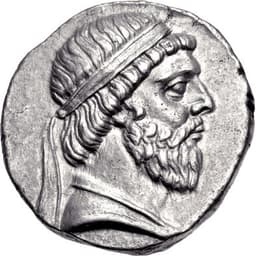
Mithridates I of Parthia
Emperor · Ancient
64.2Total
Basic Information
Born
458
-195
Died
507
-132
Era
Ancient
Ancient
Nationality
Visigothic Kingdom
Parthian Empire
Occupation
Emperor
Emperor
Civilization
Western
Middle Eastern
Score Comparison
Military (10%)
45.0
85.0
Political (20%)
46.6
55.0
Influence (20%)
50.2
60.0
Legacy (20%)
41.7
56.0
Leadership (15%)
55.3
78.0
Strategy (15%)
43.3
67.2
TOTAL
47.1
64.2
Alaric II — Complete Timeline
484 AD
Accession as Visigothic KingPolitical Action◆ Major
Alaric II succeeded his father Euric as king of the Visigoths. He inherited a large kingdom spanning Gaul and Hispania, but faced growing pressure from the Franks under Clovis I and internal religious tensions between Arian Visigoths and Catholic Romans.
Visigothic KingdomSuccessionInheritance
Impact: regional
506 AD
Issuance of the Breviary of AlaricReform
Alaric II promulgated the Breviary of Alaric, a compilation of Roman law for his Roman subjects. This code, based on the Theodosian Code, preserved Roman legal traditions and was widely used in Visigothic Gaul and Hispania, influencing later medieval law.
Visigothic KingdomLaw CodeRoman Law
Impact: regionalconstructive
507 AD
Battle of VouilléWar
Alaric II led the Visigothic army against the Franks under Clovis I at Vouill
Visigothic KingdomBattleFrankish Expansion
Impact: regionaltragic
Mithridates I of Parthia — Complete Timeline
141 BC
Conquest of Media and MesopotamiaWar
Mithridates I conquered Media and Mesopotamia from the Seleucid Empire, capturing the cities of Ecbatana and Seleucia-on-the-Tigris. These conquests transformed Parthia from a minor kingdom into a major imperial power controlling the Iranian plateau and the Tigris-Euphrates valley.
Parthian ExpansionSeleucid DeclineConquest
Impact: regionalconstructive
140 BC
Adoption of the Title 'King of Kings'Political Action◆ Major
Mithridates I adopted the Achaemenid title 'King of Kings' (Shahanshah) on his coinage and inscriptions. This act asserted Parthian legitimacy as the successor to the Persian Empire and established the ideological foundation for the Parthian Empire.
Royal TitulaturePropagandaAchaemenid Legacy
Impact: regionalconstructive
138 BC
Capture of Demetrius II NicatorWar◆ Major
Mithridates I defeated and captured the Seleucid king Demetrius II Nicator during a campaign to reclaim the eastern provinces. Demetrius was held captive in Parthia for ten years, during which Mithridates consolidated his conquests.
Seleucid-Parthian WarCaptivityPrisoner
Impact: regionalconstructive
Expert Analysis
Origins
Alaric II (c. 458–507 CE) was the son of Euric, king of the Visigoths, who expanded the kingdom to include much of Gaul and Hispania. Raised in a Germanic warrior culture, Alaric inherited a realm that blended Roman administrative structures with Gothic military traditions. He likely received a Roman-style education, as evidenced by his later legal reforms. In contrast, Mithridates I (c. 195–132 BCE) was a member of the Arsacid dynasty of Parthia, a nomadic Iranian people who had settled in the region of Khorasan. Little is known of his early life, but he was probably trained as a cavalry commander and exposed to Hellenistic culture through contact with the Seleucid Empire. His rise occurred during a period of Seleucid decline, which he exploited brilliantly.
Rise to Power
Alaric II became king of the Visigoths in 484 CE upon his father's death. He inherited a stable kingdom but faced pressure from the Franks under Clovis I, who sought to expand into Visigothic Gaul. Alaric attempted to maintain peace through diplomacy, including a meeting with Clovis on an island in the Loire (c. 496), but tensions escalated. In contrast, Mithridates I ascended the Parthian throne around 165 BCE, when Parthia was still a minor kingdom. He launched a series of campaigns against the weakening Seleucid Empire, first conquering Media in 148 BCE, then Mesopotamia in 141 BCE, capturing the cities of Ecbatana and Seleucia-on-the-Tigris. His victories were aided by Seleucid internal strife and the capture of the Seleucid king Demetrius II Nicator in 138 BCE. Mithridates I's rise transformed Parthia from a vassal state into a major imperial power.
Leadership & Governance
Alaric II is best known for issuing the Breviary of Alaric (506 CE), a legal code for his Roman subjects that condensed the Theodosian Code and other Roman laws. This act demonstrated his attempt to integrate Roman and Gothic populations under a unified legal system, scoring a political score of 46.6. Militarily, however, he scored only 45.0, reflecting his inability to counter Clovis's aggression. At the Battle of Vouillé (507 CE), Alaric led his army personally but was defeated and killed, partly due to poor strategic decisions. Mithridates I, in contrast, scored 85.0 in military and 67.2 in strategy. He adopted the Achaemenid title 'King of Kings' and minted coins with Hellenistic and Iranian motifs, blending cultures to legitimize his rule. He also established Parthian control over trade routes, but his governance relied heavily on local satraps, leading to later decentralization. His political score of 55.0 reflects moderate institutional innovation.
Triumph & Tragedy
Alaric II's greatest triumph was the Breviary of Alaric, which preserved Roman law in the Visigothic kingdom and influenced later medieval legal codes. His tragedy was his defeat and death at Vouillé, which cost the Visigoths their Gallic territories and nearly destroyed the kingdom. His son, Amalaric, was a child, leading to a regency that weakened Visigothic power. Mithridates I's triumphs included the conquest of Media and Mesopotamia, which gave Parthia control over the Silk Road and the wealthiest cities of the Near East. His capture of Demetrius II Nicator was a diplomatic coup, as he held the king captive for years while maintaining cordial relations. However, his tragedy was that his empire lacked strong administrative integration; after his death, Parthia faced rebellions and pressure from nomads on its eastern borders. His legacy score of 56.0 reflects a solid but not enduring institutional foundation.
Character & Destiny
Alaric II was a lawgiver and diplomat, attempting to preserve Roman legal traditions in a Germanic kingdom. His leadership score of 55.3 indicates a competent but not exceptional ruler. His decision to meet Clovis on the island of the Loire showed a desire for peace, but his failure to prepare adequately for war proved fatal. Mithridates I, with a leadership score of 78.0, was a visionary conqueror who combined military prowess with strategic acumen. He understood the importance of legitimacy, adopting Persian royal titles while respecting Hellenistic culture. His character was marked by ambition and pragmatism, but his reliance on personal leadership rather than institutions meant his empire's stability depended on his successors' abilities.
Legacy
Alaric II's Breviary remained in use in Visigothic Spain until the 7th century and influenced later Frankish and Burgundian law codes. His defeat at Vouillé shifted the balance of power in Western Europe toward the Franks, marking a key step in the rise of Clovis's kingdom. Alaric II scores 41.7 in legacy, reflecting limited long-term impact. Mithridates I's legacy is more profound: he established Parthia as a major power that rivaled Rome for centuries. His conquests laid the foundation for the Parthian Empire, which lasted until 224 CE. The title 'King of Kings' became standard for Parthian rulers, and his policy of cultural synthesis influenced later Sasanian and Islamic empires. His legacy score of 56.0 reflects a durable transformation of the political landscape.
Conclusion
Mithridates I of Parthia had a greater historical impact than Alaric II. His military score of 85.0 and strategy score of 67.2 far exceed Alaric's 45.0 and 43.3, reflecting his successful expansion of Parthian power. While Alaric's legal code was notable, it did not fundamentally alter the course of history; the Visigothic kingdom survived only another two centuries before being conquered by the Umayyads. In contrast, Mithridates I's creation of a Parthian empire that challenged Rome for over 250 years reshaped the ancient world. The score gap of 17.1 points (47.1 vs 64.2) underscores Mithridates I's superiority in military, leadership, and strategy. Alaric II was a capable administrator, but Mithridates I was a transformative conqueror and state-builder.
Rankings
🥇
Mithridates I of ParthiaLeader
Mil: 85.0Pol: 55.0Inf: 60.0
64.2
🥈
Alaric II
Mil: 45.0Pol: 46.6Inf: 50.2
47.1
+17.1 behind
How This Comparison Works
Algorithm
Each figure is scored on 6 dimensions (0—100 scale) based on structured historical data: Military (10%), Political (20%), Influence (20%), Legacy (20%), Leadership (15%), Strategy (15%). The weighted total produces the final ranking.
Data Sources
Scores are computed from structured sub-indicators in the database. Scale factors adjust for era (Ancient ×0.85, Modern ×1.0) and civilization size (Eastern ×1.05, Other ×0.80) to account for differences in population and military scale.
Maximum 3 Figures
Comparisons are limited to 2—3 figures to ensure readability and statistical meaningfulness.
Error Margins
±5 points per dimension — Sub-scores are derived from historical records with inherent uncertainty. Two figures within 5 points on a dimension should be considered roughly equivalent in that area.
Total Score Accuracy
±3 points overall — The weighted combination of 6 dimensions produces a total score with approximately ±3 points of uncertainty. Differences of less than 3 points are not statistically significant— the figures are effectively tied.
Known Limitations
- Historical records are incomplete and uneven across civilizations
- Figures from oral-tradition societies may be underrepresented
- Occupation labels can misclassify multi-role figures
- Scores measure capability and impact, not moral character
- Quantitative scoring is a comparison tool, not absolute truth
Capability Radar
Military (10%) — Battles & Warfare
Battles
30
75
Win Rate
25
80
Expansion
20
90
Political (20%) — Governance & Reform
Reform
60
60
Diplomacy
40
75
Economy
30
65
Influence (20%) — Cultural & Global Reach
Cultural
40
55
Global
20
65
Legacy (20%) — Historical Impact
Historical
40
70
Longevity
30
60
Leadership (15%) — Power & Stability
Tenure
40
70
Stability
30
70
Strategy (15%) — Tactics & Innovation
Strategy
30
85
Tactics
30
70
Reform
20
65
Similar Comparisons
Comments & Discussion
No comments yet. Be the first to share your thoughts!