Loading...
Alassane Ouattara vs Jacobo Arbenz
Jacobo Arbenz leads by 2.3 pts · 2 figures compared
…
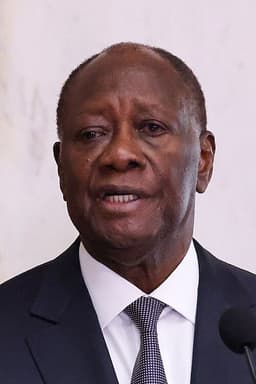
Alassane Ouattara
Politician · Modern
52.7Total
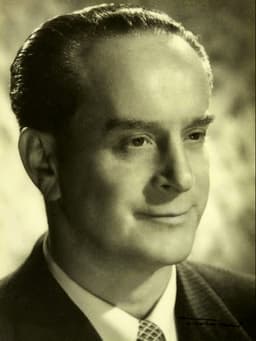
Jacobo Arbenz
Politician · Modern
55.0Total
Basic Information
Born
1942
1913
Died
—
1971
Era
Modern
Modern
Nationality
Ivory Coast
Guatemala
Occupation
Politician
Politician
Civilization
Other
Western
Score Comparison
Military (10%)
23.0
48.9
Political (20%)
65.7
68.0
Influence (20%)
55.7
55.7
Legacy (20%)
45.8
49.2
Leadership (15%)
72.0
62.2
Strategy (15%)
43.9
43.4
TOTAL
52.7
55.0
Alassane Ouattara — Complete Timeline
1990 AD
Appointed Prime Minister of Ivory CoastPolitical Action◆ Major
Ouattara was appointed Prime Minister by President F
Prime MinisterEconomic ReformIvory Coast
Impact: nationalconstructive
2000 AD
Excluded from Presidential ElectionsPolitical Action◆ Major
Ouattara was barred from running for president due to a nationality law requiring both parents to be Ivorian. His exclusion fueled political tensions and contributed to the country's instability and civil war.
ExclusionNationality LawIvory Coast
Impact: nationaldestructive
2010 AD
Elected President of Ivory CoastPolitical Action
Ouattara won the presidential election against incumbent Laurent Gbagbo, but Gbagbo refused to step down. The disputed result led to a five-month civil war, ending with Ouattara assuming office after Gbagbo's arrest.
ElectionCivil WarIvory Coast
Impact: regionalconstructive
2015 AD
Re-elected President of Ivory CoastPolitical Action◆ Major
Ouattara won a second term with 83.7% of the vote in an election deemed peaceful and credible by observers. His victory reflected support for his economic recovery policies and post-war reconciliation efforts.
ElectionIvory CoastRe-election
Impact: nationalconstructive
2020 AD
Controversial Third Term BidPolitical Action◆ Major
Ouattara announced he would run for a third term after the death of his chosen successor, sparking opposition protests and violence. The election was boycotted by the opposition, and Ouattara won with 94% of the vote.
Third TermElectionIvory Coast
Impact: nationaldestructive
Jacobo Arbenz — Complete Timeline
1952 AD
Decree 900: Agrarian Reform LawReform◆ Major
Arbenz enacted Decree 900, an agrarian reform law that redistributed uncultivated land from large estates to landless peasants. The law targeted the United Fruit Company's holdings, leading to conflict with U.S. corporate interests and the U.S. government.
Agrarian ReformLand RedistributionUnited Fruit Company
Impact: nationalconstructive
1953 AD
Nationalization of United Fruit Company landPolitical Action◆ Major
Arbenz's government expropriated over 400,000 acres of uncultivated land from the United Fruit Company, offering compensation based on the company's declared tax value. This action intensified U.S. opposition and was a key factor in the decision to overthrow him.
NationalizationUnited Fruit CompanyLand Reform
Impact: nationalconstructive
1954 AD
CIA-backed coup d'étatPolitical Action
The CIA orchestrated Operation PBSUCCESS, a covert operation that overthrew Arbenz. The coup involved propaganda, a small invasion force led by Carlos Castillo Armas, and psychological warfare. Arbenz resigned on June 27, 1954, and went into exile.
CIACoupCold WarExile
Impact: regionaldestructive
Expert Analysis
Origins
Alassane Ouattara was born on January 1, 1942, in Dimbokro, French Ivory Coast, into a family of Muslim traders. He earned a PhD in economics from the University of Pennsylvania and worked at the International Monetary Fund (IMF) from 1968 to 1988, rising to director of the African Department. His technocratic background shaped his economic focus. Jacobo Arbenz was born on September 14, 1913, in Quetzaltenango, Guatemala, to a middle-class family. After his father's suicide, he attended the Escuela Politécnica, Guatemala's military academy, graduating as an officer. His military training influenced his later reforms.
Rise to Power
Ouattara entered politics in 1990 when President Félix Houphouët-Boigny appointed him Prime Minister, a new position. He implemented structural adjustment programs that stabilized the economy but faced criticism for austerity. After Houphouët-Boigny's death in 1993, Ouattara was barred from the 1995 and 2000 presidential elections due to nationality laws requiring both parents to be Ivorian, fueling ethnic tensions. He finally won the presidency in 2010 against Laurent Gbagbo, but Gbagbo refused to cede power, sparking a five-month civil war that killed 3,000. Arbenz rose through the military, participating in the 1944 revolution that overthrew dictator Jorge Ubico. He served as Defense Minister under President Juan José Arévalo and was elected president in 1950 with 65% of the vote. His agrarian reform, Decree 900, redistributed uncultivated land, directly challenging the United Fruit Company (UFCo), a U.S. corporation with close ties to the Eisenhower administration.
Leadership & Governance
Ouattara, scoring 72.0 in leadership, governed as a pro-business technocrat. He privatized state enterprises, attracted foreign investment, and achieved annual GDP growth of 9% from 2012 to 2019. His administration invested in infrastructure, including a new bridge in Abidjan and a hydroelectric dam. However, his focus on economic growth did not reduce inequality, and his 2020 third-term bid sparked protests and violence, with 85 killed. Arbenz, with a leadership score of 62.2, governed as a reformist nationalist. His Decree 900 redistributed 1.7 million acres to 500,000 families, but its implementation was chaotic. He offered UFCo $1.2 million in compensation, based on the company's undervalued tax declaration, which the U.S. deemed inadequate. His policies alienated the elite and the military, leading to his isolation.
Triumph & Tragedy
Ouattara's triumph was ending the 2010-2011 political crisis and achieving economic recovery. He was re-elected in 2015 with 83.7% in a peaceful vote. His tragedy was the 2020 election violence and his decision to run for a third term, undermining democratic institutions. Arbenz's triumph was Decree 900, which modernized land ownership and benefited many peasants. His tragedy was the CIA-sponsored coup in 1954, Operation PBSUCCESS, which overthrew him. He resigned on June 27, 1954, and went into exile, dying in 1971 under suspicious circumstances. The coup reversed his reforms and plunged Guatemala into decades of civil war.
Character & Destiny
Ouattara, with a strategy score of 43.9, is a cautious, detail-oriented economist who prioritizes stability. His technocratic approach succeeded in economic management but failed to build inclusive political institutions. His decision to seek a third term was driven by a desire to complete his agenda but alienated many. Arbenz, with a strategy score of 43.4, was idealistic and determined but politically naive. He underestimated U.S. opposition and failed to secure military loyalty. His character—principled but inflexible—led to his downfall.
Legacy
Ouattara's legacy is mixed: he transformed Ivory Coast into a middle-income economy but left a polarized society. His infrastructure projects endure, but his third-term controversy tarnished his democratic credentials. Arbenz's legacy is that of a martyr for land reform and anti-imperialism. His overthrow is a symbol of U.S. intervention in Latin America. The Guatemalan Civil War (1960-1996) that followed cost 200,000 lives, partly due to the rollback of his reforms. In terms of total scores, Arbenz leads 55.0 to 52.7, but the gap is narrow.
Conclusion
While Arbenz's total score is higher, Ouattara had greater practical impact. Arbenz's reforms were reversed within months, and his legacy is more symbolic than substantive. Ouattara, despite his flaws, fundamentally reshaped Ivory Coast's economy and infrastructure, affecting millions. His actions led to a civil war but also to sustained growth. Arbenz's failure was catastrophic, but his reforms were too brief to create lasting change. Therefore, Ouattara's influence on his country's trajectory was more significant, even if his scores are slightly lower.
Rankings
🥇
Jacobo ArbenzLeader
Mil: 48.9Pol: 68.0Inf: 55.7
55.0
🥈
Alassane Ouattara
Mil: 23.0Pol: 65.7Inf: 55.7
52.7
+2.3 behind
How This Comparison Works
Algorithm
Each figure is scored on 6 dimensions (0—100 scale) based on structured historical data: Military (10%), Political (20%), Influence (20%), Legacy (20%), Leadership (15%), Strategy (15%). The weighted total produces the final ranking.
Data Sources
Scores are computed from structured sub-indicators in the database. Scale factors adjust for era (Ancient ×0.85, Modern ×1.0) and civilization size (Eastern ×1.05, Other ×0.80) to account for differences in population and military scale.
Maximum 3 Figures
Comparisons are limited to 2—3 figures to ensure readability and statistical meaningfulness.
Error Margins
±5 points per dimension — Sub-scores are derived from historical records with inherent uncertainty. Two figures within 5 points on a dimension should be considered roughly equivalent in that area.
Total Score Accuracy
±3 points overall — The weighted combination of 6 dimensions produces a total score with approximately ±3 points of uncertainty. Differences of less than 3 points are not statistically significant— the figures are effectively tied.
Known Limitations
- Historical records are incomplete and uneven across civilizations
- Figures from oral-tradition societies may be underrepresented
- Occupation labels can misclassify multi-role figures
- Scores measure capability and impact, not moral character
- Quantitative scoring is a comparison tool, not absolute truth
Capability Radar
Military (10%) — Battles & Warfare
Battles
20
27
Win Rate
23
33
Expansion
27
37
Political (20%) — Governance & Reform
Reform
70
65
Diplomacy
68
30
Economy
75
55
Influence (20%) — Cultural & Global Reach
Cultural
30
30
Global
45
45
Legacy (20%) — Historical Impact
Historical
40
55
Longevity
35
40
Leadership (15%) — Power & Stability
Tenure
65
40
Stability
55
20
Strategy (15%) — Tactics & Innovation
Strategy
30
41
Tactics
32
39
Reform
38
46
Similar Comparisons
Comments & Discussion
No comments yet. Be the first to share your thoughts!