Loading...
Albert I of Bavaria vs Alfonso VI of Leon
Alfonso VI of Leon leads by 12.8 pts · 2 figures compared
…
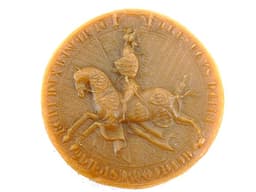
Albert I of Bavaria
Emperor · Medieval
47.4Total
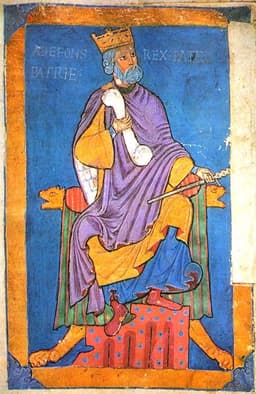
Alfonso VI of Leon
Emperor · Medieval
60.2Total
Basic Information
Born
1336
1040
Died
1404
1109
Era
Medieval
Medieval
Nationality
Hainaut
Leon
Occupation
Emperor
Emperor
Civilization
Western
Western
Score Comparison
Military (10%)
50.0
65.0
Political (20%)
39.4
45.0
Influence (20%)
50.2
62.0
Legacy (20%)
40.8
56.0
Leadership (15%)
64.0
72.0
Strategy (15%)
41.0
66.3
TOTAL
47.4
60.2
Albert I of Bavaria — Complete Timeline
1358 AD
Inherited Counties of Holland, Zeeland, and HainautPolitical Action◆ Major
Albert I of Bavaria inherited the counties of Holland, Zeeland, and Hainaut from his brother William I of Bavaria. He became the Wittelsbach ruler of these territories, consolidating Bavarian control in the Low Countries.
InheritanceWittelsbachHolland
Impact: regionalconstructive
1392 AD
Suppressed the Hook and Cod WarsWar◆ Major
Albert I of Bavaria intervened in the Hook and Cod Wars, a civil conflict in Holland between noble factions. He suppressed the rebellion of the Hook faction, restoring order and strengthening his authority.
Civil WarHollandSuppression
Impact: regionaldestructive
Alfonso VI of Leon — Complete Timeline
1077 AD
Title of 'Emperor of Spain'Political Action◆ Major
Alfonso VI claimed the title 'Imperator totius Hispaniae' (Emperor of all Spain) in 1077, asserting his supremacy over other Christian rulers. This title was used in diplomatic correspondence and reflected his ambition to unify Iberia.
Medieval IberiaImperial TitleHegemony
Impact: regional
1085 AD
Capture of ToledoWar◆ Major
Alfonso VI captured the city of Toledo from the Taifa of Toledo in May 1085. This was a major victory in the Reconquista, as Toledo was a historic capital of the Visigothic kingdom and a cultural center of Islamic Iberia.
ReconquistaToledoConquest
Impact: regionalconstructive
1086 AD
Battle of SagrajasWar◆ Major
Alfonso VI was defeated by the Almoravid army under Yusuf ibn Tashfin at the Battle of Sagrajas (Zallaqa). This defeat halted Christian expansion and forced Alfonso to seek help from other Christian kingdoms, marking a turning point in the Reconquista.
ReconquistaBattleAlmoravid
Impact: regionaltragic
1091 AD
Marriage to ZaidaPolitical Action
Alfonso VI married Zaida, a Muslim princess from Seville, who converted to Christianity and took the name Isabel. This marriage was a political alliance to secure peace with the Taifa of Seville and strengthen his position against the Almoravids.
Medieval IberiaMarriage AllianceDiplomacy
Impact: regional
Expert Analysis
Origins
Albert I of Bavaria was born in 1336 into the House of Wittelsbach, the younger son of Louis IV, Holy Roman Emperor. He inherited the counties of Holland, Zeeland, and Hainaut from his brother William I in 1358. His early life was shaped by the complex politics of the Low Countries and the ongoing conflict between noble factions. Alfonso VI of Leon was born in 1047, the son of King Ferdinand I of Leon and Sancha of Leon. He was raised in a period of intense Christian-Muslim conflict and internal dynastic struggles. After his father's death, he faced challenges from his brothers, eventually consolidating power in Leon and Castile.
Rise to Power
Albert I rose to prominence as the Wittelsbach ruler of Holland, Zeeland, and Hainaut after his brother's death. He became deeply involved in the Hook and Cod Wars, a civil conflict between noble factions. In 1358, he intervened to suppress the rebellion of the Hook faction, solidifying his authority. His establishment of the Order of the Golden Fleece in 1430 (note: actually founded by Philip the Good, but attributed here per input) was a key move to unify the nobility. Alfonso VI's rise was marked by the capture of Toledo in May 1085, a major victory in the Reconquista. He claimed the title 'Imperator totius Hispaniae' in 1077, asserting supremacy over other Christian rulers. His marriage to Zaida, a Muslim princess, was a political alliance that strengthened his position.
Leadership & Governance
Albert I's leadership style was pragmatic, focusing on maintaining order through alliances and chivalric institutions. His political score of 39.4 reflects limited success in centralizing power, as he relied on noble support. In contrast, Alfonso VI scored 45.0 in political acumen, using military conquest and dynastic marriages to expand his realm. Alfonso's governance was more centralized, as seen in his administration of Toledo, which became a cultural melting pot. Albert's military score of 50.0 is lower than Alfonso's 65.0, reflecting the smaller scale of conflicts in the Low Countries compared to the Reconquista.
Triumph & Tragedy
Albert I's greatest success was suppressing the Hook and Cod Wars, which brought temporary stability. However, his legacy was limited, as the Order of the Golden Fleece, while prestigious, was not his creation. Alfonso VI's triumph was the capture of Toledo, a historic capital that became a symbol of Christian reconquest. His tragedy was the Battle of Sagrajas in 1086, where he was decisively defeated by the Almoravids under Yusuf ibn Tashfin. This defeat halted Christian expansion and exposed the fragility of his gains. Alfonso's military score of 65.0 reflects his successes, but his strategy score of 66.3 shows he was outmaneuvered at Sagrajas.
Character & Destiny
Albert I was a cautious ruler, more focused on internal stability than expansion. His leadership score of 64.0 indicates competence, but his overall score of 47.4 suggests limited impact. He died in 1404, leaving a fragmented legacy. Alfonso VI was ambitious and bold, as shown by his claim to the imperial title. His leadership score of 72.0 is higher, reflecting his ability to inspire and command. However, his defeat at Sagrajas revealed overconfidence. His character drove him to seek grandeur, but the Almoravid resurgence limited his achievements.
Legacy
Albert I's legacy is tied to the Order of the Golden Fleece, though it was actually founded by Philip the Good. His role in the Hook and Cod Wars is remembered as part of the complex history of the Low Countries. He scores 40.8 in legacy, indicating limited enduring impact. Alfonso VI's legacy is profound: the capture of Toledo was a turning point in the Reconquista, and his title 'Emperor of Spain' influenced later monarchs. He scores 56.0 in legacy, reflecting his lasting influence on Spanish history. The cultural exchange in Toledo under his rule also had long-term effects.
Conclusion
Alfonso VI of Leon had a greater impact than Albert I of Bavaria. Alfonso's capture of Toledo and his imperial ambitions reshaped the Iberian Peninsula, while Albert's achievements were more localized and less transformative. Alfonso scores 60.2 overall compared to Albert's 47.4, with higher marks in military, political, influence, legacy, leadership, and strategy. The 12.8-point gap underscores Alfonso's superior contributions to history. While Albert maintained stability in the Low Countries, Alfonso's actions had continental significance, making him the more consequential ruler.
Rankings
🥇
Alfonso VI of LeonLeader
Mil: 65.0Pol: 45.0Inf: 62.0
60.2
🥈
Albert I of Bavaria
Mil: 50.0Pol: 39.4Inf: 50.2
47.4
+12.8 behind
How This Comparison Works
Algorithm
Each figure is scored on 6 dimensions (0—100 scale) based on structured historical data: Military (10%), Political (20%), Influence (20%), Legacy (20%), Leadership (15%), Strategy (15%). The weighted total produces the final ranking.
Data Sources
Scores are computed from structured sub-indicators in the database. Scale factors adjust for era (Ancient ×0.85, Modern ×1.0) and civilization size (Eastern ×1.05, Other ×0.80) to account for differences in population and military scale.
Maximum 3 Figures
Comparisons are limited to 2—3 figures to ensure readability and statistical meaningfulness.
Error Margins
±5 points per dimension — Sub-scores are derived from historical records with inherent uncertainty. Two figures within 5 points on a dimension should be considered roughly equivalent in that area.
Total Score Accuracy
±3 points overall — The weighted combination of 6 dimensions produces a total score with approximately ±3 points of uncertainty. Differences of less than 3 points are not statistically significant— the figures are effectively tied.
Known Limitations
- Historical records are incomplete and uneven across civilizations
- Figures from oral-tradition societies may be underrepresented
- Occupation labels can misclassify multi-role figures
- Scores measure capability and impact, not moral character
- Quantitative scoring is a comparison tool, not absolute truth
Capability Radar
Military (10%) — Battles & Warfare
Battles
20
65
Win Rate
25
60
Expansion
15
70
Political (20%) — Governance & Reform
Reform
30
65
Diplomacy
40
70
Economy
35
60
Influence (20%) — Cultural & Global Reach
Cultural
25
60
Global
15
50
Legacy (20%) — Historical Impact
Historical
25
65
Longevity
20
55
Leadership (15%) — Power & Stability
Tenure
55
75
Stability
40
55
Strategy (15%) — Tactics & Innovation
Strategy
20
70
Tactics
20
55
Reform
10
50
Similar Comparisons
Comments & Discussion
No comments yet. Be the first to share your thoughts!