Loading...
Albert I of Germany vs Napoleon Bonaparte
Napoleon Bonaparte leads by 24.8 pts · 2 figures compared
…
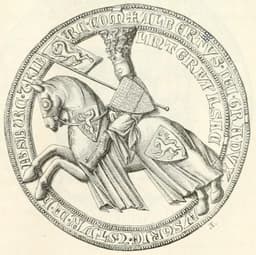
Albert I of Germany
Emperor · Medieval
46.1Total

Napoleon Bonaparte
General · Modern
70.9Total
Basic Information
Born
1255
1769
Died
1308
1821
Era
Medieval
Modern
Nationality
Holy Roman Empire
France
Occupation
Emperor
General
Civilization
Western
Western
Score Comparison
Military (10%)
55.0
94.0
Political (20%)
37.9
72.0
Influence (20%)
50.2
40.0
Legacy (20%)
41.7
80.0
Leadership (15%)
51.9
78.0
Strategy (15%)
41.7
90.0
TOTAL
46.1
70.9
Albert I of Germany — Complete Timeline
1298 AD
Election as King of GermanyPolitical Action◆ Major
Following the death of Adolf of Nassau at the Battle of G
ElectionHabsburg Restoration
Impact: national
1301 AD
Conflict with the Rhineland ElectorsWar◆ Major
Albert I waged war against the archbishops of Mainz, Cologne, and Trier, who formed a coalition against him. He defeated them, asserting royal authority over the ecclesiastical princes.
WarEcclesiastical Princes
Impact: regional
1308 AD
Assassination by John ParricidaPolitical Action
Albert I was murdered by his nephew John Parricida, whom he had deprived of his inheritance. The assassination occurred near Windisch, Switzerland, and led to a period of instability.
AssassinationDynastic Feud
Impact: nationaltragic
Napoleon Bonaparte — Complete Timeline
1799 AD
Coup of 18 BrumaireOther◆ Major
Napoleon Bonaparte, with support from his brother Lucien and key political figures, overthrew the Directory in a bloodless coup. He established the Consulate with himself as First Consul, effectively becoming the ruler of France. This event ended the French Revolution's most unstable period.
French RevolutionCoupRise to Power
Impact: regional
1804 AD
Promulgation of the Napoleonic CodeOther◆ Major
Napoleon enacted the Civil Code of the French, known as the Napoleonic Code, a comprehensive set of laws that replaced the fragmented feudal legal systems. The code established legal equality, protected property rights, and secularized law. It became the basis for legal systems in many European and world countries.
Legal ReformNapoleonic CodeCivil Law
Impact: globalconstructive
1805 AD
Battle of AusterlitzWar◆ Major
Napoleon's Grande Arm
Napoleonic WarsBattleDecisive Victory
Impact: global
1812 AD
Invasion of RussiaWar◆ Major
Napoleon led the Grande Arm
Napoleonic WarsInvasionDisaster
Impact: globaldestructive
1815 AD
Battle of WaterlooWar◆ Major
Napoleon's French army was defeated by the combined forces of the Duke of Wellington's Anglo-Allied army and Gebhard Leberecht von Bl
Napoleonic WarsBattleFinal Defeat
Impact: globaldestructive
Expert Analysis
albert-i-of-germany-vs-napoleon-bonaparte
# The Emperor and the King: Two Paths to Power, Two Destinies
On a June morning in 1815, Napoleon Bonaparte watched his dreams of empire dissolve in the mud of Waterloo, while nearly five centuries earlier, on a May afternoon in 1308, Albert I of Germany lay dying on a riverbank near Windisch, his nephew’s sword still wet with his blood. Both men reached for supreme power in Western Christendom. Both fell by violence. Yet one reshaped the world, while the other faded into a footnote of dynastic history. What separates a titan from a transitional figure? The answer lies not merely in talent, but in the currents of history that lift some men to glory and sweep others into oblivion.
Origins
Napoleon Bonaparte was born in 1769 on Corsica, an island that had passed from Genoese to French rule only months before his birth. His family belonged to the minor nobility, but in the turbulent decades before the French Revolution, a young Corsican could rise only through military education and sheer will. The revolution that erupted when he was twenty years old demolished the old aristocratic order and opened a path for talent—or for a man with talent and ambition enough to seize it.
Albert I of Germany came from sturdier stock. Born in 1255, he was the son of Rudolf I of Habsburg, the first Habsburg to become King of Germany. The Habsburgs were then a rising but not yet dominant dynasty, and Albert inherited not a throne but a claim—and the burden of proving his family’s worth. His world was one of feudal obligations, papal authority, and electors who chose kings. The medieval Holy Roman Empire was not a centralized state but a patchwork of princely territories, and its king was only as powerful as the nobles who elected him.
Rise to Power
Napoleon’s rise was meteoric. By 1796, at twenty-six, he commanded the French army in Italy, where his lightning campaigns humiliated the Austrians. In 1799, he overthrew the Directory in a coup d’état. By 1804, he crowned himself Emperor of the French—not through inheritance, but through military glory and political calculation. His path was unprecedented: a general who made himself a monarch.
Albert’s ascent was slower and more precarious. His father Rudolf had secured the German throne in 1273, but when Rudolf died in 1291, the electors bypassed Albert in favor of Adolf of Nassau. For seven years, Albert waited, plotting and building alliances. In 1298, his patience paid off: Adolf was defeated and killed at the Battle of Göllheim, and the electors, seeing no alternative, chose Albert as King of Germany. He was forty-three years old—a mature age by medieval standards, and a reminder that in the feudal world, power came through patience, not audacity.
Leadership & Governance
As emperor, Napoleon governed with terrifying energy. He reformed France’s legal system with the Napoleonic Code, centralized administration, and built a modern state that outlasted his empire. On the battlefield, he was a genius: his 94.0 military score and 93.0 strategy rating reflect campaigns that still studied in war academies today. He won at Austerlitz, Jena, and Wagram, but his ambition overreached. The invasion of Russia in 1812 destroyed his Grand Army, and the coalition that finally defeated him at Waterloo in 1815 was his own creation—a Europe united against him.
Albert’s governance was more modest. His 59.6 political score and 73.8 leadership rating suggest a competent but unexceptional ruler. He waged war against the archbishops of Mainz, Cologne, and Trier in 1301, defeating their coalition and asserting royal authority over the Rhineland. He sought to build a Habsburg power base, but the medieval empire resisted centralization. Popes and princes limited his reach, and his achievements were incremental rather than transformative. Where Napoleon created a new order, Albert merely preserved an old one.
Triumph & Tragedy
Napoleon’s greatest moment was probably his coronation in 1804, when he took the crown from the pope’s hands and placed it on his own head—a gesture that declared his power came from himself, not from God or tradition. His greatest tragedy was the Russian campaign of 1812, where 600,000 men marched east and fewer than 100,000 returned. His final defeat at Waterloo, on June 18, 1815, ended an era and sent him to exile on Saint Helena, where he died in 1821.
Albert’s triumph was his election in 1298, which vindicated his long wait and his father’s legacy. His tragedy came a decade later, in 1308, when his nephew John Parricida—whom Albert had deprived of his inheritance—stabbed him to death on the banks of the Reuss River. The assassination shocked the empire, but it did not change history. Albert’s son never inherited the throne, and the Habsburgs would wait another century before reclaiming imperial power.
Character & Destiny
Napoleon was driven by an insatiable hunger for glory. “I live only for posterity,” he once said, and his actions bore out the claim. His 82.0 influence score reflects a man who reshaped laws, borders, and the very concept of modern warfare. But his ambition was also his flaw: he could not stop, could not consolidate, could not accept limits.
Albert was more cautious, more patient—a builder rather than a conqueror. His 66.7 influence score reflects a ruler who strengthened his dynasty but did not transform his world. He was murdered not by a foreign enemy but by a family member, a reminder that medieval politics were personal and blood-soaked. Where Napoleon’s enemies were armies, Albert’s were relatives.
Legacy
Napoleon’s legacy is immense. The Napoleonic Code influences legal systems across Europe and beyond. His military campaigns are still studied. His rise and fall shaped the modern state, nationalism, and the balance of power. His 78.0 legacy score understates his impact: he is one of the most recognizable figures in world history.
Albert’s legacy is narrower. He is remembered primarily as a Habsburg ancestor, a stepping-stone to the dynasty’s later greatness. His 55.0 legacy score reflects a king who mattered in his own time but left little that outlasted him. The Holy Roman Empire he ruled would survive for another five centuries, but his personal contributions to its history were modest.
Conclusion
Napoleon and Albert both reached for supreme power in the West. One changed the world; the other merely survived in it. The difference was not talent—both were capable men—but opportunity. Napoleon lived in an age of revolution, when the old order crumbled and a single man could remake it. Albert lived in an age of tradition, when power was inherited, negotiated, and constrained. The Corsican general who crowned himself emperor and the Habsburg king who died by his nephew’s hand are reminders that history favors not the ambitious alone, but the ambitious who arrive at the right moment. The rest, however capable, become footnotes.
Rankings
🥇
Napoleon BonaparteLeader
Mil: 94.0Pol: 72.0Inf: 40.0
70.9
🥈
Albert I of Germany
Mil: 55.0Pol: 37.9Inf: 50.2
46.1
+24.8 behind
How This Comparison Works
Algorithm
Each figure is scored on 6 dimensions (0—100 scale) based on structured historical data: Military (10%), Political (20%), Influence (20%), Legacy (20%), Leadership (15%), Strategy (15%). The weighted total produces the final ranking.
Data Sources
Scores are computed from structured sub-indicators in the database. Scale factors adjust for era (Ancient ×0.85, Modern ×1.0) and civilization size (Eastern ×1.05, Other ×0.80) to account for differences in population and military scale.
Maximum 3 Figures
Comparisons are limited to 2—3 figures to ensure readability and statistical meaningfulness.
Error Margins
±5 points per dimension — Sub-scores are derived from historical records with inherent uncertainty. Two figures within 5 points on a dimension should be considered roughly equivalent in that area.
Total Score Accuracy
±3 points overall — The weighted combination of 6 dimensions produces a total score with approximately ±3 points of uncertainty. Differences of less than 3 points are not statistically significant— the figures are effectively tied.
Known Limitations
- Historical records are incomplete and uneven across civilizations
- Figures from oral-tradition societies may be underrepresented
- Occupation labels can misclassify multi-role figures
- Scores measure capability and impact, not moral character
- Quantitative scoring is a comparison tool, not absolute truth
Capability Radar
Military (10%) — Battles & Warfare
Battles
30
95
Win Rate
35
90
Expansion
40
95
Political (20%) — Governance & Reform
Reform
30
95
Diplomacy
40
80
Economy
30
85
Influence (20%) — Cultural & Global Reach
Cultural
25
85
Global
15
90
Legacy (20%) — Historical Impact
Historical
30
95
Longevity
20
90
Leadership (15%) — Power & Stability
Tenure
45
85
Stability
20
70
Strategy (15%) — Tactics & Innovation
Strategy
25
95
Tactics
30
98
Reform
20
92
Similar Comparisons
Comments & Discussion
CorsicanThunder6/17/2026
Let’s be real: Albert I couldn’t carry Napoleon’s boots to Waterloo. Napoleonic France rewrote law codes, shattered feudalism across Europe, and birthed modern nationalism. Albert’s big achievement? Getting stabbed by his nephew on a riverbank. The Habsburgs became dominant later, sure, but that was through marriage, not military genius. Napoleon lost at Waterloo; Albert lost at basic survival. One inspired Clausewitz and Beethoven; the other inspires blank stares from German history undergrads.
哈布斯堡草鞋匠6/17/2026
哈布斯堡王朝的崛起靠的是“让别人打仗,自己联姻”,阿尔布雷希特一世就是个典型的工具人。拿破仑用二十年从炮兵少尉杀到皇帝,改了整个欧洲的地图;阿尔布雷希特一辈子忙着镇压瑞士农民起义,最后被亲侄子捅死在河边——这对比就像拿歼星舰对比独木舟。说句刻薄话:拿破仑的失败都有史诗感,阿尔布雷希特的死亡就是个家族琐事。历史记住的是改变规则的人,不是被规则碾死的人。
DataSkeptic426/17/2026
The comparison’s framing is emotionally charged but factually sloppy. Albert I was King of Germany, not an Emperor—Napoleon literally crowned himself Emperor of the French. Apples to oranges in constitutional terms. Also, “nearly five centuries” between 1308 and 1815 is closer to 507 years—basic arithmetic, folks. If we’re ranking by measurable impact: Napoleon’s Code still governs civil law across 70+ jurisdictions. Albert’s biggest legacy was getting the Swiss Confederacy to kick Habsburg ass
统计兵马里奥6/17/2026
讲真,把阿尔布雷希特和拿破仑放一起比较,就像拿算盘和计算机比计算速度。拿破仑时代全球人口约10亿,他直接影响的人数至少上千万;阿尔布雷希特统治的神圣罗马帝国人口才1400万左右,而且实权分散到上百个诸侯手里。更别说传播范围:拿破仑法典翻译成几十种语言,阿尔布雷希特的帝国法令连德语区都没完全覆盖。规模差了两个数量级,没法比。
RomaRevenant6/17/2026
You’re all missing the deeper layer: both men failed because they misunderstood their eras. Napoleon was a product of the Enlightenment who tried to impose a dynastic empire—contradiction from the start. Albert, meanwhile, was a feudal king trying to centralize power just as the Swiss communes and imperial cities were demanding autonomy. He bled out on the Reuss River because he couldn’t read the signs of decline. Napoleon bled out at St. Helena because he couldn’t stop surpassing himself. Diffe