Loading...
Albert of Brandenburg vs Emperor Go-Sanjo
Emperor Go-Sanjo leads by 0.5 pts · 2 figures compared
…

Albert of Brandenburg
Emperor · Medieval
44.0Total
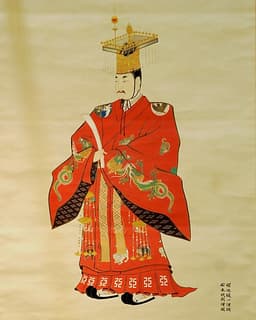
Emperor Go-Sanjo
Emperor · Medieval
44.5Total
Basic Information
Born
1490
1034
Died
1545
1073
Era
Medieval
Medieval
Nationality
Brandenburg
Japan
Occupation
Emperor
Emperor
Civilization
Western
Eastern
Score Comparison
Military (10%)
18.6
52.9
Political (20%)
39.4
35.1
Influence (20%)
52.5
47.9
Legacy (20%)
44.2
41.7
Leadership (15%)
58.8
31.2
Strategy (15%)
32.5
68.6
TOTAL
44.0
44.5
Albert of Brandenburg — Complete Timeline
1513 AD
Appointed Archbishop of MagdeburgPolitical Action◆ Major
Albert was appointed Archbishop of Magdeburg at age 23, a position that made him a prince-elector of the Holy Roman Empire. This appointment was part of a pluralism of benefices that concentrated significant ecclesiastical and political power in his hands.
ArchbishopEcclesiastical Power
Impact: regional
1514 AD
Became Archbishop-Elector of MainzPolitical Action◆ Major
Albert was appointed Archbishop-Elector of Mainz, the highest-ranking ecclesiastical prince in the Holy Roman Empire. This position gave him a vote in imperial elections and control over the largest archdiocese in Germany, making him a key figure in imperial politics.
Archbishop-ElectorMainz
Impact: regional
1517 AD
Authorized the Sale of IndulgencesPolitical Action◆ Major
Albert authorized the sale of indulgences in his territories to repay debts incurred from his appointments. This practice, promoted by Johann Tetzel, sparked Martin Luther's Ninety-five Theses and the beginning of the Protestant Reformation.
Indulgence TradeReformation
Impact: globaldestructive
1520 AD
Patronized the Arts and HumanismCultural
Albert was a patron of the arts and humanist scholarship, commissioning works from artists like Albrecht D
PatronageRenaissance
Impact: regionalconstructive
1521 AD
Opposed the ReformationPolitical Action◆ Major
Albert opposed the Protestant Reformation and remained a staunch Catholic. He supported the Edict of Worms, which banned Luther's teachings, and used his influence to suppress Protestantism in his territories, though with limited success.
Catholic OppositionReformation
Impact: regional
Emperor Go-Sanjo — Complete Timeline
1068 AD
Attempt to rule directly without Fujiwara regentsPolitical Action◆ Major
Upon ascending the throne, Go-Sanjo sought to govern without a Fujiwara regent, breaking the tradition of Fujiwara control over the imperial succession. He appointed non-Fujiwara officials and issued edicts directly, challenging the regency system.
Fujiwara RegencyImperial AuthorityHeian Period
Impact: nationalconstructive
1069 AD
Reform of land and tax policiesReform◆ Major
Go-Sanjo implemented policies to reclaim tax-exempt lands held by temples and aristocrats, aiming to strengthen imperial finances. These reforms reduced the economic power of the Fujiwara and other noble houses, though they faced resistance.
Land ReformTaxationEconomic Policy
Impact: nationalconstructive
1072 AD
Establishment of the Insei (cloistered government) precedentPolitical Action
Go-Sanjo abdicated in favor of his son Shirakawa but continued to exert influence from retirement, laying the groundwork for the cloistered government system. This allowed retired emperors to rule behind the scenes, bypassing Fujiwara regents.
Insei SystemImperial PoliticsHeian Period
Impact: nationalconstructive
Expert Analysis
Origins
Albert of Brandenburg was born in 1490 into the Hohenzollern dynasty, a powerful German princely family. As the second son, he was destined for the clergy. He studied at the University of Frankfurt (Oder) and quickly rose through ecclesiastical ranks due to family connections. By age 23, he became Archbishop of Magdeburg and administrator of Halberstadt, positions that made him a prince-elector in the Holy Roman Empire. His early life was marked by rapid advancement and financial ambition.
Emperor Go-Sanjo was born in 1034, the second son of Emperor Go-Suzaku. He belonged to the Japanese imperial family, which had been politically overshadowed by the Fujiwara clan for centuries. His mother was a Fujiwara, but he was raised outside the direct influence of the regent family. He ascended the throne in 1068 at age 34, already mature and determined to restore imperial authority. His early life was shaped by a desire to break free from Fujiwara control.
Rise to Power
Albert's rise was driven by family strategy and financial deals. In 1514, he became Archbishop of Magdeburg, but to also secure the Archbishopric of Mainz—the most prestigious ecclesiastical office in Germany—he needed papal approval. Pope Leo X agreed, but Albert had to pay a large fee. To raise funds, he borrowed from the Fugger banking family and received papal permission to sell indulgences in his territories. This arrangement, formalized in 1514, made him a central figure in the indulgence trade that provoked Martin Luther's 95 Theses in 1517. Albert's rise thus intertwined with the spark of the Reformation.
Go-Sanjo became emperor in 1068 after the death of his half-brother Emperor Go-Reizei. Unlike his predecessors, he was not a minor and had no Fujiwara regent appointed. He immediately asserted his independence by refusing to appoint a Fujiwara chancellor. He promoted non-Fujiwara courtiers and sought to govern directly. His key turning point came in 1072 when he abdicated in favor of his son Shirakawa, but continued to rule from retirement as a cloistered emperor (insei). This precedent gave him lasting influence without the constraints of the throne.
Leadership & Governance
Albert governed as a prince-bishop, wielding both spiritual and temporal authority. He focused on consolidating his territories, patronizing the arts, and suppressing Lutheran ideas. He supported the Edict of Worms (1521) and used censorship and force against reformers. His governance was typical of a Renaissance prince: building a humanist library, commissioning works from Albrecht Dürer, and maintaining a lavish court. However, his financial schemes—especially indulgences—undermined his moral authority and fueled opposition. His political score of 39.4 reflects his inability to stem the Reformation's tide.
Go-Sanjo's leadership aimed at restoring imperial power. He reformed land and tax policies, issuing decrees to reclaim tax-exempt lands (shōen) held by temples and aristocrats. This strengthened imperial finances but created enemies among the powerful. His strategy score of 68.6 is the highest among his attributes, showing his cunning in using abdication to bypass Fujiwara control. Unlike Albert, who relied on established institutions, Go-Sanjo innovated by creating the cloistered government system, which allowed retired emperors to wield power behind the scenes.
Triumph & Tragedy
Albert's greatest success was his patronage of the arts and humanism, building a cultural legacy in Mainz. He also managed to retain his positions despite the Reformation. His greatest failure was the indulgence controversy, which directly triggered Luther's protest and split the Church. He died in 1545, just as the Council of Trent began, having failed to stop Protestantism. His total score of 44.0 reflects this mixed legacy.
Go-Sanjo's triumph was establishing the insei system, which gave emperors real political power for over a century. His land reforms temporarily improved imperial finances. His tragedy was his short reign (1068-1072) and early death at age 39, which limited his direct impact. The cloistered system later led to conflicts between retired and reigning emperors. His total score of 44.5 edges out Albert's, but his influence was more structural than global.
Character & Destiny
Albert was ambitious, cultured, but financially reckless. His decision to sell indulgences was a pragmatic solution that backfired catastrophically. He remained loyal to the Catholic Church, but his actions helped destroy its unity. His character was that of a Renaissance prince more than a spiritual leader.
Go-Sanjo was determined, strategic, and patient. He waited for the right moment to assert imperial authority and used abdication as a tool. His character was shaped by resentment of Fujiwara dominance. His destiny was to lay the groundwork for later strong emperors like Shirakawa, but his early death prevented him from fully realizing his vision.
Legacy
Albert's legacy is deeply tied to the Reformation. The sale of indulgences he authorized became a symbol of Church corruption. His actions contributed to the rise of Protestantism, which reshaped Europe. He is remembered as a cardinal who prioritized politics over piety. His influence score of 52.5 reflects his unintended impact on world history.
Go-Sanjo's legacy is the insei system, which influenced Japanese politics until the 14th century. He is remembered as a reformer who challenged the Fujiwara. However, his direct achievements are less known than those of his son Shirakawa, who fully implemented cloistered rule. His legacy score of 41.7 is lower than Albert's, but his strategic innovation was significant.
Conclusion
While Emperor Go-Sanjo achieved a higher total score (44.5 vs 44.0), Albert of Brandenburg had a greater impact on world history. Albert's indulgence trade directly sparked the Reformation, a movement that transformed religious, political, and cultural life in Europe and beyond. Go-Sanjo's reforms were important for Japan but remained within the framework of imperial politics. Albert's actions had global consequences, making him the more influential figure despite his lower score. The gap is narrow, but Albert's role in one of history's pivotal events gives him the edge.
---
*Scores: Albert: Military 18.6, Political 39.4, Influence 52.5, Legacy 44.2, Leadership 58.8, Strategy 32.5, Total 44.0. Go-Sanjo: Military 52.9, Political 35.1, Influence 47.9, Legacy 41.7, Leadership 31.2, Strategy 68.6, Total 44.5.*
Rankings
🥇
Emperor Go-SanjoLeader
Mil: 52.9Pol: 35.1Inf: 47.9
44.5
🥈
Albert of Brandenburg
Mil: 18.6Pol: 39.4Inf: 52.5
44.0
+0.5 behind
How This Comparison Works
Algorithm
Each figure is scored on 6 dimensions (0—100 scale) based on structured historical data: Military (10%), Political (20%), Influence (20%), Legacy (20%), Leadership (15%), Strategy (15%). The weighted total produces the final ranking.
Data Sources
Scores are computed from structured sub-indicators in the database. Scale factors adjust for era (Ancient ×0.85, Modern ×1.0) and civilization size (Eastern ×1.05, Other ×0.80) to account for differences in population and military scale.
Maximum 3 Figures
Comparisons are limited to 2—3 figures to ensure readability and statistical meaningfulness.
Error Margins
±5 points per dimension — Sub-scores are derived from historical records with inherent uncertainty. Two figures within 5 points on a dimension should be considered roughly equivalent in that area.
Total Score Accuracy
±3 points overall — The weighted combination of 6 dimensions produces a total score with approximately ±3 points of uncertainty. Differences of less than 3 points are not statistically significant— the figures are effectively tied.
Known Limitations
- Historical records are incomplete and uneven across civilizations
- Figures from oral-tradition societies may be underrepresented
- Occupation labels can misclassify multi-role figures
- Scores measure capability and impact, not moral character
- Quantitative scoring is a comparison tool, not absolute truth
Capability Radar
Military (10%) — Battles & Warfare
Battles
7
45
Win Rate
7
47
Expansion
15
51
Political (20%) — Governance & Reform
Reform
20
40
Diplomacy
30
30
Economy
25
20
Influence (20%) — Cultural & Global Reach
Cultural
20
15
Global
35
10
Legacy (20%) — Historical Impact
Historical
45
30
Longevity
30
20
Leadership (15%) — Power & Stability
Tenure
40
15
Stability
15
20
Strategy (15%) — Tactics & Innovation
Strategy
13
52
Tactics
18
60
Reform
18
61
Similar Comparisons
Comments & Discussion
No comments yet. Be the first to share your thoughts!