Loading...
Albert of Brandenburg vs William the Conqueror
William the Conqueror leads by 24.8 pts · 2 figures compared
…

Albert of Brandenburg
Emperor · Medieval
44.0Total
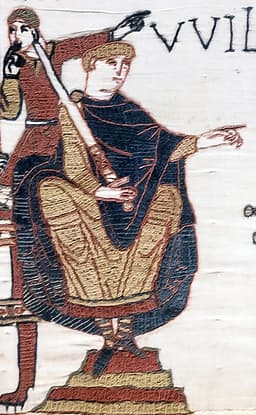
William the Conqueror
Emperor · Medieval
68.8Total
Basic Information
Born
1490
1028
Died
1545
1087
Era
Medieval
Medieval
Nationality
Brandenburg
England
Occupation
Emperor
Emperor
Civilization
Western
Western
Score Comparison
Military (10%)
18.6
82.0
Political (20%)
39.4
70.0
Influence (20%)
52.5
65.0
Legacy (20%)
44.2
65.0
Leadership (15%)
58.8
72.0
Strategy (15%)
32.5
68.0
TOTAL
44.0
68.8
Albert of Brandenburg — Complete Timeline
1513 AD
Appointed Archbishop of MagdeburgPolitical Action◆ Major
Albert was appointed Archbishop of Magdeburg at age 23, a position that made him a prince-elector of the Holy Roman Empire. This appointment was part of a pluralism of benefices that concentrated significant ecclesiastical and political power in his hands.
ArchbishopEcclesiastical Power
Impact: regional
1514 AD
Became Archbishop-Elector of MainzPolitical Action◆ Major
Albert was appointed Archbishop-Elector of Mainz, the highest-ranking ecclesiastical prince in the Holy Roman Empire. This position gave him a vote in imperial elections and control over the largest archdiocese in Germany, making him a key figure in imperial politics.
Archbishop-ElectorMainz
Impact: regional
1517 AD
Authorized the Sale of IndulgencesPolitical Action◆ Major
Albert authorized the sale of indulgences in his territories to repay debts incurred from his appointments. This practice, promoted by Johann Tetzel, sparked Martin Luther's Ninety-five Theses and the beginning of the Protestant Reformation.
Indulgence TradeReformation
Impact: globaldestructive
1520 AD
Patronized the Arts and HumanismCultural
Albert was a patron of the arts and humanist scholarship, commissioning works from artists like Albrecht D
PatronageRenaissance
Impact: regionalconstructive
1521 AD
Opposed the ReformationPolitical Action◆ Major
Albert opposed the Protestant Reformation and remained a staunch Catholic. He supported the Edict of Worms, which banned Luther's teachings, and used his influence to suppress Protestantism in his territories, though with limited success.
Catholic OppositionReformation
Impact: regional
William the Conqueror — Complete Timeline
1066 AD
Battle of HastingsWar
William, Duke of Normandy, defeated King Harold II of England at Hastings. Harold was killed in battle. William then marched to London and was crowned King of England on Christmas Day 1066, beginning Norman rule in England.
Norman ConquestBattleCrowning
Impact: national
1069 AD
Harrying of the NorthWar◆ Major
William led a brutal military campaign to suppress rebellions in northern England. His forces systematically destroyed crops, livestock, and settlements across Yorkshire and Northumbria. The devastation caused a famine that killed tens of thousands and depopulated large areas.
RepressionFamineRebellion
Impact: regionaldestructive
1080 AD
Council of LillebonnePolitical Action
William convened a council of Norman barons and bishops at Lillebonne to assert royal authority over the Church in Normandy. The council issued decrees regulating ecclesiastical jurisdiction and property, strengthening ducal control.
Church-State RelationsNormandy
Impact: regional
1086 AD
Domesday Book SurveyReform◆ Major
William ordered a comprehensive survey of landholdings and resources in England. The resulting Domesday Book recorded ownership, value, and population for tax assessment. It became the most detailed administrative record in medieval Europe.
AdministrationTaxationCensus
Impact: national
Expert Analysis
Origins
**Albert of Brandenburg** (1490–1545) was born into the Hohenzollern dynasty, a powerful German princely family. As the second son, he was destined for the clergy. He studied at the University of Frankfurt (Oder) and quickly rose through ecclesiastical ranks due to family influence. In 1513, at age 23, he became Archbishop of Magdeburg, and in 1514, he added the Archbishopric of Mainz, making him the highest-ranking church official in Germany. To secure these appointments, he borrowed heavily from the Fugger banking family, a debt that would shape his policies.
**William the Conqueror** (c. 1028–1087) was the illegitimate son of Robert I, Duke of Normandy, and Herleva. Despite his birth, he succeeded his father as Duke at age seven. His youth was marked by violence and attempts to usurp his duchy. He survived assassination attempts and rebellions, learning military and political skills early. In 1051, he visited England and allegedly received a promise of succession from his cousin, King Edward the Confessor, setting the stage for his claim.
Rise to Power
Albert’s rise was fueled by family connections and financial maneuvering. In 1514, he paid a substantial fee to Pope Leo X to become Archbishop of Mainz, a position that made him a prince-elector. To repay the debt, he received papal permission to sell indulgences—a practice where the faithful could reduce time in purgatory by donating money. This indulgence trade, preached by Johann Tetzel, angered Martin Luther and sparked the Protestant Reformation. Albert’s political power grew as he became a key ally of the Habsburgs, but his actions also made him a target of reformers.
William’s rise came through military conquest. As Duke of Normandy, he consolidated power by defeating rebellious nobles at the Battle of Val-ès-Dunes (1047). He then expanded his influence through marriage to Matilda of Flanders. In 1066, after the death of Edward the Confessor, William claimed the English throne, asserting that Harold Godwinson had sworn an oath to support him. Harold was crowned, prompting William to invade. At the Battle of Hastings (October 14, 1066), William’s disciplined Norman forces defeated Harold’s army. Harold was killed, and William was crowned King of England on Christmas Day 1066.
Leadership & Governance
Albert governed as an ecclesiastical prince, focusing on maintaining Catholic orthodoxy and his own wealth. He opposed the Reformation, enforcing the Edict of Worms (1521) that banned Luther’s teachings. He used his authority to suppress Protestantism in his territories, but his indulgence sales had already fueled the movement. Albert also patronized the arts, commissioning works from Albrecht Dürer and Lucas Cranach the Elder, and built a Renaissance palace in Halle. His governance was marked by financial strain; he continued to sell indulgences even after the Reformation began.
William centralized royal power in England. He introduced Norman feudalism, granting land to his followers in exchange for military service. He ordered the Domesday Book (1086), a comprehensive survey of land and resources, which enabled efficient taxation. William also asserted control over the Church, replacing English bishops with Normans and forbidding papal interference without royal consent. His Harrying of the North (1069–1070) was a brutal campaign to crush rebellion, destroying crops and livestock, causing a famine that killed thousands. This harshness ensured submission but left a legacy of devastation.
Triumph & Tragedy
Albert’s greatest success was his accumulation of power and wealth as a prince-elector, but his indulgence sales inadvertently triggered the Reformation, a movement he could not stop. His tragedy was that his financial practices undermined the Church he served. He died in 1545, just before the Council of Trent, his reputation damaged by the controversy. In terms of scores, Albert scored 58.8 in leadership but only 18.6 in military, reflecting his ecclesiastical role.
William’s triumph was the conquest of England, creating a unified Anglo-Norman kingdom. His Domesday Book remains a landmark of administrative efficiency. However, his tragedy was the Harrying of the North, which caused immense suffering and left lasting resentment. William died in 1087 from a riding accident, his conquest secure but his rule marked by violence. William scored 82.0 in military and 72.0 in leadership, reflecting his martial prowess.
Character & Destiny
Albert was a product of his era: ambitious, financially shrewd, but ultimately shortsighted. He prioritized personal gain over spiritual integrity, which led to the Reformation. His character—combining princely ambition with ecclesiastical office—made him a symbol of church corruption. Historians often view him as a catalyst for change he did not intend.
William was ruthless and pragmatic. He overcame illegitimacy through force and cunning. His decision to invade England was risky, but his strategic planning and adaptability ensured victory. His character was shaped by constant threats; he trusted few and punished treachery severely. This paranoia and brutality defined his reign.
Legacy
Albert’s legacy is tied to the Reformation. His indulgence sales inspired Luther’s 95 Theses, and he is remembered as a key figure in the schism that split Western Christianity. His patronage of the arts left cultural monuments, but his political influence waned. He scores 44.2 in legacy.
William’s legacy is profound. He transformed England’s language, law, and land ownership. The Norman Conquest introduced feudalism, castles, and a new aristocracy. The Domesday Book remains a unique historical record. William scores 65.0 in legacy, higher than Albert, but his impact is more structural than ideological.
Conclusion
William the Conqueror had greater impact than Albert of Brandenburg. William’s total score of 68.8 versus Albert’s 44.0 reflects his superior military (82.0 vs 18.6), political (70.0 vs 39.4), and strategic (68.0 vs 32.5) capabilities. While Albert’s actions inadvertently sparked the Reformation, a world-changing event, his role was passive. William actively reshaped a nation, creating institutions that lasted centuries. The Norman Conquest altered the course of English history, whereas Albert’s influence was limited to religious controversy. Therefore, William the Conqueror emerges as the more impactful figure.
Rankings
🥇
William the ConquerorLeader
Mil: 82.0Pol: 70.0Inf: 65.0
68.8
🥈
Albert of Brandenburg
Mil: 18.6Pol: 39.4Inf: 52.5
44.0
+24.8 behind
How This Comparison Works
Algorithm
Each figure is scored on 6 dimensions (0—100 scale) based on structured historical data: Military (10%), Political (20%), Influence (20%), Legacy (20%), Leadership (15%), Strategy (15%). The weighted total produces the final ranking.
Data Sources
Scores are computed from structured sub-indicators in the database. Scale factors adjust for era (Ancient ×0.85, Modern ×1.0) and civilization size (Eastern ×1.05, Other ×0.80) to account for differences in population and military scale.
Maximum 3 Figures
Comparisons are limited to 2—3 figures to ensure readability and statistical meaningfulness.
Error Margins
±5 points per dimension — Sub-scores are derived from historical records with inherent uncertainty. Two figures within 5 points on a dimension should be considered roughly equivalent in that area.
Total Score Accuracy
±3 points overall — The weighted combination of 6 dimensions produces a total score with approximately ±3 points of uncertainty. Differences of less than 3 points are not statistically significant— the figures are effectively tied.
Known Limitations
- Historical records are incomplete and uneven across civilizations
- Figures from oral-tradition societies may be underrepresented
- Occupation labels can misclassify multi-role figures
- Scores measure capability and impact, not moral character
- Quantitative scoring is a comparison tool, not absolute truth
Capability Radar
Military (10%) — Battles & Warfare
Battles
7
85
Win Rate
7
90
Expansion
15
85
Political (20%) — Governance & Reform
Reform
20
85
Diplomacy
30
75
Economy
25
70
Influence (20%) — Cultural & Global Reach
Cultural
20
75
Global
35
70
Legacy (20%) — Historical Impact
Historical
45
85
Longevity
30
80
Leadership (15%) — Power & Stability
Tenure
40
80
Stability
15
65
Strategy (15%) — Tactics & Innovation
Strategy
13
85
Tactics
18
80
Reform
18
75
Similar Comparisons
Comments & Discussion
No comments yet. Be the first to share your thoughts!