Loading...
Mongke Khan vs William the Conqueror
Mongke Khan leads by 0.7 pts · 2 figures compared
…
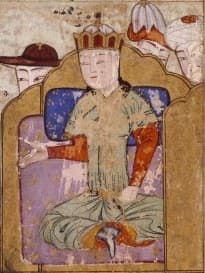
Mongke Khan
Emperor · Medieval
69.5Total
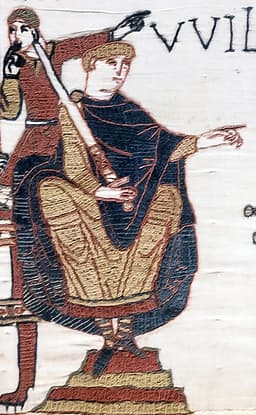
William the Conqueror
Emperor · Medieval
68.8Total
Basic Information
Born
1209
1028
Died
1259
1087
Era
Medieval
Medieval
Nationality
Mongol Empire
England
Occupation
Emperor
Emperor
Civilization
Eastern
Western
Score Comparison
Military (10%)
85.0
82.0
Political (20%)
59.3
70.0
Influence (20%)
68.0
65.0
Legacy (20%)
72.0
65.0
Leadership (15%)
68.0
72.0
Strategy (15%)
69.1
68.0
TOTAL
69.5
68.8
Mongke Khan — Complete Timeline
1251 AD
Election as Great KhanPolitical Action
Möngke was elected as the fourth Great Khan of the Mongol Empire with the support of Batu and his family, ending a period of regency after Güyük's death. His election was contested by the Ögedeid and Chagataid families, leading to purges.
SuccessionMongol EmpirePurge
Impact: global
1252 AD
Conquest of the Song Dynasty (Southern China)War◆ Major
Möngke launched a massive campaign against the Southern Song dynasty, personally leading the western army while his brother Kublai attacked from the north. The campaign stalled at Diaoyu Fortress, where Möngke died, but it set the stage for Kublai's later conquest.
Mongol ConquestSong DynastyChina
Impact: global
Purge of the Ögedeid and Chagataid FamiliesPolitical Action◆ Major
Möngke ordered a systematic purge of the Ögedeid and Chagataid princes and their supporters, accusing them of plotting against him. Hundreds of nobles were executed, consolidating Möngke's power and centralizing the empire under the Toluid line.
PurgeMongol EmpireToluid Consolidation
Impact: globaldestructive
1253 AD
Invasion of the Middle East (Hulagu's Campaign)War◆ Major
Möngke ordered his brother Hulagu to lead a massive Mongol army into the Middle East to conquer the Abbasid Caliphate and the Ismaili fortresses. This campaign resulted in the destruction of Baghdad in 1258 and the establishment of the Ilkhanate.
Mongol ConquestMiddle EastBaghdad
Impact: globaldestructive
1259 AD
Death at Diaoyu FortressWar
Möngke died during the siege of Diaoyu Fortress in Sichuan, possibly from dysentery or a battle wound. His death triggered a succession crisis that led to the division of the Mongol Empire into four khanates.
DeathMongol EmpireSuccession Crisis
Impact: globaltragic
William the Conqueror — Complete Timeline
1066 AD
Battle of HastingsWar
William, Duke of Normandy, defeated King Harold II of England at Hastings. Harold was killed in battle. William then marched to London and was crowned King of England on Christmas Day 1066, beginning Norman rule in England.
Norman ConquestBattleCrowning
Impact: national
1069 AD
Harrying of the NorthWar◆ Major
William led a brutal military campaign to suppress rebellions in northern England. His forces systematically destroyed crops, livestock, and settlements across Yorkshire and Northumbria. The devastation caused a famine that killed tens of thousands and depopulated large areas.
RepressionFamineRebellion
Impact: regionaldestructive
1080 AD
Council of LillebonnePolitical Action
William convened a council of Norman barons and bishops at Lillebonne to assert royal authority over the Church in Normandy. The council issued decrees regulating ecclesiastical jurisdiction and property, strengthening ducal control.
Church-State RelationsNormandy
Impact: regional
1086 AD
Domesday Book SurveyReform◆ Major
William ordered a comprehensive survey of landholdings and resources in England. The resulting Domesday Book recorded ownership, value, and population for tax assessment. It became the most detailed administrative record in medieval Europe.
AdministrationTaxationCensus
Impact: national
Expert Analysis
Origins
Möngke Khan was born in 1209 into the Mongol imperial family, grandson of Genghis Khan. His father Tolui was a renowned general, and his mother Sorghaghtani Beki was a Nestorian Christian princess who ensured her sons received a broad education. Möngke grew up in the nomadic steppe tradition, learning horsemanship, archery, and military tactics from an early age. He participated in campaigns against the Jin dynasty and Kievan Rus, gaining firsthand experience in siege warfare and large-scale coordination.
William the Conqueror, born around 1028 in Falaise, Normandy, was the illegitimate son of Duke Robert I of Normandy and Herleva, a tanner's daughter. Despite his illegitimacy, he succeeded his father as Duke at age seven, facing a turbulent minority marked by violence and betrayal. His early life was shaped by constant threats from rival nobles and neighboring counties, forcing him to develop political cunning and military skill. He was educated in Norman chivalric culture and Latin, but his true schooling came from surviving assassinations and rebellions.
Rise to Power
Möngke's rise was engineered by his mother Sorghaghtani, who secured alliances with Batu Khan of the Golden Horde. After the death of Güyük Khan in 1248, a power vacuum ensued. Möngke was elected Great Khan in 1251 at a kurultai dominated by Batu's supporters, bypassing the Ögedeid line. He immediately faced a conspiracy from the Ögedeid and Chagataid princes, which he crushed in a brutal purge. Between 1251 and 1252, he executed hundreds of nobles, including the former regent's family, consolidating absolute control. This purge eliminated rivals and allowed Möngke to centralize authority, setting the stage for expansion.
William's rise began with his victory at the Battle of Val-ès-Dunes in 1047, where he defeated rebel Norman barons with help from King Henry I of France. He then secured his duchy through a series of campaigns, including the conquest of Maine in 1063. His pivotal moment came in 1066 when he claimed the English throne, citing a supposed promise from Edward the Confessor and Harold Godwinson's oath. After building a fleet and army, he landed at Pevensey on September 28, 1066, and defeated Harold II at the Battle of Hastings on October 14. Harold's death on the field allowed William to march to London, where he was crowned on Christmas Day 1066.
Leadership & Governance
Möngke governed the Mongol Empire through a centralized bureaucracy, drawing on Chinese, Persian, and Uyghur administrators. He reformed the tax system, standardizing weights and measures, and established a census to track resources. He supported religious tolerance, exempting clergy from taxes, but demanded absolute loyalty. His military leadership was hands-on: he led the western army in the Song campaign, personally directing sieges. However, his governance was marred by the purge of rivals, which created an atmosphere of fear. His administrative reforms were effective but relied on coercion, scoring 59.3 in political skill.
William introduced Norman feudalism to England, replacing the Anglo-Saxon aristocracy with his own barons. He commissioned the Domesday Book in 1086, a comprehensive survey of land and resources that enabled efficient taxation. He built castles, including the Tower of London, to project control. His governance was harsh but systematic: the Harrying of the North (1069-1070) destroyed entire regions to quell rebellion. He also reformed the Church, appointing Lanfranc as Archbishop of Canterbury and separating ecclesiastical courts. His political score of 70.0 reflects his ability to impose order, but his methods were brutal.
Triumph & Tragedy
Möngke's greatest triumph was the simultaneous conquest of the Song dynasty and the Abbasid Caliphate. Under his orders, his brother Hulagu captured Baghdad in 1258, ending the Islamic Golden Age. Möngke himself conquered the Kingdom of Dali (1253) and parts of Sichuan. His tragedy was his death at the Siege of Diaoyu Fortress in 1259, possibly from dysentery or a wound. This halted the Song campaign and triggered a succession crisis between his brothers Kublai and Ariq Böke, fracturing the empire. His military score of 85.0 reflects his successes, but his death undid much of his work.
William's triumph was the conquest of England, a feat that reshaped the nation. He defeated Harold II with a combination of cavalry, infantry, and archers at Hastings. His tragedy was the Harrying of the North, a scorched-earth campaign that caused a famine estimated to have killed 100,000 people. This secured his rule but left a legacy of resentment. His later years saw rebellion by his son Robert Curthose and a disastrous war in France. His military score of 82.0 acknowledges his conquest, but his political score of 70.0 reflects the costs.
Character & Destiny
Möngke was known for his discipline, intelligence, and ruthlessness. He was a capable administrator who delegated effectively but brooked no opposition. His character shaped his fate: his decision to personally lead the Song campaign exposed him to danger, leading to his death. His purge of rivals secured his throne but created enemies. Historians note his religious tolerance, but his primary motivation was conquest and control.
William was calculating, ambitious, and unforgiving. He used legal pretexts to justify his invasion and maintained discipline among his troops. His character is reflected in the Domesday Book, which shows his obsession with control. His destiny was shaped by his ability to survive multiple rebellions, but his harshness alienated his own children. He died in 1087 from injuries sustained during a campaign in France, leaving a fractured inheritance.
Legacy
Möngke's legacy is the consolidation of the Mongol Empire at its peak. He enabled the conquest of the Middle East and the expansion into China, which his brother Kublai completed. However, his death led to the empire's fragmentation into four khanates. He is remembered as a capable but short-lived ruler. His influence score of 68.0 reflects his role in shaping Mongol history, but his legacy is overshadowed by Genghis and Kublai.
William's legacy is the transformation of England. He introduced Norman culture, language, and feudalism, laying the foundation for the English state. The Domesday Book remains a unique historical record. His conquest brought England into closer contact with continental Europe. His legacy score of 65.0 acknowledges his profound impact, though his methods were brutal. He is remembered as a conqueror who reshaped a nation.
Conclusion
Möngke Khan scored 69.5 overall, slightly higher than William's 68.8. However, William's impact on England was more enduring and transformative. Möngke's military achievements were vast, but his empire fragmented after his death. William's conquest created a centralized kingdom that evolved into modern Britain. While Möngke's military score (85.0) exceeds William's (82.0), William's political skill (70.0 vs 59.3) ensured his conquests lasted. Therefore, William the Conqueror had a greater lasting impact on world history.
Rankings
🥇
Mongke KhanLeader
Mil: 85.0Pol: 59.3Inf: 68.0
69.5
🥈
William the Conqueror
Mil: 82.0Pol: 70.0Inf: 65.0
68.8
+0.7 behind
How This Comparison Works
Algorithm
Each figure is scored on 6 dimensions (0—100 scale) based on structured historical data: Military (10%), Political (20%), Influence (20%), Legacy (20%), Leadership (15%), Strategy (15%). The weighted total produces the final ranking.
Data Sources
Scores are computed from structured sub-indicators in the database. Scale factors adjust for era (Ancient ×0.85, Modern ×1.0) and civilization size (Eastern ×1.05, Other ×0.80) to account for differences in population and military scale.
Maximum 3 Figures
Comparisons are limited to 2—3 figures to ensure readability and statistical meaningfulness.
Error Margins
±5 points per dimension — Sub-scores are derived from historical records with inherent uncertainty. Two figures within 5 points on a dimension should be considered roughly equivalent in that area.
Total Score Accuracy
±3 points overall — The weighted combination of 6 dimensions produces a total score with approximately ±3 points of uncertainty. Differences of less than 3 points are not statistically significant— the figures are effectively tied.
Known Limitations
- Historical records are incomplete and uneven across civilizations
- Figures from oral-tradition societies may be underrepresented
- Occupation labels can misclassify multi-role figures
- Scores measure capability and impact, not moral character
- Quantitative scoring is a comparison tool, not absolute truth
Capability Radar
Military (10%) — Battles & Warfare
Battles
85
85
Win Rate
80
90
Expansion
90
85
Political (20%) — Governance & Reform
Reform
75
85
Diplomacy
70
75
Economy
80
70
Influence (20%) — Cultural & Global Reach
Cultural
60
75
Global
80
70
Legacy (20%) — Historical Impact
Historical
75
85
Longevity
65
80
Leadership (15%) — Power & Stability
Tenure
60
80
Stability
65
65
Strategy (15%) — Tactics & Innovation
Strategy
85
85
Tactics
75
80
Reform
70
75
Similar Comparisons
Comments & Discussion
No comments yet. Be the first to share your thoughts!