Loading...
Authari vs William the Conqueror
William the Conqueror leads by 22.4 pts · 2 figures compared
…
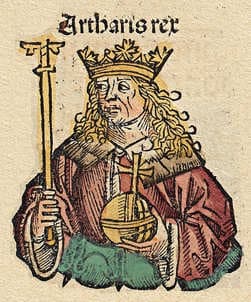
Authari
Emperor · Medieval
46.4Total
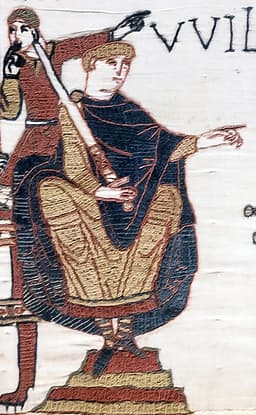
William the Conqueror
Emperor · Medieval
68.8Total
Basic Information
Born
540
1028
Died
590
1087
Era
Medieval
Medieval
Nationality
Lombards
England
Occupation
Emperor
Emperor
Civilization
Western
Western
Score Comparison
Military (10%)
10.0
82.0
Political (20%)
39.4
70.0
Influence (20%)
56.4
65.0
Legacy (20%)
45.0
65.0
Leadership (15%)
64.5
72.0
Strategy (15%)
45.0
68.0
TOTAL
46.4
68.8
Authari — Complete Timeline
568 AD
Invasion of ItalyWar
Authari led the Lombard invasion of Italy, crossing the Alps and establishing a kingdom. This conquest seized large parts of the Italian peninsula from Byzantine control, founding the Lombard Kingdom in Italy.
Lombard InvasionConquestItaly
Impact: regionaldestructive
572 AD
Establishment of the Lombard KingdomPolitical Action◆ Major
Authari established Pavia as the capital of the Lombard Kingdom, consolidating Lombard rule over northern and central Italy. He organized the kingdom into duchies, creating a stable political structure that lasted for centuries.
State FormationCapitalLombard Kingdom
Impact: regionalconstructive
589 AD
Marriage to TheudelindaPolitical Action
Authari married Theudelinda, a Bavarian princess, to strengthen alliances with the Bavarians and promote Catholic conversion among the Lombards. The marriage produced no heir, but Theudelinda later became a key figure in Lombard politics.
Marriage AllianceDynastic PoliticsCatholic Conversion
Impact: nationalconstructive
William the Conqueror — Complete Timeline
1066 AD
Battle of HastingsWar
William, Duke of Normandy, defeated King Harold II of England at Hastings. Harold was killed in battle. William then marched to London and was crowned King of England on Christmas Day 1066, beginning Norman rule in England.
Norman ConquestBattleCrowning
Impact: national
1069 AD
Harrying of the NorthWar◆ Major
William led a brutal military campaign to suppress rebellions in northern England. His forces systematically destroyed crops, livestock, and settlements across Yorkshire and Northumbria. The devastation caused a famine that killed tens of thousands and depopulated large areas.
RepressionFamineRebellion
Impact: regionaldestructive
1080 AD
Council of LillebonnePolitical Action
William convened a council of Norman barons and bishops at Lillebonne to assert royal authority over the Church in Normandy. The council issued decrees regulating ecclesiastical jurisdiction and property, strengthening ducal control.
Church-State RelationsNormandy
Impact: regional
1086 AD
Domesday Book SurveyReform◆ Major
William ordered a comprehensive survey of landholdings and resources in England. The resulting Domesday Book recorded ownership, value, and population for tax assessment. It became the most detailed administrative record in medieval Europe.
AdministrationTaxationCensus
Impact: national
Expert Analysis
Origins
**Authari** (c. 540–590) was the son of King Cleph of the Lombards. Little is known of his early life before he became king in 584. The Lombards were a Germanic people who migrated into the Roman Empire, and Authari grew up in a warrior culture shaped by constant conflict with the Byzantines and other tribes. He was raised in the Arian Christian faith, which distinguished his people from the Catholic Romans.
**William the Conqueror** (c. 1028–1087) was the illegitimate son of Duke Robert I of Normandy and Herleva, a tanner's daughter. Despite his birth, he succeeded his father as duke at age seven. His youth was marked by violence and instability, with Norman nobles rebelling and even attempting to kill him. This forged a ruthless, calculating character. He was educated in military arts and governance, and his Norman upbringing blended Frankish and Viking traditions.
Rise to Power
Authari was elected king by the Lombard nobility in 584 after a ten-year interregnum following his father's death. The Lombards had invaded Italy in 568 under Cleph, but after his assassination, the dukes ruled independently. Authari restored central authority and led a major invasion of Italy, crossing the Alps and capturing Pavia in 572, which became his capital. He expanded the kingdom into Tuscany and Spoleto, halting Byzantine counterattacks. His marriage to Theudelinda, a Bavarian princess, in 589 secured an alliance with the Bavarians and promoted Catholic conversion, softening religious tensions.
William's rise began with his victory at the Battle of Val-ès-Dunes in 1047, where he crushed a rebellion with King Henry I of France's help. He then consolidated Normandy by defeating rivals and expanding his territory. In 1066, after Edward the Confessor's death, William claimed the English throne, citing an alleged promise. He prepared a fleet and army, landing at Pevensey on September 28. At the Battle of Hastings on October 14, he defeated King Harold II, who was killed, and was crowned king on Christmas Day. He faced subsequent rebellions, including the Harrying of the North (1069–1070), which he crushed with extreme brutality.
Leadership & Governance
Authari ruled as a warrior king, leading armies personally and enforcing loyalty through a mix of force and diplomacy. He organized the Lombard kingdom into duchies, with Pavia as the capital, and issued laws (the Edict of Rothari, later codified) that blended Lombard custom with Roman law. He promoted religious tolerance by marrying a Catholic and allowing conversion, but he remained Arian himself. His governance was decentralized, with local dukes holding significant power, which later led to fragmentation.
William centralized power in England, introducing Norman feudalism: he granted lands to his followers in exchange for military service, building castles (like the Tower of London) to control the realm. He ordered the Domesday Book in 1086, a detailed survey of land and resources, which allowed efficient taxation and administration. He also reformed the Church, replacing Anglo-Saxon bishops with Normans and asserting royal control. His rule was harsh, especially in the north, but it created a strong, unified kingdom.
Triumph & Tragedy
Authari's greatest success was establishing the Lombard Kingdom in Italy, which lasted for two centuries. He secured a stable base and expanded territory, but his early death (possibly poisoned) prevented full consolidation. His failure was the incomplete unification of Italy; Byzantine enclaves remained, and internal divisions persisted. His score of 10.0 in military reflects limited battlefield achievements compared to later conquerors, but his political score of 39.4 indicates some state-building.
William's triumph was the conquest of England, a feat that reshaped British history. He successfully integrated Norman and Anglo-Saxon cultures, creating a new aristocracy. His military score of 82.0 reflects his strategic brilliance at Hastings and in campaigns. However, his tragedy was the human cost: the Harrying of the North caused famine and death, and his suppression of rebellions was brutal. His political score of 70.0 shows effective governance, but his legacy is tainted by violence.
Character & Destiny
Authari was a determined leader who restored Lombard unity after a crisis, but he lacked the long-term vision to fully integrate his kingdom. His marriage to Theudelinda was a shrewd move that eased religious tensions, but his Arianism limited his appeal. His early death left the kingdom vulnerable. Historians view him as a capable founder but not a transformative figure.
William was ruthless, calculating, and ambitious. His illegitimacy drove him to prove himself, and he never hesitated to use terror to achieve his goals. He was also a skilled administrator, as shown by the Domesday Book. His character combined Viking ferocity with Norman political savvy, enabling him to conquer and rule. His legacy as a conqueror is secure, but his methods were often cruel.
Legacy
Authari's Lombard kingdom lasted until 774 when Charlemagne conquered it. His influence is seen in the Lombard law code and the fusion of Germanic and Roman cultures in Italy. However, his individual impact is overshadowed by later kings like Liutprand. His legacy score of 45.0 reflects modest enduring influence.
William's impact on England was profound: he introduced feudalism, castles, the Domesday Book, and a centralized monarchy. The Norman Conquest changed the English language, culture, and political structure. His legacy score of 65.0 is high, and he is remembered as one of the most consequential rulers in British history. His influence extended to France and the broader medieval world.
Conclusion
While Authari successfully founded a kingdom, William the Conqueror's impact was far greater in scale and duration. William scored 68.8 total versus Authari's 46.4, a gap of 22.4 points. William's military (82.0 vs 10.0), political (70.0 vs 39.4), and legacy (65.0 vs 45.0) scores all demonstrate superior achievement. Authari's kingdom was eventually subsumed, while William's conquest permanently transformed England. Therefore, William the Conqueror had the greater impact.
Rankings
🥇
William the ConquerorLeader
Mil: 82.0Pol: 70.0Inf: 65.0
68.8
🥈
Authari
Mil: 10.0Pol: 39.4Inf: 56.4
46.4
+22.4 behind
How This Comparison Works
Algorithm
Each figure is scored on 6 dimensions (0—100 scale) based on structured historical data: Military (10%), Political (20%), Influence (20%), Legacy (20%), Leadership (15%), Strategy (15%). The weighted total produces the final ranking.
Data Sources
Scores are computed from structured sub-indicators in the database. Scale factors adjust for era (Ancient ×0.85, Modern ×1.0) and civilization size (Eastern ×1.05, Other ×0.80) to account for differences in population and military scale.
Maximum 3 Figures
Comparisons are limited to 2—3 figures to ensure readability and statistical meaningfulness.
Error Margins
±5 points per dimension — Sub-scores are derived from historical records with inherent uncertainty. Two figures within 5 points on a dimension should be considered roughly equivalent in that area.
Total Score Accuracy
±3 points overall — The weighted combination of 6 dimensions produces a total score with approximately ±3 points of uncertainty. Differences of less than 3 points are not statistically significant— the figures are effectively tied.
Known Limitations
- Historical records are incomplete and uneven across civilizations
- Figures from oral-tradition societies may be underrepresented
- Occupation labels can misclassify multi-role figures
- Scores measure capability and impact, not moral character
- Quantitative scoring is a comparison tool, not absolute truth
Capability Radar
Military (10%) — Battles & Warfare
Battles
35
85
Win Rate
40
90
Expansion
45
85
Political (20%) — Governance & Reform
Reform
30
85
Diplomacy
35
75
Economy
25
70
Influence (20%) — Cultural & Global Reach
Cultural
30
75
Global
20
70
Legacy (20%) — Historical Impact
Historical
35
85
Longevity
25
80
Leadership (15%) — Power & Stability
Tenure
40
80
Stability
30
65
Strategy (15%) — Tactics & Innovation
Strategy
35
85
Tactics
30
80
Reform
25
75
Similar Comparisons
Comments & Discussion
No comments yet. Be the first to share your thoughts!