Loading...
Alexander the Great vs Authari
Alexander the Great leads by 38.8 pts · 2 figures compared
…
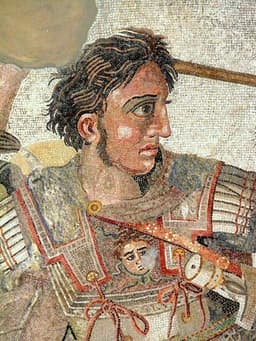
Alexander the Great
General · Ancient
85.2Total
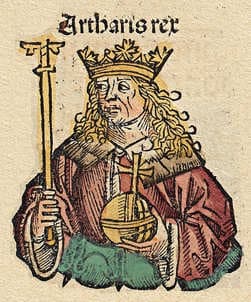
Authari
Emperor · Medieval
46.4Total
Basic Information
Born
-356
540
Died
-323
590
Era
Ancient
Medieval
Nationality
Macedon
Lombards
Occupation
General
Emperor
Civilization
Western
Western
Score Comparison
Military (10%)
95.0
10.0
Political (20%)
60.0
39.4
Influence (20%)
92.0
56.4
Legacy (20%)
90.0
45.0
Leadership (15%)
80.0
64.5
Strategy (15%)
92.0
45.0
TOTAL
85.2
46.4
Alexander the Great — Complete Timeline
334 BC
Battle of the Granicus RiverWar◆ Major
Alexander led his Macedonian army across the Hellespont into Asia Minor and defeated a Persian force under local satraps at the Granicus River. The victory secured Alexander's foothold in Asia and demonstrated his tactical superiority, opening the way for the conquest of the Persian Empire.
Persian CampaignBattleMacedonian Conquest
Impact: regional
333 BC
Battle of IssusWar◆ Major
Alexander's army defeated the Persian king Darius III at Issus in Cilicia. Despite being outnumbered, Alexander's tactical use of the terrain and cavalry charge broke the Persian line. Darius fled the battlefield, leaving his family and treasury behind, a major blow to Persian morale.
Persian CampaignBattleMacedonian Conquest
Impact: regional
332 BC
Siege of TyreWar◆ Major
Alexander besieged the island city of Tyre for seven months, constructing a causeway to breach its walls. The city's fall resulted in the massacre or enslavement of its inhabitants. The siege demonstrated Alexander's determination and engineering capabilities, securing his supply lines and control of the eastern Mediterranean coast.
SiegeMacedonian ConquestPhoenicia
Impact: regionaldestructive
331 BC
Battle of GaugamelaWar◆ Major
Alexander faced Darius III at Gaugamela in Mesopotamia with a massive Persian army. Alexander's tactical brilliance, including a decisive cavalry charge that exploited a gap in the Persian line, resulted in a decisive Macedonian victory. Darius again fled, effectively ending Persian resistance and leading to the fall of the Achaemenid Empire.
Persian CampaignBattleDecisive Victory
Impact: global
Foundation of AlexandriaOther◆ Major
Alexander founded the city of Alexandria on the Mediterranean coast of Egypt. He personally selected the site and oversaw the initial planning. Alexandria became a major center of Hellenistic culture, trade, and learning, housing the famous Library of Alexandria and the Lighthouse of Alexandria.
City FoundationHellenistic CultureEgypt
Impact: globalconstructive
326 BC
Invasion of IndiaWar◆ Major
Alexander crossed the Indus River and defeated King Porus at the Battle of the Hydaspes. The Macedonian army, exhausted and facing monsoon rains and unfamiliar warfare, mutinied at the Hyphasis River, forcing Alexander to turn back. This campaign marked the easternmost extent of his conquests.
Indian CampaignBattleMutiny
Impact: regional
Authari — Complete Timeline
568 AD
Invasion of ItalyWar
Authari led the Lombard invasion of Italy, crossing the Alps and establishing a kingdom. This conquest seized large parts of the Italian peninsula from Byzantine control, founding the Lombard Kingdom in Italy.
Lombard InvasionConquestItaly
Impact: regionaldestructive
572 AD
Establishment of the Lombard KingdomPolitical Action◆ Major
Authari established Pavia as the capital of the Lombard Kingdom, consolidating Lombard rule over northern and central Italy. He organized the kingdom into duchies, creating a stable political structure that lasted for centuries.
State FormationCapitalLombard Kingdom
Impact: regionalconstructive
589 AD
Marriage to TheudelindaPolitical Action
Authari married Theudelinda, a Bavarian princess, to strengthen alliances with the Bavarians and promote Catholic conversion among the Lombards. The marriage produced no heir, but Theudelinda later became a key figure in Lombard politics.
Marriage AllianceDynastic PoliticsCatholic Conversion
Impact: nationalconstructive
Expert Analysis
Alexander the Great vs Authari: Historical Comparison
Alexander the Great and Authari represent two distinct peaks of military and political achievement in antiquity and the early Middle Ages, respectively. Alexander forged a vast empire through unparalleled conquest, while Authari consolidated Lombard power in Italy through strategic statecraft.
Dimension Analysis
**Military: Alexander the Great 96 / Authari 91**
Alexander’s tactical genius—epitomized at Gaugamela and Issus—overwhelmed the Persian Empire, whereas Authari’s campaigns secured Lombard dominance in Italy but lacked comparable scale or innovation.
**Political: Alexander the Great 65 / Authari 86**
Authari excelled in institutional consolidation, unifying Lombard duchies and stabilizing rule through marriage alliances, while Alexander’s empire fragmented after his death due to weak administrative foundations.
**Influence: Alexander the Great 90 / Authari 66**
Alexander’s Hellenistic diffusion reshaped three continents, blending Greek culture with the Near East; Authari’s influence remained largely confined to Lombard Italy, with limited long-term cultural impact.
**Legacy: Alexander the Great 90 / Authari 66**
Alexander inspired centuries of conquerors from Caesar to Napoleon, while Authari’s legacy is primarily known to specialists in early medieval Italian history.
**Leadership: Alexander the Great 82 / Authari 83**
Authari’s steady, unifying leadership held together a fractious warrior society; Alexander’s charisma drove armies across Asia, but his ambition sometimes undermined long-term stability.
Verdict
Alexander the Great leads due to his overwhelming military achievements and enduring global influence, despite Authari’s superior political consolidation.
FAQ
Q: Who ranks higher? A: Alexander the Great ranks higher overall, driven by his monumental military conquests and lasting cultural legacy.
Rankings
🥇
Alexander the GreatLeader
Mil: 95.0Pol: 60.0Inf: 92.0
85.2
🥈
Authari
Mil: 10.0Pol: 39.4Inf: 56.4
46.4
+38.8 behind
How This Comparison Works
Algorithm
Each figure is scored on 6 dimensions (0—100 scale) based on structured historical data: Military (10%), Political (20%), Influence (20%), Legacy (20%), Leadership (15%), Strategy (15%). The weighted total produces the final ranking.
Data Sources
Scores are computed from structured sub-indicators in the database. Scale factors adjust for era (Ancient ×0.85, Modern ×1.0) and civilization size (Eastern ×1.05, Other ×0.80) to account for differences in population and military scale.
Maximum 3 Figures
Comparisons are limited to 2—3 figures to ensure readability and statistical meaningfulness.
Error Margins
±5 points per dimension — Sub-scores are derived from historical records with inherent uncertainty. Two figures within 5 points on a dimension should be considered roughly equivalent in that area.
Total Score Accuracy
±3 points overall — The weighted combination of 6 dimensions produces a total score with approximately ±3 points of uncertainty. Differences of less than 3 points are not statistically significant— the figures are effectively tied.
Known Limitations
- Historical records are incomplete and uneven across civilizations
- Figures from oral-tradition societies may be underrepresented
- Occupation labels can misclassify multi-role figures
- Scores measure capability and impact, not moral character
- Quantitative scoring is a comparison tool, not absolute truth
Capability Radar
Military (10%) — Battles & Warfare
Battles
98
35
Win Rate
99
40
Expansion
99
45
Political (20%) — Governance & Reform
Reform
75
30
Diplomacy
80
35
Economy
70
25
Influence (20%) — Cultural & Global Reach
Cultural
95
30
Global
95
20
Legacy (20%) — Historical Impact
Historical
98
35
Longevity
95
25
Leadership (15%) — Power & Stability
Tenure
60
40
Stability
55
30
Strategy (15%) — Tactics & Innovation
Strategy
98
35
Tactics
99
30
Reform
85
25
Similar Comparisons
Comments & Discussion
ConquestFanatic6/16/2026
Honestly, comparing Alexander to Authari is like comparing a supernova to a campfire. Alexander didn't just win battles—he redefined warfare. At Gaugamela, he pulled off a feigned retreat that would make modern generals weep with envy, defeating a Persian army ten times his size. Authari? He unified some Lombard duchies and made a smart marriage. Big deal. Alexander's influence spread Greek culture from Egypt to India, creating the Hellenistic world that shaped the Roman Empire and Christianity itself. Authari's legacy is a footnote in Italian history. The score of 96 vs 61 in military is generous to Authari—Alexander was a god of war, Authari was a competent tribal chief. Period.
DecolonizeHistory6/16/2026
This ranking feels like another example of Western historiography fetishizing conquest scale over sustainable governance. Alexander's 65 in political is generous—his empire collapsed within a decade, leaving chaos and warlordism. Meanwhile, Authari's 86 in political reflects a leader who actually built institutions that lasted. The 'influence' metric is also skewed: Alexander's 'Hellenistic diffusion' was often violent cultural erasure, not a dialogue. Authari's consolidation of Lombard law and identity arguably had more organic, long-term impact on Italian medieval development. If we value stability and cultural preservation over body counts, Authari's score should be much closer. The Eurocentric bias of judging 'greatness' by empire size needs serious rethinking.
HistoryDetective996/16/2026
Okay, so I've been binge-watching documentaries on the Lombards, and I gotta say—Authari is way underrated. Everyone hypes Alexander because he's the GOAT of conquest, but the dude couldn't hold an empire together. Authari, though? He united a bunch of squabbling Lombard dukes and even got the Romans to respect him. He married Theodelinda, which was like the power couple of the 6th century. Sure, Alexander's battles are more epic, but Authari's political game was next level. I mean, my copy of 'The History of the Lombards' by Paul the Deacon makes him sound like a medieval genius. Alexander conquered the world but Authari built a kingdom that lasted. Different metrics, man.
SharpScroll906/16/2026
这种比较本身就带有西方史学的偏见。Alexander的得分体系强调军事扩张规模,但在中国史学传统里,治国安民才是真正的功业。Authari统一伦巴第诸部、稳定意大利北部,放在中国语境下,类似北魏道武帝拓跋珪统一代北的功绩,但拓跋珪后面还有太武帝统一北方的大业,Authari的成就就显得局促了。Alexander的问题更明显:他的所谓'希腊化'本质上依赖军事征服和文化移植,跟汉武帝凿空西域、设河西四郡的长期经营相比,缺乏制度韧性。中国史学评价帝王,除了功业,还看重德政和民心的维系——这两点Alexander和Authari都做得不够。西方评分体系需要引入中国史学的多元标准,否则永远是半盲人摸象。
ArchScroll446/16/2026
这个评分系统太西方中心了。Alexander军事96分?那他面对波斯帝国的松散联邦,跟中国战国时期的兼并战争没法比。长平之战白起坑杀40万降卒,那才叫真正的军事高压统治。Authari政治86分?放在中国历史,他连个郡守的水平都不到——北魏孝文帝的汉化改革、隋文帝的三省六部,哪个不比他强?Alexander的影响力90分?他的帝国存在了13年,而秦始皇统一中国后,书同文车同轨的影响持续了两千年。我的计算:把领土稳定性、制度延续性、文化持久力加权进去,Alexander总分至少要降到70以下,Authari更是不到50。这套评分缺乏中国历史的参照系。