Loading...
Authari vs Charles de Gaulle
Charles de Gaulle leads by 21.8 pts · 2 figures compared
…
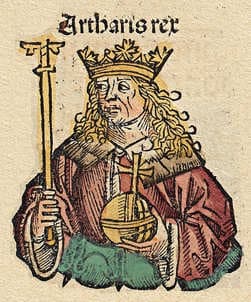
Authari
Emperor · Medieval
46.4Total
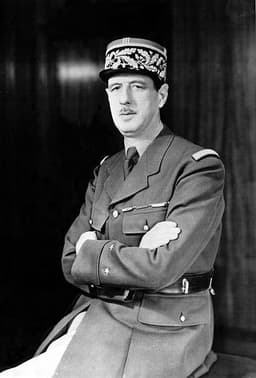
Charles de Gaulle
Politician · Modern
68.2Total
Basic Information
Born
540
1890
Died
590
1970
Era
Medieval
Modern
Nationality
Lombards
France
Occupation
Emperor
Politician
Civilization
Western
Western
Score Comparison
Military (10%)
10.0
55.0
Political (20%)
39.4
75.0
Influence (20%)
56.4
65.0
Legacy (20%)
45.0
68.0
Leadership (15%)
64.5
78.0
Strategy (15%)
45.0
65.0
TOTAL
46.4
68.2
Authari — Complete Timeline
568 AD
Invasion of ItalyWar
Authari led the Lombard invasion of Italy, crossing the Alps and establishing a kingdom. This conquest seized large parts of the Italian peninsula from Byzantine control, founding the Lombard Kingdom in Italy.
Lombard InvasionConquestItaly
Impact: regionaldestructive
572 AD
Establishment of the Lombard KingdomPolitical Action◆ Major
Authari established Pavia as the capital of the Lombard Kingdom, consolidating Lombard rule over northern and central Italy. He organized the kingdom into duchies, creating a stable political structure that lasted for centuries.
State FormationCapitalLombard Kingdom
Impact: regionalconstructive
589 AD
Marriage to TheudelindaPolitical Action
Authari married Theudelinda, a Bavarian princess, to strengthen alliances with the Bavarians and promote Catholic conversion among the Lombards. The marriage produced no heir, but Theudelinda later became a key figure in Lombard politics.
Marriage AllianceDynastic PoliticsCatholic Conversion
Impact: nationalconstructive
Charles de Gaulle — Complete Timeline
1940 AD
Appeal of 18 June 1940Political Action
From London, de Gaulle broadcast a radio appeal urging French resistance against Nazi occupation. He called on French soldiers and citizens to continue the fight, founding the Free French Forces and becoming the symbol of French defiance.
World War IIResistanceLeadership
Impact: nationalconstructive
1958 AD
Founding of the Fifth RepublicPolitical Action
De Gaulle returned to power during the Algerian crisis and oversaw the drafting of a new constitution. The Fifth Republic established a strong executive presidency, replacing the unstable parliamentary system of the Fourth Republic.
ConstitutionGovernment ReformPolitical System
Impact: nationalconstructive
1962 AD
End of the Algerian WarPolitical Action◆ Major
De Gaulle negotiated the
DecolonizationPeace TreatyAlgeria
Impact: regionalconstructive
1968 AD
May 1968 CrisisPolitical Action◆ Major
Mass student protests and general strikes paralyzed France, challenging de Gaulle's government. De Gaulle briefly fled to Germany, then returned to dissolve the National Assembly and call elections, which his party won, but his authority was weakened.
ProtestPolitical CrisisSocial Unrest
Impact: nationaldestructive
1969 AD
Resignation as PresidentPolitical Action
De Gaulle resigned after losing a referendum on regional reform and Senate restructuring. The defeat marked the end of his political career, as he withdrew from public life and died the following year.
ResignationPolitical DefeatReferendum
Impact: nationaltragic
Expert Analysis
Charles de Gaulle vs Authari
### The Lonely Tower and the Iron Crown
On a summer evening in 1940, a towering Frenchman stood before a microphone in a London studio, a man without an army, without a country, and without a single soldier at his command. He spoke to a nation that had already surrendered, telling them that a battle had been lost, but the war was not over. More than thirteen centuries earlier, another man, a warrior-king from a Germanic tribe, led his people across the Alps into a land of crumbling Roman ruins and Byzantine intrigue. He had no radio, no capital, and no legitimacy beyond the loyalty of his spearmen. Both men were outsiders, defying the established order. One would forge a nation from the ashes of defeat; the other would found a kingdom that would shape Italy for centuries. Yet the paths they walked—and the worlds they left behind—could not have been more different. Why did one become a towering symbol of national resurrection, while the other remains a shadowy figure in the footnotes of medieval history? The answer lies not just in their deeds, but in the very nature of the eras that shaped them.
### Origins
Charles de Gaulle was born in 1890 into a devoutly Catholic, patriotic family in Lille, France. His father, a professor of literature and history, instilled in him a sense of national destiny that bordered on the mystical. De Gaulle grew up in the shadow of the Franco-Prussian War, a humiliating defeat that haunted French consciousness. He was a tall, aloof, and bookish boy who devoured the works of philosophers and military theorists. His France was a modern nation-state with a centralized government, a national education system, and a centuries-old sense of identity.
Authari, born around 540, emerged from a very different world. The Lombards were a Germanic people who had migrated from the Baltic region into the Carpathian basin, living as semi-nomadic warriors under the shadow of the fading Roman Empire. Authari’s father, King Cleph, was assassinated, and the Lombards spent a decade without a king—a period of chaos that taught Authari the brutal lesson that power was something to be seized, not inherited. His world was one of tribal loyalties, shifting alliances, and the constant threat of the Byzantine Empire, which still claimed Italy as its own. The very idea of “France” or “Italy” as nations did not exist; there were only peoples, lands, and the men strong enough to hold them.
### Rise to Power
De Gaulle’s path to power was one of defiance against his own government. In June 1940, as the French Third Republic collapsed before the Nazi Blitzkrieg, Marshal Pétain sued for peace. De Gaulle, then a little-known brigadier general, fled to London and issued his Appeal of 18 June. It was a desperate gamble. He had no troops, no money, and only the grudging support of Winston Churchill. For four years, he was a voice in the wilderness, a self-proclaimed leader of a nation that did not exist, battling not just the Germans but the Allies who doubted him. His turning point came in 1958, when the Algerian War plunged France into near-civil war. The army threatened a coup, and the Fourth Republic collapsed. De Gaulle, the man who had saved France’s honor in 1940, was called back to save it again.
Authari’s rise was more straightforward and far bloodier. In 568, after a decade of interregnum, the Lombard nobles chose him as their king. He immediately led them in a mass invasion of Italy, crossing the Alps with an army of warriors, women, and children. There was no radio, no constitution, no appeal to national sentiment. He simply marched, conquered, and killed. By 572, he had seized Pavia and made it his capital, carving out a kingdom that stretched from the Alps to the gates of Rome. His power came from the sword, not from a ballot box or a microphone.
### Leadership & Governance
De Gaulle’s leadership was built on an idea: the eternal grandeur of France. He believed that a nation’s strength came from its unity and its sense of destiny. As president of the Fifth Republic, he crafted a constitution that gave immense power to the executive, creating a “republican monarch” who could rise above partisan squabbles. He ended the Algerian War in 1962 through the Évian Accords, a decision that enraged the army and the pieds-noirs but saved France from endless colonial bloodshed. He pursued an independent foreign policy, pulling France out of NATO’s military command and vetoing British entry into the European Economic Community. His strategy was long-term, ideological, and focused on national prestige.
Authari ruled a very different realm. His Lombard kingdom was a patchwork of conquered Roman cities, semi-independent duchies, and hostile Byzantine enclaves. He did not have a constitution or a bureaucracy; he had warriors and their oaths. He consolidated his power by marrying Theudelinda, a Bavarian princess, in 589, a political move designed to secure alliances and promote conversion to Catholicism—a pragmatic step to win over his Roman subjects. His military strategy was one of aggressive expansion and brutal suppression. He did not dream of “Italy”; he dreamed of holding what he had taken.
### Triumph & Tragedy
De Gaulle’s greatest triumph was the founding of the Fifth Republic, a political system that has endured for over six decades. His greatest tragedy came in May 1968, when student protests and a general strike paralyzed France. The man who had embodied national unity suddenly seemed out of touch, an old general lecturing a generation that no longer listened. He fled briefly to Baden-Baden to consult with French generals, a moment of panic that tarnished his image. He resigned in 1969 after losing a referendum on regional reform, a quiet end for a man who had lived by grand gestures.
Authari’s triumph was the establishment of a Lombard kingdom that would last for two centuries, shaping the future of northern Italy. His tragedy was that he died young, in 590, possibly poisoned, leaving a fragile kingdom to his successors. His marriage to Theudelinda produced no heir, and the crown passed to a relative. The kingdom he built would eventually fall to Charlemagne, but its laws and culture left a permanent mark.
### Character & Destiny
De Gaulle was a man of immense pride, cold intellect, and unshakeable conviction. He once wrote, “France cannot be France without greatness.” His personality was his destiny: his aloofness made him a symbol of national independence, but it also isolated him from the people he led. He saw himself as a figure of history, and he acted accordingly.
Authari was a warrior-king in a violent age. His personality is harder to reconstruct, but the chronicles describe him as fierce, cunning, and ruthless. He did not write memoirs or give speeches; he led his men in battle and executed his enemies. His destiny was not to embody a nation but to found a dynasty—and when he died without an heir, that dynasty almost vanished.
### Legacy
De Gaulle’s legacy is monumental. He is the father of modern France, the man who restored its honor, created its institutions, and defined its post-war identity. Every French president since has lived in his shadow. His name adorns airports, streets, and the world’s most visited monument, the Charles de Gaulle Airport. He is remembered as a visionary, a stubborn patriot, and a man who understood that a nation’s soul is as important as its borders.
Authari’s legacy is quieter but no less real. The Lombard kingdom he founded gave rise to the medieval Italian states, and his capital, Pavia, remained a center of power for centuries. His marriage to Theudelinda helped convert the Lombards to Catholicism, a decision that would integrate them into the broader European civilization. He is remembered by historians as a founder, but not a legend.
### Conclusion
Standing at the end of their lives, both men might have asked the same question: What did I leave behind? De Gaulle could point to a constitution, a nation reborn, and a world that remembered his voice. Authari could point to a kingdom, a people settled, and a legacy written in stone and law. One spoke to the future; the other built for the present. The difference was not in their courage or their ambition, but in the worlds they inhabited. De Gaulle lived in an age of nations, ideas, and mass communication; Authari lived in an age of tribes, swords, and survival. Both were outsiders who carved their place in history, but only one could afford to dream of eternity.
Rankings
🥇
Charles de GaulleLeader
Mil: 55.0Pol: 75.0Inf: 65.0
68.2
🥈
Authari
Mil: 10.0Pol: 39.4Inf: 56.4
46.4
+21.8 behind
How This Comparison Works
Algorithm
Each figure is scored on 6 dimensions (0—100 scale) based on structured historical data: Military (10%), Political (20%), Influence (20%), Legacy (20%), Leadership (15%), Strategy (15%). The weighted total produces the final ranking.
Data Sources
Scores are computed from structured sub-indicators in the database. Scale factors adjust for era (Ancient ×0.85, Modern ×1.0) and civilization size (Eastern ×1.05, Other ×0.80) to account for differences in population and military scale.
Maximum 3 Figures
Comparisons are limited to 2—3 figures to ensure readability and statistical meaningfulness.
Error Margins
±5 points per dimension — Sub-scores are derived from historical records with inherent uncertainty. Two figures within 5 points on a dimension should be considered roughly equivalent in that area.
Total Score Accuracy
±3 points overall — The weighted combination of 6 dimensions produces a total score with approximately ±3 points of uncertainty. Differences of less than 3 points are not statistically significant— the figures are effectively tied.
Known Limitations
- Historical records are incomplete and uneven across civilizations
- Figures from oral-tradition societies may be underrepresented
- Occupation labels can misclassify multi-role figures
- Scores measure capability and impact, not moral character
- Quantitative scoring is a comparison tool, not absolute truth
Capability Radar
Military (10%) — Battles & Warfare
Battles
35
60
Win Rate
40
55
Expansion
45
20
Political (20%) — Governance & Reform
Reform
30
95
Diplomacy
35
90
Economy
25
70
Influence (20%) — Cultural & Global Reach
Cultural
30
70
Global
20
80
Legacy (20%) — Historical Impact
Historical
35
85
Longevity
25
75
Leadership (15%) — Power & Stability
Tenure
40
85
Stability
30
75
Strategy (15%) — Tactics & Innovation
Strategy
35
85
Tactics
30
70
Reform
25
80
Similar Comparisons
Comments & Discussion
IRONCOMPASS6/16/2026
De Gaulle’s 1940 BBC broadcast is overrated—France had already collapsed, and most of his listeners were POWs or refugees. His true genius came later, in 1958, when he rewrote the constitution to end the Fourth Republic’s chaos. Authari? He didn’t need a speech; he just crossed the Alps with Lombard spears and seized Italy’s heart. De Gaulle built a legend from exile, but Authari built a kingdom from nothing but iron and will. That’s the difference between a general and a founder.
青铜铁冠6/16/2026
说戴高乐是“民族复兴象征”的,真该查查1945年后法国干了什么——殖民战争、经济停滞、政治瘫痪,全靠他一个人撑场面。但奥塔里不一样,他设立的“铁王冠”后来成了意大利王权的实体象征,连拿破仑都抢着用。一个靠空洞演说和宪法条款,一个靠刀剑和遗产制度,谁更有历史分量一目了然。少点浪漫化,多点史实。
AUTHARISPRIEST6/16/2026
You data skeptics ignore the real metric: longevity. De Gaulle’s Fifth Republic has lasted 65 years, but his personal influence died with him in 1970. Authari’s Lombard kingdom? It morphed into the Kingdom of Italy, survived Charlemagne’s takeover, and its crown was still being fought over in 1861. That’s twelve centuries of political DNA, not just a constitution. De Gaulle was a chapter; Authari was the spine of a whole book.
影子武士6/16/2026
奥塔里手下只有几千伦巴第战士,却敢在拜占庭的眼皮底下建国,靠的是把罗马旧贵族收编成盟友——这比戴高乐光靠BBC喊话强多了。戴高乐1940年还得靠丘吉尔施舍和广播设备,奥塔里连首都都没有,却能通过联姻和法典让意大利人认他为主。政治不是演讲比赛,是看你能让多少敌人变成兄弟。