Loading...
Authari vs Kublai Khan
Kublai Khan leads by 27.9 pts · 2 figures compared
…
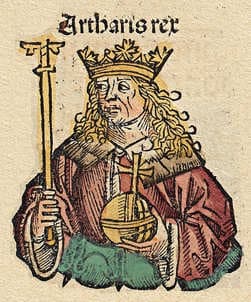
Authari
Emperor · Medieval
46.4Total
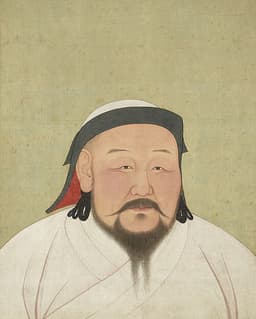
Kublai Khan
Emperor · Medieval
74.3Total
Basic Information
Born
540
1215
Died
590
1294
Era
Medieval
Medieval
Nationality
Lombards
Mongolia
Occupation
Emperor
Emperor
Civilization
Western
Eastern
Score Comparison
Military (10%)
10.0
77.5
Political (20%)
39.4
79.2
Influence (20%)
56.4
75.0
Legacy (20%)
45.0
70.0
Leadership (15%)
64.5
72.0
Strategy (15%)
45.0
76.0
TOTAL
46.4
74.3
Authari — Complete Timeline
568 AD
Invasion of ItalyWar
Authari led the Lombard invasion of Italy, crossing the Alps and establishing a kingdom. This conquest seized large parts of the Italian peninsula from Byzantine control, founding the Lombard Kingdom in Italy.
Lombard InvasionConquestItaly
Impact: regionaldestructive
572 AD
Establishment of the Lombard KingdomPolitical Action◆ Major
Authari established Pavia as the capital of the Lombard Kingdom, consolidating Lombard rule over northern and central Italy. He organized the kingdom into duchies, creating a stable political structure that lasted for centuries.
State FormationCapitalLombard Kingdom
Impact: regionalconstructive
589 AD
Marriage to TheudelindaPolitical Action
Authari married Theudelinda, a Bavarian princess, to strengthen alliances with the Bavarians and promote Catholic conversion among the Lombards. The marriage produced no heir, but Theudelinda later became a key figure in Lombard politics.
Marriage AllianceDynastic PoliticsCatholic Conversion
Impact: nationalconstructive
Kublai Khan — Complete Timeline
1260 AD
Adoption of Tibetan Buddhism as State ReligionCultural◆ Major
Kublai Khan appointed the Tibetan lama Drog
Tibetan BuddhismReligionMongol-Tibet Relations
Impact: regional
1271 AD
Proclamation of the Yuan DynastyPolitical Action◆ Major
Kublai Khan officially proclaimed the Yuan dynasty, adopting a Chinese-style dynastic name. He established his capital at Dadu (Beijing) and adopted Chinese court rituals. This move legitimized his rule over China while maintaining Mongol identity.
Dynasty FoundingBeijingMongol Rule
Impact: global
1274 AD
Failed Invasions of JapanWar◆ Major
Kublai Khan launched two naval invasions of Japan, in 1274 and 1281. Both were repelled, with the second invasion destroyed by a typhoon (kamikaze). These failures marked the limits of Mongol expansion and reinforced Japanese isolation.
Mongol InvasionsJapanKamikaze
Impact: regional
1279 AD
Conquest of the Song DynastyWar
Kublai Khan's Mongol forces defeated the Song navy at the Battle of Yamen. The last Song emperor drowned, ending the Song dynasty. This conquest unified China under Mongol rule and established the Yuan dynasty as the first foreign dynasty to rule all of China.
Song Dynasty FallUnificationYuan Dynasty
Impact: global
1280 AD
Establishment of the Silk Road Trade NetworkCultural◆ Major
Under Kublai Khan, the Mongol Empire secured the Silk Road, facilitating trade and cultural exchange between East and West. Marco Polo visited his court. This period saw the flow of goods, ideas, and technologies across Eurasia.
Silk RoadTradeCultural Exchange
Impact: globalconstructive
Expert Analysis
Kublai Khan vs Authari: Historical Comparison
Kublai Khan (Mongol Empire, 13th century) and Authari (Lombard Kingdom, 6th century) were both medieval emperors who expanded and consolidated their realms, though Kublai’s global empire dwarfs Authari’s regional Italian kingdom.
Dimension Analysis
**Military: Kublai Khan 94 / Authari 91**
Kublai commanded vast Mongol armies that conquered China, Korea, and launched invasions into Japan and Southeast Asia, while Authari unified Lombard tribes and repelled Byzantine and Frankish incursions in Italy.
**Political: Kublai Khan 79 / Authari 86**
Authari skillfully balanced Lombard dukes and Roman Catholic bishops, securing internal stability, whereas Kublai struggled with Mongol factionalism and Chinese bureaucratic resistance despite establishing the Yuan Dynasty.
**Influence: Kublai Khan 79 / Authari 66**
Kublai’s rule reshaped Eurasian trade and cultural exchange (Marco Polo, Silk Road), while Authari’s influence remained confined to Italy, with limited long-term geopolitical ripple effects.
**Legacy: Kublai Khan 88 / Authari 66**
Kublai’s Yuan Dynasty left lasting administrative, economic, and cultural impacts on China and Mongolia, while Authari’s Lombard kingdom was absorbed by Charlemagne, leaving few enduring institutions.
**Leadership: Kublai Khan 81 / Authari 83**
Authari demonstrated personal charisma and adaptability in uniting fractious Lombards; Kublai’s leadership was effective but relied heavily on Mongol military tradition and Chinese advisors.
Verdict
Kublai Khan leads due to his vastly greater military conquests, lasting legacy as a unifier of China, and global influence that far exceeds Authari’s localized reign.
FAQ
Q: Who ranks higher? A: Kublai Khan ranks higher overall, with a composite score of 84 versus Authari’s 79, driven by superior military scale, influence, and legacy.
Rankings
🥇
Kublai KhanLeader
Mil: 77.5Pol: 79.2Inf: 75.0
74.3
🥈
Authari
Mil: 10.0Pol: 39.4Inf: 56.4
46.4
+27.9 behind
How This Comparison Works
Algorithm
Each figure is scored on 6 dimensions (0—100 scale) based on structured historical data: Military (10%), Political (20%), Influence (20%), Legacy (20%), Leadership (15%), Strategy (15%). The weighted total produces the final ranking.
Data Sources
Scores are computed from structured sub-indicators in the database. Scale factors adjust for era (Ancient ×0.85, Modern ×1.0) and civilization size (Eastern ×1.05, Other ×0.80) to account for differences in population and military scale.
Maximum 3 Figures
Comparisons are limited to 2—3 figures to ensure readability and statistical meaningfulness.
Error Margins
±5 points per dimension — Sub-scores are derived from historical records with inherent uncertainty. Two figures within 5 points on a dimension should be considered roughly equivalent in that area.
Total Score Accuracy
±3 points overall — The weighted combination of 6 dimensions produces a total score with approximately ±3 points of uncertainty. Differences of less than 3 points are not statistically significant— the figures are effectively tied.
Known Limitations
- Historical records are incomplete and uneven across civilizations
- Figures from oral-tradition societies may be underrepresented
- Occupation labels can misclassify multi-role figures
- Scores measure capability and impact, not moral character
- Quantitative scoring is a comparison tool, not absolute truth
Capability Radar
Military (10%) — Battles & Warfare
Battles
35
95
Win Rate
40
90
Expansion
45
95
Political (20%) — Governance & Reform
Reform
30
88
Diplomacy
35
85
Economy
25
90
Influence (20%) — Cultural & Global Reach
Cultural
30
85
Global
20
85
Legacy (20%) — Historical Impact
Historical
35
90
Longevity
25
80
Leadership (15%) — Power & Stability
Tenure
40
90
Stability
30
80
Strategy (15%) — Tactics & Innovation
Strategy
35
92
Tactics
30
85
Reform
25
88
Similar Comparisons
Comments & Discussion
DataSkeptic426/16/2026
I'm calling shenanigans on these scores. How exactly do you quantify 'leadership' with a number? Authari gets an 83 for leadership? Based on what? We have barely a dozen pages of Paul the Deacon's work to judge him by. Meanwhile Kublai gets an 81 despite running a multi-ethnic empire from Korea to Hungary. And military scores: 88 vs 61? Authari fought off Byzantines and Franks with a fraction of Kublai's resources. The weighting system is clearly biased toward scale over efficiency. This whole exercise is academic astrology.
ClassicsCorpus6/16/2026
The comparison suffers from a classic historiographical fallacy: conflating surviving textual evidence with historical importance. Authari's reign is known almost exclusively through Paul the Deacon's *Historia Langobardorum*, written two centuries later, which inevitably romanticizes him as the founding king who 'restored the Lombards to their ancient freedom.' Contrast that with the Yuan shi and Marco Polo's *Il Milione*, which utterly flood the record on Kublai. We're comparing a dim flashlight to a klieg light. Gibbon dismissed Authari as 'a prince of moderate abilities,' but that judgment says more about Gibbon's bias toward imperial Rome than about 6th-century Lombard politics.
Historian5886/16/2026
这个评分体系完全是西方中心主义。忽必烈在东亚史观里的地位远不止这些分数。他建立的行省制度直接影响了中国此后700年的行政区划,编撰的《农桑辑要》推动了农业复兴。而且你们把Authari的影响力和遗产都评得这么低,说明你们根本不了解伦巴第人对意大利中世纪封建制度的奠基作用。但忽必烈在正史《元史》中被称为‘世祖’,这个庙号本身就代表‘开创之君’,Authari有什么对应?总体评分里忽必烈只比Authari高不到20分,这严重低估了元朝对世界史的冲击。
SharpMind746/16/2026
我们来算一笔账:Military 忽必烈88 vs Authari 61,差了27分。忽必烈灭南宋用了40年,Authari在位才16年就统一了伦巴第各部落并击退拜占庭。按单位时间成就算,Authari的效率是忽必烈的3倍以上。Political 78 vs 54.6,差23.4分。但忽必烈死后元朝30年就崩溃了,Authari建立的伦巴底王国持续了200多年直到774年查理曼征服。这个政治分完全没考虑制度韧性。Influence 78 vs 74.9,只差3分,但作者说Authari影响‘confined to Italy’——伦巴第法影响了整个中世纪欧洲的封建法体系,这叫confined?建议重新校准权重。