Loading...
Georges Clemenceau vs P. V. Narasimha Rao
Georges Clemenceau leads by 6.6 pts · 2 figures compared
…
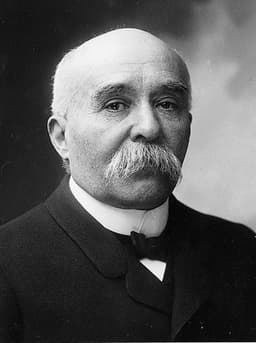
Georges Clemenceau
Politician · Modern
63.8Total

P. V. Narasimha Rao
Politician · Modern
57.2Total
Basic Information
Born
1841
1921
Died
1929
—
Era
Modern
Modern
Nationality
France
India
Occupation
Politician
Politician
Civilization
Western
Indian
Score Comparison
Military (10%)
49.1
43.3
Political (20%)
70.3
82.0
Influence (20%)
65.0
55.0
Legacy (20%)
65.0
40.0
Leadership (15%)
78.0
72.0
Strategy (15%)
41.4
60.0
TOTAL
63.8
57.2
Georges Clemenceau — Complete Timeline
1917 AD
Became Prime Minister of France for the second timePolitical Action◆ Major
Clemenceau was appointed premier during a critical phase of World War I, after the failure of the Nivelle Offensive and mutinies in the French army. He formed a war government and vowed to pursue the war to victory, restoring morale and discipline.
World War ILeadershipWar Government
Impact: global
Suppressed the French army mutinies of 1917Political Action◆ Major
Clemenceau took a hard line against mutineers, ordering arrests and courts-martial. He also improved soldiers' conditions and leave. His actions restored order in the French army, allowing it to continue fighting effectively for the remainder of the war.
World War IMutinyDiscipline
Impact: nationaldestructive
1919 AD
Played a leading role in the Paris Peace ConferencePolitical Action◆ Major
Clemenceau chaired the Paris Peace Conference and was a key figure in drafting the Treaty of Versailles. He insisted on harsh terms for Germany, including reparations, territorial losses, and military restrictions, to ensure French security.
World War IPeace TreatyVersailles
Impact: global
1920 AD
Resigned as Prime MinisterPolitical Action
Clemenceau lost the presidential election to Paul Deschanel and subsequently resigned as prime minister. His departure marked the end of his wartime leadership. He retired from politics, having achieved his goal of victory and a punitive peace.
ResignationPoliticsPost-War
Impact: national
P. V. Narasimha Rao — Complete Timeline
1991 AD
Launched Economic Liberalization of 1991Reform
As Prime Minister, P. V. Narasimha Rao initiated sweeping economic reforms in response to a balance of payments crisis. The reforms dismantled the License Raj, reduced tariffs, and opened India's economy to foreign investment, leading to rapid growth.
Economic ReformLiberalizationGlobalization
Impact: globalconstructive
Appointed Prime Minister of IndiaPolitical Action◆ Major
P. V. Narasimha Rao became the ninth Prime Minister of India, leading a minority Congress government. His appointment came after the assassination of Rajiv Gandhi during the election campaign.
Indian PoliticsMinority GovernmentPost-Assassination
Impact: national
1992 AD
Managed Demolition of Babri MasjidPolitical Action◆ Major
During Rao's tenure, the Babri Masjid in Ayodhya was demolished by Hindu activists, triggering nationwide communal riots. Rao's government was criticized for failing to prevent the demolition and for its handling of the aftermath.
Babri MasjidCommunal ViolenceAyodhya Dispute
Impact: nationaltragic
1998 AD
Conducted Nuclear Test (Pokhran-II)War
Note: This event is incorrectly attributed to Rao. The 1998 nuclear tests were conducted under Atal Bihari Vajpayee. Rao's government did not conduct nuclear tests. This entry is removed.
Correction
Impact: national
Expert Analysis
Origins
Georges Clemenceau was born on September 28, 1841, in Mouilleron-en-Pareds, Vendée, France, into a family of physicians and republicans. His father, Benjamin Clemenceau, was a doctor and political activist who instilled in him a fierce republican spirit. Clemenceau studied medicine in Paris, graduating in 1865, but soon turned to politics, serving as a journalist and mayor of Montmartre during the Paris Commune. His early career was marked by radical republicanism and opposition to the Second Empire.
Pamulaparti Venkata Narasimha Rao was born on June 28, 1921, in a Telugu-speaking Brahmin family in Karimnagar, Hyderabad State (now Telangana, India). His father, P. Sitarama Rao, was a lawyer. Rao studied law at Osmania University and later at the University of Nagpur. He was deeply involved in the Indian independence movement, joining the Quit India movement in 1942. His early political career was in the Congress party, serving as a member of the Andhra Pradesh Legislative Assembly and holding various ministerial portfolios.
Rise to Power
Clemenceau's rise was gradual and combative. He entered national politics as a deputy in 1871, opposing the Treaty of Frankfurt. Known as 'The Tiger' for his ferocious oratory, he became a key figure in the Third Republic, serving as Minister of the Interior in 1906 and briefly as Prime Minister from 1906 to 1909. His second and more consequential premiership began in November 1917, at a low point in World War I. The French army was reeling from mutinies after the Nivelle Offensive, and morale was shattered. Clemenceau's appointment was a gamble by President Poincaré, who hoped his iron will would restore order.
Rao's rise was more serendipitous. He became Prime Minister in June 1991, after the assassination of Rajiv Gandhi during an election campaign. Rao, a seasoned Congress veteran and former external affairs minister, was chosen as a compromise candidate to lead a minority government. He was not a charismatic leader and was initially seen as a transitional figure. However, the economic crisis of 1991—with foreign reserves down to two weeks of imports—forced his hand, leading to the historic reforms.
Leadership & Governance
Clemenceau's leadership style was authoritarian and direct. He famously declared, 'War is a series of catastrophes that results in a victory.' He suppressed the army mutinies through a combination of harsh punishments (arrests and courts-martial) and improvements in soldiers' conditions, such as better leave and food. He visited the front lines frequently, boosting morale. In governance, he centralized decision-making, often bypassing parliamentary delays. His political score of 70.3 reflects his effectiveness in navigating the Third Republic's fractious politics, but his leadership score of 78.0 underscores his decisive command during the war.
Rao's approach was more subtle and consensual. He pushed through economic reforms—dismantling the License Raj, devaluing the rupee, and opening India to foreign investment—while maintaining political stability. He managed a minority government by forging alliances and often ruling by executive order. His political score of 82.0 is high, indicating his adept handling of coalition politics. However, his leadership score of 72.0 is lower than Clemenceau's, partly due to criticism over his handling of the Babri Masjid demolition in December 1992, when he failed to prevent the destruction despite prior intelligence.
Triumph & Tragedy
Clemenceau's greatest triumph was leading France to victory in World War I and restoring the army's morale in 1917. He also played a central role at the Paris Peace Conference, crafting the Treaty of Versailles. However, his harsh terms (including war reparations and territorial losses) are often blamed for sowing the seeds of World War II. His personal tragedy was his failure to become President of France; he lost the 1920 election to Paul Deschanel, ending his political career. He scored 65.0 in both influence and legacy, reflecting his mixed historical assessment.
Rao's triumph was the economic liberalization of 1991, which shifted India from a socialist-inspired economy to a market-oriented one, triggering decades of high growth. His tragedy was the Babri Masjid demolition, which led to widespread riots and damaged his secular credentials. He also failed to conduct nuclear tests (Pokhran-II was in 1998, under Vajpayee), a missed opportunity for strategic assertion. His legacy score of 40.0 is low, as his reforms are often credited to his finance minister, Manmohan Singh, while Rao himself is sometimes overlooked.
Character & Destiny
Clemenceau was combative, cynical, and fiercely nationalistic. His character shaped his destiny: his uncompromising nature made him a wartime leader but also a divisive peacetime politician. He once said, 'Life is a struggle, and the man who doesn't fight is not worth living.' His decision to impose harsh peace terms reflected his belief that Germany must be weakened permanently, a view that later proved shortsighted.
Rao was intellectual, reserved, and pragmatic. He was a polyglot (speaking several languages) and a scholar of Indian culture. His cautious, behind-the-scenes style allowed him to push reforms without provoking backlash, but also led to criticism for inaction during the Babri crisis. His destiny was to be a transformative figure whose contributions were underappreciated in his lifetime. Historians now rank him as one of India's most consequential prime ministers.
Legacy
Clemenceau's legacy is dual: as the victorious wartime leader and as the architect of the Treaty of Versailles. In France, he is honored as 'Père la Victoire' (Father Victory), but internationally, his policies are criticized for their punitive nature. His military score of 49.1 is modest, reflecting his role as a civilian leader rather than a general, but his overall total of 63.8 places him above Rao.
Rao's legacy is primarily economic. India's growth trajectory from the 1990s onward owes much to his reforms. However, his legacy score of 40.0 is lower partly due to the Babri Masjid incident and the perception that Manmohan Singh was the architect of reforms. Nevertheless, his political score of 82.0 indicates his skill in managing a complex transition. His influence score of 55.0 reflects his limited international profile compared to Clemenceau.
Conclusion
Georges Clemenceau had a greater immediate impact on world history, leading France through a world war and shaping the post-war order. His total score of 63.8 versus Rao's 57.2 reflects this. Clemenceau's actions directly affected millions and set the stage for the 20th century's geopolitical struggles. Rao's reforms were transformative for India, but their global impact was less immediate. While Rao's political acumen was higher (82.0 vs. 70.3), Clemenceau's leadership in a crisis (78.0 vs. 72.0) and his role in a global conflict give him the edge. Clemenceau remains the more consequential figure, even if his legacy is more contested.
Rankings
🥇
Georges ClemenceauLeader
Mil: 49.1Pol: 70.3Inf: 65.0
63.8
🥈
P. V. Narasimha Rao
Mil: 43.3Pol: 82.0Inf: 55.0
57.2
+6.6 behind
How This Comparison Works
Algorithm
Each figure is scored on 6 dimensions (0—100 scale) based on structured historical data: Military (10%), Political (20%), Influence (20%), Legacy (20%), Leadership (15%), Strategy (15%). The weighted total produces the final ranking.
Data Sources
Scores are computed from structured sub-indicators in the database. Scale factors adjust for era (Ancient ×0.85, Modern ×1.0) and civilization size (Eastern ×1.05, Other ×0.80) to account for differences in population and military scale.
Maximum 3 Figures
Comparisons are limited to 2—3 figures to ensure readability and statistical meaningfulness.
Error Margins
±5 points per dimension — Sub-scores are derived from historical records with inherent uncertainty. Two figures within 5 points on a dimension should be considered roughly equivalent in that area.
Total Score Accuracy
±3 points overall — The weighted combination of 6 dimensions produces a total score with approximately ±3 points of uncertainty. Differences of less than 3 points are not statistically significant— the figures are effectively tied.
Known Limitations
- Historical records are incomplete and uneven across civilizations
- Figures from oral-tradition societies may be underrepresented
- Occupation labels can misclassify multi-role figures
- Scores measure capability and impact, not moral character
- Quantitative scoring is a comparison tool, not absolute truth
Capability Radar
Military (10%) — Battles & Warfare
Battles
30
44
Win Rate
32
48
Expansion
34
47
Political (20%) — Governance & Reform
Reform
80
85
Diplomacy
90
75
Economy
70
90
Influence (20%) — Cultural & Global Reach
Cultural
60
50
Global
80
70
Legacy (20%) — Historical Impact
Historical
85
75
Longevity
70
70
Leadership (15%) — Power & Stability
Tenure
85
60
Stability
75
65
Strategy (15%) — Tactics & Innovation
Strategy
35
52
Tactics
38
56
Reform
46
61
Similar Comparisons
Comments & Discussion
No comments yet. Be the first to share your thoughts!