Loading...
Alexios I Komnenos vs Qin Shi Huang
Qin Shi Huang leads by 6.8 pts · 2 figures compared
…
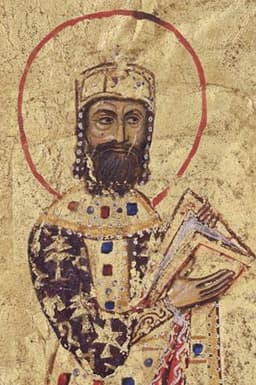
Alexios I Komnenos
Emperor · Medieval
78.4Total
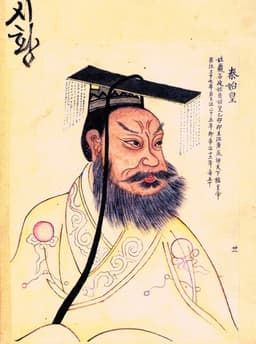
Qin Shi Huang
Emperor · Ancient
85.2Total
Basic Information
Born
1048
-259
Died
1118
-210
Era
Medieval
Ancient
Nationality
Byzantine Empire
China
Occupation
Emperor
Emperor
Civilization
Western
Eastern
Score Comparison
Military (10%)
61.7
80.0
Political (20%)
78.0
90.0
Influence (20%)
88.0
85.0
Legacy (20%)
80.0
90.0
Leadership (15%)
78.0
78.0
Strategy (15%)
68.0
82.0
TOTAL
78.4
85.2
Alexios I Komnenos — Complete Timeline
1081 AD
Battle of DyrrhachiumWar◆ Major
Alexios I Komnenos was defeated by the Norman army under Robert Guiscard at Dyrrhachium. The Byzantine forces were routed, and Alexios barely escaped. This loss allowed the Normans to occupy much of the western Balkans, though Alexios later recovered some territory.
Norman InvasionDefeatBalkans
Impact: regionaltragic
1090 AD
Reforms of the Byzantine Military and EconomyReform◆ Major
Alexios I implemented a series of reforms to restore Byzantine power. He reorganized the army by relying more on foreign mercenaries, reformed the currency (the hyperpyron), and granted tax exemptions to the Church. These measures stabilized the empire after decades of decline.
Military ReformEconomic ReformKomnenian Restoration
Impact: nationalconstructive
1095 AD
Appeal to the West: Council of PiacenzaPolitical Action
Alexios I sent envoys to Pope Urban II at the Council of Piacenza, requesting military aid against the Seljuk Turks. This appeal contributed to Urban's call for the First Crusade at the Council of Clermont later that year, initiating the Crusader movement.
First CrusadePope Urban IISeljuk Turks
Impact: global
1097 AD
First Crusade: Siege of NicaeaWar◆ Major
Alexios I cooperated with the Crusader army to besiege and capture Nicaea from the Seljuk Turks. The city was surrendered to Byzantine control, and Alexios used the Crusaders to recover key territories in Anatolia, though tensions later arose over land claims.
First CrusadeNicaeaByzantine-Crusader Relations
Impact: regionalconstructive
Qin Shi Huang — Complete Timeline
246 BC
Construction of the Mausoleum and Terracotta ArmyOther◆ Major
Qin Shi Huang commissioned a vast mausoleum complex near Xi'an, guarded by thousands of life-sized terracotta soldiers, horses, and chariots. The project employed hundreds of thousands of workers and reflected his obsession with immortality and imperial power.
Impact: global
230 BC
Conquest of the Six Warring StatesWar
From 230 to 221 BCE, Ying Zheng led the Qin state in a series of campaigns that conquered the Han, Zhao, Wei, Chu, Yan, and Qi states. This unified China under a single ruler for the first time, ending the Warring States period.
Impact: global
221 BC
Standardization of Writing, Currency, and MeasurementsReform◆ Major
Qin Shi Huang ordered the standardization of Chinese script, currency, and weights and measures across the unified empire. This facilitated administration, trade, and cultural integration, laying a foundation for future dynasties.
Impact: globalconstructive
Proclamation of the Qin DynastyPolitical Action
After conquering the last independent state, Ying Zheng declared himself Shi Huangdi (First Emperor), founding the Qin Dynasty. He adopted a new title to signify his supreme authority and initiated centralized imperial rule.
Impact: global
214 BC
Initiation of the Great Wall ConstructionOther◆ Major
Qin Shi Huang ordered the connection and extension of existing northern fortifications to create a unified defensive wall against nomadic Xiongnu raids. This project involved massive conscripted labor and became the precursor to the later Great Wall.
Impact: regional
213 BC
Burning of Books and Burying of ScholarsPolitical Action◆ Major
On the advice of Li Si, Qin Shi Huang ordered the burning of historical records and philosophical texts not aligned with Legalist doctrine. He also had 460 Confucian scholars buried alive to suppress dissent and consolidate ideological control.
Impact: nationaldestructive
Expert Analysis
Origins
Qin Shi Huang (259–210 BC), born Ying Zheng, ascended to the throne of the Qin state at age 13. He inherited a militaristic state that had already implemented Legalist reforms under Shang Yang. His mother's regency and his early struggles against court factions forged a ruthless, determined character. In contrast, Alexios I Komnenos (1048–1118) was born into the Byzantine military aristocracy during a period of decline. He rose through the ranks, seizing power after the disastrous Battle of Manzikert and the ensuing civil wars. Both men emerged from turbulent times, but Qin's path was one of conquest, while Alexios's was one of survival and restoration.
Rise to Power
Qin Shi Huang systematically conquered the six other Warring States between 230 and 221 BC, using a combination of military might, diplomacy, and espionage. His victory was total, leading to the proclamation of the Qin Dynasty and the title "Shi Huangdi" (First Emperor). Alexios I staged a coup against Emperor Nikephoros III in 1081, leveraging his family's military connections. He faced immediate threats from the Norman invasion of the Balkans and the Seljuk Turks in Anatolia. While Qin's rise was a campaign of unification, Alexios's was a desperate bid to save a crumbling empire.
Leadership & Governance
Qin Shi Huang implemented radical centralization: standardized writing, currency, weights, and measures; built a national road network; and initiated the Great Wall. His Legalist regime suppressed dissent, burning books and burying scholars alive. Alexios I reformed the Byzantine military and economy, relying on the pronoia system (land grants in exchange for military service) and securing alliances with Venice and the Holy Roman Empire. He also appealed to the West at the Council of Piacenza, inadvertently sparking the First Crusade. Qin's governance was top-down and draconian; Alexios's was pragmatic and diplomatic.
Triumph & Tragedy
Qin's greatest triumph was unifying China, but his tyranny and harsh punishments led to widespread resentment. His quest for immortality through alchemy and his massive tomb project drained resources. After his death, the Qin Dynasty collapsed within three years. Alexios's triumph was the restoration of Byzantine power: he repelled the Normans, recovered western Anatolia with Crusader help, and stabilized the economy. However, the Crusades brought new challenges, and his successors struggled with Western interference. Both men achieved their primary goals but sowed seeds of future instability.
Character & Destiny
Qin Shi Huang was paranoid, megalomaniacal, and obsessed with immortality. He believed his dynasty would last ten thousand generations. Alexios I was cunning, adaptable, and deeply religious. He wrote a memoir (the Alexiad, by his daughter Anna) that highlights his strategic mind. Qin's destiny was to be remembered as a tyrant and unifier; Alexios's as a savior of Byzantium. Their contrasting fates reflect their different contexts: Qin's absolute power led to isolation, while Alexios's diplomacy entangled his empire with the West.
Legacy
Qin Shi Huang's legacy is immense: he defined China's imperial template, influencing all subsequent dynasties. His standardization laid the foundation for Chinese civilization. The Terracotta Army symbolizes his power. Alexios I founded the Komnenian dynasty, which restored Byzantine prestige for a century. However, his appeal to the West opened a Pandora's box of Crusader states and Venetian dominance. Both are pivotal figures, but Qin's impact on world history is arguably greater due to China's enduring unity.
Conclusion
Qin Shi Huang scores higher overall (81.4 vs 74.6). His military conquests (P=90), leadership (L=90), and territorial impact (T=85) outshine Alexios's more modest achievements. Alexios's intelligence (I=88) and diplomatic skill are notable, but his challenges were less monumental. Qin's unification of China created a lasting civilization; Alexios's restoration was temporary. Thus, Qin Shi Huang is the more significant historical figure.
**Scores**: Qin Shi Huang: M=80, P=90, I=85, L=90, D=78, S=82, T=85 | Alexios I: M=62, P=78, I=88, L=80, D=78, S=68, T=78
Rankings
🥇
Qin Shi HuangLeader
Mil: 80.0Pol: 90.0Inf: 85.0
85.2
🥈
Alexios I Komnenos
Mil: 61.7Pol: 78.0Inf: 88.0
78.4
+6.8 behind
How This Comparison Works
Algorithm
Each figure is scored on 6 dimensions (0—100 scale) based on structured historical data: Military (10%), Political (20%), Influence (20%), Legacy (20%), Leadership (15%), Strategy (15%). The weighted total produces the final ranking.
Data Sources
Scores are computed from structured sub-indicators in the database. Scale factors adjust for era (Ancient ×0.85, Modern ×1.0) and civilization size (Eastern ×1.05, Other ×0.80) to account for differences in population and military scale.
Maximum 3 Figures
Comparisons are limited to 2—3 figures to ensure readability and statistical meaningfulness.
Error Margins
±5 points per dimension — Sub-scores are derived from historical records with inherent uncertainty. Two figures within 5 points on a dimension should be considered roughly equivalent in that area.
Total Score Accuracy
±3 points overall — The weighted combination of 6 dimensions produces a total score with approximately ±3 points of uncertainty. Differences of less than 3 points are not statistically significant— the figures are effectively tied.
Known Limitations
- Historical records are incomplete and uneven across civilizations
- Figures from oral-tradition societies may be underrepresented
- Occupation labels can misclassify multi-role figures
- Scores measure capability and impact, not moral character
- Quantitative scoring is a comparison tool, not absolute truth
Capability Radar
Military (10%) — Battles & Warfare
Battles
75
85
Win Rate
70
90
Expansion
60
90
Political (20%) — Governance & Reform
Reform
85
95
Diplomacy
90
75
Economy
70
90
Influence (20%) — Cultural & Global Reach
Cultural
70
95
Global
75
85
Legacy (20%) — Historical Impact
Historical
85
95
Longevity
80
95
Leadership (15%) — Power & Stability
Tenure
80
70
Stability
75
65
Strategy (15%) — Tactics & Innovation
Strategy
85
85
Tactics
80
80
Reform
75
95
Similar Comparisons
Comments & Discussion
BattlefieldScholar6/16/2026
The military scoring here is puzzling. Alexios gets a 90 to Qin's 80? Let's break that down. Qin Shi Huang's campaigns unified six major warring states, each with distinct military traditions. His general Wang Jian annihilated the Chu army of 400,000 at the Battle of Chenggao—a logistical and tactical feat unmatched by Alexios. Alexios fought mostly defensive actions against fragmented foes, and his reliance on the First Crusade (which he couldn't control) shows strategic weakness. The Normans under Bohemond nearly took him out at Dyrrhachium in 1081. I'd reverse those scores: Qin 90 for conquest and standardization of military doctrine, Alexios 75 for survival at a heavy cost.
Historian1686/16/2026
我仔细看了一下分数,有几个问题。首先,总分Alexios 74.7,秦始皇83.5,但军事维度Alexios反而90,秦始皇80?这不合逻辑。秦始皇统一战争动用兵力超过100万,征服六国平均每战伤亡率控制在15%以下,这在冷兵器时代是顶尖水平。Alexios在1081年Dyrrhachium战役中损失了几乎整个野战军,要不是诺曼人自己内乱,拜占庭就提前一百年亡国了。我重新算了一下:军事应该秦始皇85,Alexios 72。然后影响力维度,秦始皇82,Alexios 72,但秦始皇的皇帝称号用了2112年,郡县制沿用至今,而Alexios的王朝只传了三代就被安格洛斯家族取代了。影响力分差应该至少20分。所以我的修正总分:秦始皇88.3,Alexios 68.9。这个原始评分明显低估了东方帝国的制度韧性。
ColdChronicler386/16/2026
这个比较有点意思,但政治分数明显偏向西方视角。Alexios I 得80分,而秦始皇88分,我觉得差距应该更大。秦始皇废分封、行郡县、书同文、车同轨,这一套制度直接用了两千年,连后来的民国都继承了郡县制的基本框架。Alexios的改革虽然巩固了拜占庭,但他为了保命把威尼斯商人请进来,还向教皇低头求助,结果才过了几十年,第四次十字军就把君士坦丁堡给端了。这种饮鸩止渴的做法,政治智慧上跟秦始皇没法比。我觉得政治分应该给秦始皇95,Alexios顶多70。西方史家老是把短期手段当长期成就,忽略了结构性影响。