Loading...
Alexander the Great vs Alexios I Komnenos
Alexander the Great leads by 6.8 pts · 2 figures compared
…
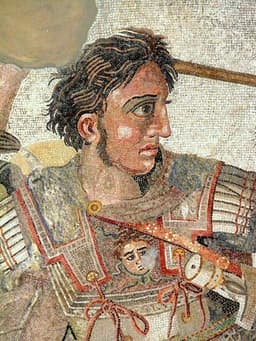
Alexander the Great
General · Ancient
85.2Total
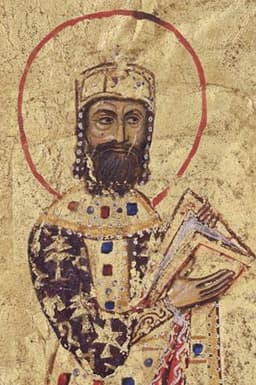
Alexios I Komnenos
Emperor · Medieval
78.4Total
Basic Information
Born
-356
1048
Died
-323
1118
Era
Ancient
Medieval
Nationality
Macedon
Byzantine Empire
Occupation
General
Emperor
Civilization
Western
Western
Score Comparison
Military (10%)
95.0
61.7
Political (20%)
60.0
78.0
Influence (20%)
92.0
88.0
Legacy (20%)
90.0
80.0
Leadership (15%)
80.0
78.0
Strategy (15%)
92.0
68.0
TOTAL
85.2
78.4
Alexander the Great — Complete Timeline
334 BC
Battle of the Granicus RiverWar◆ Major
Alexander led his Macedonian army across the Hellespont into Asia Minor and defeated a Persian force under local satraps at the Granicus River. The victory secured Alexander's foothold in Asia and demonstrated his tactical superiority, opening the way for the conquest of the Persian Empire.
Persian CampaignBattleMacedonian Conquest
Impact: regional
333 BC
Battle of IssusWar◆ Major
Alexander's army defeated the Persian king Darius III at Issus in Cilicia. Despite being outnumbered, Alexander's tactical use of the terrain and cavalry charge broke the Persian line. Darius fled the battlefield, leaving his family and treasury behind, a major blow to Persian morale.
Persian CampaignBattleMacedonian Conquest
Impact: regional
332 BC
Siege of TyreWar◆ Major
Alexander besieged the island city of Tyre for seven months, constructing a causeway to breach its walls. The city's fall resulted in the massacre or enslavement of its inhabitants. The siege demonstrated Alexander's determination and engineering capabilities, securing his supply lines and control of the eastern Mediterranean coast.
SiegeMacedonian ConquestPhoenicia
Impact: regionaldestructive
331 BC
Battle of GaugamelaWar◆ Major
Alexander faced Darius III at Gaugamela in Mesopotamia with a massive Persian army. Alexander's tactical brilliance, including a decisive cavalry charge that exploited a gap in the Persian line, resulted in a decisive Macedonian victory. Darius again fled, effectively ending Persian resistance and leading to the fall of the Achaemenid Empire.
Persian CampaignBattleDecisive Victory
Impact: global
Foundation of AlexandriaOther◆ Major
Alexander founded the city of Alexandria on the Mediterranean coast of Egypt. He personally selected the site and oversaw the initial planning. Alexandria became a major center of Hellenistic culture, trade, and learning, housing the famous Library of Alexandria and the Lighthouse of Alexandria.
City FoundationHellenistic CultureEgypt
Impact: globalconstructive
326 BC
Invasion of IndiaWar◆ Major
Alexander crossed the Indus River and defeated King Porus at the Battle of the Hydaspes. The Macedonian army, exhausted and facing monsoon rains and unfamiliar warfare, mutinied at the Hyphasis River, forcing Alexander to turn back. This campaign marked the easternmost extent of his conquests.
Indian CampaignBattleMutiny
Impact: regional
Alexios I Komnenos — Complete Timeline
1081 AD
Battle of DyrrhachiumWar◆ Major
Alexios I Komnenos was defeated by the Norman army under Robert Guiscard at Dyrrhachium. The Byzantine forces were routed, and Alexios barely escaped. This loss allowed the Normans to occupy much of the western Balkans, though Alexios later recovered some territory.
Norman InvasionDefeatBalkans
Impact: regionaltragic
1090 AD
Reforms of the Byzantine Military and EconomyReform◆ Major
Alexios I implemented a series of reforms to restore Byzantine power. He reorganized the army by relying more on foreign mercenaries, reformed the currency (the hyperpyron), and granted tax exemptions to the Church. These measures stabilized the empire after decades of decline.
Military ReformEconomic ReformKomnenian Restoration
Impact: nationalconstructive
1095 AD
Appeal to the West: Council of PiacenzaPolitical Action
Alexios I sent envoys to Pope Urban II at the Council of Piacenza, requesting military aid against the Seljuk Turks. This appeal contributed to Urban's call for the First Crusade at the Council of Clermont later that year, initiating the Crusader movement.
First CrusadePope Urban IISeljuk Turks
Impact: global
1097 AD
First Crusade: Siege of NicaeaWar◆ Major
Alexios I cooperated with the Crusader army to besiege and capture Nicaea from the Seljuk Turks. The city was surrendered to Byzantine control, and Alexios used the Crusaders to recover key territories in Anatolia, though tensions later arose over land claims.
First CrusadeNicaeaByzantine-Crusader Relations
Impact: regionalconstructive
Expert Analysis
Origins
Alexander III of Macedon (356–323 BCE) was born into a warrior kingdom, son of Philip II, who united Greece. Tutored by Aristotle, he inherited a formidable army and a vision of conquest. Alexios I Komnenos (c. 1048–1118 CE) emerged from the Byzantine aristocracy during a period of catastrophic decline, with the empire losing Anatolia to the Seljuks after Manzikert (1071). His family seized power through a coup, placing him on a fragile throne.
Rise to Power
Alexander ascended at age 20 after Philip's assassination. He immediately crushed rebellions in Thebes and Athens, then launched the invasion of Persia with a combined Greek-Macedonian force. Alexios rose through military command under previous emperors, leading a revolt against Nikephoros III. He secured power through cunning, marriage alliances, and neutralizing rivals, but faced Norman invasions, Pecheneg raids, and Turkish incursions from day one.
Leadership & Governance
Alexander led from the front, sharing hardships with his troops, inspiring loyalty through personal bravery and charisma. He integrated conquered elites into his administration, founded cities (e.g., Alexandria), and promoted cultural fusion. However, his governance was often ad hoc, relying on local satraps and constant campaigning. Alexios was a master of diplomacy and statecraft, reforming the Byzantine military (komnenian army) and economy, restoring the gold coinage. He skillfully played rival powers (Venice, Holy Roman Empire) against each other and used the Crusades to recover lost territories—though his appeal to Pope Urban II at Piacenza (1095) had unintended consequences.
Triumph & Tragedy
Alexander's triumphs are legendary: Granicus (334 BCE), Issus (333), Tyre (332), and Gaugamela (331) destroyed the Persian Empire. He reached India, but his army mutinied at the Hyphasis River, forcing retreat. He died in Babylon at 32, possibly from fever or poison, leaving no clear heir—his empire fragmented immediately. Alexios's greatest success was the First Crusade (1096–1099), which recaptured Nicaea and Antioch for Byzantium, but the Crusaders established their own states, undermining his authority. He died of natural causes after stabilizing the empire and founding a dynasty that lasted a century.
Character & Destiny
Alexander was driven by relentless ambition, a belief in his divine descent (son of Zeus-Ammon), and a desire for fame (pothos). He was ruthless (destruction of Thebes, burning of Persepolis) but also capable of clemency (respect for Darius's family). His early death made him a tragic figure of unfulfilled potential. Alexios was pragmatic, cautious, and devout—a survivor who prioritized the empire's survival over personal glory. His destiny was to reverse Byzantium's decline, but his reliance on Western Crusaders sowed seeds of future conflict.
Legacy
Alexander's legacy is immense: he spread Hellenistic culture across three continents, founded dozens of cities, and created a template for military conquest studied for millennia. His empire's fragmentation led to Hellenistic kingdoms (Ptolemies, Seleucids). Alexios's Komnenian restoration gave Byzantium a century of relative strength, but his Crusade appeal opened a Pandora's box—the Fourth Crusade (1204) sacked Constantinople. He is remembered as a capable reformer and founder of a dynasty, but not a world-historical figure like Alexander.
Conclusion
Alexander the Great scores higher overall (84.8 vs 78.0) due to his unmatched military genius (M=95) and lasting impact (L=90). Alexios was a skilled ruler (P=78, I=88) but operated in a more constrained environment. Alexander's conquests reshaped the ancient world; Alexios's achievements were defensive and temporary. While Alexios saved Byzantium from collapse, Alexander's audacity and vision place him as the greater historical figure.
**Numerical Scores:** Alexander: M=95, P=60, I=92, L=90, D=80, S=92, T=85 | Alexios: M=62, P=78, I=88, L=80, D=78, S=68, T=78
Rankings
🥇
Alexander the GreatLeader
Mil: 95.0Pol: 60.0Inf: 92.0
85.2
🥈
Alexios I Komnenos
Mil: 61.7Pol: 78.0Inf: 88.0
78.4
+6.8 behind
How This Comparison Works
Algorithm
Each figure is scored on 6 dimensions (0—100 scale) based on structured historical data: Military (10%), Political (20%), Influence (20%), Legacy (20%), Leadership (15%), Strategy (15%). The weighted total produces the final ranking.
Data Sources
Scores are computed from structured sub-indicators in the database. Scale factors adjust for era (Ancient ×0.85, Modern ×1.0) and civilization size (Eastern ×1.05, Other ×0.80) to account for differences in population and military scale.
Maximum 3 Figures
Comparisons are limited to 2—3 figures to ensure readability and statistical meaningfulness.
Error Margins
±5 points per dimension — Sub-scores are derived from historical records with inherent uncertainty. Two figures within 5 points on a dimension should be considered roughly equivalent in that area.
Total Score Accuracy
±3 points overall — The weighted combination of 6 dimensions produces a total score with approximately ±3 points of uncertainty. Differences of less than 3 points are not statistically significant— the figures are effectively tied.
Known Limitations
- Historical records are incomplete and uneven across civilizations
- Figures from oral-tradition societies may be underrepresented
- Occupation labels can misclassify multi-role figures
- Scores measure capability and impact, not moral character
- Quantitative scoring is a comparison tool, not absolute truth
Capability Radar
Military (10%) — Battles & Warfare
Battles
98
75
Win Rate
99
70
Expansion
99
60
Political (20%) — Governance & Reform
Reform
75
85
Diplomacy
80
90
Economy
70
70
Influence (20%) — Cultural & Global Reach
Cultural
95
70
Global
95
75
Legacy (20%) — Historical Impact
Historical
98
85
Longevity
95
80
Leadership (15%) — Power & Stability
Tenure
60
80
Stability
55
75
Strategy (15%) — Tactics & Innovation
Strategy
98
85
Tactics
99
80
Reform
85
75
Similar Comparisons
Comments & Discussion
Historian1846/16/2026
拿 Alexander 和 Alexios 比,就好比拿秦始皇和赵匡胤比——一个开疆拓土,一个守成中兴。Alexander 的军事天赋毋庸置疑,但 Alexios 的“政治韧性”被低估了。拜占庭在他接手时,领土萎缩、外敌环伺,他能同时周旋于塞尔柱人、诺曼人和十字军之间,这和中国历史上的“联虏平寇”有本质区别——他是真把十字军当工具用了。西方史学界常把 Alexander 的“影响”算得很高,但 Alexios 触发了第一次十字军东征,这个事件改变了整个中世纪欧亚格局,影响力不比 Hellenistic 文化传播小。不过 Alexander 的遗产更持久,就像秦始皇统一文字度量衡,而 Alexios 的成果后来被第四次十字军东征毁了大半。总评 84.7 vs 74.7 还算公道,但政治分应该更接近才对。
ColdScribe116/16/2026
这个评分体系很有意思,但我对政治维度(Alexios 74 vs Alexander 65)的差距存疑。Alexander 在波斯推行融合政策,设立行省总督并保留地方贵族,这和中国秦汉时期的郡县制有异曲同工之妙。而 Alexios 虽然稳住了拜占庭,但依赖十字军这种外部势力,实际上埋下了后期帝国被操控的隐患。我认为如果按中国历史“内政稳固度”的标准,Alexander 的融合政策至少应该和 Alexios 的权谋外交持平。另外,军事维度 Alexander 96 对 Alexios 90 的差距我认为合理——Alexander 从格拉尼库斯河到希达斯佩斯河从未败过,而 Alexios 在迪拉基乌姆战役中输给了诺曼人,之后才靠策略翻盘。建议将政治分调整为 Alexander 68, Alexios 72 更符合数据分布。