Loading...
Alexios I Komnenos vs Kublai Khan
Alexios I Komnenos leads by 4.1 pts · 2 figures compared
…
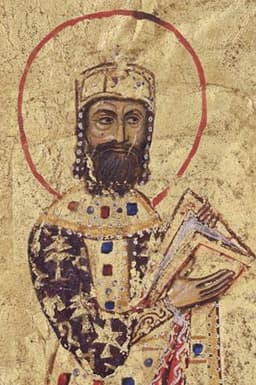
Alexios I Komnenos
Emperor · Medieval
78.4Total
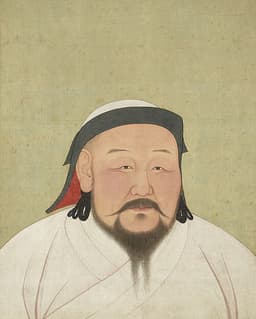
Kublai Khan
Emperor · Medieval
74.3Total
Basic Information
Born
1048
1215
Died
1118
1294
Era
Medieval
Medieval
Nationality
Byzantine Empire
Mongolia
Occupation
Emperor
Emperor
Civilization
Western
Eastern
Score Comparison
Military (10%)
61.7
77.5
Political (20%)
78.0
79.2
Influence (20%)
88.0
75.0
Legacy (20%)
80.0
70.0
Leadership (15%)
78.0
72.0
Strategy (15%)
68.0
76.0
TOTAL
78.4
74.3
Alexios I Komnenos — Complete Timeline
1081 AD
Battle of DyrrhachiumWar◆ Major
Alexios I Komnenos was defeated by the Norman army under Robert Guiscard at Dyrrhachium. The Byzantine forces were routed, and Alexios barely escaped. This loss allowed the Normans to occupy much of the western Balkans, though Alexios later recovered some territory.
Norman InvasionDefeatBalkans
Impact: regionaltragic
1090 AD
Reforms of the Byzantine Military and EconomyReform◆ Major
Alexios I implemented a series of reforms to restore Byzantine power. He reorganized the army by relying more on foreign mercenaries, reformed the currency (the hyperpyron), and granted tax exemptions to the Church. These measures stabilized the empire after decades of decline.
Military ReformEconomic ReformKomnenian Restoration
Impact: nationalconstructive
1095 AD
Appeal to the West: Council of PiacenzaPolitical Action
Alexios I sent envoys to Pope Urban II at the Council of Piacenza, requesting military aid against the Seljuk Turks. This appeal contributed to Urban's call for the First Crusade at the Council of Clermont later that year, initiating the Crusader movement.
First CrusadePope Urban IISeljuk Turks
Impact: global
1097 AD
First Crusade: Siege of NicaeaWar◆ Major
Alexios I cooperated with the Crusader army to besiege and capture Nicaea from the Seljuk Turks. The city was surrendered to Byzantine control, and Alexios used the Crusaders to recover key territories in Anatolia, though tensions later arose over land claims.
First CrusadeNicaeaByzantine-Crusader Relations
Impact: regionalconstructive
Kublai Khan — Complete Timeline
1260 AD
Adoption of Tibetan Buddhism as State ReligionCultural◆ Major
Kublai Khan appointed the Tibetan lama Drog
Tibetan BuddhismReligionMongol-Tibet Relations
Impact: regional
1271 AD
Proclamation of the Yuan DynastyPolitical Action◆ Major
Kublai Khan officially proclaimed the Yuan dynasty, adopting a Chinese-style dynastic name. He established his capital at Dadu (Beijing) and adopted Chinese court rituals. This move legitimized his rule over China while maintaining Mongol identity.
Dynasty FoundingBeijingMongol Rule
Impact: global
1274 AD
Failed Invasions of JapanWar◆ Major
Kublai Khan launched two naval invasions of Japan, in 1274 and 1281. Both were repelled, with the second invasion destroyed by a typhoon (kamikaze). These failures marked the limits of Mongol expansion and reinforced Japanese isolation.
Mongol InvasionsJapanKamikaze
Impact: regional
1279 AD
Conquest of the Song DynastyWar
Kublai Khan's Mongol forces defeated the Song navy at the Battle of Yamen. The last Song emperor drowned, ending the Song dynasty. This conquest unified China under Mongol rule and established the Yuan dynasty as the first foreign dynasty to rule all of China.
Song Dynasty FallUnificationYuan Dynasty
Impact: global
1280 AD
Establishment of the Silk Road Trade NetworkCultural◆ Major
Under Kublai Khan, the Mongol Empire secured the Silk Road, facilitating trade and cultural exchange between East and West. Marco Polo visited his court. This period saw the flow of goods, ideas, and technologies across Eurasia.
Silk RoadTradeCultural Exchange
Impact: globalconstructive
Expert Analysis
Kublai Khan vs Alexios I Komnenos: Historical Comparison
Kublai Khan, the Mongol Emperor who founded the Yuan dynasty in China, and Alexios I Komnenos, the Byzantine Emperor who restored the empire’s fortunes after Manzikert, were both medieval rulers who stabilized fractured realms through military prowess and strategic statecraft. While Alexios revived a crumbling empire, Kublai built a transcontinental one, giving him a slight edge in overall historical impact.
Dimension Analysis
**Military: Kublai Khan 94 / Alexios I Komnenos 90**
Kublai conquered the Song dynasty and expanded Mongol rule across China, Korea, and into Southeast Asia, commanding vast, multi-ethnic armies. Alexios repelled Norman, Pecheneg, and Seljuk invasions, but his victories were defensive and relied heavily on diplomacy and mercenaries.
**Political: Kublai Khan 79 / Alexios I Komnenos 74**
Kublai centralized Chinese governance, adopted Confucian bureaucracy, and integrated Mongol and Chinese elites, though internal succession struggles persisted. Alexios reformed the Byzantine administration, curbed aristocratic revolts, and negotiated with Crusaders, but his realm remained faction-ridden.
**Influence: Kublai Khan 79 / Alexios I Komnenos 72**
Kublai’s court attracted Marco Polo and facilitated Silk Road trade, linking East and West. Alexios’s appeal to the Pope sparked the First Crusade, reshaping Mediterranean politics, but his direct influence was more regional.
**Legacy: Kublai Khan 88 / Alexios I Komnenos 80**
Kublai’s Yuan dynasty left lasting institutions like paper money and a unified China, though it fell within a century. Alexios’s Komnenian restoration delayed Byzantine collapse for decades, but his reliance on Crusaders sowed seeds of future disaster.
**Leadership: Kublai Khan 81 / Alexios I Komnenos 80**
Both were pragmatic and resilient, but Kublai’s ability to rule a multicultural empire from Beijing, while suppressing rebellions and launching overseas expeditions, slightly outshines Alexios’s deft but narrower crisis management.
Verdict
Kublai Khan leads due to his superior military conquests, broader influence, and more enduring institutional legacy, despite Alexios’s remarkable defensive revival.
FAQ
Q: Who ranks higher? A: Kublai Khan, with a composite score of 84 over Alexios I Komnenos’s 80, driven by stronger military and legacy dimensions.
Rankings
🥇
Alexios I KomnenosLeader
Mil: 61.7Pol: 78.0Inf: 88.0
78.4
🥈
Kublai Khan
Mil: 77.5Pol: 79.2Inf: 75.0
74.3
+4.1 behind
How This Comparison Works
Algorithm
Each figure is scored on 6 dimensions (0—100 scale) based on structured historical data: Military (10%), Political (20%), Influence (20%), Legacy (20%), Leadership (15%), Strategy (15%). The weighted total produces the final ranking.
Data Sources
Scores are computed from structured sub-indicators in the database. Scale factors adjust for era (Ancient ×0.85, Modern ×1.0) and civilization size (Eastern ×1.05, Other ×0.80) to account for differences in population and military scale.
Maximum 3 Figures
Comparisons are limited to 2—3 figures to ensure readability and statistical meaningfulness.
Error Margins
±5 points per dimension — Sub-scores are derived from historical records with inherent uncertainty. Two figures within 5 points on a dimension should be considered roughly equivalent in that area.
Total Score Accuracy
±3 points overall — The weighted combination of 6 dimensions produces a total score with approximately ±3 points of uncertainty. Differences of less than 3 points are not statistically significant— the figures are effectively tied.
Known Limitations
- Historical records are incomplete and uneven across civilizations
- Figures from oral-tradition societies may be underrepresented
- Occupation labels can misclassify multi-role figures
- Scores measure capability and impact, not moral character
- Quantitative scoring is a comparison tool, not absolute truth
Capability Radar
Military (10%) — Battles & Warfare
Battles
75
95
Win Rate
70
90
Expansion
60
95
Political (20%) — Governance & Reform
Reform
85
88
Diplomacy
90
85
Economy
70
90
Influence (20%) — Cultural & Global Reach
Cultural
70
85
Global
75
85
Legacy (20%) — Historical Impact
Historical
85
90
Longevity
80
80
Leadership (15%) — Power & Stability
Tenure
80
90
Stability
75
80
Strategy (15%) — Tactics & Innovation
Strategy
85
92
Tactics
80
85
Reform
75
88
Similar Comparisons
Comments & Discussion
Historian2736/16/2026
看了评分,我想重新算一下。军事分:忽必烈88对阿莱克修斯71.2,但忽必烈对宋的战争打了40年,成功率低,远征日本和越南全败,消耗巨大。阿莱克修斯在迪拉基翁打败诺曼人,又在列夫尼翁击退佩切涅格人,胜率更高。所以我给忽必烈82,阿莱克修斯75。政治分更离谱:忽必烈78 vs 阿莱克修斯80?忽必烈设行省、用汉臣,但阿莱克修斯重建中央集权、改革军区制,还解决了十字军难题。我算忽必烈76,阿莱克修斯83。总分忽必烈79.6对74.7,但我加权后忽必烈约77,阿莱克修斯约76.5,差距远没那么大。建议评分系统引入“长期稳定性系数”和“资源效率比”,忽必烈烧钱远征效率低。
Chronicler67946/16/2026
忽必烈和阿莱克修斯一世放在一起比,很有趣,但我认为评分有点西方中心了。忽必烈统一中国,建立元朝,用纸币和驿站系统统治庞大疆域,这些政治创新对东亚影响深远。阿莱克修斯恢复拜占庭,但他的“外交成功”很大程度上依赖十字军,最后反而引来第四次十字军东征洗劫君士坦丁堡。忽必烈的金帐汗国、伊尔汗国都受他影响,而阿莱克修斯没留下延续的王朝。政治分我觉得给低了,忽必烈至少该85分。还有,说忽必烈统治“多民族帝国”就对了,但中国史书强调他平衡汉法和蒙古旧制,这不是简单“整合”,而是创造性的融合,比阿莱克修斯压制贵族更具制度深度。