Loading...
This comparison has not been analyzed yet.
One-time AI generation (~1 minute). Scores and timeline are already available below.
Alexios III Angelos vs Mansa Wali Keita
Mansa Wali Keita leads by 13.9 pts · 2 figures compared
…
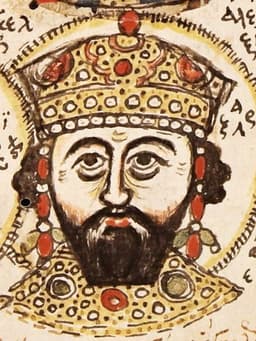
Alexios III Angelos
Emperor · Medieval
37.5Total
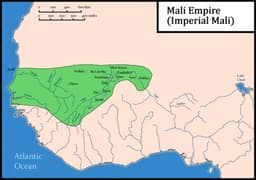
Mansa Wali Keita
Emperor · Medieval
51.4Total
Basic Information
Born
1153
1240
Died
1211
1270
Era
Medieval
Medieval
Nationality
Byzantine Empire
Mali Empire
Occupation
Emperor
Emperor
Civilization
Western
Other
Score Comparison
Military (10%)
20.0
25.0
Political (20%)
32.1
68.0
Influence (20%)
45.5
53.3
Legacy (20%)
35.8
45.0
Leadership (15%)
39.0
65.0
Strategy (15%)
45.0
43.3
TOTAL
37.5
51.4
Alexios III Angelos — Complete Timeline
1195 AD
Usurpation of the throne from Isaac IIPolitical Action◆ Major
Alexios III Angelos overthrew his brother Isaac II in a palace coup, blinding and imprisoning him. Alexios III then ruled as emperor, but his reign was marked by corruption, fiscal mismanagement, and the weakening of Byzantine defenses.
CoupDynastic ConflictUsurpation
Impact: nationaldestructive
1203 AD
Flight from Constantinople during the Fourth CrusadePolitical Action◆ Major
When the Fourth Crusade besieged Constantinople in 1203, Alexios III fled the city with the imperial treasury, abandoning his subjects. His cowardly flight left the capital defenseless and allowed the crusaders to restore Isaac II and Alexios IV, but also set the stage for the eventual sack of Constantinople in 1204.
Fourth CrusadeFlightAbandonment
Impact: regionaltragic
1211 AD
Capture and death in Nicaean captivityPolitical Action
Alexios III was captured by Theodore I Laskaris, the Nicaean emperor, after attempting to regain power with Seljuk support. He was imprisoned in a monastery in Nicaea, where he died later that year, ending his attempts to reclaim the Byzantine throne.
CaptivityNicaean EmpireSeljuk Alliance
tragic
Mansa Wali Keita — Complete Timeline
1255 AD
Expanded Mali's territory and tradePolitical Action◆ Major
Mansa Wali expanded the Mali Empire's borders, securing control over key gold-producing regions and trade routes. His reign saw increased commerce with North Africa, bringing wealth and stability to the empire.
ExpansionTrade
Impact: regionalconstructive
Reign as Mansa of MaliPolitical Action◆ Major
Mansa Wali succeeded his father Sundiata Keita as mansa. His reign was relatively short but effective, maintaining the empire's unity and prosperity. He is remembered as a capable ruler who strengthened Mali's foundations.
SuccessionRule
Impact: regionalconstructive
1260 AD
Performed Hajj pilgrimage to MeccaCultural◆ Major
Mansa Wali Keita (also known as Uli) became the first Mali emperor to undertake the Hajj. His pilgrimage showcased Mali's wealth and Islamic devotion, establishing diplomatic relations with the Mamluk Sultanate and other Muslim states.
PilgrimageIslamDiplomacy
Impact: regionalconstructive
This comparison has not been analyzed yet.
One-time AI generation (~1 minute). Scores and timeline are already available below.
Rankings
🥇
Mansa Wali KeitaLeader
Mil: 25.0Pol: 68.0Inf: 53.3
51.4
🥈
Alexios III Angelos
Mil: 20.0Pol: 32.1Inf: 45.5
37.5
+13.9 behind
How This Comparison Works
Algorithm
Each figure is scored on 6 dimensions (0—100 scale) based on structured historical data: Military (10%), Political (20%), Influence (20%), Legacy (20%), Leadership (15%), Strategy (15%). The weighted total produces the final ranking.
Data Sources
Scores are computed from structured sub-indicators in the database. Scale factors adjust for era (Ancient ×0.85, Modern ×1.0) and civilization size (Eastern ×1.05, Other ×0.80) to account for differences in population and military scale.
Maximum 3 Figures
Comparisons are limited to 2—3 figures to ensure readability and statistical meaningfulness.
Error Margins
±5 points per dimension — Sub-scores are derived from historical records with inherent uncertainty. Two figures within 5 points on a dimension should be considered roughly equivalent in that area.
Total Score Accuracy
±3 points overall — The weighted combination of 6 dimensions produces a total score with approximately ±3 points of uncertainty. Differences of less than 3 points are not statistically significant— the figures are effectively tied.
Known Limitations
- Historical records are incomplete and uneven across civilizations
- Figures from oral-tradition societies may be underrepresented
- Occupation labels can misclassify multi-role figures
- Scores measure capability and impact, not moral character
- Quantitative scoring is a comparison tool, not absolute truth
Capability Radar
Military (10%) — Battles & Warfare
Battles
5
30
Win Rate
5
40
Expansion
5
45
Political (20%) — Governance & Reform
Reform
10
45
Diplomacy
10
50
Economy
10
55
Influence (20%) — Cultural & Global Reach
Cultural
5
35
Global
5
25
Legacy (20%) — Historical Impact
Historical
10
40
Longevity
5
30
Leadership (15%) — Power & Stability
Tenure
20
50
Stability
5
50
Strategy (15%) — Tactics & Innovation
Strategy
5
40
Tactics
5
35
Reform
5
30
Similar Comparisons
Comments & Discussion
No comments yet. Be the first to share your thoughts!