Loading...
Alfonso VIII of Castile vs Napoleon Bonaparte
Napoleon Bonaparte leads by 9.9 pts · 2 figures compared
…
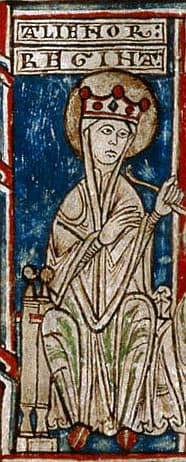
Alfonso VIII of Castile
Emperor · Medieval
61.0Total

Napoleon Bonaparte
General · Modern
70.9Total
Basic Information
Born
1155
1769
Died
1214
1821
Era
Medieval
Modern
Nationality
Castile
France
Occupation
Emperor
General
Civilization
Western
Western
Score Comparison
Military (10%)
60.0
94.0
Political (20%)
72.0
72.0
Influence (20%)
56.7
40.0
Legacy (20%)
55.0
80.0
Leadership (15%)
68.0
78.0
Strategy (15%)
61.2
90.0
TOTAL
61.0
70.9
Alfonso VIII of Castile — Complete Timeline
1170 AD
Marriage to Eleanor of EnglandPolitical Action
Alfonso VIII married Eleanor of England, daughter of Henry II and Eleanor of Aquitaine. This marriage brought Castile into the Plantagenet sphere of influence and produced several children who married into other European royal houses.
MarriageAllianceCastile
Impact: regionalconstructive
1195 AD
Battle of AlarcosWar◆ Major
Alfonso VIII's Castilian army was decisively defeated by the Almohad Caliph Abu Yusuf Yaqub al-Mansur at Alarcos. The defeat led to the loss of several frontier fortresses and a period of Almohad dominance in Iberia.
ReconquistaBattleDefeat
Impact: regionaltragic
1208 AD
Founding of the University of PalenciaCultural◆ Major
Alfonso VIII founded the University of Palencia, one of the first universities in Europe. The institution attracted scholars from across Europe and promoted the study of theology, law, and the liberal arts in Castile.
EducationUniversityCulture
Impact: regionalconstructive
1212 AD
Battle of Las Navas de TolosaWar
Alfonso VIII led a coalition of Castilian, Aragonese, Navarrese, and Portuguese forces to a decisive victory over the Almohad Caliph Muhammad al-Nasir at Las Navas de Tolosa. This battle broke Almohad power in Iberia and opened the way for the Christian reconquest of Andalusia.
ReconquistaBattleTurning Point
Impact: regionalconstructive
Napoleon Bonaparte — Complete Timeline
1799 AD
Coup of 18 BrumaireOther◆ Major
Napoleon Bonaparte, with support from his brother Lucien and key political figures, overthrew the Directory in a bloodless coup. He established the Consulate with himself as First Consul, effectively becoming the ruler of France. This event ended the French Revolution's most unstable period.
French RevolutionCoupRise to Power
Impact: regional
1804 AD
Promulgation of the Napoleonic CodeOther◆ Major
Napoleon enacted the Civil Code of the French, known as the Napoleonic Code, a comprehensive set of laws that replaced the fragmented feudal legal systems. The code established legal equality, protected property rights, and secularized law. It became the basis for legal systems in many European and world countries.
Legal ReformNapoleonic CodeCivil Law
Impact: globalconstructive
1805 AD
Battle of AusterlitzWar◆ Major
Napoleon's Grande Arm
Napoleonic WarsBattleDecisive Victory
Impact: global
1812 AD
Invasion of RussiaWar◆ Major
Napoleon led the Grande Arm
Napoleonic WarsInvasionDisaster
Impact: globaldestructive
1815 AD
Battle of WaterlooWar◆ Major
Napoleon's French army was defeated by the combined forces of the Duke of Wellington's Anglo-Allied army and Gebhard Leberecht von Bl
Napoleonic WarsBattleFinal Defeat
Impact: globaldestructive
Expert Analysis
alfonso-viii-of-castile-vs-napoleon-bonaparte
# The Emperor and the Crusader King
On a July morning in 1212, a coalition army marched through the Sierra Morena mountains of southern Spain, led by a king who had known the bitterness of total defeat. Seventeen years earlier, Alfonso VIII of Castile had watched his knights flee in terror at Alarcos, his kingdom left exposed to the fury of the Almohad Caliphate. Now, at Las Navas de Tolosa, he would shatter Muslim power in Iberia forever. Across the centuries, another figure would rise from the ashes of a different revolution: Napoleon Bonaparte, born in 1769 on the island of Corsica, would conquer Europe from Madrid to Moscow, only to find his own Alarcos in the snows of Russia and the mud of Waterloo. What drove these two men—one a medieval king, the other a modern emperor—to such different fates? The answer lies not merely in their talents, but in the worlds that shaped them.
Origins
Alfonso VIII entered the world in 1155, a child of the Reconquista, that centuries-long struggle between Christian and Muslim kingdoms for the soul of the Iberian Peninsula. He inherited a Castile that was fragmented, feudal, and perpetually under threat. His upbringing was one of noble alliances and constant warfare, where a king's legitimacy depended on his ability to protect his people and expand his domain. The medieval world offered no room for doubt: God, honor, and dynasty were the only currencies that mattered.
Napoleon Bonaparte, by contrast, was born into the chaos of an Enlightenment world cracking apart. Corsica had only recently passed from Genoa to France, and young Napoleon grew up speaking Italian, not French. He was a provincial outsider in a nation that would soon devour its own king. His era was one of revolution, meritocracy, and the collapse of old hierarchies. While Alfonso learned to command through inherited right, Napoleon learned to command through artillery mathematics and sheer ambition.
Rise to Power
Alfonso's path was predetermined. Crowned king of Castile at age three, his early reign was a regency of warring nobles. He spent his youth learning to manage powerful barons, forge alliances through marriage—his 1170 union with Eleanor of England brought Castile into the Plantagenet orbit—and prepare for the inevitable confrontation with the Almohads. His rise was not a leap but a slow accumulation of authority, measured in treaties, sieges, and the careful balancing of feudal loyalties.
Napoleon's ascent was explosive. A young artillery officer during the French Revolution, he seized his moment at the Siege of Toulon in 1793, when he was just 24. By 1796, he commanded the Army of Italy; by 1799, he had overthrown the Directory and made himself First Consul. In 1804, he crowned himself Emperor of the French. Where Alfonso inherited a kingdom, Napoleon created an empire from the wreckage of a revolution. His rise was a testament to talent over birthright—a distinctly modern phenomenon.
Leadership & Governance
Alfonso VIII governed as a medieval king must: through personal presence, religious authority, and the sword. His greatest achievement was not military but institutional—the founding of the University of Palencia in 1208, one of Europe's first universities, which drew scholars from across Christendom. He understood that a kingdom's strength lay not only in its knights but in its minds. Yet his rule remained bound by feudal constraints; he could command only what his nobles would grant.
Napoleon governed with a revolutionary's energy and a dictator's precision. The Napoleonic Code, enacted in 1804, standardized French law and influenced legal systems across Europe and beyond. He reformed education, centralized administration, and built roads and canals. His political score of 75 reflects both his genius for organization and his fatal flaw: he could not stop conquering. Where Alfonso fought defensive wars for survival and expansion, Napoleon fought for glory. The difference was destiny.
Triumph & Tragedy
Alfonso's tragedy came early. At the Battle of Alarcos in 1195, he attacked the Almohad Caliph Abu Yusuf Yaqub al-Mansur with reckless confidence. The result was a massacre. His military score of 62.6 reflects this disaster. But Alfonso learned from defeat. For seventeen years, he rebuilt his army, secured alliances, and waited. When he finally met the Almohads again at Las Navas de Tolosa in 1212, he led a coalition of Castilians, Aragonese, Navarrese, and Portuguese to a victory that broke Muslim power in Spain forever. That triumph—scored at 72.2 for legacy—defined his reign.
Napoleon's trajectory was the reverse. His triumph was early and sustained: Austerlitz in 1805, Jena in 1806, Friedland in 1807. His military score of 94 is among the highest in history. But his tragedy was hubris. The invasion of Russia in 1812 destroyed his Grand Army; Leipzig in 1813 broke his empire; Waterloo in 1815 ended his return. Unlike Alfonso, who learned from defeat, Napoleon could not stop. His character forbade it.
Character & Destiny
Alfonso was a man of his age: pious, patient, and pragmatic. He understood that a king's duty was to his kingdom, not his ego. His leadership score of 82.5 reflects a ruler who could admit error and adapt. Napoleon, with a leadership score of 80, was equally capable but fundamentally different. He was a creature of the Enlightenment and the Revolution: restless, rational, and utterly convinced of his own destiny. "Impossible is a word to be found only in the dictionary of fools," he once said. That confidence built an empire—and destroyed it.
Legacy
Alfonso VIII is remembered as the victor of Las Navas de Tolosa, the king who turned the tide of the Reconquista. His university still stands. His legacy is one of consolidation: he expanded Castile, secured its borders, and laid the foundation for the unified Spain that would emerge under his successors. His influence score of 76.2 is modest but enduring.
Napoleon's legacy is vast and contested. He is remembered as a military genius, a reformer, a tyrant, and a liberator all at once. The Napoleonic Code shapes European law; his campaigns are studied in every military academy; his name is synonymous with ambition and its limits. His legacy score of 78 is deceptively modest for a man who redrew the map of Europe.
Conclusion
Standing at Las Navas de Tolosa, Alfonso VIII might have looked at Napoleon and seen a man who had everything—except the wisdom to stop. Napoleon, gazing across the field at Waterloo, might have envied a king who learned from defeat rather than being destroyed by it. Both men were products of their eras: Alfonso of a world where patience and piety could win a centuries-long war; Napoleon of a world where genius and ambition could conquer a continent in a decade. Their differences are not merely personal but epochal. One built a kingdom; the other built a legend. And in the end, it was the kingdom that endured.
Rankings
🥇
Napoleon BonaparteLeader
Mil: 94.0Pol: 72.0Inf: 40.0
70.9
🥈
Alfonso VIII of Castile
Mil: 60.0Pol: 72.0Inf: 56.7
61.0
+9.9 behind
How This Comparison Works
Algorithm
Each figure is scored on 6 dimensions (0—100 scale) based on structured historical data: Military (10%), Political (20%), Influence (20%), Legacy (20%), Leadership (15%), Strategy (15%). The weighted total produces the final ranking.
Data Sources
Scores are computed from structured sub-indicators in the database. Scale factors adjust for era (Ancient ×0.85, Modern ×1.0) and civilization size (Eastern ×1.05, Other ×0.80) to account for differences in population and military scale.
Maximum 3 Figures
Comparisons are limited to 2—3 figures to ensure readability and statistical meaningfulness.
Error Margins
±5 points per dimension — Sub-scores are derived from historical records with inherent uncertainty. Two figures within 5 points on a dimension should be considered roughly equivalent in that area.
Total Score Accuracy
±3 points overall — The weighted combination of 6 dimensions produces a total score with approximately ±3 points of uncertainty. Differences of less than 3 points are not statistically significant— the figures are effectively tied.
Known Limitations
- Historical records are incomplete and uneven across civilizations
- Figures from oral-tradition societies may be underrepresented
- Occupation labels can misclassify multi-role figures
- Scores measure capability and impact, not moral character
- Quantitative scoring is a comparison tool, not absolute truth
Capability Radar
Military (10%) — Battles & Warfare
Battles
65
95
Win Rate
50
90
Expansion
55
95
Political (20%) — Governance & Reform
Reform
65
95
Diplomacy
75
80
Economy
60
85
Influence (20%) — Cultural & Global Reach
Cultural
60
85
Global
65
90
Legacy (20%) — Historical Impact
Historical
75
95
Longevity
70
90
Leadership (15%) — Power & Stability
Tenure
70
85
Stability
55
70
Strategy (15%) — Tactics & Innovation
Strategy
75
95
Tactics
70
98
Reform
60
92
Similar Comparisons
Comments & Discussion
CrusaderSkeptic6/17/2026
Comparing Alfonso VIII to Napoleon is like comparing a chess grandmaster to a professional boxer. Alfonso fought for God and glory in a confined peninsula; Napoleon conquered a continent. The 1212 battle of Las Navas de Tolosa involved roughly 70,000 men combined, while Napoleon’s 1812 invasion of Russia fielded over 600,000 on one side alone. Scale matters. Napoleon’s tactical genius survived setbacks like Austerlitz, but Alfonso’s entire legacy hinges on one single battle. That’s not a leader;
军事数据控6/17/2026
拿破仑那套集中兵力、快速机动的战术在1812年俄国战役里彻底失灵,而阿方索八世在1212年拉斯纳瓦斯战役中却用联军的协同作战打破了穆斯林近70年的优势。数据说话:拿破仑的法国大军损失了超过30万人,阿方索的损失不到1万。你说谁更会打仗?拿破仑是个自我膨胀的赌徒,只会赌大的,输了就赖天气。阿方索才是实打实的战略家,从1171年的溃败中爬起来,十年磨一剑,最后用精准的地形配合和盟友调度,在山区封锁战中彻底灭掉了对手。
ClassicalScholar6/17/2026
Ah, the great irony: Napoleon, a man of the Enlightenment, ended up a tyrannical emperor, while Alfonso VIII, a medieval king of the Reconquista, embodied the spirit of a crusader—defending Christendom from the Almohad threat. Napoleon’s ambition was pagan; he wanted to be a god. Alfonso’s was Christian; he wanted to be a servant of God. The difference is clear at Las Navas de Tolosa: Alfonso fought alongside his knights and shared their risks. Napoleon, by 1812, was directing battles from a dis
历史补习生6/17/2026
别被教科书骗了!阿方索八世不是那个神化的“十字军英雄”。他1212年的胜利一半是靠运气——气候突变和叛变的内应,否则早就被盟友抛弃了。拿破仑才是真正的军中起家,从土伦战役到意大利战役,每一步都是实打实的战术胜利。阿方索的Castile军队在1187年还输给过穆斯林,而拿破仑的法国大兵团在1805年奥斯特里茨战役中5小时内击溃了俄奥联军。一个靠神权撑腰的封建领主,怎么能和用现代军制重塑欧洲的军事天才相提并论?别闹了。
HistoryBuff_Foibles6/17/2026
What fascinates me isn’t their victories but their defeats. Alfonso VIII’s 1195 disaster at Alarcos, where he lost nearly his entire