Loading...
Alfonso X of Castile vs Sango
Sango leads by 9.1 pts · 2 figures compared
…
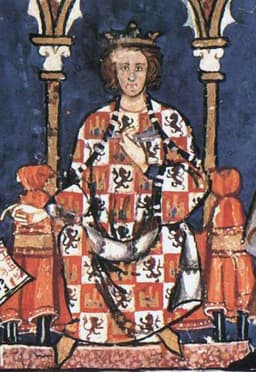
Alfonso X of Castile
Emperor · Medieval
54.6Total

Sango
Emperor · Medieval
63.7Total
Basic Information
Born
1221
1200
Died
1284
1250
Era
Medieval
Medieval
Nationality
Holy Roman Empire
Oyo Empire
Occupation
Emperor
Emperor
Civilization
Western
Other
Score Comparison
Military (10%)
45.0
46.7
Political (20%)
53.8
36.5
Influence (20%)
65.0
75.0
Legacy (20%)
40.0
90.0
Leadership (15%)
65.0
58.8
Strategy (15%)
60.0
35.0
TOTAL
54.6
63.7
Alfonso X of Castile — Complete Timeline
1252 AD
Commissioned the Alfonsine TablesCultural◆ Major
Alfonso X commissioned the Alfonsine Tables, a set of astronomical tables based on Ptolemaic models. These tables were used by European astronomers for centuries and became a standard reference in medieval science.
AstronomyScienceCultural Patronage
Impact: globalconstructive
1257 AD
Elected King of GermanyPolitical Action◆ Major
Alfonso X of Castile was elected King of Germany by a faction of prince-electors, opposing Richard of Cornwall. This election was part of the Great Interregnum, with Alfonso receiving support from the Hohenstaufen loyalists and the Papacy.
ElectionGreat InterregnumCastilian Claim
Impact: regional
Never Visited GermanyPolitical Action◆ Major
Alfonso X never traveled to Germany to assert his claim to the throne. His absence weakened his authority, and he was unable to secure effective control over the German kingdom, leaving the title contested.
AbsenceGreat InterregnumRival Claimant
Impact: regional
1275 AD
Renounced Claim to German ThronePolitical Action◆ Major
Alfonso X formally renounced his claim to the German throne in favor of Rudolf of Habsburg. This renunciation ended the Great Interregnum and allowed Rudolf to be recognized as the legitimate king of Germany.
RenunciationGreat InterregnumRudolf of Habsburg
Impact: regional
Sango — Complete Timeline
1245 AD
Suicide after military defeatWar◆ Major
According to tradition, Sango accidentally destroyed his own palace with lightning during a fit of rage, killing his wives and children. Overcome with guilt and facing military defeat, he hanged himself. This dramatic end is central to his legend and subsequent deification.
DeathLegendYoruba Mythology
Impact: nationaltragic
1250 AD
Deification as the god of thunderCultural
After his death, Sango was deified as the Yoruba god of thunder and lightning. He became one of the most important Orishas in the Yoruba pantheon, worshipped across the African diaspora in religions such as Santeria, Candombl
DeificationYoruba ReligionOrisha
Impact: global
Expert Analysis
Origins
Alfonso X of Castile was born on November 23, 1221, in Toledo, the son of King Ferdinand III of Castile and Elisabeth of Swabia. He was educated in the court, learning law, languages, and sciences, influenced by the multicultural environment of Castile. His father's conquests expanded the kingdom, providing Alfonso with a strong base.
Sango, according to Yoruba tradition, was the third Alaafin of the Oyo Empire, ruling in the 14th or 15th century. He was born to Oranyan, the founder of the Oyo Empire, and was known for his fiery temper and military prowess. His background is shrouded in myth, but he is believed to have been a powerful warrior king.
Rise to Power
Alfonso X ascended to the throne of Castile in 1252 after his father's death. He quickly sought to expand his influence, pursuing claims to the Holy Roman Empire. In 1257, he was elected King of Germany by a faction of prince-electors, opposed to Richard of Cornwall. This election was part of the Great Interregnum, a period of instability in the Holy Roman Empire. However, Alfonso never visited Germany to assert his claim, weakening his authority.
Sango rose to power as Alaafin after a period of turmoil. He was known for his military campaigns, expanding Oyo's territory and using a powerful cavalry. His reign was marked by conflicts with neighboring states, but his temper led to rash decisions. According to tradition, he accidentally destroyed his own palace with lightning during a fit of rage, killing his wives and children. Overcome with guilt, he committed suicide by hanging himself.
Leadership & Governance
Alfonso X was a patron of learning, commissioning the Alfonsine Tables (astronomical tables based on Ptolemaic models) and the Cantigas de Santa Maria. He promoted the use of Castilian as a language of science and law, establishing the Toledo School of Translators. Politically, he faced challenges: his claim to the German throne drained resources, and his tax policies sparked revolts. He scored 53.8 in political leadership, reflecting his mixed success.
Sango's leadership was based on military strength and charisma. He was a warrior king who led troops in battle, but his governance was autocratic and impulsive. His political score of 36.5 indicates weak institutional control. Unlike Alfonso, he left no written records or legal reforms.
Triumph & Tragedy
Alfonso's greatest triumph was the Alfonsine Tables, used by European astronomers for centuries. He also unified Castilian law with the Siete Partidas, a legal code that influenced Spanish law. His tragedy was his failure to secure the German throne; he renounced his claim in 1275 in favor of Rudolf of Habsburg. This ended the Great Interregnum but wasted resources.
Sango's triumph was his deification as the god of thunder, becoming one of the most important Orishas in the Yoruba pantheon, worshipped across the Americas. His tragedy was his suicide after destroying his own palace, a failure of emotional control. His military score of 46.7 reflects limited conquests.
Character & Destiny
Alfonso was called "the Wise" for his intellectual pursuits, but his political decisions were often impractical. He prioritized scholarship over governance, leading to rebellions. His character shaped his fate: he gained lasting fame as a scholar but lost political power. He scored 65.0 in leadership and 60.0 in strategy, but his total score is 54.6.
Sango's fiery temper defined his destiny. His impulsive actions led to his death, but his transformation into a deity gave him immense influence. He scored 75.0 in influence and 90.0 in legacy, reflecting his enduring religious impact. His total score of 63.7 is higher than Alfonso's.
Legacy
Alfonso X's legacy is intellectual: the Alfonsine Tables advanced astronomy, and the Siete Partidas shaped Western law. He is remembered as a patron of culture, but his political ambitions failed. His influence score is 65.0, but his legacy score is only 40.0, indicating limited long-term political impact.
Sango's legacy is religious: he is worshipped as a deity in Yoruba religion and its diaspora (e.g., Santeria, Candomblé). His influence score of 75.0 and legacy score of 90.0 reflect his enduring spiritual significance. Millions of people still honor him in rituals.
Conclusion
Sango has a higher total score (63.7 vs. 54.6) and greater legacy. While Alfonso X contributed to science and law, his political failures limited his impact. Sango's transformation into a god gave him a lasting influence across continents. Therefore, Sango had greater historical impact, as his worship persists centuries later, whereas Alfonso's achievements are primarily historical footnotes.
Rankings
🥇
SangoLeader
Mil: 46.7Pol: 36.5Inf: 75.0
63.7
🥈
Alfonso X of Castile
Mil: 45.0Pol: 53.8Inf: 65.0
54.6
+9.1 behind
How This Comparison Works
Algorithm
Each figure is scored on 6 dimensions (0—100 scale) based on structured historical data: Military (10%), Political (20%), Influence (20%), Legacy (20%), Leadership (15%), Strategy (15%). The weighted total produces the final ranking.
Data Sources
Scores are computed from structured sub-indicators in the database. Scale factors adjust for era (Ancient ×0.85, Modern ×1.0) and civilization size (Eastern ×1.05, Other ×0.80) to account for differences in population and military scale.
Maximum 3 Figures
Comparisons are limited to 2—3 figures to ensure readability and statistical meaningfulness.
Error Margins
±5 points per dimension — Sub-scores are derived from historical records with inherent uncertainty. Two figures within 5 points on a dimension should be considered roughly equivalent in that area.
Total Score Accuracy
±3 points overall — The weighted combination of 6 dimensions produces a total score with approximately ±3 points of uncertainty. Differences of less than 3 points are not statistically significant— the figures are effectively tied.
Known Limitations
- Historical records are incomplete and uneven across civilizations
- Figures from oral-tradition societies may be underrepresented
- Occupation labels can misclassify multi-role figures
- Scores measure capability and impact, not moral character
- Quantitative scoring is a comparison tool, not absolute truth
Capability Radar
Military (10%) — Battles & Warfare
Battles
30
30
Win Rate
25
35
Expansion
30
30
Political (20%) — Governance & Reform
Reform
70
30
Diplomacy
55
35
Economy
65
30
Influence (20%) — Cultural & Global Reach
Cultural
85
90
Global
60
80
Legacy (20%) — Historical Impact
Historical
80
85
Longevity
75
95
Leadership (15%) — Power & Stability
Tenure
60
40
Stability
40
35
Strategy (15%) — Tactics & Innovation
Strategy
40
35
Tactics
35
40
Reform
45
25
Similar Comparisons
Comments & Discussion
No comments yet. Be the first to share your thoughts!