Loading...
This comparison has not been analyzed yet.
One-time AI generation (~1 minute). Scores and timeline are already available below.
Alfonso XIII vs Madho Singh II
Madho Singh II leads by 7.6 pts · 2 figures compared
…
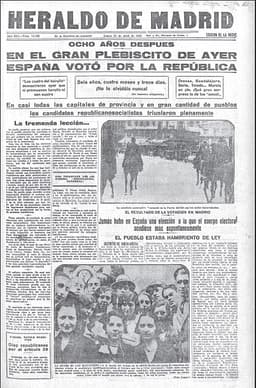
Alfonso XIII
Emperor · Modern
47.1Total
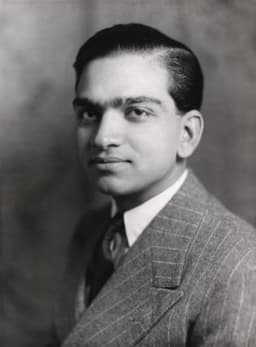
Madho Singh II
Emperor · Modern
54.7Total
Basic Information
Born
1886
1861
Died
1941
1922
Era
Modern
Modern
Nationality
Spain
India
Occupation
Emperor
Emperor
Civilization
Western
Indian
Score Comparison
Military (10%)
10.2
42.2
Political (20%)
61.3
68.0
Influence (20%)
54.9
53.3
Legacy (20%)
45.0
42.5
Leadership (15%)
53.2
72.0
Strategy (15%)
39.6
55.3
TOTAL
47.1
54.7
Alfonso XIII — Complete Timeline
1886 AD
Accession to the thronePolitical Action◆ Major
Alfonso XIII became King of Spain at birth, as his father Alfonso XII had died. His mother Maria Cristina served as regent until he came of age in 1902.
SuccessionRegencyMonarchy
Impact: national
1898 AD
Spanish-American WarWar
During Alfonso XIII's minority, Spain lost the Spanish-American War, ceding Cuba, Puerto Rico, and the Philippines to the United States. This disaster led to the Generation of '98 and a crisis of national identity.
WarColonial LossCrisis
Impact: globaltragic
1921 AD
Rif War and the Disaster of AnnualWar◆ Major
Spanish forces suffered a catastrophic defeat at Annual in Morocco, with thousands killed by Rifian rebels. The disaster severely damaged the monarchy's prestige and led to political crisis.
Colonial WarDefeatMorocco
Impact: regionaltragic
1923 AD
Dictatorship of Primo de RiveraPolitical Action◆ Major
Alfonso XIII supported General Miguel Primo de Rivera's coup, which established a military dictatorship. The king's association with the dictatorship further eroded support for the monarchy.
DictatorshipCoupMonarchy
Impact: nationaldestructive
1931 AD
Exile after the Second RepublicPolitical Action
After the Republican victory in municipal elections, Alfonso XIII left Spain without abdicating. The Second Spanish Republic was proclaimed, and he lived in exile until his death in 1941.
ExileRepublicEnd of Monarchy
Impact: nationaltragic
Madho Singh II — Complete Timeline
1876 AD
Construction of Albert Hall MuseumCultural◆ Major
Madho Singh II commissioned the construction of the Albert Hall Museum in Jaipur, designed by Sir Samuel Swinton Jacob. The building was completed in 1887 and became a major cultural landmark, housing a collection of artifacts and art.
JaipurArchitectureMuseum
Impact: regionalconstructive
1887 AD
Visit to England for Queen Victoria's Golden JubileePolitical Action
Madho Singh II traveled to England to attend Queen Victoria's Golden Jubilee celebrations. He presented gifts and strengthened ties with the British Crown, securing Jaipur's position as a loyal princely state within the British Raj.
British RajDiplomacy
Impact: national
1890 AD
Introduction of Water Supply System in JaipurReform◆ Major
Madho Singh II implemented a modern water supply system for Jaipur city, including the construction of the Ramgarh Lake dam and pipelines. This improved public health and sanitation, addressing chronic water shortages.
JaipurInfrastructurePublic Works
constructive
This comparison has not been analyzed yet.
One-time AI generation (~1 minute). Scores and timeline are already available below.
Rankings
🥇
Madho Singh IILeader
Mil: 42.2Pol: 68.0Inf: 53.3
54.7
🥈
Alfonso XIII
Mil: 10.2Pol: 61.3Inf: 54.9
47.1
+7.6 behind
How This Comparison Works
Algorithm
Each figure is scored on 6 dimensions (0—100 scale) based on structured historical data: Military (10%), Political (20%), Influence (20%), Legacy (20%), Leadership (15%), Strategy (15%). The weighted total produces the final ranking.
Data Sources
Scores are computed from structured sub-indicators in the database. Scale factors adjust for era (Ancient ×0.85, Modern ×1.0) and civilization size (Eastern ×1.05, Other ×0.80) to account for differences in population and military scale.
Maximum 3 Figures
Comparisons are limited to 2—3 figures to ensure readability and statistical meaningfulness.
Error Margins
±5 points per dimension — Sub-scores are derived from historical records with inherent uncertainty. Two figures within 5 points on a dimension should be considered roughly equivalent in that area.
Total Score Accuracy
±3 points overall — The weighted combination of 6 dimensions produces a total score with approximately ±3 points of uncertainty. Differences of less than 3 points are not statistically significant— the figures are effectively tied.
Known Limitations
- Historical records are incomplete and uneven across civilizations
- Figures from oral-tradition societies may be underrepresented
- Occupation labels can misclassify multi-role figures
- Scores measure capability and impact, not moral character
- Quantitative scoring is a comparison tool, not absolute truth
Capability Radar
Military (10%) — Battles & Warfare
Battles
10
31
Win Rate
10
34
Expansion
5
33
Political (20%) — Governance & Reform
Reform
30
55
Diplomacy
40
50
Economy
30
45
Influence (20%) — Cultural & Global Reach
Cultural
30
40
Global
30
20
Legacy (20%) — Historical Impact
Historical
40
35
Longevity
30
30
Leadership (15%) — Power & Stability
Tenure
60
60
Stability
20
60
Strategy (15%) — Tactics & Innovation
Strategy
10
40
Tactics
10
42
Reform
20
45
Similar Comparisons
Comments & Discussion
No comments yet. Be the first to share your thoughts!