Loading...
Alfonso XIII vs Qaboos bin Said
Qaboos bin Said leads by 11.7 pts · 2 figures compared
…
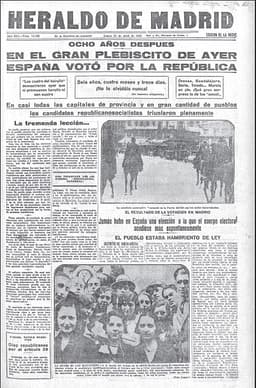
Alfonso XIII
Emperor · Modern
47.1Total
Qaboos bin Said
Emperor · Modern
58.8Total
Basic Information
Born
1886
1940
Died
1941
—
Era
Modern
Modern
Nationality
Spain
Oman
Occupation
Emperor
Emperor
Civilization
Western
Middle Eastern
Score Comparison
Military (10%)
10.2
14.9
Political (20%)
61.3
88.0
Influence (20%)
54.9
55.0
Legacy (20%)
45.0
54.0
Leadership (15%)
53.2
83.3
Strategy (15%)
39.6
43.7
TOTAL
47.1
58.8
Alfonso XIII — Complete Timeline
1886 AD
Accession to the thronePolitical Action◆ Major
Alfonso XIII became King of Spain at birth, as his father Alfonso XII had died. His mother Maria Cristina served as regent until he came of age in 1902.
SuccessionRegencyMonarchy
Impact: national
1898 AD
Spanish-American WarWar
During Alfonso XIII's minority, Spain lost the Spanish-American War, ceding Cuba, Puerto Rico, and the Philippines to the United States. This disaster led to the Generation of '98 and a crisis of national identity.
WarColonial LossCrisis
Impact: globaltragic
1921 AD
Rif War and the Disaster of AnnualWar◆ Major
Spanish forces suffered a catastrophic defeat at Annual in Morocco, with thousands killed by Rifian rebels. The disaster severely damaged the monarchy's prestige and led to political crisis.
Colonial WarDefeatMorocco
Impact: regionaltragic
1923 AD
Dictatorship of Primo de RiveraPolitical Action◆ Major
Alfonso XIII supported General Miguel Primo de Rivera's coup, which established a military dictatorship. The king's association with the dictatorship further eroded support for the monarchy.
DictatorshipCoupMonarchy
Impact: nationaldestructive
1931 AD
Exile after the Second RepublicPolitical Action
After the Republican victory in municipal elections, Alfonso XIII left Spain without abdicating. The Second Spanish Republic was proclaimed, and he lived in exile until his death in 1941.
ExileRepublicEnd of Monarchy
Impact: nationaltragic
Qaboos bin Said — Complete Timeline
1970 AD
Launched the Omani Renaissance modernization programReform◆ Major
Upon taking power, Qaboos initiated a comprehensive modernization program known as the 'Omani Renaissance'. He built schools, hospitals, roads, and a modern civil service, transforming Oman from a isolated, underdeveloped state into a stable, prosperous nation.
ModernizationDevelopmentOman
Impact: nationalconstructive
Abolished slavery in OmanReform◆ Major
One of Qaboos's first acts as Sultan was to abolish slavery, which had been legal under his father's rule. This reform ended a centuries-old practice and aligned Oman with international human rights standards.
Human RightsAbolitionReform
Impact: nationalprogressive
Overthrew his father in a palace coupPolitical Action
Qaboos bin Said led a British-backed coup against his father, Sultan Said bin Taimur, who had isolated Oman. Qaboos assumed power as Sultan, ending decades of conservative rule and beginning a modernization program.
CoupSuccessionOman Modernization
Impact: nationalconstructive
Established Oman's neutral foreign policyPolitical Action◆ Major
Qaboos bin Singh established a foreign policy of neutrality and mediation, maintaining diplomatic relations with both Iran and the United States, as well as with the Soviet Union. This approach made Oman a trusted mediator in regional conflicts.
Foreign PolicyNeutralityDiplomacy
Impact: regionalconstructive
1975 AD
Ended the Dhofar RebellionWar◆ Major
Qaboos bin Said's military forces, supported by British, Iranian, and Jordanian troops, defeated the Marxist insurgents of the Dhofar Rebellion. The victory consolidated his control over Oman and ended a decade-long insurgency.
Dhofar WarCounterinsurgencyOman Stability
Impact: nationalconstructive
Expert Analysis
Origins
Alfonso XIII was born on May 17, 1886, in Madrid, Spain, as the posthumous son of King Alfonso XII. His mother, Maria Cristina of Austria, served as regent until he came of age in 1902. Alfonso's early life was shaped by the loss of Spain's colonial empire; the Spanish-American War in 1898, when he was 12, resulted in the cession of Cuba, Puerto Rico, and the Philippines to the United States, marking a national trauma. His education was strictly royal, emphasizing military and political duties.
Qaboos bin Said was born on November 18, 1940, in Salalah, Oman, to Sultan Said bin Taimur and a Qara woman, Mazoon al-Mashani. His father was a conservative ruler who kept Oman isolated. Qaboos was sent to a private school in England at age 16, then attended the Royal Military Academy Sandhurst, graduating in 1962. He served briefly in the British Army and later studied local government in England. His exposure to Western education contrasted sharply with his father's reactionary regime.
Rise to Power
Alfonso XIII ascended the throne at birth, but his effective rule began in 1902 at age 16. His early reign was marked by political instability, with alternating conservative and liberal governments. A key turning point came in 1921 with the Disaster of Annual, where Spanish forces suffered a catastrophic defeat in the Rif War, with thousands killed. The disaster severely damaged the monarchy's prestige. In 1923, Alfonso supported General Miguel Primo de Rivera's coup, establishing a dictatorship that lasted until 1930. This association with authoritarianism alienated many Spaniards.
Qaboos bin Said rose to power through a palace coup on July 23, 1970, with British backing. His father, Sultan Said bin Taimur, had imposed a medieval regime with few schools, no roads, and banned radios. Qaboos, then 29, deposed his father and exiled him to London. The coup was swift and bloodless, ending decades of isolation. Upon assuming power, Qaboos immediately began modernizing Oman, using oil revenues discovered in the 1960s.
Leadership & Governance
Alfonso XIII's leadership style was interventionist but inconsistent. He frequently used his constitutional powers to influence elections and governments, often bypassing parliament. His support for Primo de Rivera's dictatorship (1923-1930) was a critical error, as it associated the monarchy with repression. After the dictatorship fell, Alfonso's popularity plummeted. In 1931, after Republican victories in municipal elections, he left Spain without abdicating, hoping to avoid civil war. He scored 53.2 in leadership and 39.6 in strategy, reflecting his inability to navigate political crises.
Qaboos bin Said was an autocratic but modernizing ruler. He centralized power, holding the posts of Sultan, Prime Minister, and Minister of Defense, Foreign Affairs, and Finance. He launched the 'Omani Renaissance', building infrastructure, schools, and hospitals. He abolished slavery in 1970, ending a centuries-old practice. His political score of 88.0 reflects his effective governance, though his regime was authoritarian. He maintained a neutral foreign policy, mediating regional conflicts and keeping Oman stable amid Middle Eastern turmoil.
Triumph & Tragedy
Alfonso XIII's triumphs include overseeing Spain's neutrality in World War I, which brought economic benefits, and the construction of the Madrid Metro. However, his tragedies were numerous: the loss of the Spanish Empire in 1898, the Disaster of Annual in 1921, and his support for Primo de Rivera's dictatorship. His exile in 1931 led to a life in Rome and Paris, dying in 1941 in relative obscurity. His legacy score of 45.0 reflects his mixed impact.
Qaboos bin Said's greatest triumph was ending the Dhofar Rebellion in 1975, with British and Iranian support, stabilizing Oman. His modernization program transformed Oman from a feudal state into a developed nation, with a high Human Development Index. He also abolished slavery. His tragedy was the lack of political freedom; he tolerated no opposition, and his absolute rule meant no succession plan, causing uncertainty after his death in 2020. His legacy score of 54.0 and political score of 88.0 indicate strong governance but limited democratic evolution.
Character & Destiny
Alfonso XIII was known for his charm and athleticism but also indecisiveness. He believed in his divine right to rule but failed to adapt to democratic pressures. His decision to support Primo de Rivera sealed the monarchy's fate. Historians note his inability to read public sentiment; he scored 61.3 in political acumen but 39.6 in strategy, indicating poor long-term planning.
Qaboos bin Said was reclusive, disciplined, and shrewd. He never married and had no children, focusing entirely on Oman's development. His British education gave him a pragmatic worldview. He skillfully balanced Western and Arab interests, scoring 83.3 in leadership and 88.0 in politics. However, his authoritarianism and lack of a successor led to a succession crisis after his death, resolved by appointing a cousin.
Legacy
Alfonso XIII's legacy is that of a monarch who failed to preserve the Spanish monarchy. The Second Republic was established after his exile, leading to the Spanish Civil War. His reputation was further damaged by his association with dictatorship. However, his neutrality in WWI and infrastructure projects are noted. His total score of 47.1 reflects a largely negative legacy.
Qaboos bin Said's legacy is transformative. He modernized Oman, raised living standards, and established a stable, neutral state. He is remembered as the 'Father of the Renaissance'. His abolition of slavery and infrastructure development are enduring. His total score of 58.8 reflects his positive impact, though his authoritarian model is criticized. Oman's peaceful transition after his death shows his institutional legacy.
Conclusion
Qaboos bin Said had a greater impact than Alfonso XIII, as reflected in their total scores (58.8 vs 47.1). Alfonso XIII presided over Spain's decline and the monarchy's collapse, while Qaboos bin Said lifted Oman from obscurity to modernity. Qaboos's leadership and political scores (83.3 and 88.0) dwarf Alfonso's (53.2 and 61.3). While both were monarchs in times of change, Qaboos successfully navigated modernization, whereas Alfonso failed to adapt. The data clearly supports Qaboos bin Said as the more effective and impactful ruler.
Rankings
🥇
Qaboos bin SaidLeader
Mil: 14.9Pol: 88.0Inf: 55.0
58.8
🥈
Alfonso XIII
Mil: 10.2Pol: 61.3Inf: 54.9
47.1
+11.7 behind
How This Comparison Works
Algorithm
Each figure is scored on 6 dimensions (0—100 scale) based on structured historical data: Military (10%), Political (20%), Influence (20%), Legacy (20%), Leadership (15%), Strategy (15%). The weighted total produces the final ranking.
Data Sources
Scores are computed from structured sub-indicators in the database. Scale factors adjust for era (Ancient ×0.85, Modern ×1.0) and civilization size (Eastern ×1.05, Other ×0.80) to account for differences in population and military scale.
Maximum 3 Figures
Comparisons are limited to 2—3 figures to ensure readability and statistical meaningfulness.
Error Margins
±5 points per dimension — Sub-scores are derived from historical records with inherent uncertainty. Two figures within 5 points on a dimension should be considered roughly equivalent in that area.
Total Score Accuracy
±3 points overall — The weighted combination of 6 dimensions produces a total score with approximately ±3 points of uncertainty. Differences of less than 3 points are not statistically significant— the figures are effectively tied.
Known Limitations
- Historical records are incomplete and uneven across civilizations
- Figures from oral-tradition societies may be underrepresented
- Occupation labels can misclassify multi-role figures
- Scores measure capability and impact, not moral character
- Quantitative scoring is a comparison tool, not absolute truth
Capability Radar
Military (10%) — Battles & Warfare
Battles
10
5
Win Rate
10
5
Expansion
5
10
Political (20%) — Governance & Reform
Reform
30
90
Diplomacy
40
85
Economy
30
85
Influence (20%) — Cultural & Global Reach
Cultural
30
55
Global
30
50
Legacy (20%) — Historical Impact
Historical
40
60
Longevity
30
55
Leadership (15%) — Power & Stability
Tenure
60
95
Stability
20
90
Strategy (15%) — Tactics & Innovation
Strategy
10
5
Tactics
10
5
Reform
20
60
Similar Comparisons
Comments & Discussion
No comments yet. Be the first to share your thoughts!