Loading...
Alfonso XIII vs Guru Tegh Bahadur
Guru Tegh Bahadur leads by 2.5 pts · 2 figures compared
…
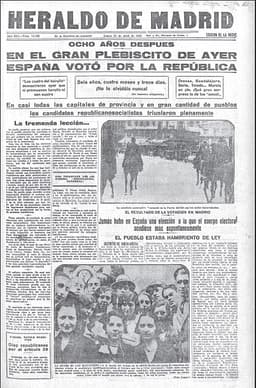
Alfonso XIII
Emperor · Modern
47.1Total
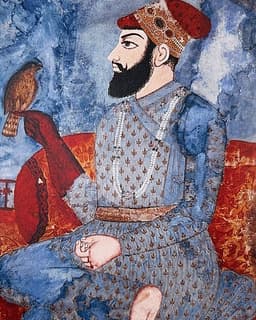
Guru Tegh Bahadur
Emperor · Modern
49.6Total
Basic Information
Born
1886
1621
Died
1941
1675
Era
Modern
Modern
Nationality
Spain
India
Occupation
Emperor
Emperor
Civilization
Western
Indian
Score Comparison
Military (10%)
10.2
41.3
Political (20%)
61.3
39.4
Influence (20%)
54.9
55.0
Legacy (20%)
45.0
55.0
Leadership (15%)
53.2
45.0
Strategy (15%)
39.6
53.0
TOTAL
47.1
49.6
Alfonso XIII — Complete Timeline
1886 AD
Accession to the thronePolitical Action◆ Major
Alfonso XIII became King of Spain at birth, as his father Alfonso XII had died. His mother Maria Cristina served as regent until he came of age in 1902.
SuccessionRegencyMonarchy
Impact: national
1898 AD
Spanish-American WarWar
During Alfonso XIII's minority, Spain lost the Spanish-American War, ceding Cuba, Puerto Rico, and the Philippines to the United States. This disaster led to the Generation of '98 and a crisis of national identity.
WarColonial LossCrisis
Impact: globaltragic
1921 AD
Rif War and the Disaster of AnnualWar◆ Major
Spanish forces suffered a catastrophic defeat at Annual in Morocco, with thousands killed by Rifian rebels. The disaster severely damaged the monarchy's prestige and led to political crisis.
Colonial WarDefeatMorocco
Impact: regionaltragic
1923 AD
Dictatorship of Primo de RiveraPolitical Action◆ Major
Alfonso XIII supported General Miguel Primo de Rivera's coup, which established a military dictatorship. The king's association with the dictatorship further eroded support for the monarchy.
DictatorshipCoupMonarchy
Impact: nationaldestructive
1931 AD
Exile after the Second RepublicPolitical Action
After the Republican victory in municipal elections, Alfonso XIII left Spain without abdicating. The Second Spanish Republic was proclaimed, and he lived in exile until his death in 1941.
ExileRepublicEnd of Monarchy
Impact: nationaltragic
Guru Tegh Bahadur — Complete Timeline
1664 AD
Appointed Ninth Sikh GuruPolitical Action
Guru Har Krishan appointed Tegh Bahadur as his successor, making him the ninth Sikh Guru. This continued the tradition of guru succession and brought a period of renewed focus on Sikh teachings.
SikhismGuru SuccessionLeadership
Impact: globalconstructive
1665 AD
Founded the City of Anandpur SahibCultural◆ Major
Guru Tegh Bahadur founded the city of Anandpur Sahib in the Shivalik Hills. It became a major Sikh center and later the birthplace of the Khalsa.
City FoundationAnandpur SahibSikhism
Impact: globalconstructive
Traveled and Preached Across North IndiaCultural
Guru Tegh Bahadur traveled extensively through Punjab, Uttar Pradesh, and Bihar, spreading Sikh teachings. He visited many places, including Patna and Dhaka, strengthening the Sikh community's presence.
PreachingTravelSikhism
Impact: regionalconstructive
1675 AD
Executed by Emperor Aurangzeb in DelhiPolitical Action
Guru Tegh Bahadur was arrested and executed in Delhi by order of Emperor Aurangzeb for refusing to convert to Islam and for protecting Kashmiri Pandits. His martyrdom at Chandni Chowk became a pivotal event in Sikh history.
MartyrdomMughal PersecutionSikhism
Impact: globaltragic
Expert Analysis
Origins
Alfonso XIII was born on May 17, 1886, in Madrid, posthumously to King Alfonso XII, who had died six months earlier. His mother, Queen Maria Christina of Austria, served as regent until he came of age. He was raised in a court dominated by political instability and the aftermath of Spain's declining empire. His education was traditional, focusing on military and monarchical duties, but he lacked exposure to the democratic currents sweeping Europe.
Guru Tegh Bahadur was born on April 1, 1621, in Amritsar, Punjab, into the Sodhi family of the Sikh Gurus. He was the youngest son of Guru Hargobind, the sixth Guru, who had militarized the Sikh community. He grew up in a period of Mughal persecution under Shah Jahan and Aurangzeb. His early life was marked by meditation and spiritual retreat, living quietly in Bakala. He was known for his contemplative nature, spending years in seclusion before being called to lead.
Rise to Power
Alfonso XIII's rise was automatic: he became king at birth. His formal reign began on his 16th birthday in 1902, when he assumed full powers. His early years were shaped by the Spanish-American War (1898), a disaster that occurred during his mother's regency, costing Spain its last colonies. This event fostered a sense of national humiliation that Alfonso sought to reverse through a more active foreign policy, especially in Morocco.
Guru Tegh Bahadur's rise came through spiritual succession. In 1664, Guru Har Krishan, the eighth Guru, named him as his successor before dying of smallpox. This was contested by some who claimed to be the true Guru, but Tegh Bahadur's spiritual authority prevailed. He was formally installed as the ninth Sikh Guru in 1665. His leadership was tested early by opposition from local chieftains and the Mughal state, which viewed his growing influence with suspicion.
Leadership & Governance
Alfonso XIII's leadership was characterized by personal intervention in politics, often bypassing constitutional norms. He actively supported the dictatorship of Primo de Rivera in 1923, believing a strongman could restore order and national pride. This decision alienated democratic forces and tied the monarchy to an unpopular regime. His governance style was monarchical absolutism in a constitutional framework, leading to political instability. He scored 53.2 in leadership, but his political score of 61.3 reflects his maneuvering within the system.
Guru Tegh Bahadur led the Sikh community through spiritual and social reform. He emphasized interfaith harmony and stood against forced conversions. His governance was decentralized, relying on the network of Sikh sangats (congregations) and masands (local leaders). He traveled extensively across north India, establishing new centers and strengthening Sikh identity. His political score of 39.4 reflects his non-political role, but his influence score of 55.0 shows his moral authority.
Triumph & Tragedy
Alfonso XIII's greatest triumph was his role in Spain's neutrality during World War I, which brought economic benefits and international prestige. He also established the Residencia de Estudiantes, fostering cultural and scientific growth. However, his greatest failure was his support for the dictatorship of Primo de Rivera, which discredited the monarchy. The disaster at Annual in 1921 (Rif War) further eroded trust, with thousands of Spanish soldiers killed. His score of 10.2 in military reflects his lack of direct military success.
Guru Tegh Bahadur's triumph was his unwavering defense of religious freedom. He is remembered for protecting Kashmiri Pandits from forced conversion, which led to his martyrdom. He founded Anandpur Sahib, which became the cradle of the Khalsa. His tragedy was his execution in 1675 in Delhi by Aurangzeb, a brutal event meant to break Sikh resistance but instead galvanized it. His military score of 41.3 reflects the defensive battles fought by his followers.
Character & Destiny
Alfonso XIII was energetic and well-intentioned but lacked strategic patience. He believed in the monarchy's divine right and meddled in politics, which led to his downfall. His character was marked by a desire to restore Spain's past glory, but he misjudged the political currents. After the 1931 municipal elections gave a republican majority, he left Spain without abdicating, living in exile in Rome until his death in 1941.
Guru Tegh Bahadur was contemplative and courageous. He chose martyrdom over compromise, setting a precedent for Sikh resistance to tyranny. His character was shaped by the Sikh tradition of saint-soldier (Sant Sipahi). His destiny was sealed by his refusal to convert to Islam, even under torture. His execution made him a symbol of religious freedom. He scored 45.0 in leadership, but his legacy score of 55.0 reflects his enduring impact.
Legacy
Alfonso XIII's legacy is mixed. He is the last king of Spain before the republic and the father of Juan Carlos I, who later restored the monarchy. However, his association with dictatorship and military disasters weakened the monarchy. His scores: legacy 45.0, influence 54.9. Spain's transition to democracy after Franco was shaped by the lessons of his failures.
Guru Tegh Bahadur's legacy is profound in Sikhism. His martyrdom directly inspired his son, Guru Gobind Singh, to found the Khalsa in 1699. He is remembered as the 'Protector of the Faith' (Hind di Chadar). His teachings on equality and resistance to oppression continue to influence Sikhs. His scores: legacy 55.0, influence 55.0. He scored higher overall (49.6 vs 47.1) and his impact is more enduring.
Conclusion
Guru Tegh Bahadur had greater historical impact. While Alfonso XIII's reign ended in failure and exile, Guru Tegh Bahadur's sacrifice solidified Sikh identity and inspired a movement that persists today. Alfonso scored 47.1 total, weaker in military (10.2) and strategy (39.6), while Guru Tegh Bahadur scored 49.6, with higher legacy (55.0) and influence (55.0). The Guru's moral victory over Mughal tyranny outweighs the king's political maneuvering. In the balance of history, spiritual authority proved more durable than royal power.
Rankings
🥇
Guru Tegh BahadurLeader
Mil: 41.3Pol: 39.4Inf: 55.0
49.6
🥈
Alfonso XIII
Mil: 10.2Pol: 61.3Inf: 54.9
47.1
+2.5 behind
How This Comparison Works
Algorithm
Each figure is scored on 6 dimensions (0—100 scale) based on structured historical data: Military (10%), Political (20%), Influence (20%), Legacy (20%), Leadership (15%), Strategy (15%). The weighted total produces the final ranking.
Data Sources
Scores are computed from structured sub-indicators in the database. Scale factors adjust for era (Ancient ×0.85, Modern ×1.0) and civilization size (Eastern ×1.05, Other ×0.80) to account for differences in population and military scale.
Maximum 3 Figures
Comparisons are limited to 2—3 figures to ensure readability and statistical meaningfulness.
Error Margins
±5 points per dimension — Sub-scores are derived from historical records with inherent uncertainty. Two figures within 5 points on a dimension should be considered roughly equivalent in that area.
Total Score Accuracy
±3 points overall — The weighted combination of 6 dimensions produces a total score with approximately ±3 points of uncertainty. Differences of less than 3 points are not statistically significant— the figures are effectively tied.
Known Limitations
- Historical records are incomplete and uneven across civilizations
- Figures from oral-tradition societies may be underrepresented
- Occupation labels can misclassify multi-role figures
- Scores measure capability and impact, not moral character
- Quantitative scoring is a comparison tool, not absolute truth
Capability Radar
Military (10%) — Battles & Warfare
Battles
10
31
Win Rate
10
34
Expansion
5
34
Political (20%) — Governance & Reform
Reform
30
30
Diplomacy
40
25
Economy
30
20
Influence (20%) — Cultural & Global Reach
Cultural
30
70
Global
30
60
Legacy (20%) — Historical Impact
Historical
40
75
Longevity
30
80
Leadership (15%) — Power & Stability
Tenure
60
20
Stability
20
15
Strategy (15%) — Tactics & Innovation
Strategy
10
37
Tactics
10
42
Reform
20
47
Similar Comparisons
Comments & Discussion
No comments yet. Be the first to share your thoughts!