Loading...
Algirdas Brazauskas vs Napoleon Bonaparte
Napoleon Bonaparte leads by 14.5 pts · 2 figures compared
…
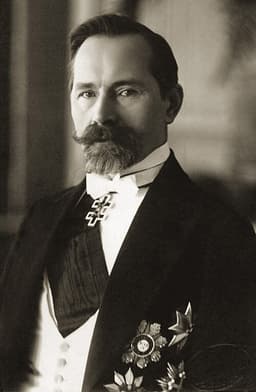
Algirdas Brazauskas
Politician · Modern
56.4Total

Napoleon Bonaparte
General · Modern
70.9Total
Basic Information
Born
1932
1769
Died
—
1821
Era
Modern
Modern
Nationality
Lithuania
France
Occupation
Politician
General
Civilization
Western
Western
Score Comparison
Military (10%)
48.9
94.0
Political (20%)
70.0
72.0
Influence (20%)
53.3
40.0
Legacy (20%)
46.7
80.0
Leadership (15%)
78.0
78.0
Strategy (15%)
42.7
90.0
TOTAL
56.4
70.9
Algirdas Brazauskas — Complete Timeline
1993 AD
Introduction of the Lithuanian litasReform◆ Major
Brazauskas oversaw the introduction of the Lithuanian litas as the national currency in June 1993, replacing the temporary talonas. The move was part of broader economic reforms to stabilize the economy and establish monetary independence from Russia.
Lithuanian PoliticsCurrency ReformEconomic Independence
Impact: nationalconstructive
Election as President of LithuaniaPolitical Action
Algirdas Brazauskas was elected President of Lithuania in February 1993, winning 60% of the vote. He was the first president of independent Lithuania after the dissolution of the Soviet Union, having previously served as the last leader of the Lithuanian Communist Party.
Lithuanian PoliticsFirst PresidentPost-Soviet
Impact: national
Lithuania's withdrawal of Soviet troopsPolitical Action◆ Major
Brazauskas negotiated the withdrawal of the last Russian troops from Lithuania in August 1993, completing the country's full independence. The agreement was reached after months of talks, and the troops left by the end of the year.
Lithuanian PoliticsIndependenceTroop Withdrawal
Impact: nationalconstructive
Napoleon Bonaparte — Complete Timeline
1799 AD
Coup of 18 BrumaireOther◆ Major
Napoleon Bonaparte, with support from his brother Lucien and key political figures, overthrew the Directory in a bloodless coup. He established the Consulate with himself as First Consul, effectively becoming the ruler of France. This event ended the French Revolution's most unstable period.
French RevolutionCoupRise to Power
Impact: regional
1804 AD
Promulgation of the Napoleonic CodeOther◆ Major
Napoleon enacted the Civil Code of the French, known as the Napoleonic Code, a comprehensive set of laws that replaced the fragmented feudal legal systems. The code established legal equality, protected property rights, and secularized law. It became the basis for legal systems in many European and world countries.
Legal ReformNapoleonic CodeCivil Law
Impact: globalconstructive
1805 AD
Battle of AusterlitzWar◆ Major
Napoleon's Grande Arm
Napoleonic WarsBattleDecisive Victory
Impact: global
1812 AD
Invasion of RussiaWar◆ Major
Napoleon led the Grande Arm
Napoleonic WarsInvasionDisaster
Impact: globaldestructive
1815 AD
Battle of WaterlooWar◆ Major
Napoleon's French army was defeated by the combined forces of the Duke of Wellington's Anglo-Allied army and Gebhard Leberecht von Bl
Napoleonic WarsBattleFinal Defeat
Impact: globaldestructive
Expert Analysis
algirdas-brazauskas-vs-napoleon-bonaparte
# The Conqueror and the Conciliator
On a June morning in 1815, Napoleon Bonaparte stood on a muddy field near Waterloo, watching his Imperial Guard march into cannon fire that would tear them apart. Thirty thousand men would lie dead or wounded by nightfall, and with them, the dream of a united Europe under French dominion. One hundred seventy-eight years later, in February 1993, Algirdas Brazauskas stood before the Seimas in Vilnius, taking the oath of office as Lithuania’s first democratically elected president since the Soviet occupation. No cannons roared. No empires fell. Yet both men, in their own ways, had reshaped the world they inherited. What drove one to conquer continents and the other to negotiate the quiet end of an empire?
Origins
Napoleon Bonaparte was born in 1769 on the island of Corsica, a place that had only become French the year before. His family were minor nobility, but they were not rich. The young Napoleon spoke Italian-accented French, was mocked by his classmates at military school, and carried a lifelong chip on his shoulder. The French Revolution, which erupted when he was twenty, shattered the old order and opened paths that birth alone could never have granted. A world of opportunity emerged from chaos, and Napoleon seized it.
Algirdas Brazauskas was born in 1932 in Rokiškis, a small town in independent Lithuania. When he was eight, the Soviet Union annexed his country. He grew up under Stalinism, then Nazi occupation, then Stalinism again. By the time he entered politics, Lithuania was a Soviet republic, and the only game in town was the Communist Party. Where Napoleon’s world was one of revolution and upward mobility, Brazauskas’s was one of survival and slow, patient maneuvering within a system that allowed no open dissent.
Rise to Power
Napoleon rose like a rocket. At twenty-four, he drove the British out of Toulon. At twenty-six, he put down a royalist uprising in Paris with a "whiff of grapeshot." At twenty-seven, he took command of the Army of Italy and won six battles in twelve days. By thirty, he was First Consul of France, effectively its dictator. His path was one of brilliance, audacity, and violence—each victory a stepping stone to the next.
Brazauskas rose differently. He climbed the Soviet bureaucracy, becoming the First Secretary of the Lithuanian Communist Party in 1988. But he did so at a moment when the Soviet system was cracking. In 1990, Lithuania declared independence. Moscow sent tanks. Brazauskas, rather than ordering a crackdown, began negotiating. He was the last communist leader—and then, remarkably, he became the first democratic one. In 1993, he was elected president with 60 percent of the vote, completing a transformation that had no parallel in the former Soviet Union.
Leadership & Governance
Napoleon ruled through force and law. His Napoleonic Code, introduced in 1804, swept away feudal privileges, established equality before the law, and protected property rights. It spread across Europe as his armies marched. But his governance was also personal, autocratic, and restless. He could not stop conquering. He reformed France brilliantly, but he exhausted it.
Brazauskas governed through negotiation and patience. In June 1993, he introduced the Lithuanian litas as the national currency, stabilizing an economy in freefall. In August 1993, he negotiated the withdrawal of the last Russian troops from Lithuanian soil, completing the country’s de facto independence without a war. His military score—a mere 37.5—reflected not weakness but wisdom: he understood that in the modern world, battles were won in conference rooms, not on fields.
Triumph & Tragedy
Napoleon’s greatest moment was Austerlitz in 1805, where he destroyed the combined armies of Russia and Austria in a single day. His tragedy was Waterloo, followed by exile on Saint Helena, where he died in 1821 at age fifty-one, a prisoner of the British. He had conquered Europe and lost it all.
Brazauskas’s triumph was bloodless but profound: the peaceful end of Soviet occupation. His tragedy was subtler. He was never fully trusted—by nationalists who saw him as a former communist, by democrats who remembered his Soviet past. He served one term as president and left office in 1998, his legacy secure but incomplete. He died in 2010, having seen Lithuania join NATO and the European Union, but also having witnessed the corruption and disappointment that followed independence.
Character & Destiny
Napoleon was driven by ambition, genius, and an unquenchable hunger for glory. "Impossible is a word to be found only in the dictionary of fools," he once said. His character made him unstoppable—and ultimately, unsustainable. He could not compromise, could not stop, could not share power.
Brazauskas was driven by pragmatism, patience, and a deep understanding of limits. He knew when to push and when to wait. "We must learn to live with reality," he said, "but also to change it." His character made him unremarkable in the traditional sense—no battles, no dramatic speeches—but effective in a way that saved his country from the bloodshed that consumed Yugoslavia, Chechnya, and so many other post-Soviet states.
Legacy
Napoleon left behind a transformed Europe: the Napoleonic Code, the metric system, the modern nation-state. He is remembered as both a military genius and a tyrant, his name synonymous with ambition and downfall. His legacy score of 78.0 reflects a figure who reshaped history but whose methods remain deeply controversial.
Brazauskas left behind an independent Lithuania, a stable democracy, and a model of peaceful transition from communism. His legacy score of 64.2 is lower, but his impact on his own people was profound. He is remembered quietly, without statues or parades, as the man who led his country out of empire without firing a shot.
Conclusion
Two men, two centuries, two worlds. Napoleon conquered Europe with cannons; Brazauskas liberated a nation with patience. One burned bright and fast, the other burned steady and long. Their differences are not just differences of character, but of era: Napoleon lived in a time when empires were built by force, Brazauskas in a time when they were dismantled by diplomacy. Yet both understood something fundamental about power: that it must be seized, but also that it must be used wisely. The conqueror and the conciliator—each, in his own way, a product of his time, and each, in his own way, a shaper of the world that followed.
Rankings
🥇
Napoleon BonaparteLeader
Mil: 94.0Pol: 72.0Inf: 40.0
70.9
🥈
Algirdas Brazauskas
Mil: 48.9Pol: 70.0Inf: 53.3
56.4
+14.5 behind
How This Comparison Works
Algorithm
Each figure is scored on 6 dimensions (0—100 scale) based on structured historical data: Military (10%), Political (20%), Influence (20%), Legacy (20%), Leadership (15%), Strategy (15%). The weighted total produces the final ranking.
Data Sources
Scores are computed from structured sub-indicators in the database. Scale factors adjust for era (Ancient ×0.85, Modern ×1.0) and civilization size (Eastern ×1.05, Other ×0.80) to account for differences in population and military scale.
Maximum 3 Figures
Comparisons are limited to 2—3 figures to ensure readability and statistical meaningfulness.
Error Margins
±5 points per dimension — Sub-scores are derived from historical records with inherent uncertainty. Two figures within 5 points on a dimension should be considered roughly equivalent in that area.
Total Score Accuracy
±3 points overall — The weighted combination of 6 dimensions produces a total score with approximately ±3 points of uncertainty. Differences of less than 3 points are not statistically significant— the figures are effectively tied.
Known Limitations
- Historical records are incomplete and uneven across civilizations
- Figures from oral-tradition societies may be underrepresented
- Occupation labels can misclassify multi-role figures
- Scores measure capability and impact, not moral character
- Quantitative scoring is a comparison tool, not absolute truth
Capability Radar
Military (10%) — Battles & Warfare
Battles
26
95
Win Rate
33
90
Expansion
38
95
Political (20%) — Governance & Reform
Reform
60
95
Diplomacy
70
80
Economy
55
85
Influence (20%) — Cultural & Global Reach
Cultural
30
85
Global
30
90
Legacy (20%) — Historical Impact
Historical
45
95
Longevity
35
90
Leadership (15%) — Power & Stability
Tenure
65
85
Stability
60
70
Strategy (15%) — Tactics & Innovation
Strategy
40
95
Tactics
39
98
Reform
44
92
Similar Comparisons
Comments & Discussion
No comments yet. Be the first to share your thoughts!