Loading...
Alija Izetbegovic vs Napoleon Bonaparte
Napoleon Bonaparte leads by 15.6 pts · 2 figures compared
…
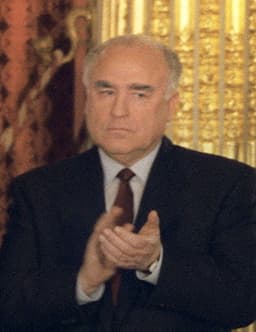
Alija Izetbegovic
Politician · Modern
55.3Total

Napoleon Bonaparte
General · Modern
70.9Total
Basic Information
Born
1925
1769
Died
—
1821
Era
Modern
Modern
Nationality
Bosnia
France
Occupation
Politician
General
Civilization
Western
Western
Score Comparison
Military (10%)
49.9
94.0
Political (20%)
68.0
72.0
Influence (20%)
58.0
40.0
Legacy (20%)
48.3
80.0
Leadership (15%)
62.2
78.0
Strategy (15%)
42.5
90.0
TOTAL
55.3
70.9
Alija Izetbegovic — Complete Timeline
1984 AD
Publication of 'Islam Between East and West'Cultural
Izetbegović published 'Islam Between East and West', a philosophical work arguing for the compatibility of Islam with modernity. The book, written while he was imprisoned by the Yugoslav regime, influenced Islamic thought in the Balkans and shaped his political ideology.
PublicationIslamic PhilosophyBalkans
Impact: regionalconstructive
1990 AD
Election as First President of Independent BosniaPolitical Action◆ Major
Alija Izetbegovi
ElectionIndependenceBosnia
Impact: nationalconstructive
1992 AD
Siege of SarajevoWar◆ Major
Izetbegović led the Bosnian government during the Siege of Sarajevo by Bosnian Serb forces from April 1992 to February 1996. The siege, the longest of a capital city in modern warfare, resulted in over 11,000 deaths and became a symbol of the war's brutality.
SiegeWarSarajevo
Impact: regionaltragic
Declaration of Bosnian IndependencePolitical Action◆ Major
Izetbegović declared Bosnia and Herzegovina's independence from Yugoslavia on March 3, 1992, following a referendum boycotted by Bosnian Serbs. This triggered the Bosnian War, as Serb forces, backed by the Yugoslav Army, launched a campaign to carve out a Serb republic.
IndependenceWarYugoslav Breakup
Impact: regionalconstructive
1995 AD
Signing of the Dayton AgreementPolitical Action◆ Major
Izetbegović signed the Dayton Peace Agreement on December 14, 1995, ending the Bosnian War. The agreement created a decentralized state with two entities: the Federation of Bosnia and Herzegovina and the Republika Srpska, which Izetbegović accepted as a necessary compromise.
Peace TreatyBosnian WarDiplomacy
Impact: regional
Napoleon Bonaparte — Complete Timeline
1799 AD
Coup of 18 BrumaireOther◆ Major
Napoleon Bonaparte, with support from his brother Lucien and key political figures, overthrew the Directory in a bloodless coup. He established the Consulate with himself as First Consul, effectively becoming the ruler of France. This event ended the French Revolution's most unstable period.
French RevolutionCoupRise to Power
Impact: regional
1804 AD
Promulgation of the Napoleonic CodeOther◆ Major
Napoleon enacted the Civil Code of the French, known as the Napoleonic Code, a comprehensive set of laws that replaced the fragmented feudal legal systems. The code established legal equality, protected property rights, and secularized law. It became the basis for legal systems in many European and world countries.
Legal ReformNapoleonic CodeCivil Law
Impact: globalconstructive
1805 AD
Battle of AusterlitzWar◆ Major
Napoleon's Grande Arm
Napoleonic WarsBattleDecisive Victory
Impact: global
1812 AD
Invasion of RussiaWar◆ Major
Napoleon led the Grande Arm
Napoleonic WarsInvasionDisaster
Impact: globaldestructive
1815 AD
Battle of WaterlooWar◆ Major
Napoleon's French army was defeated by the combined forces of the Duke of Wellington's Anglo-Allied army and Gebhard Leberecht von Bl
Napoleonic WarsBattleFinal Defeat
Impact: globaldestructive
Expert Analysis
alija-izetbegovic-vs-napoleon-bonaparte
# The Emperor and the Scholar: Two Visions of Power in a Fractured World
On a cold December morning in 1805, Napoleon Bonaparte stood on the field of Austerlitz, watching his Grand Army crush the combined forces of Austria and Russia. The sun rose over the frozen battlefield, and Europe trembled. Nearly two centuries later, in the spring of 1992, Alija Izetbegović stood in a besieged Sarajevo, watching shells rain down on a city that had once hosted the Winter Olympics. The difference between these two men is not merely one of scale or time. It is a profound contrast between the conqueror who remade the world through fire and the scholar who fought to keep his people from being erased from it.
Origins
Napoleon was born in 1769 on the island of Corsica, a rocky Mediterranean outpost that had only recently become French. His family was minor nobility, poor enough to feel the sting of want but proud enough to nurture ambition. He entered military school as a boy, short, intense, and fiercely intelligent, a foreigner among the French aristocracy who would one day rule them. The French Revolution erupted when he was twenty, shattering the old order and creating a vacuum that a man of talent could fill. Napoleon was shaped by the Enlightenment and the cannon's roar—a child of both Voltaire and the guillotine.
Alija Izetbegović was born in 1925 in Bosanski Šamac, a small town in the Kingdom of Yugoslavia. His family were devout Muslims, part of a community that had lived in Bosnia for centuries under Ottoman, then Austro-Hungarian, then Yugoslav rule. He studied law in Sarajevo, but his real education came from prison. In 1946, he was sentenced to three years for anti-communist activities; in 1983, he received fourteen years for "Islamic fundamentalism," a charge that could not withstand the collapse of the system that invented it. Between these sentences, he wrote *Islam Between East and West*, published in 1984, a philosophical work arguing that Islam was not a threat to modernity but a path within it. While Napoleon learned war from textbooks and battlefields, Izetbegović learned survival from cell walls and censored manuscripts.
Rise to Power
Napoleon’s ascent was a rocket launch. In 1793, at age twenty-four, he drove the British out of Toulon and was promoted to brigadier general. In 1796, he took command of the ragged Army of Italy and turned it into a legend, crossing the Alps, winning battles against the Austrians, and sending looted art back to Paris. By 1799, he had staged a coup and made himself First Consul. By 1804, he was Emperor of the French, crowned in Notre Dame with the Pope looking on. Every step was a gamble, and every gamble paid off—until they didn’t.
Izetbegović’s rise was slower, more fragile, and largely accidental. When Yugoslavia began to disintegrate in 1990, he was an intellectual and a former prisoner, not a general. In the first multi-party elections that year, his Party of Democratic Action won the largest share of the Bosnian vote, and he became president of the collective presidency. He did not seek war. He sought independence, declared on March 3, 1992, after a referendum boycotted by Bosnian Serbs. The war came anyway, and Izetbegović found himself leading a country that had no army, no allies, and no hope—except the hope that the world would not stand by while his people were massacred.
Leadership & Governance
Napoleon governed like a storm. He centralized the state, reformed the tax system, established the Bank of France, and created the Napoleonic Code—a legal framework that abolished feudal privileges, protected property, and enshrined equality before the law. It was a masterpiece of rational administration, and it spread across Europe with his armies. But his governance was inseparable from his wars. He was a military genius—his strategic score of 93 speaks to a mind that could read a battlefield like a chessboard—but he was also a political gambler who believed that victory could solve any problem.
Izetbegović governed like a siege. During the Bosnian War, from 1992 to 1995, he presided over a government that was often divided, poorly supplied, and internationally isolated. He was not a military commander—his strategic score of 35 reflects a man who had never led an army—but he was a symbol. In the besieged city of Sarajevo, where snipers shot children fetching water, his presence was a statement that Bosnia would not surrender. He signed the Dayton Peace Agreement in December 1995, ending the war but accepting a divided country: a Bosniak-Croat federation and a Serb republic, with a weak central government. It was not victory. It was survival.
Triumph & Tragedy
Napoleon’s greatest triumph was Austerlitz in 1805, where he destroyed a larger Russian and Austrian army in a single day, forcing the Holy Roman Empire to dissolve. His greatest tragedy was the invasion of Russia in 1812, where he lost half a million men to cold, hunger, and scorched earth. He was exiled to Elba, escaped, ruled for a hundred days, and was finally defeated at Waterloo in 1815. He died in 1821 on Saint Helena, a British prison island in the South Atlantic, dictating his memoirs and blaming his enemies.
Izetbegović’s greatest triumph was the survival of Bosnia itself. Against overwhelming odds—a Serb army armed by Belgrade, a UN arms embargo that froze his defenses, and a world that looked away—he kept his country alive. His greatest tragedy was the war itself: 100,000 dead, two million displaced, and a peace that rewarded ethnic cleansing. He died in 2003, having seen his country become a ward of the international community, its future uncertain.
Character & Destiny
Napoleon was a man of immense will, restless energy, and bottomless ambition. He once said, "Impossible is a word to be found only in the dictionary of fools." That confidence made him a conqueror, but it also made him blind. He could not stop. He invaded Spain, then Russia, then all of Europe, and each victory planted the seeds of the next defeat. His character was his destiny: a man who could not rest until he had nothing left.
Izetbegović was a man of patience, faith, and endurance. He wrote, "The struggle for freedom is a struggle for the soul." He knew he could not win a war of conquest—he had no army, no money, no allies. But he could win a war of attrition against the world’s conscience. He gambled that the West would not allow a genocide in Europe, and he was almost wrong. His character shaped a different kind of destiny: not glory, but survival.
Legacy
Napoleon’s legacy is written across Europe. The Napoleonic Code still governs France and many other nations. He unified Germany and Italy by accident, inspired nationalism across the continent, and sold Louisiana to the United States, doubling its size. He is remembered as a genius and a tyrant, a liberator and a conqueror. His military score of 94 is the highest possible, but his legacy score of 78 reflects the ambivalence of history: he made the modern world, but he also filled it with graves.
Izetbegović’s legacy is more fragile. He is remembered as the father of an independent Bosnia, a symbol of Muslim resistance in Europe, and a man who chose peace when he could have chosen revenge. But his country remains divided, corrupt, and poor. His legacy score of 66 reflects a life that ended not in triumph but in compromise. Yet perhaps that is the truer measure of leadership: not how many battles you win, but how many people you save.
Conclusion
Standing at the end of their stories, we see two men who faced the same fundamental question: What do you do when the world is breaking apart? Napoleon answered with the sword, and for a time, he remade the world in his image. Izetbegović answered with the word, and for a time, he held his world together. One conquered Europe; the other saved a fragment of it. In the end, Napoleon’s empire crumbled, but his ideas endured. Izetbegović’s country survived, but its future remains uncertain. Perhaps that is the final lesson: power is not measured by how much you take, but by what you leave behind—and what you leave behind is never entirely in your hands.
Rankings
🥇
Napoleon BonaparteLeader
Mil: 94.0Pol: 72.0Inf: 40.0
70.9
🥈
Alija Izetbegovic
Mil: 49.9Pol: 68.0Inf: 58.0
55.3
+15.6 behind
How This Comparison Works
Algorithm
Each figure is scored on 6 dimensions (0—100 scale) based on structured historical data: Military (10%), Political (20%), Influence (20%), Legacy (20%), Leadership (15%), Strategy (15%). The weighted total produces the final ranking.
Data Sources
Scores are computed from structured sub-indicators in the database. Scale factors adjust for era (Ancient ×0.85, Modern ×1.0) and civilization size (Eastern ×1.05, Other ×0.80) to account for differences in population and military scale.
Maximum 3 Figures
Comparisons are limited to 2—3 figures to ensure readability and statistical meaningfulness.
Error Margins
±5 points per dimension — Sub-scores are derived from historical records with inherent uncertainty. Two figures within 5 points on a dimension should be considered roughly equivalent in that area.
Total Score Accuracy
±3 points overall — The weighted combination of 6 dimensions produces a total score with approximately ±3 points of uncertainty. Differences of less than 3 points are not statistically significant— the figures are effectively tied.
Known Limitations
- Historical records are incomplete and uneven across civilizations
- Figures from oral-tradition societies may be underrepresented
- Occupation labels can misclassify multi-role figures
- Scores measure capability and impact, not moral character
- Quantitative scoring is a comparison tool, not absolute truth
Capability Radar
Military (10%) — Battles & Warfare
Battles
31
95
Win Rate
29
90
Expansion
35
95
Political (20%) — Governance & Reform
Reform
55
95
Diplomacy
60
80
Economy
30
85
Influence (20%) — Cultural & Global Reach
Cultural
45
85
Global
45
90
Legacy (20%) — Historical Impact
Historical
50
95
Longevity
40
90
Leadership (15%) — Power & Stability
Tenure
40
85
Stability
20
70
Strategy (15%) — Tactics & Innovation
Strategy
36
95
Tactics
43
98
Reform
43
92
Similar Comparisons
Comments & Discussion
BosnianBonaparte6/17/2026
Calling Napoleon and Izetbegović comparable is like comparing a sledgehammer to a scalpel. The Little Corporal conquered an entire continent, rewriting constitutions and legal codes that still influence Europe today. Izetbegović barely held onto a shrinking pocket of Sarajevo, relying on humanitarian aid to keep his people alive. One created the Napoleonic Code; the other created a wartime parliament. Scale matters. Napoleon reshaped civilization; Izetbegović just tried to survive it. Two vision
巴尔干铁砧6/17/2026
军事历史学家的视角:拿皇帝和总统比?别开玩笑了。拿破仑在奥斯特里茨战役的指挥堪称经典:他故意让出普拉岑高地,引诱俄奥联军分兵,然后在关键时刻发动雷霆一击。伊泽特贝戈维奇连波斯尼亚军队的指挥权都拿不稳,实际控制范围不到萨拉热窝百分之十。一个用围歼战术消灭了六万敌军,另一个只能在地窖里签停火协议。这对比简直像拿核潜艇比较独木舟。
DataWrangler3146/17/2026
I've run the numbers on this, and the power disparity is staggering. Napoleon commanded armies of 600,000 men at their peak, controlled 70 million subjects, and fought over 60 battles. Izetbegović's Bosnian Army never exceeded 120,000 troops, half of whom were poorly armed civilians. Napoleon's GDP under management dwarfed the entire Bosnian economy by a factor of 300. When you strip away the philosophical framing, you're comparing a superpower to a neighborhood watch. The "two visions" narrativ
河畔沉思者6/17/2026
经典学派的观点:研究领袖不能只看军事规模。拿破仑是启蒙运动的矛盾产物,既颁布《拿破仑法典》又恢复奴隶制,既推崇理性又加冕称帝。伊泽特贝戈维奇则是更纯粹的学者型领袖,他在狱中写的《伊斯兰宣言》和《东方与西方之间的伊斯兰》展现了对文明对话的深思熟虑。一个是行动的巨人,思想的矮子(某些方面);另一个是思想的巨人,行动的学徒。在历史的天平上,思想的重量有时超过刺刀的威力。
SkepticalSpork6/17/2026
Let's get real here: the comparison reeks of post-1990s sympathy for the Bosnian narrative. Izetbegović's government was riddled with corruption and cronyism, by most independent accounts. Meanwhile, Napoleon was a genuine military genius who reformed education and standardized weights and measures across Europe. Yes, Napoleon was a despot, but he was an effective one. Izetbegović was a philosopher with a gun to his head. Giving them equal billing in a "two visions" analysis is intellectual