Loading...
Alphonse Massamba-Debat vs Napoleon Bonaparte
Napoleon Bonaparte leads by 28.5 pts · 2 figures compared
…
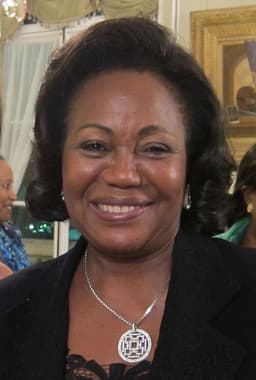
Alphonse Massamba-Debat
Politician · Modern
42.4Total

Napoleon Bonaparte
General · Modern
70.9Total
Basic Information
Born
1921
1769
Died
—
1821
Era
Modern
Modern
Nationality
Congo-Brazzaville
France
Occupation
Politician
General
Civilization
Other
Western
Score Comparison
Military (10%)
50.0
94.0
Political (20%)
35.1
72.0
Influence (20%)
48.6
40.0
Legacy (20%)
38.3
80.0
Leadership (15%)
41.5
78.0
Strategy (15%)
42.1
90.0
TOTAL
42.4
70.9
Alphonse Massamba-Debat — Complete Timeline
1963 AD
Elected President of Congo-BrazzavillePolitical Action◆ Major
Massamba-Debat was elected president following the overthrow of Fulbert Youlou. He established a socialist-oriented government and pursued policies of nationalization and one-party rule under the National Revolutionary Movement.
ElectionSocialist GovernmentCongo-Brazzaville
Impact: national
1968 AD
Overthrown and Executed in CoupPolitical Action◆ Major
Massamba-Debat was overthrown in a military coup led by Marien Ngouabi. He was subsequently arrested and executed by firing squad, ending his presidency and marking a shift to Marxist military rule.
CoupExecutionCongo-Brazzaville
Impact: nationaltragic
Napoleon Bonaparte — Complete Timeline
1799 AD
Coup of 18 BrumaireOther◆ Major
Napoleon Bonaparte, with support from his brother Lucien and key political figures, overthrew the Directory in a bloodless coup. He established the Consulate with himself as First Consul, effectively becoming the ruler of France. This event ended the French Revolution's most unstable period.
French RevolutionCoupRise to Power
Impact: regional
1804 AD
Promulgation of the Napoleonic CodeOther◆ Major
Napoleon enacted the Civil Code of the French, known as the Napoleonic Code, a comprehensive set of laws that replaced the fragmented feudal legal systems. The code established legal equality, protected property rights, and secularized law. It became the basis for legal systems in many European and world countries.
Legal ReformNapoleonic CodeCivil Law
Impact: globalconstructive
1805 AD
Battle of AusterlitzWar◆ Major
Napoleon's Grande Arm
Napoleonic WarsBattleDecisive Victory
Impact: global
1812 AD
Invasion of RussiaWar◆ Major
Napoleon led the Grande Arm
Napoleonic WarsInvasionDisaster
Impact: globaldestructive
1815 AD
Battle of WaterlooWar◆ Major
Napoleon's French army was defeated by the combined forces of the Duke of Wellington's Anglo-Allied army and Gebhard Leberecht von Bl
Napoleonic WarsBattleFinal Defeat
Impact: globaldestructive
Expert Analysis
alphonse-massamba-debat-vs-napoleon-bonaparte
# The Emperor and the President: Two Paths from Revolution
In the summer of 1815, Napoleon Bonaparte stood on the deck of the HMS *Bellerophon*, watching the coast of France disappear for the last time. He had ruled an empire of seventy million souls, rewritten the laws of a continent, and led armies across the Alps, the Pyrenees, and the frozen plains of Russia. Half a world away and a century and a half later, on a March morning in 1977, Alphonse Massamba-Debat faced a firing squad in Brazzaville, his presidency already a memory, his socialist experiment crushed by the very army he had once commanded. One man conquered Europe; the other could not hold his own small nation. What separates a titan from a footnote? The answer lies not in ambition alone, but in the soil of history itself.
Origins
Napoleon was born in 1769 on the island of Corsica, a place only recently annexed by France. His family was minor nobility, but poor. From the start, he was an outsider—Italian-speaking, fiercely proud, and hungry for recognition. The French Revolution, which erupted when he was twenty, shattered the old order and created a ladder for talent. Napoleon climbed it. He was a child of chaos, shaped by the conviction that a man of will could remake the world.
Alphonse Massamba-Debat was born in 1921 in the French colony of Congo-Brazzaville, a world away from Corsica but similarly peripheral. He was a schoolteacher by training, a product of the colonial system that educated a small elite to administer its own subjugation. When independence came in 1960, Congo-Brazzaville was a nation of two million people, divided by ethnic loyalties, rich in oil but poor in institutions. Massamba-Debat inherited not a revolution but a vacuum—the sudden absence of a colonial master, with nothing to fill the space but hope and slogans.
The difference in their eras is decisive. Napoleon rose in a Europe convulsed by war, where military glory translated directly into political power. Massamba-Debat rose in a Cold War world, where superpowers propped up and tore down governments with equal indifference. One man’s revolution gave him an army; the other’s gave him a bureaucracy.
Rise to Power
Napoleon’s ascent was meteoric. At twenty-four, he drove the British out of Toulon. At twenty-six, he saved the revolutionary government from a royalist uprising with a “whiff of grapeshot.” By thirty, he was First Consul, effectively dictator of France. Each step was a gamble, each victory a ladder rung. He understood that in revolutionary France, legitimacy came from success—and success came from war.
Massamba-Debat’s rise was quieter, more political. In 1963, when President Fulbert Youlou was overthrown by street protests, Massamba-Debat was elected as a compromise candidate. He was not a warrior but a mediator, a man chosen because he offended no one. His score for military ability—30.2 out of 100—tells the story. Where Napoleon had conquered, Massamba-Debat had been handed power by circumstance. He was a president by default, not destiny.
The key turning point for each was different. For Napoleon, it was the Italian campaign of 1796, where he transformed a starving, ragged army into a victorious force and dictated peace to Austria. For Massamba-Debat, it was the decision in 1964 to align Congo-Brazzaville with the Soviet Union and China, declaring a “scientific socialist” state. One man conquered his enemies; the other chose sides in a global conflict he could not control.
Leadership & Governance
Napoleon governed with the same energy he brought to war. The Napoleonic Code, enacted in 1804, standardized French law, guaranteed property rights, and abolished feudal privileges. He built roads, founded banks, and centralized education. His political score of 75.0 reflects a man who understood that conquest must be followed by administration. He was ruthless, yes—he suppressed dissent and censored newspapers—but he also gave France a framework that outlasted his empire.
Massamba-Debat attempted something similar on a smaller scale. He nationalized key industries, expanded education, and tried to build a single-party state that would unify Congo’s fractious ethnic groups. But his political score of 51.7 tells a story of intentions outpacing capacity. He had no code to rival Napoleon’s, no army to enforce his will, no bureaucracy that answered to him alone. His socialism was real, but it was imposed on a society that had never been a nation, only a colonial border drawn on a map.
In military terms, the contrast is stark. Napoleon’s strategic score of 93.0 places him among history’s greatest commanders. He invented the corps system, mastered the use of artillery, and won battles—Austerlitz, Jena, Borodino—that are still studied in war colleges. Massamba-Debat’s military score of 30.2 reflects a president who never led troops in battle. When his own army turned against him in 1968, he had no defense. Marien Ngouabi, the colonel who overthrew him, simply marched his soldiers into the capital and arrested the president. There was no Waterloo, only a quiet coup.
Triumph & Tragedy
Napoleon’s greatest moment came on December 2, 1805, at Austerlitz, where he crushed the combined armies of Russia and Austria. It was a masterpiece of deception and timing, a victory so complete that it ended the Third Coalition. His tragedy was the invasion of Russia in 1812—a catastrophic miscalculation that cost half a million lives and destroyed his Grand Army. He was a man who could not stop, who mistook momentum for destiny.
Massamba-Debat’s triumph was more modest: the peaceful transition of power in 1963, when Congo-Brazzaville avoided the civil wars that plagued its neighbors. His tragedy was the coup of 1968, when Ngouabi, once his ally, turned against him. He was executed nine years later, in 1977, after being implicated in Ngouabi’s assassination—a charge he may or may not have deserved. He died not on a battlefield but in a prison yard, forgotten by the world that had once taken note of his socialist experiment.
Character & Destiny
Napoleon was driven by an insatiable hunger for glory. “I live only for posterity,” he once said, and he meant it. His character—arrogant, brilliant, relentless—shaped every decision. He could not delegate, could not rest, could not imagine defeat. That same drive made him emperor and exile.
Massamba-Debat was a different kind of man: cautious, intellectual, perhaps naive. He believed that ideology could replace institutions, that loyalty could be commanded by a party program. He was not a tyrant—he was a schoolteacher who found himself president. His character reflected his circumstances: a man of modest talents in an impossible position.
Legacy
Napoleon’s legacy is immense. His legal code shaped civil law across Europe and the Americas. His military innovations influenced warfare into the twentieth century. His legend—the little corporal who conquered a continent—remains a symbol of ambition and tragedy. His total score of 82.4 out of 100 reflects a man who changed the world, for better and worse.
Massamba-Debat’s legacy is local. In Congo-Brazzaville, he is remembered as a founder of the socialist state, but also as a failure who could not hold power. His score of 51.0 places him in history’s footnotes—a president who tried, but whose nation was too small, too poor, too divided to sustain his vision.
Conclusion
The difference between Napoleon and Massamba-Debat is not simply talent—it is context. Napoleon rode a wave of revolution that gave him an army, a nation, and a continent to conquer. Massamba-Debat inherited a fragile state in a hostile world, with no army to command and no tradition of obedience to sustain him. One man’s ambition met history’s opportunity; the other’s met history’s indifference. Both were prisoners of their time, but Napoleon’s prison was a palace, and Massamba-Debat’s was a firing squad. In the end, greatness is not just what you do—it is when and where you are allowed to do it.
Rankings
🥇
Napoleon BonaparteLeader
Mil: 94.0Pol: 72.0Inf: 40.0
70.9
🥈
Alphonse Massamba-Debat
Mil: 50.0Pol: 35.1Inf: 48.6
42.4
+28.5 behind
How This Comparison Works
Algorithm
Each figure is scored on 6 dimensions (0—100 scale) based on structured historical data: Military (10%), Political (20%), Influence (20%), Legacy (20%), Leadership (15%), Strategy (15%). The weighted total produces the final ranking.
Data Sources
Scores are computed from structured sub-indicators in the database. Scale factors adjust for era (Ancient ×0.85, Modern ×1.0) and civilization size (Eastern ×1.05, Other ×0.80) to account for differences in population and military scale.
Maximum 3 Figures
Comparisons are limited to 2—3 figures to ensure readability and statistical meaningfulness.
Error Margins
±5 points per dimension — Sub-scores are derived from historical records with inherent uncertainty. Two figures within 5 points on a dimension should be considered roughly equivalent in that area.
Total Score Accuracy
±3 points overall — The weighted combination of 6 dimensions produces a total score with approximately ±3 points of uncertainty. Differences of less than 3 points are not statistically significant— the figures are effectively tied.
Known Limitations
- Historical records are incomplete and uneven across civilizations
- Figures from oral-tradition societies may be underrepresented
- Occupation labels can misclassify multi-role figures
- Scores measure capability and impact, not moral character
- Quantitative scoring is a comparison tool, not absolute truth
Capability Radar
Military (10%) — Battles & Warfare
Battles
21
95
Win Rate
27
90
Expansion
27
95
Political (20%) — Governance & Reform
Reform
30
95
Diplomacy
25
80
Economy
20
85
Influence (20%) — Cultural & Global Reach
Cultural
15
85
Global
15
90
Legacy (20%) — Historical Impact
Historical
20
95
Longevity
10
90
Leadership (15%) — Power & Stability
Tenure
20
85
Stability
10
70
Strategy (15%) — Tactics & Innovation
Strategy
31
95
Tactics
33
98
Reform
38
92
Similar Comparisons
Comments & Discussion
No comments yet. Be the first to share your thoughts!