Loading...
Amago Tsunehisa vs Qapaghan Qaghan
Qapaghan Qaghan leads by 6.5 pts · 2 figures compared
…

Amago Tsunehisa
Emperor · Medieval
52.6Total
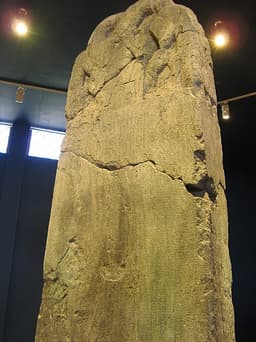
Qapaghan Qaghan
Emperor · Medieval
59.1Total
Basic Information
Born
1458
664
Died
1541
716
Era
Medieval
Medieval
Nationality
Japan
Gokturk Khaganate
Occupation
Emperor
Emperor
Civilization
Eastern
Eastern
Score Comparison
Military (10%)
45.0
72.0
Political (20%)
53.8
68.0
Influence (20%)
51.8
59.0
Legacy (20%)
43.3
49.2
Leadership (15%)
72.0
53.2
Strategy (15%)
55.0
66.3
TOTAL
52.6
59.1
Amago Tsunehisa — Complete Timeline
1486 AD
Assassination of Amago KiyosadaPolitical Action◆ Major
Amago Tsunehisa orchestrated the assassination of his uncle Amago Kiyosada, the clan head, seizing control of the Amago clan. This act of treachery established Tsunehisa as the new leader and began the clan's rise to power.
AssassinationClan CoupAmago Rise
Impact: regionaldestructive
1517 AD
Battle of Arita-NakaideWar
Amago Tsunehisa defeated the forces of the Ouchi clan at Arita-Nakaide in Aki Province, halting Ouchi expansion into the San'in region. The battle solidified Amago control over their newly conquered territories.
BattleOuchi ConflictSan'in
Impact: regional
1518 AD
Conquest of Izumo ProvinceWar◆ Major
Amago Tsunehisa completed the conquest of Izumo Province, defeating the local Kyogoku clan and capturing Gassantoda Castle. This victory made the Amago the dominant power in the San'in region of western Honshu.
ConquestIzumoGassantoda Castle
Impact: regional
1537 AD
Retirement and SuccessionPolitical Action
Amago Tsunehisa retired as clan head and passed leadership to his grandson Amago Haruhisa. This orderly succession ensured the continued strength of the Amago clan during a period of expansion.
SuccessionRetirementAmago Clan
Impact: regionalconstructive
Qapaghan Qaghan — Complete Timeline
690 AD
Expansion of the Gokturk KhaganateWar◆ Major
Qapaghan Qaghan led military campaigns that expanded the Gokturk Khaganate's territory from the Great Wall of China to the Caspian Sea. He subjugated the Kyrgyz, Turgesh, and other steppe tribes, establishing Gokturk dominance over the eastern steppes.
ExpansionSteppe EmpireMilitary Campaign
Impact: regional
695 AD
Submission of the Khitans and TatarsWar
Qapaghan Qaghan forced the Khitan and Tatar confederations to submit to Gokturk authority. He incorporated their cavalry into his army and used them as vassals in campaigns against China and other steppe peoples.
SubjugationSteppe PoliticsVassalage
Impact: regional
698 AD
Defeat of the Tang Dynasty at the Battle of QarabaliqWar◆ Major
Qapaghan Qaghan defeated a Tang Chinese army near Qarabaliq, forcing the Tang to recognize Gokturk suzerainty over the Tarim Basin. This victory secured Gokturk control over the Silk Road trade routes for a decade.
Tang-Gokturk WarBattleSilk Road
Impact: regional
716 AD
Death in Battle against the BasmylWar◆ Major
Qapaghan Qaghan was killed in a battle against the Basmyl tribe, a former vassal that rebelled. His death led to a succession crisis and the eventual decline of the Gokturk Khaganate, as his son was unable to maintain control.
DeathBattleSuccession Crisis
Impact: regionaltragic
Expert Analysis
Origins
Amago Tsunehisa (1458–1541) was born into the Amago clan, a minor samurai family in Izumo Province, Japan. His early life was marked by the tumult of the Ōnin War (1467–1477), which shattered central authority and enabled local lords to rise. Tsunehisa's father, Amago Kiyosada, was the clan head, but Tsunehisa's ambitions were shaped by the brutal realities of the Sengoku period. He received education in military tactics and governance, but his formative experience was the assassination of his uncle, which he orchestrated in 1484.
Qapaghan Qaghan (c. 665–716) was born into the Ashina clan, the royal family of the Gokturk Khaganate. His early life is poorly documented, but he grew up in a steppe empire that had been revitalized by his brother, Ilterish Qaghan, who rebelled against Tang Chinese domination. Qapaghan likely participated in Ilterish's campaigns, learning cavalry warfare and tribal diplomacy. His background was one of nomadic mobility and constant conflict with settled empires.
Rise to Power
Tsunehisa's rise began with the assassination of his uncle, Amago Kiyosada, in 1484. This act, while treacherous, allowed him to seize control of the clan. He then consolidated power by eliminating rivals and forging alliances. His key turning point was the conquest of Izumo Province in 1518, where he defeated the Kyogoku clan and captured Gassantoda Castle, a fortress that became his stronghold. By 1520, he had established the Amago as a major power in the San'in region.
Qapaghan's rise was tied to his brother Ilterish, who founded the Second Gokturk Khaganate in 682. After Ilterish's death in 693, Qapaghan became khagan. He quickly asserted dominance by defeating internal rivals and launching campaigns against the Tang Dynasty. His major victory came at the Battle of Qarabaliq in 696, where he defeated a Tang army and forced the Chinese to recognize Gokturk suzerainty over the Tarim Basin. By 700, he had expanded the khaganate to its greatest extent.
Leadership & Governance
Tsunehisa governed through a mix of strategic marriages, patronage of Buddhism, and ruthless elimination of threats. He centralized the Amago administration, implementing land surveys and tax reforms that increased clan revenue. His leadership style was calculating: he often used diplomacy before war, but did not hesitate to assassinate or betray when necessary. For example, he married his daughter to a powerful neighbor to secure an alliance, then later turned on him. He scored 72.0 in leadership, reflecting his ability to maintain clan cohesion.
Qapaghan ruled as a traditional steppe khagan, relying on personal charisma and military success to hold the tribal confederation together. He governed through a dual system: a central court and subordinate tribal leaders. He imposed tribute on conquered peoples, including the Khitans and Tatars, and integrated their cavalry into his army. His governance was less bureaucratic than Tsunehisa's, but effective for a nomadic empire. His political score of 68.0 indicates his skill in managing diverse tribes.
Triumph & Tragedy
Tsunehisa's greatest success was building the Amago clan from a minor house into a regional power. He conquered Izumo and repelled the Ouchi clan at the Battle of Arita-Nakaide in 1518. His orderly retirement in 1537, passing leadership to his grandson Haruhisa, ensured a smooth transition. However, his greatest failure was the long-term decline of the Amago after his death. Haruhisa was less capable, and the clan fell to the Mori clan in 1566. Tsunehisa's reliance on assassination created a culture of distrust that weakened the clan.
Qapaghan's triumph was expanding the Gokturk Khaganate to its zenith, controlling territory from the Caspian Sea to the Great Wall. He forced the Tang to pay tribute and subjugated numerous steppe tribes. His tragedy was his death in battle against the Basmyl in 716, a former vassal that rebelled. This led to a succession crisis that fractured the khaganate, and within decades it collapsed. His military score of 72.0 reflects his success, but his legacy score of 49.2 shows the fragility of his achievements.
Character & Destiny
Tsunehisa was patient and cunning, often described as a "saintly schemer" for his ability to appear benevolent while plotting. He was willing to kill family members for power, yet he also fostered loyalty through fair governance. His character shaped his fate: his careful planning built the Amago, but his duplicity sowed seeds of instability.
Qapaghan was a bold warrior and strategist, with a military score of 72.0 and strategy of 66.3. He was aggressive in expansion but less adept at ensuring long-term stability. His death in battle was fitting for a steppe conqueror but cut short his dynasty. Historians note that his empire was held together by his personal authority, which vanished with his death.
Legacy
Tsunehisa's legacy is mixed. He is remembered as a skilled Sengoku daimyo who built a short-lived power. The Amago clan's fall meant his achievements were overshadowed by the Mori and later Tokugawa. However, his administrative reforms influenced later daimyo, and his story is preserved in Japanese chronicles. His influence score of 51.8 reflects his regional impact.
Qapaghan's legacy is more significant. He is celebrated as a great khagan in Turkic history, remembered for restoring Gokturk power. His campaigns weakened Tang China and reshaped Central Asian geopolitics. However, the rapid collapse of his khaganate limited his long-term impact. His legacy score of 49.2 is comparable to Tsunehisa's 43.3.
Conclusion
Qapaghan Qaghan had a greater impact on history. His total score of 59.1 exceeds Tsunehisa's 52.6, and his military and political achievements affected a wider region. While Tsunehisa was a master of Sengoku politics, his influence was confined to western Japan and lasted only a few decades. Qapaghan, by contrast, challenged the Tang Empire, controlled a vast steppe empire, and left a mark on Turkic identity that persists today. His death in battle and the empire's collapse do not diminish the scale of his accomplishments. Thus, Qapaghan Qaghan takes the edge.
Rankings
🥇
Qapaghan QaghanLeader
Mil: 72.0Pol: 68.0Inf: 59.0
59.1
🥈
Amago Tsunehisa
Mil: 45.0Pol: 53.8Inf: 51.8
52.6
+6.5 behind
How This Comparison Works
Algorithm
Each figure is scored on 6 dimensions (0—100 scale) based on structured historical data: Military (10%), Political (20%), Influence (20%), Legacy (20%), Leadership (15%), Strategy (15%). The weighted total produces the final ranking.
Data Sources
Scores are computed from structured sub-indicators in the database. Scale factors adjust for era (Ancient ×0.85, Modern ×1.0) and civilization size (Eastern ×1.05, Other ×0.80) to account for differences in population and military scale.
Maximum 3 Figures
Comparisons are limited to 2—3 figures to ensure readability and statistical meaningfulness.
Error Margins
±5 points per dimension — Sub-scores are derived from historical records with inherent uncertainty. Two figures within 5 points on a dimension should be considered roughly equivalent in that area.
Total Score Accuracy
±3 points overall — The weighted combination of 6 dimensions produces a total score with approximately ±3 points of uncertainty. Differences of less than 3 points are not statistically significant— the figures are effectively tied.
Known Limitations
- Historical records are incomplete and uneven across civilizations
- Figures from oral-tradition societies may be underrepresented
- Occupation labels can misclassify multi-role figures
- Scores measure capability and impact, not moral character
- Quantitative scoring is a comparison tool, not absolute truth
Capability Radar
Military (10%) — Battles & Warfare
Battles
45
85
Win Rate
50
80
Expansion
55
85
Political (20%) — Governance & Reform
Reform
50
55
Diplomacy
65
65
Economy
45
60
Influence (20%) — Cultural & Global Reach
Cultural
35
45
Global
15
50
Legacy (20%) — Historical Impact
Historical
40
55
Longevity
30
40
Leadership (15%) — Power & Stability
Tenure
60
70
Stability
50
50
Strategy (15%) — Tactics & Innovation
Strategy
65
80
Tactics
60
75
Reform
40
60
Similar Comparisons
Comments & Discussion
No comments yet. Be the first to share your thoughts!