Loading...
Qapaghan Qaghan vs Wanyan Aguda
Wanyan Aguda leads by 4.3 pts · 2 figures compared
…
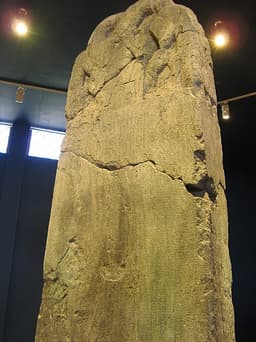
Qapaghan Qaghan
Emperor · Medieval
59.1Total
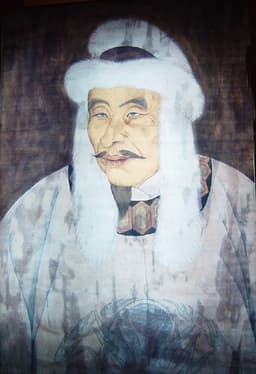
Wanyan Aguda
Emperor · Medieval
63.4Total
Basic Information
Born
664
1068
Died
716
1123
Era
Medieval
Medieval
Nationality
Gokturk Khaganate
China
Occupation
Emperor
Emperor
Civilization
Eastern
Eastern
Score Comparison
Military (10%)
72.0
82.0
Political (20%)
68.0
59.3
Influence (20%)
59.0
55.0
Legacy (20%)
49.2
52.0
Leadership (15%)
53.2
85.0
Strategy (15%)
66.3
68.0
TOTAL
59.1
63.4
Qapaghan Qaghan — Complete Timeline
690 AD
Expansion of the Gokturk KhaganateWar◆ Major
Qapaghan Qaghan led military campaigns that expanded the Gokturk Khaganate's territory from the Great Wall of China to the Caspian Sea. He subjugated the Kyrgyz, Turgesh, and other steppe tribes, establishing Gokturk dominance over the eastern steppes.
ExpansionSteppe EmpireMilitary Campaign
Impact: regional
695 AD
Submission of the Khitans and TatarsWar
Qapaghan Qaghan forced the Khitan and Tatar confederations to submit to Gokturk authority. He incorporated their cavalry into his army and used them as vassals in campaigns against China and other steppe peoples.
SubjugationSteppe PoliticsVassalage
Impact: regional
698 AD
Defeat of the Tang Dynasty at the Battle of QarabaliqWar◆ Major
Qapaghan Qaghan defeated a Tang Chinese army near Qarabaliq, forcing the Tang to recognize Gokturk suzerainty over the Tarim Basin. This victory secured Gokturk control over the Silk Road trade routes for a decade.
Tang-Gokturk WarBattleSilk Road
Impact: regional
716 AD
Death in Battle against the BasmylWar◆ Major
Qapaghan Qaghan was killed in a battle against the Basmyl tribe, a former vassal that rebelled. His death led to a succession crisis and the eventual decline of the Gokturk Khaganate, as his son was unable to maintain control.
DeathBattleSuccession Crisis
Impact: regionaltragic
Wanyan Aguda — Complete Timeline
1114 AD
Battle of HubudagangWar◆ Major
Aguda's Jurchen forces defeated a Liao army at Hubudagang, marking the first major victory of the rebellion. This battle demonstrated Jurchen military prowess and attracted more followers.
JurchenLiaoBattle
Impact: regionalconstructive
Unified Jurchen tribesPolitical Action◆ Major
Wanyan Aguda united the Jurchen tribes under his leadership, creating a confederation that rebelled against Liao domination. He organized a disciplined army and began the Jurchen revolt.
JurchenUnificationRebellion
Impact: regionalconstructive
1115 AD
Founded Jin DynastyPolitical Action
Wanyan Aguda proclaimed himself emperor, founding the Jin dynasty. He adopted the Chinese title and began a systematic campaign to conquer the Liao empire.
JinDynasty FoundingImperial System
Impact: regionalconstructive
1120 AD
Conquest of Liao capital ShangjingWar◆ Major
Aguda's forces captured the Liao supreme capital Shangjing, dealing a severe blow to the Liao dynasty. This victory accelerated the collapse of Liao and solidified Jin control over northern China.
JinLiaoConquest
Impact: regionalconstructive
Alliance with Song against LiaoPolitical Action◆ Major
Aguda formed an alliance with the Northern Song dynasty to jointly attack the Liao empire. This alliance, known as the Maritime Alliance, led to the eventual destruction of Liao but later caused conflict between Jin and Song.
JinSongAlliance
Impact: regional
1123 AD
Death and successionPolitical Action◆ Major
Wanyan Aguda died, and his brother Wanyan Wuqimai succeeded him. Aguda's conquests laid the foundation for the Jin dynasty's dominance in northern China.
JinDeathSuccession
Impact: regional
Expert Analysis
Origins
Qapaghan Qaghan (born around 665 AD) was a member of the Ashina clan, the ruling dynasty of the Second Turkic Khaganate. His early life was shaped by the resurgence of Turkic power under his brother Ilterish Qaghan, who rebelled against Tang Chinese dominance. Qapaghan served as a military commander under Ilterish, gaining experience in steppe warfare and tribal politics. He was likely born in the Orkhon Valley, the heartland of the Gokturk confederation.
Wanyan Aguda (born 1068 AD) was a chieftain of the Wanyan tribe, the leading clan of the Jurchen people in Manchuria. The Jurchen were semi-nomadic tribes living in the forests and rivers of what is now northeastern China. Aguda's father, Helibo, had begun unifying Jurchen clans under his leadership. Aguda grew up in a society chafing under the domination of the Khitan Liao dynasty, which extracted tribute and suppressed Jurchen autonomy. He was educated in both Jurchen martial traditions and some Chinese administrative practices.
Rise to Power
Qapaghan became Qaghan upon Ilterish's death in 691 AD. He immediately launched campaigns to consolidate and expand the khaganate. His first major success was subduing the Khitans in 696, forcing them to acknowledge Gokturk suzerainty. He then turned west, defeating the Turgesh and extending his control to the Caspian Sea. His greatest military achievement came in 698-701 when he defeated a Tang army at the Battle of Qarabaliq, securing Gokturk dominance over the Tarim Basin. By 705, he had forced the Tang to pay tribute and recognize his authority over the Silk Road oases.
Aguda rose to power by uniting the Jurchen tribes against the Liao. In 1113, he succeeded his brother Wuyashu as chieftain. He organized a confederation and began fortifying villages. In 1114, he openly rebelled, winning the Battle of Hubudagang against a Liao force. He proclaimed himself emperor in 1115, founding the Jin dynasty. He then captured the Liao supreme capital Shangjing in 1120, and formed the Maritime Alliance with the Northern Song dynasty in 1120 to jointly attack the Liao. By the time of his death in 1123, he had conquered most of Liao territory.
Leadership & Governance
Qapaghan governed as a traditional steppe emperor, relying on a network of tribal alliances and personal loyalty. He maintained the Gokturk administrative structure, with a dual system of eastern and western wings. His rule was characterized by constant campaigning; he was rarely in the capital. He used the Khitans and Tatars as auxiliary troops. However, he failed to create lasting institutions, and his empire was held together by his personal authority. His military score of 72.0 reflects his success in expansion, but his political score of 68.0 indicates a weaker administrative foundation.
Aguda adopted Chinese-style governance for his Jin dynasty. He established a centralized bureaucracy, adopted Chinese titles, and implemented a legal code. He also maintained Jurchen tribal structures, creating a dual system that allowed for integration of conquered Liao territories. He promoted agriculture and trade, and his alliance with Song showed diplomatic acumen. His leadership score of 85.0 is high, reflecting his ability to both conquer and administer. However, his political score of 59.3 suggests his early death prevented full consolidation.
Triumph & Tragedy
Qapaghan's greatest triumph was expanding the Gokturk Khaganate to its largest extent, from the Great Wall to the Caspian. He defeated the Tang, the Turgesh, and the Khitans. His tragedy was his death in battle in 716 against the Basmyl, a former vassal. This led to a succession crisis and the eventual collapse of the khaganate within decades. His legacy score of 49.2 reflects the ephemeral nature of his achievements.
Aguda's triumph was founding the Jin dynasty and destroying the Liao, a major power. He unified the Jurchen and created a state that would later conquer northern China. His tragedy was dying before completing the conquest; his successors had to deal with Song betrayal and internal strife. His legacy score of 52.0 is higher than Qapaghan's, as the Jin dynasty lasted over a century.
Character & Destiny
Qapaghan was a relentless warrior, personally leading campaigns. He was pragmatic, forming alliances when useful, but also ruthless. His character drove him to constant expansion, but also to overreach. His death in battle was fitting for a steppe conqueror, but his failure to secure succession doomed his empire.
Aguda was more patient and calculating. He carefully built his confederation before rebelling, and his adoption of Chinese methods showed adaptability. He was a skilled diplomat, as seen in the Song alliance. His early death at 55 prevented him from seeing his dynasty's full rise, but his foundation was solid.
Legacy
Qapaghan's empire collapsed after his death, but he is remembered as a great Gokturk ruler. His campaigns weakened the Tang and reshaped Central Asian politics. However, his legacy is limited to steppe history.
Aguda's Jin dynasty controlled northern China for 119 years, influencing Chinese history. He is considered a founder of a major dynasty. His unification of the Jurchen set the stage for the later Manchu conquest. His influence score of 55.0 reflects this enduring impact.
Conclusion
While Qapaghan Qaghan achieved impressive military expansion, scoring 72.0 in military, his empire was ephemeral. Wanyan Aguda, with a total score of 63.4 against Qapaghan's 59.1, had greater long-term impact. Aguda founded a dynasty that reshaped East Asian geopolitics, while Qapaghan's khaganate vanished. Aguda's leadership (85.0) and strategic vision (68.0) created a lasting state. Therefore, Wanyan Aguda had greater historical impact.
Rankings
🥇
Wanyan AgudaLeader
Mil: 82.0Pol: 59.3Inf: 55.0
63.4
🥈
Qapaghan Qaghan
Mil: 72.0Pol: 68.0Inf: 59.0
59.1
+4.3 behind
How This Comparison Works
Algorithm
Each figure is scored on 6 dimensions (0—100 scale) based on structured historical data: Military (10%), Political (20%), Influence (20%), Legacy (20%), Leadership (15%), Strategy (15%). The weighted total produces the final ranking.
Data Sources
Scores are computed from structured sub-indicators in the database. Scale factors adjust for era (Ancient ×0.85, Modern ×1.0) and civilization size (Eastern ×1.05, Other ×0.80) to account for differences in population and military scale.
Maximum 3 Figures
Comparisons are limited to 2—3 figures to ensure readability and statistical meaningfulness.
Error Margins
±5 points per dimension — Sub-scores are derived from historical records with inherent uncertainty. Two figures within 5 points on a dimension should be considered roughly equivalent in that area.
Total Score Accuracy
±3 points overall — The weighted combination of 6 dimensions produces a total score with approximately ±3 points of uncertainty. Differences of less than 3 points are not statistically significant— the figures are effectively tied.
Known Limitations
- Historical records are incomplete and uneven across civilizations
- Figures from oral-tradition societies may be underrepresented
- Occupation labels can misclassify multi-role figures
- Scores measure capability and impact, not moral character
- Quantitative scoring is a comparison tool, not absolute truth
Capability Radar
Military (10%) — Battles & Warfare
Battles
85
85
Win Rate
80
90
Expansion
85
85
Political (20%) — Governance & Reform
Reform
55
75
Diplomacy
65
70
Economy
60
65
Influence (20%) — Cultural & Global Reach
Cultural
45
60
Global
50
50
Legacy (20%) — Historical Impact
Historical
55
70
Longevity
40
55
Leadership (15%) — Power & Stability
Tenure
70
70
Stability
50
60
Strategy (15%) — Tactics & Innovation
Strategy
80
85
Tactics
75
80
Reform
60
75
Similar Comparisons
Comments & Discussion
No comments yet. Be the first to share your thoughts!