Loading...
Mehmed II vs Qapaghan Qaghan
Mehmed II leads by 7.7 pts · 2 figures compared
…
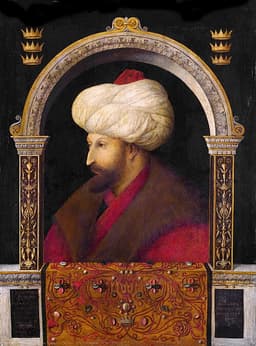
Mehmed II
Emperor · Medieval
66.8Total
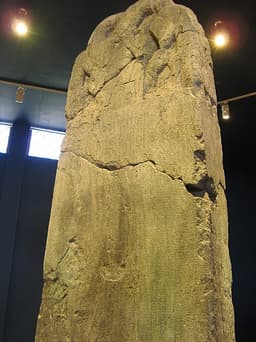
Qapaghan Qaghan
Emperor · Medieval
59.1Total
Basic Information
Born
1432
664
Died
1481
716
Era
Medieval
Medieval
Nationality
Ottoman Empire
Gokturk Khaganate
Occupation
Emperor
Emperor
Civilization
Middle Eastern
Eastern
Score Comparison
Military (10%)
77.5
72.0
Political (20%)
70.3
68.0
Influence (20%)
40.0
59.0
Legacy (20%)
75.0
49.2
Leadership (15%)
78.0
53.2
Strategy (15%)
80.3
66.3
TOTAL
66.8
59.1
Mehmed II — Complete Timeline
1453 AD
Siege of ConstantinopleWar
Mehmed II led the Ottoman army in a 53-day siege of Constantinople, the capital of the Byzantine Empire. The city fell on May 29, 1453, after Ottoman forces breached the walls. This conquest ended the Byzantine Empire and established Constantinople as the Ottoman capital, later renamed Istanbul.
ConquestByzantine EmpireOttoman Expansion
Impact: global
1456 AD
Siege of BelgradeWar◆ Major
Mehmed II led a large Ottoman army to besiege Belgrade, a key Hungarian fortress. The siege was broken by a Christian relief force led by John Hunyadi. The Ottoman army suffered heavy losses and was forced to retreat. This defeat halted Ottoman expansion into Hungary for decades.
SiegeDefeatHungary
Impact: regional
1461 AD
Conquest of the Empire of TrebizondWar◆ Major
Mehmed II led a military campaign against the Empire of Trebizond, the last major Byzantine Greek successor state. After a siege of the capital, Emperor David Megas Komnenos surrendered. This conquest eliminated the final remnant of Byzantine authority in Anatolia.
ConquestAnatoliaByzantine Successor
Impact: regional
1478 AD
Codification of Ottoman Law (Kanunname)Reform◆ Major
Mehmed II issued the Kanunname, a comprehensive legal code that systematized Ottoman criminal, administrative, and land law. This code defined the powers of the sultan, the structure of the bureaucracy, and the rights of subjects. It provided a legal framework for the expanding empire.
Legal ReformOttoman LawAdministration
Impact: nationalconstructive
1480 AD
Invasion of OtrantoWar
Mehmed II ordered an Ottoman fleet to invade the Italian city of Otranto. Ottoman forces captured the city and massacred many inhabitants. This invasion established a temporary Ottoman foothold in Italy, causing alarm among Italian states. The occupation ended after Mehmed's death.
InvasionItalyOttoman Expansion
Impact: regionaldestructive
Qapaghan Qaghan — Complete Timeline
690 AD
Expansion of the Gokturk KhaganateWar◆ Major
Qapaghan Qaghan led military campaigns that expanded the Gokturk Khaganate's territory from the Great Wall of China to the Caspian Sea. He subjugated the Kyrgyz, Turgesh, and other steppe tribes, establishing Gokturk dominance over the eastern steppes.
ExpansionSteppe EmpireMilitary Campaign
Impact: regional
695 AD
Submission of the Khitans and TatarsWar
Qapaghan Qaghan forced the Khitan and Tatar confederations to submit to Gokturk authority. He incorporated their cavalry into his army and used them as vassals in campaigns against China and other steppe peoples.
SubjugationSteppe PoliticsVassalage
Impact: regional
698 AD
Defeat of the Tang Dynasty at the Battle of QarabaliqWar◆ Major
Qapaghan Qaghan defeated a Tang Chinese army near Qarabaliq, forcing the Tang to recognize Gokturk suzerainty over the Tarim Basin. This victory secured Gokturk control over the Silk Road trade routes for a decade.
Tang-Gokturk WarBattleSilk Road
Impact: regional
716 AD
Death in Battle against the BasmylWar◆ Major
Qapaghan Qaghan was killed in a battle against the Basmyl tribe, a former vassal that rebelled. His death led to a succession crisis and the eventual decline of the Gokturk Khaganate, as his son was unable to maintain control.
DeathBattleSuccession Crisis
Impact: regionaltragic
Expert Analysis
Origins
Mehmed II was born on March 30, 1432, in Edirne, the Ottoman capital. He was the son of Sultan Murad II and Hüma Hatun, a slave concubine. He received a rigorous education in Islamic sciences, philosophy, and military tactics from tutors including the scholar Molla Gürani. His early exposure to the court's political intrigues shaped his strategic mindset.
Qapaghan Qaghan, born around 665 AD, was a member of the Ashina clan, the ruling dynasty of the Gokturk Khaganate. His father was likely a lesser noble, and he rose through the military ranks. Little is known of his early life, but the tribal confederation's nomadic culture emphasized horseback warfare and loyalty to the khagan.
Rise to Power
Mehmed II ascended the throne in August 1444 at age 12 after his father abdicated. However, a coup by the Janissaries and political instability forced Murad II to return. Mehmed was sidelined but learned from the experience. He became sultan permanently in February 1451 after Murad's death. His first act was to consolidate power by executing potential rivals and strengthening the Janissaries.
Qapaghan Qaghan became khagan in 691 AD after the death of his brother, Ilterish Qaghan. He faced immediate challenges from rebellious tribes and the Tang Dynasty. His rise was marked by military campaigns to assert authority over the Gokturk confederation. He defeated the Khitans and Tatars, forcing their submission and incorporating their cavalry into his army.
Leadership & Governance
Mehmed II was a centralized autocrat who systematized Ottoman law. In 1474, he issued the Kanunname, a legal code defining the powers of the sultan, the hierarchy of officials, and criminal penalties. He also granted autonomy to religious communities (millet system) to manage their own affairs. His governance combined Islamic law with secular edicts, creating a durable administrative framework.
Qapaghan Qaghan led a nomadic empire based on tribal alliances. He maintained control through military prowess and distributing loot from campaigns. He did not establish a written legal code; instead, he relied on customary Turkic law (töre). His governance was personal and charismatic, but lacked institutional structures. This made the khaganate vulnerable to succession disputes.
Triumph & Tragedy
Mehmed II's greatest triumph was the capture of Constantinople in 1453 after a 53-day siege. He used massive bombardments, including the famous Orban cannon, and amphibious assaults. The conquest ended the Byzantine Empire and made the Ottoman Empire a major power. He also conquered the Empire of Trebizond in 1461 and extended Ottoman control over Anatolia and the Balkans.
His failures include the Siege of Belgrade in 1456, where he was defeated by John Hunyadi, and the failed invasion of Otranto in 1480, which ended after his death. The Otranto campaign overextended Ottoman resources and provoked a Christian coalition.
Qapaghan Qaghan's triumphs include expanding the Gokturk Khaganate from the Great Wall to the Caspian Sea. He defeated the Tang at the Battle of Qarabaliq in 696 AD, forcing Tang recognition of Gokturk suzerainty over the Tarim Basin. He also subjugated the Khitans and Tatars.
His tragedy was his death in battle against the Basmyl tribe in 716 AD. The Basmyl were former vassals who rebelled. His death triggered a succession crisis that weakened the khaganate, leading to its eventual collapse in 744 AD. His overreliance on personal leadership proved fatal.
Character & Destiny
Mehmed II was methodical, patient, and ruthless. He personally directed sieges and studied military tactics. His decision to build a fortress (Rumeli Hisarı) on the Bosphorus prior to the Constantinople siege shows his strategic planning. He was also a patron of arts and sciences, inviting scholars to his court. His character combined intellectual curiosity with cold pragmatism.
Qapaghan Qaghan was a warrior khagan, leading from the front. His military scores of 72.0 and strategy of 66.3 reflect his aggressive tactics. However, his leadership score of 53.2 suggests he struggled to maintain loyalty. He did not delegate effectively, and his death in battle highlights his impulsive nature. His legacy was fragile due to the lack of institutional governance.
Legacy
Mehmed II's legacy is enduring. He transformed Constantinople into Istanbul, the Ottoman capital, and repopulated it with Muslims, Christians, and Jews. His legal code influenced Ottoman governance for centuries. He is remembered as a conqueror and administrator, scoring 75.0 in legacy. The city he captured remains a major global city.
Qapaghan Qaghan's legacy is more limited. He expanded the Gokturk Khaganate but did not create lasting institutions. His empire fragmented after his death. He is remembered in Turkic history as a great warrior, but his legacy score of 49.2 reflects the ephemeral nature of his achievements. The Khaganate collapsed within 30 years of his death.
Conclusion
Mehmed II had greater impact. His total score of 66.8 compared to Qapaghan's 59.1 reflects this. Mehmed's conquests reshaped the geopolitical landscape of Europe and the Middle East, and his legal reforms provided stability. Qapaghan's expansion was impressive but transient. While both were skilled commanders, Mehmed's institutional legacy outlasted Qapaghan's personal conquests. The Ottoman Empire endured for centuries, while the Gokturk Khaganate faded into history.
Rankings
🥇
Mehmed IILeader
Mil: 77.5Pol: 70.3Inf: 40.0
66.8
🥈
Qapaghan Qaghan
Mil: 72.0Pol: 68.0Inf: 59.0
59.1
+7.7 behind
How This Comparison Works
Algorithm
Each figure is scored on 6 dimensions (0—100 scale) based on structured historical data: Military (10%), Political (20%), Influence (20%), Legacy (20%), Leadership (15%), Strategy (15%). The weighted total produces the final ranking.
Data Sources
Scores are computed from structured sub-indicators in the database. Scale factors adjust for era (Ancient ×0.85, Modern ×1.0) and civilization size (Eastern ×1.05, Other ×0.80) to account for differences in population and military scale.
Maximum 3 Figures
Comparisons are limited to 2—3 figures to ensure readability and statistical meaningfulness.
Error Margins
±5 points per dimension — Sub-scores are derived from historical records with inherent uncertainty. Two figures within 5 points on a dimension should be considered roughly equivalent in that area.
Total Score Accuracy
±3 points overall — The weighted combination of 6 dimensions produces a total score with approximately ±3 points of uncertainty. Differences of less than 3 points are not statistically significant— the figures are effectively tied.
Known Limitations
- Historical records are incomplete and uneven across civilizations
- Figures from oral-tradition societies may be underrepresented
- Occupation labels can misclassify multi-role figures
- Scores measure capability and impact, not moral character
- Quantitative scoring is a comparison tool, not absolute truth
Capability Radar
Military (10%) — Battles & Warfare
Battles
95
85
Win Rate
90
80
Expansion
95
85
Political (20%) — Governance & Reform
Reform
90
55
Diplomacy
85
65
Economy
80
60
Influence (20%) — Cultural & Global Reach
Cultural
85
45
Global
90
50
Legacy (20%) — Historical Impact
Historical
95
55
Longevity
90
40
Leadership (15%) — Power & Stability
Tenure
85
70
Stability
75
50
Strategy (15%) — Tactics & Innovation
Strategy
95
80
Tactics
95
75
Reform
85
60
Similar Comparisons
Comments & Discussion
No comments yet. Be the first to share your thoughts!