Loading...
Amalric I of Jerusalem vs Napoleon Bonaparte
Napoleon Bonaparte leads by 16.5 pts · 2 figures compared
…
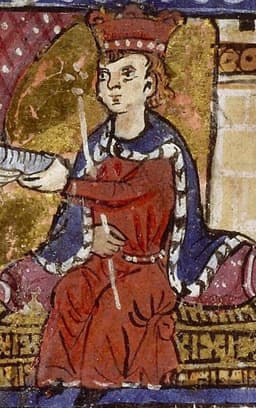
Amalric I of Jerusalem
Emperor · Medieval
54.4Total

Napoleon Bonaparte
General · Modern
70.9Total
Basic Information
Born
1136
1769
Died
1174
1821
Era
Medieval
Modern
Nationality
Jerusalem
France
Occupation
Emperor
General
Civilization
Western
Western
Score Comparison
Military (10%)
50.0
94.0
Political (20%)
61.3
72.0
Influence (20%)
53.3
40.0
Legacy (20%)
44.2
80.0
Leadership (15%)
65.7
78.0
Strategy (15%)
60.0
90.0
TOTAL
54.4
70.9
Amalric I of Jerusalem — Complete Timeline
1163 AD
First invasion of EgyptWar◆ Major
Amalric I launched an invasion of Fatimid Egypt, aiming to exploit internal divisions. He captured the city of Bilbeis but was forced to withdraw after Nur ad-Din sent reinforcements. This began a series of campaigns for control of Egypt.
CrusadeEgyptFatimid
Impact: regional
Accession as King of JerusalemPolitical Action◆ Major
Amalric I succeeded his brother Baldwin III as King of Jerusalem. He inherited a kingdom facing threats from Nur ad-Din Zengi and the Fatimid Caliphate, and immediately began planning campaigns to expand crusader influence.
SuccessionCrusader States
Impact: regional
1167 AD
Alliance with the Byzantine EmpirePolitical Action◆ Major
Amalric I negotiated an alliance with Byzantine Emperor Manuel I Komnenos, agreeing to a joint campaign against Egypt. The alliance included a marriage between Amalric and Maria Komnene, and promised Byzantine naval support.
AllianceByzantineDiplomacy
Impact: regionalconstructive
1169 AD
Failed joint campaign against EgyptWar◆ Major
Amalric I and Byzantine forces launched a joint siege of Damietta in Egypt. The campaign failed due to poor coordination, supply issues, and the arrival of Nur ad-Din's army. This defeat ended crusader hopes of conquering Egypt.
CrusadeEgyptByzantineFailure
Impact: regionaldestructive
1174 AD
Death from illnessOther◆ Major
Amalric I died of dysentery at age 38, leaving his young son Baldwin IV as heir. His death weakened the Kingdom of Jerusalem, as it faced the rising power of Saladin, who had united Egypt and Syria.
DeathSuccessionCrusader States
Impact: regionaltragic
Napoleon Bonaparte — Complete Timeline
1799 AD
Coup of 18 BrumaireOther◆ Major
Napoleon Bonaparte, with support from his brother Lucien and key political figures, overthrew the Directory in a bloodless coup. He established the Consulate with himself as First Consul, effectively becoming the ruler of France. This event ended the French Revolution's most unstable period.
French RevolutionCoupRise to Power
Impact: regional
1804 AD
Promulgation of the Napoleonic CodeOther◆ Major
Napoleon enacted the Civil Code of the French, known as the Napoleonic Code, a comprehensive set of laws that replaced the fragmented feudal legal systems. The code established legal equality, protected property rights, and secularized law. It became the basis for legal systems in many European and world countries.
Legal ReformNapoleonic CodeCivil Law
Impact: globalconstructive
1805 AD
Battle of AusterlitzWar◆ Major
Napoleon's Grande Arm
Napoleonic WarsBattleDecisive Victory
Impact: global
1812 AD
Invasion of RussiaWar◆ Major
Napoleon led the Grande Arm
Napoleonic WarsInvasionDisaster
Impact: globaldestructive
1815 AD
Battle of WaterlooWar◆ Major
Napoleon's French army was defeated by the combined forces of the Duke of Wellington's Anglo-Allied army and Gebhard Leberecht von Bl
Napoleonic WarsBattleFinal Defeat
Impact: globaldestructive
Expert Analysis
amalric-i-of-jerusalem-vs-napoleon-bonaparte
# The Conqueror and the Crusader: Napoleon, Amalric, and the Seduction of Egypt
In 1798, a thirty-year-old general from Corsica stood on the deck of a French warship, watching the Egyptian coast materialize through the Mediterranean haze. Napoleon Bonaparte had come to conquer. Six hundred years earlier, another king had gazed upon those same shores with the same ambition. Amalric I of Jerusalem, a crusader monarch in his prime, had launched invasion after invasion into Egypt, believing the Nile Delta held the key to his kingdom's survival. One would reshape the world. The other would be swallowed by the sand.
Origins
Napoleon Bonaparte was born in 1769 on Corsica, an island that had just been sold to France by Genoa. His family were minor nobility, resentful of French rule, and young Napoleon grew up speaking Italian-accented French in a household that burned with grievance. The French Revolution, which erupted when he was twenty, shattered the old order and created a ladder for ambitious outsiders. Napoleon climbed it.
Amalric I, born in 1136, was the second son of Fulk of Jerusalem and Queen Melisende. He grew up in a kingdom that was itself a stranger in a strange land—a Crusader state carved out of the Levant by force, surrounded by hostile Muslim powers. Unlike Napoleon, who inherited a revolutionary era that demanded constant motion, Amalric inherited a precarious status quo that demanded constant vigilance.
Their eras shaped them profoundly. Napoleon lived in a time when Europe was remaking itself, when a man could rise from artillery officer to emperor in a decade. Amalric lived in a time when Christendom and Islam were locked in a grinding stalemate, when kingship was a burden rather than an opportunity, and when the margin for error was measured in inches.
Rise to Power
Napoleon’s ascent was a masterpiece of opportunism. He first distinguished himself at the Siege of Toulon in 1793, where his artillery tactics drove the British from the port. By 1796, at age twenty-six, he commanded the French Army of Italy and proceeded to shatter the Austrian Empire in a series of lightning campaigns. His political genius matched his military brilliance. In 1799, he overthrew the Directory in a coup d'état, installed himself as First Consul, and by 1804 had crowned himself Emperor of the French. Each step was calculated, each risk measured.
Amalric’s rise was quieter. He became King of Jerusalem in 1163, succeeding his brother Baldwin III. The kingdom was already under existential pressure from Nur ad-Din, the Muslim ruler of Syria who had united the fragmented Islamic states of the region. Amalric inherited not a launching pad for conquest, but a fortress under siege. His coronation was not a triumph but a burden.
Leadership & Governance
Napoleon governed with terrifying efficiency. He centralized the French state, created the Bank of France, and established the Napoleonic Code—a legal framework that abolished feudal privileges, protected property rights, and enshrined meritocracy. His military reforms were equally sweeping: he organized his armies into corps that could march separately but fight together, and he revolutionized logistics by living off the land. His political wisdom was pragmatic: he pacified the Catholic Church through the Concordat of 1801, won over the peasantry by securing their revolutionary land gains, and created a new nobility drawn from talent rather than birth.
Amalric governed a kingdom that was a patchwork of feudal obligations, clerical privileges, and military orders. He lacked the raw power to impose his will. His political achievements were diplomatic rather than legislative. In 1167, he negotiated an alliance with Byzantine Emperor Manuel I Komnenos, securing a promise of joint action against Egypt. It was a shrewd move—the Byzantine navy could provide the naval support the Crusader kingdom desperately lacked—but it tied his fate to an ally whose interests did not perfectly align with his own.
Triumph & Tragedy
Napoleon’s greatest moment came on December 2, 1805, at Austerlitz, where he destroyed the combined armies of Austria and Russia in a single day. The battle was a tactical masterpiece: he deliberately weakened his right flank to lure the allies into a trap, then crushed their center with a massive assault. By nightfall, the Third Coalition had collapsed. Napoleon stood at the height of his power, master of continental Europe.
His greatest failure followed a decade later. The invasion of Russia in 1812 was a catastrophic miscalculation. He marched 600,000 men into the vastness of the Russian steppes, won every battle, and lost his army to winter, disease, and starvation. The retreat from Moscow destroyed his aura of invincibility. His final defeat came at Waterloo on June 18, 1815, where Prussian reinforcements arrived just in time to turn the tide against him.
Amalric’s triumphs were smaller and more desperate. His first invasion of Egypt in 1163 captured the city of Bilbeis, but he could not hold it. His second campaign in 1167 made more progress, but he was outmaneuvered by the wily Egyptian vizier Shawar, who played the Crusaders against Nur ad-Din. The joint campaign with the Byzantines in 1169—a siege of Damietta—failed disastrously due to poor coordination and mutual suspicion. Amalric’s tragedy was not a single catastrophic defeat but a series of grinding failures that drained his kingdom’s strength. He died of dysentery in 1174, at age thirty-eight, leaving his leprous son Baldwin IV to inherit a kingdom that was already crumbling.
Character & Destiny
Napoleon was a man of relentless ambition and iron self-discipline. He slept four hours a night, dictated multiple letters simultaneously, and trusted no one completely. His personality drove him to constant expansion—he could not stop because stopping meant decline. “I am a man of the Revolution,” he once said, “and I know that the Revolution cannot be undone.” He was also a man of profound self-regard. His decisions were shaped by a belief in his own destiny that bordered on mysticism.
Amalric was a more cautious figure, a king who understood that his kingdom was a fragile artifact surrounded by enemies. He was a student of history and law, a patron of learning, and a man who knew the limits of his power. His caution was not timidity but realism: he understood that the Crusader states could not survive without external support, and he spent his reign seeking that support. His personality shaped his decisions toward diplomacy rather than conquest, but diplomacy could not save him when the tide of history turned against his kingdom.
Legacy
Napoleon’s legacy is immense and contested. He spread the ideals of the French Revolution—equality before the law, religious toleration, meritocracy—across Europe, even as he betrayed those ideals by crowning himself emperor. The Napoleonic Code remains the foundation of civil law in much of the world. His military innovations influenced warfare for a century. He is remembered as both a liberator and a tyrant, a genius and a megalomaniac.
Amalric’s legacy is narrower. He is remembered as the king who tried and failed to conquer Egypt, whose ambitions overreached his resources, and whose death hastened the fall of the Kingdom of Jerusalem. The kingdom he left to his son collapsed entirely in 1187, thirteen years after his death, when Saladin captured Jerusalem. Amalric is a footnote in the history of the Crusades, a cautionary tale about the limits of ambition.
Conclusion
Napoleon and Amalric both reached for Egypt, but they reached from different worlds. Napoleon was a modern man, armed with the resources of a nation-state and the momentum of a revolution. He could afford to fail—he had Europe to fall back on. Amalric was a medieval king, armed only with feudal levies and the prayers of a dwindling kingdom. He could not afford to fail, because failure meant extinction.
In the end, both men were defeated by the same forces: geography, logistics, and the stubborn resistance of peoples who did not wish to be conquered. Napoleon’s fall was spectacular, a tragedy of Shakespearean proportions. Amalric’s fall was quiet, a slow erosion of hope. But both stories remind us that history is not kind to those who reach too far, no matter how brilliant their minds or how noble their cause.
Rankings
🥇
Napoleon BonaparteLeader
Mil: 94.0Pol: 72.0Inf: 40.0
70.9
🥈
Amalric I of Jerusalem
Mil: 50.0Pol: 61.3Inf: 53.3
54.4
+16.5 behind
How This Comparison Works
Algorithm
Each figure is scored on 6 dimensions (0—100 scale) based on structured historical data: Military (10%), Political (20%), Influence (20%), Legacy (20%), Leadership (15%), Strategy (15%). The weighted total produces the final ranking.
Data Sources
Scores are computed from structured sub-indicators in the database. Scale factors adjust for era (Ancient ×0.85, Modern ×1.0) and civilization size (Eastern ×1.05, Other ×0.80) to account for differences in population and military scale.
Maximum 3 Figures
Comparisons are limited to 2—3 figures to ensure readability and statistical meaningfulness.
Error Margins
±5 points per dimension — Sub-scores are derived from historical records with inherent uncertainty. Two figures within 5 points on a dimension should be considered roughly equivalent in that area.
Total Score Accuracy
±3 points overall — The weighted combination of 6 dimensions produces a total score with approximately ±3 points of uncertainty. Differences of less than 3 points are not statistically significant— the figures are effectively tied.
Known Limitations
- Historical records are incomplete and uneven across civilizations
- Figures from oral-tradition societies may be underrepresented
- Occupation labels can misclassify multi-role figures
- Scores measure capability and impact, not moral character
- Quantitative scoring is a comparison tool, not absolute truth
Capability Radar
Military (10%) — Battles & Warfare
Battles
45
95
Win Rate
40
90
Expansion
55
95
Political (20%) — Governance & Reform
Reform
40
95
Diplomacy
60
80
Economy
45
85
Influence (20%) — Cultural & Global Reach
Cultural
30
85
Global
20
90
Legacy (20%) — Historical Impact
Historical
40
95
Longevity
25
90
Leadership (15%) — Power & Stability
Tenure
50
85
Stability
35
70
Strategy (15%) — Tactics & Innovation
Strategy
55
95
Tactics
50
98
Reform
30
92
Similar Comparisons
Comments & Discussion
**AmalricTheAvalanche**6/17/2026
People romanticize Napoleon's Egyptian campaign like it was some grand chess move, when really it was a desperate publicity stunt after all his Italian glory. Amalric at least understood his strategy: Egypt was the breadbasket and treasury of the Muslim world, and he tried eight times to cut the snake's head off. Napoleon? He won the Battle of the Pyramids, then lost his fleet at Aboukir Bay, stranded his army, and sneaked back to France like a thief. Who's the real conqueror here? The one who k