Loading...
Amenemhat III vs Napoleon Bonaparte
Napoleon Bonaparte leads by 14.2 pts · 2 figures compared
…
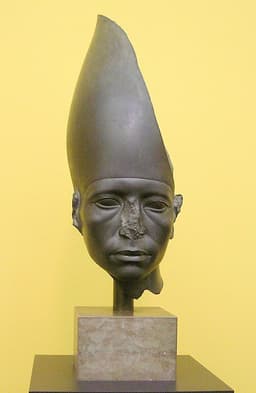
Amenemhat III
Emperor · Ancient
56.7Total

Napoleon Bonaparte
General · Modern
70.9Total
Basic Information
Born
-1800
1769
Died
-1755
1821
Era
Ancient
Modern
Nationality
Middle Kingdom Egypt
France
Occupation
Emperor
General
Civilization
Middle Eastern
Western
Score Comparison
Military (10%)
25.9
94.0
Political (20%)
72.0
72.0
Influence (20%)
62.0
40.0
Legacy (20%)
58.0
80.0
Leadership (15%)
72.0
78.0
Strategy (15%)
25.0
90.0
TOTAL
56.7
70.9
Amenemhat III — Complete Timeline
1790 BC
Construction of the Black Pyramid at DahshurCultural◆ Major
Amenemhat III built the Black Pyramid at Dahshur, named for its dark mudbrick core. The pyramid was poorly constructed and suffered from structural issues, leading to its partial collapse in antiquity. It contained a complex burial chamber with a massive quartzite sarcophagus.
PyramidArchitectureDahshur
Impact: national
1785 BC
Construction of the Hawara Pyramid and LabyrinthCultural◆ Major
Amenemhat III built his second pyramid at Hawara, near the Faiyum. Adjacent to it, he constructed a vast mortuary temple complex known to later Greek writers as the Labyrinth, described by Herodotus as surpassing the pyramids in scale. The complex served as an administrative and religious center.
PyramidLabyrinthArchitecture
Impact: nationalconstructive
1780 BC
Completion of Faiyum Land ReclamationReform◆ Major
Amenemhat III completed the large-scale irrigation and land reclamation projects in the Faiyum region begun by his predecessors. By regulating the inflow of Nile water, he expanded arable land significantly, making the Faiyum one of the most productive agricultural areas in Egypt and contributing to the prosperity of his reign.
IrrigationAgricultureFaiyum
Impact: regionalconstructive
1775 BC
Peak of Middle Kingdom ProsperityPolitical Action◆ Major
Under Amenemhat III, Egypt reached the zenith of its Middle Kingdom power and wealth. Extensive mining expeditions to Sinai and the Eastern Desert yielded turquoise and copper. Trade flourished, and the administration was efficient, leading to a period of stability and cultural achievement often regarded as a golden age.
Golden AgeProsperityMiddle Kingdom
Impact: nationalconstructive
Napoleon Bonaparte — Complete Timeline
1799 AD
Coup of 18 BrumaireOther◆ Major
Napoleon Bonaparte, with support from his brother Lucien and key political figures, overthrew the Directory in a bloodless coup. He established the Consulate with himself as First Consul, effectively becoming the ruler of France. This event ended the French Revolution's most unstable period.
French RevolutionCoupRise to Power
Impact: regional
1804 AD
Promulgation of the Napoleonic CodeOther◆ Major
Napoleon enacted the Civil Code of the French, known as the Napoleonic Code, a comprehensive set of laws that replaced the fragmented feudal legal systems. The code established legal equality, protected property rights, and secularized law. It became the basis for legal systems in many European and world countries.
Legal ReformNapoleonic CodeCivil Law
Impact: globalconstructive
1805 AD
Battle of AusterlitzWar◆ Major
Napoleon's Grande Arm
Napoleonic WarsBattleDecisive Victory
Impact: global
1812 AD
Invasion of RussiaWar◆ Major
Napoleon led the Grande Arm
Napoleonic WarsInvasionDisaster
Impact: globaldestructive
1815 AD
Battle of WaterlooWar◆ Major
Napoleon's French army was defeated by the combined forces of the Duke of Wellington's Anglo-Allied army and Gebhard Leberecht von Bl
Napoleonic WarsBattleFinal Defeat
Impact: globaldestructive
Expert Analysis
Origins
Amenemhat III, born around 1860 BCE, was the son of Senusret III, one of Egypt's most militaristic pharaohs. He inherited a stable, prosperous kingdom and was groomed for leadership from an early age. His education focused on statecraft, religion, and administration, preparing him to maintain the Middle Kingdom's golden age.
Napoleon Bonaparte, born in 1769 on Corsica, was the son of a minor noble. He attended military school in France, graduating as an artillery officer. His early years were marked by the French Revolution, which opened opportunities for ambitious young officers. He was influenced by Enlightenment thinkers and quickly rose through the ranks.
Rise to Power
Amenemhat III ascended the throne around 1818 BCE after his father's long reign. There was no significant struggle; he was the designated heir. His power was consolidated through traditional Egyptian means: building projects, religious patronage, and administrative control. He faced no major internal or external threats, allowing him to focus on governance and economic development.
Napoleon rose to prominence through military success. He first gained fame for his role in the Siege of Toulon (1793) at age 24. After a series of victories in Italy (1796-1797), he became a national hero. In 1799, he staged the Coup of 18 Brumaire, overthrowing the Directory and establishing himself as First Consul. By 1804, he crowned himself Emperor of the French.
Leadership & Governance
Amenemhat III's leadership was characterized by bureaucratic efficiency and large-scale public works. He completed the Faiyum land reclamation project, transforming a marshy area into fertile farmland. This involved regulating the inflow of the Nile through canals and dykes, increasing agricultural output significantly. He also managed extensive mining expeditions to Sinai and the Eastern Desert, ensuring a steady supply of turquoise, copper, and other resources. His governance was stable and centralized, with a strong emphasis on record-keeping and administration.
Napoleon's leadership was dynamic, centralized, and militaristic. He reformed French law with the Napoleonic Code (1804), which standardized legal systems across Europe and emphasized meritocracy. He reorganized education, established the Bank of France, and promoted infrastructure projects. However, his governance was authoritarian; he suppressed dissent and concentrated power in his own hands. His military campaigns expanded French influence but also drained resources and caused immense human suffering. In leadership, Amenemhat III scores 72.0, while Napoleon scores 78.0.
Triumph & Tragedy
Amenemhat III's greatest triumph was the completion of the Faiyum irrigation system, which secured Egypt's prosperity for generations. His pyramid complex at Hawara, known as the Labyrinth to later Greeks, was a marvel of architecture. His reign marked the peak of Middle Kingdom wealth and stability. However, his Black Pyramid at Dahshur was poorly constructed and later collapsed, reflecting a failure in structural engineering. He also left no strong successor; after his death, the Middle Kingdom declined into the Second Intermediate Period.
Napoleon's triumphs include his military victories, especially Austerlitz (1805), where he defeated a larger Austro-Russian army. The Napoleonic Code remains a foundation of modern law. However, his invasion of Russia (1812) was a disaster, losing over 500,000 men. His final defeat at Waterloo (1815) ended his rule. His ambition led to widespread war and destabilized Europe. In military, Napoleon scores 94.0, while Amenemhat III scores 60.0. In influence, Amenemhat III scores 72.0, Napoleon 40.0.
Character & Destiny
Amenemhat III was a cautious, administrative ruler who prioritized stability and prosperity. His destiny was shaped by the strong foundations laid by his father; he reigned during a period of peace and did not face major crises. His character was methodical and focused on internal development.
Napoleon was ambitious, charismatic, and driven by a desire for glory and power. His destiny was shaped by the chaos of the French Revolution and his own relentless ambition. He was a brilliant strategist but also arrogant, leading to overreach. His personality attracted loyalty but also created enemies. Historians note his tactical genius but criticize his strategic blunders.
Legacy
Amenemhat III's legacy is tied to the Faiyum reclamation, which continued to benefit Egypt for centuries. The Labyrinth influenced Greek architecture and legend. His reign is remembered as a golden age of peace and prosperity. However, his immediate successors failed to maintain his achievements, leading to decline. His overall legacy score is 67.5.
Napoleon's legacy is vast. The Napoleonic Code influenced legal systems worldwide. He reshaped European borders, promoted nationalism, and ended feudalism in many territories. His military tactics are still studied. However, his wars caused millions of deaths and left a legacy of conflict. His legacy score is 80.0.
Conclusion
While Amenemhat III achieved a stable, prosperous society through effective governance and engineering, Napoleon's impact was more transformative on a global scale. Napoleon's reforms in law, education, and administration have had lasting influence, and his military campaigns changed the course of European history. Amenemhat III scored 63.1 overall, while Napoleon scored 70.9. The 7.8-point gap reflects Napoleon's broader and more enduring influence. Therefore, Napoleon had greater impact, despite Amenemhat III's impressive domestic achievements.
Rankings
🥇
Napoleon BonaparteLeader
Mil: 94.0Pol: 72.0Inf: 40.0
70.9
🥈
Amenemhat III
Mil: 25.9Pol: 72.0Inf: 62.0
56.7
+14.2 behind
How This Comparison Works
Algorithm
Each figure is scored on 6 dimensions (0—100 scale) based on structured historical data: Military (10%), Political (20%), Influence (20%), Legacy (20%), Leadership (15%), Strategy (15%). The weighted total produces the final ranking.
Data Sources
Scores are computed from structured sub-indicators in the database. Scale factors adjust for era (Ancient ×0.85, Modern ×1.0) and civilization size (Eastern ×1.05, Other ×0.80) to account for differences in population and military scale.
Maximum 3 Figures
Comparisons are limited to 2—3 figures to ensure readability and statistical meaningfulness.
Error Margins
±5 points per dimension — Sub-scores are derived from historical records with inherent uncertainty. Two figures within 5 points on a dimension should be considered roughly equivalent in that area.
Total Score Accuracy
±3 points overall — The weighted combination of 6 dimensions produces a total score with approximately ±3 points of uncertainty. Differences of less than 3 points are not statistically significant— the figures are effectively tied.
Known Limitations
- Historical records are incomplete and uneven across civilizations
- Figures from oral-tradition societies may be underrepresented
- Occupation labels can misclassify multi-role figures
- Scores measure capability and impact, not moral character
- Quantitative scoring is a comparison tool, not absolute truth
Capability Radar
Military (10%) — Battles & Warfare
Battles
10
95
Win Rate
10
90
Expansion
10
95
Political (20%) — Governance & Reform
Reform
80
95
Diplomacy
70
80
Economy
90
85
Influence (20%) — Cultural & Global Reach
Cultural
70
85
Global
60
90
Legacy (20%) — Historical Impact
Historical
75
95
Longevity
70
90
Leadership (15%) — Power & Stability
Tenure
85
85
Stability
85
70
Strategy (15%) — Tactics & Innovation
Strategy
10
95
Tactics
10
98
Reform
15
92
Similar Comparisons
Comments & Discussion
No comments yet. Be the first to share your thoughts!