Loading...
Anastasius I vs Sargon of Akkad
Sargon of Akkad leads by 13.8 pts · 2 figures compared
…

Anastasius I
Emperor · Ancient
55.8Total
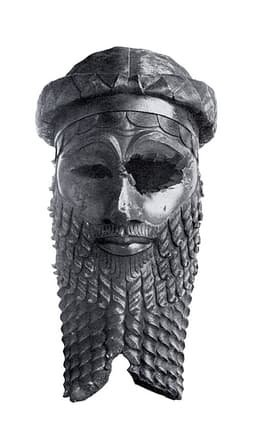
Sargon of Akkad
Emperor · Ancient
69.6Total
Basic Information
Born
431
-2334
Died
518
-2279
Era
Ancient
Ancient
Nationality
Byzantine Empire
Akkadian Empire
Occupation
Emperor
Emperor
Civilization
Western
Middle Eastern
Score Comparison
Military (10%)
47.5
75.0
Political (20%)
62.7
72.0
Influence (20%)
55.7
65.0
Legacy (20%)
45.8
65.0
Leadership (15%)
79.8
79.8
Strategy (15%)
43.3
68.0
TOTAL
55.8
69.6
Anastasius I — Complete Timeline
498 AD
Suppressed the Isaurian RevoltWar◆ Major
Anastasius defeated the Isaurian rebels who had opposed his accession. The war ended with the capture and execution of the rebel leaders, and the Isaurians were forcibly resettled, ending their threat to imperial authority.
RebellionCivil WarByzantine Empire
Impact: national
Abolished the chrysargyron taxReform◆ Major
Emperor Anastasius I abolished the chrysargyron, a highly unpopular tax on trade and commerce that was collected every four years. This reform, along with others, improved the financial stability of the empire and left a substantial surplus in the treasury upon his death.
Tax ReformEconomic PolicyByzantine Empire
Impact: nationalprogressive
Reformed the coinage systemReform◆ Major
Anastasius introduced a new system of bronze coinage, including the follis and its fractions. This reform stabilized the currency and facilitated trade, becoming a standard for Byzantine coinage for centuries.
Currency ReformEconomic PolicyByzantine Empire
Impact: regionalconstructive
507 AD
Built the Anastasian WallOther
Anastasius ordered the construction of a long defensive wall, the Anastasian Wall, stretching from the Sea of Marmara to the Black Sea. The wall was intended to protect Constantinople from barbarian incursions, but it proved difficult to maintain and was eventually abandoned.
FortificationDefenseByzantine Empire
Sargon of Akkad — Complete Timeline
2334 BC
Conquest of SumerWar
Sargon of Akkad conquered the Sumerian city-states, including Uruk and Ur, unifying Mesopotamia under his rule. This marked the creation of the world's first empire, the Akkadian Empire.
ConquestEmpireMesopotamia
Impact: global
Foundation of AkkadOther◆ Major
Sargon established the city of Akkad as his capital, likely near modern Baghdad. The city became the administrative and cultural center of the Akkadian Empire, though its exact location remains unknown.
City FoundationCapitalAkkad
Impact: regionalconstructive
2330 BC
Campaigns into AnatoliaWar◆ Major
Sargon led military campaigns into Anatolia (modern Turkey), reaching the Taurus Mountains and the Mediterranean coast. These expeditions expanded Akkadian influence and secured trade routes for timber and metals.
Military CampaignAnatoliaTrade
Impact: regional
2325 BC
Suppression of revoltsWar◆ Major
Sargon faced widespread revolts across his empire in his later years. He suppressed rebellions in Sumer, Elam, and other regions, but the unrest foreshadowed the empire's eventual collapse after his death.
RevoltEmpireInstability
Impact: regionaldestructive
Expert Analysis
Origins
Anastasius I (c. 430–518 AD) was born in Dyrrhachium (modern Durrës, Albania) into a modest Illyrian family. His father was a provincial official, and Anastasius rose through the Byzantine bureaucracy, serving as a silentiary (court official) before his accession. His early life was shaped by the religious controversies of the time, particularly the Chalcedonian schism.
Sargon of Akkad (c. 2334–2279 BC) was born in Azupiranu, a city on the Euphrates. According to legend, his mother was a priestess who set him adrift in a basket on the river. He was rescued by a gardener and later became cupbearer to King Ur-Zababa of Kish. This humble origin contrasts with his later role as founder of the first empire in history.
Rise to Power
Anastasius I was elected emperor in 491 AD after the death of Emperor Zeno. His accession was contested by the Isaurian faction, who supported Zeno's brother Longinus. Anastasius quickly moved to consolidate power, exiling Longinus and other Isaurian leaders. This sparked the Isaurian War (492–497), which Anastasius won after defeating the rebels in battle and capturing their strongholds. By 498, he had crushed the revolt and removed the Isaurian influence from Constantinople.
Sargon of Akkad rose by overthrowing his master, King Ur-Zababa of Kish, around 2334 BC. He then turned his attention to the Sumerian city-states, led by Lugalzagesi of Uruk. Sargon defeated Lugalzagesi in battle and captured him, then systematically conquered Sumer, including Ur, Lagash, and Umma. This conquest created the Akkadian Empire, the first multi-ethnic empire in history.
Leadership & Governance
Anastasius I was a reformist administrator. He abolished the chrysargyron tax, a hated levy on trade collected every four years, in 498. This reform, along with his reorganization of the tax system, increased state revenue and left a surplus of 320,000 pounds of gold in the treasury at his death. He also reformed the coinage system, introducing bronze denominations like the follis, which stabilized the currency. His military record was less impressive: he scored 47.5 in military leadership, reflecting his reliance on diplomacy and fortifications rather than aggressive campaigns. He built the Anastasian Wall, a 56-kilometer defensive line protecting Constantinople, but it was often bypassed by invaders.
Sargon of Akkad was a military conqueror who scored 75.0 in military prowess and 68.0 in strategy. He created a centralized administration, appointing Akkadian governors over conquered cities and replacing Sumerian officials. He standardized weights and measures and promoted trade. However, his empire was held together by force; he faced repeated revolts, particularly in Sumer and Elam. His governance relied on a standing army of 5,400 soldiers who ate daily at his table, ensuring loyalty.
Triumph & Tragedy
Anastasius I's greatest triumph was his financial reform, which left the Byzantine treasury with a massive surplus. He also successfully navigated religious tensions between Monophysites and Chalcedonians, though his own Monophysite leanings caused unrest. His tragedy was the failure of the Anastasian Wall to prevent invasions; in 502, the Sassanid Persians invaded and sacked several cities. He also faced the revolt of General Vitalian in 513, which was suppressed with difficulty.
Sargon of Akkad's triumph was the creation of the first empire, unifying Mesopotamia from the Persian Gulf to the Mediterranean. He claimed to have conquered 34 cities and reached the Cedar Forest (Lebanon). His tragedy was the fragility of his empire; in his later years, revolts erupted across his domain, and after his death, the empire quickly collapsed. His dynasty ended within a century.
Character & Destiny
Anastasius I was cautious and administrative, preferring reform to war. He scored 79.8 in leadership, reflecting his ability to manage the empire's finances and bureaucracy. His character was shaped by a desire for stability, but his religious policies alienated many. He died at age 88, one of the longest-reigning Byzantine emperors.
Sargon of Akkad was ambitious and ruthless, driven by conquest. His leadership score of 79.8 matches Anastasius, but his style was militaristic. He believed himself chosen by the goddess Ishtar, and his hubris may have contributed to his downfall. He died naturally, but the empire he built did not outlast him by long.
Legacy
Anastasius I's legacy is financial and administrative. His coinage reforms set the standard for Byzantine currency for centuries. The treasury surplus he left funded the grand projects of his successor, Justinian I. However, his military weaknesses exposed the empire's vulnerabilities. His overall legacy score is 45.8, reflecting limited long-term impact compared to more famous emperors.
Sargon of Akkad's legacy is foundational. He invented the concept of empire, which influenced subsequent Mesopotamian states like Babylon and Assyria. His dynasty's art and literature, including the famous "Sargon of Akkad" cylinder seals, set cultural precedents. He scored 65.0 in legacy, reflecting his role as a historical archetype. His empire lasted only about 150 years, but its idea endured.
Conclusion
Sargon of Akkad had a greater impact on history than Anastasius I. Sargon's total score of 69.6 compared to Anastasius's 55.8 reflects this. Sargon created the first empire, a political structure that shaped the ancient world and beyond. Anastasius, while an effective reformer, operated within an existing imperial system and did not fundamentally change the course of history. Sargon's military and political achievements (75.0 and 72.0) overshadow Anastasius's financial reforms (47.5 and 62.7). In the long view, founding an empire outweighs filling a treasury.
Rankings
🥇
Sargon of AkkadLeader
Mil: 75.0Pol: 72.0Inf: 65.0
69.6
🥈
Anastasius I
Mil: 47.5Pol: 62.7Inf: 55.7
55.8
+13.8 behind
How This Comparison Works
Algorithm
Each figure is scored on 6 dimensions (0—100 scale) based on structured historical data: Military (10%), Political (20%), Influence (20%), Legacy (20%), Leadership (15%), Strategy (15%). The weighted total produces the final ranking.
Data Sources
Scores are computed from structured sub-indicators in the database. Scale factors adjust for era (Ancient ×0.85, Modern ×1.0) and civilization size (Eastern ×1.05, Other ×0.80) to account for differences in population and military scale.
Maximum 3 Figures
Comparisons are limited to 2—3 figures to ensure readability and statistical meaningfulness.
Error Margins
±5 points per dimension — Sub-scores are derived from historical records with inherent uncertainty. Two figures within 5 points on a dimension should be considered roughly equivalent in that area.
Total Score Accuracy
±3 points overall — The weighted combination of 6 dimensions produces a total score with approximately ±3 points of uncertainty. Differences of less than 3 points are not statistically significant— the figures are effectively tied.
Known Limitations
- Historical records are incomplete and uneven across civilizations
- Figures from oral-tradition societies may be underrepresented
- Occupation labels can misclassify multi-role figures
- Scores measure capability and impact, not moral character
- Quantitative scoring is a comparison tool, not absolute truth
Capability Radar
Military (10%) — Battles & Warfare
Battles
20
85
Win Rate
25
90
Expansion
15
90
Political (20%) — Governance & Reform
Reform
85
85
Diplomacy
75
75
Economy
90
80
Influence (20%) — Cultural & Global Reach
Cultural
50
85
Global
45
85
Legacy (20%) — Historical Impact
Historical
55
90
Longevity
40
95
Leadership (15%) — Power & Stability
Tenure
70
80
Stability
80
70
Strategy (15%) — Tactics & Innovation
Strategy
35
85
Tactics
30
80
Reform
40
75
Similar Comparisons
Comments & Discussion
No comments yet. Be the first to share your thoughts!