Loading...
Chandragupta I vs Sargon of Akkad
Sargon of Akkad leads by 12.7 pts · 2 figures compared
…

Chandragupta I
Emperor · Ancient
56.9Total
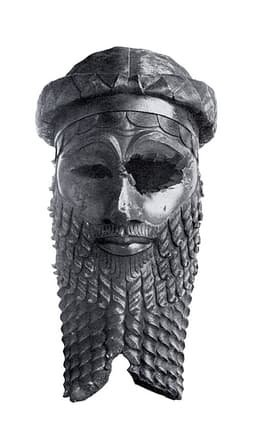
Sargon of Akkad
Emperor · Ancient
69.6Total
Basic Information
Born
319
-2334
Died
335
-2279
Era
Ancient
Ancient
Nationality
India
Akkadian Empire
Occupation
Emperor
Emperor
Civilization
Indian
Middle Eastern
Score Comparison
Military (10%)
55.0
75.0
Political (20%)
61.3
72.0
Influence (20%)
57.2
65.0
Legacy (20%)
50.0
65.0
Leadership (15%)
74.0
79.8
Strategy (15%)
43.3
68.0
TOTAL
56.9
69.6
Chandragupta I — Complete Timeline
308 AD
Married Princess KumaradeviPolitical Action◆ Major
Chandragupta I married Kumaradevi, a princess of the Licchavi clan. This alliance brought the wealthy Licchavi territories under Gupta control, strengthening his political and military position.
Marriage AllianceLicchaviGupta
Impact: regionalconstructive
319 AD
Founded the Gupta EmpirePolitical Action
Chandragupta I established the Gupta Empire by consolidating territories in the Ganges basin. He assumed the title Maharajadhiraja, marking the beginning of a dynasty that would dominate northern India for centuries.
Gupta EmpireFoundingIndia
Impact: regionalconstructive
320 AD
Issued Gupta Era CoinageCultural
Chandragupta I issued gold coins bearing his image and the title Maharajadhiraja. These coins standardized currency in his realm and promoted Gupta sovereignty, becoming a model for later rulers.
CoinageEconomyGupta
Impact: regionalconstructive
Sargon of Akkad — Complete Timeline
2334 BC
Conquest of SumerWar
Sargon of Akkad conquered the Sumerian city-states, including Uruk and Ur, unifying Mesopotamia under his rule. This marked the creation of the world's first empire, the Akkadian Empire.
ConquestEmpireMesopotamia
Impact: global
Foundation of AkkadOther◆ Major
Sargon established the city of Akkad as his capital, likely near modern Baghdad. The city became the administrative and cultural center of the Akkadian Empire, though its exact location remains unknown.
City FoundationCapitalAkkad
Impact: regionalconstructive
2330 BC
Campaigns into AnatoliaWar◆ Major
Sargon led military campaigns into Anatolia (modern Turkey), reaching the Taurus Mountains and the Mediterranean coast. These expeditions expanded Akkadian influence and secured trade routes for timber and metals.
Military CampaignAnatoliaTrade
Impact: regional
2325 BC
Suppression of revoltsWar◆ Major
Sargon faced widespread revolts across his empire in his later years. He suppressed rebellions in Sumer, Elam, and other regions, but the unrest foreshadowed the empire's eventual collapse after his death.
RevoltEmpireInstability
Impact: regionaldestructive
Expert Analysis
Origins
**Chandragupta I** (c. 320–335 CE) was born into the Gupta dynasty, a relatively minor clan in the Magadha region of northern India. His early life is obscure, but he inherited a small kingdom along the Ganges River. His marriage to Kumaradevi, a princess of the powerful Licchavi clan, brought him significant territorial and political advantages, as the Licchavis controlled the wealthy region of Vaishali. This alliance was foundational to his rise.
**Sargon of Akkad** (c. 2334–2279 BCE) claimed a humble origin, said to be the son of a date palm gardener and a temple priestess. He rose from obscurity in the city of Kish, serving as a cupbearer to King Ur-Zababa. His early life is shrouded in legend, but historical records indicate he seized power in a coup, overthrowing the king of Kish and establishing his own rule. His background contrasts sharply with Chandragupta's dynastic inheritance.
Rise to Power
Chandragupta I's rise was primarily diplomatic and strategic. By marrying Kumaradevi around 320 CE, he gained control of the Licchavi territories, which included the prosperous city of Pataliputra. He assumed the title Maharajadhiraja ("King of Great Kings"), signaling his supremacy over neighboring rulers. His reign focused on consolidating the Ganges basin, using alliances rather than large-scale warfare. He issued gold coins bearing his image and the title, standardizing currency and projecting authority. His political score of 61.3 reflects this deft statecraft.
Sargon's rise was military. He conquered the Sumerian city-states of Uruk, Ur, and Lagash, defeating their armies and unifying Mesopotamia under his rule around 2334 BCE. He established the city of Akkad as his capital, likely near modern Baghdad, and appointed loyal governors. His campaigns extended into Elam and Anatolia, reaching the Taurus Mountains and the Mediterranean. He scored 72.0 in political and 75.0 in military, reflecting his conquest-driven ascent. His total score of 69.6 is 12.7 points higher than Chandragupta's 56.9.
Leadership & Governance
Chandragupta I governed through a feudal system, delegating authority to local rulers who paid tribute. He maintained the existing administrative structures of the Licchavis and other conquered territories, ensuring stability. His coinage promoted economic integration, and his reign saw the beginning of the Gupta Golden Age, though his own achievements were modest. He scored 74.0 in leadership, indicating effective but not transformative governance.
Sargon created the first true empire, with a centralized administration. He appointed Akkadian officials over Sumerian cities, replaced local rulers with his own men, and stationed garrisons to suppress revolts. He standardized weights and measures and promoted trade, but his empire faced constant rebellions. His leadership score of 79.8 reflects his innovative but often harsh rule. Unlike Chandragupta's consensual approach, Sargon's governance was coercive, leading to instability after his death.
Triumph & Tragedy
Chandragupta I's greatest success was founding the Gupta Empire, which would become a classical era of Indian culture, science, and art. His alliance with the Licchavis secured a strong power base. However, his reign was short (c. 320–335 CE), and he died relatively young, leaving his son Samudragupta to expand the empire further. His failure was the limited territorial expansion; he did not conquer beyond the Ganges basin. His legacy score of 50.0 reflects his role as a founder rather than a great conqueror.
Sargon's triumph was creating the world's first empire, uniting Mesopotamia and influencing subsequent empires for millennia. He also pioneered military tactics like using composite bows and organized infantry. His tragedy was the empire's fragility: revolts erupted in his later years, and after his death, the Akkadian Empire collapsed within a century. His influence score of 65.0 and legacy of 65.0 acknowledge his innovation but also his empire's short duration.
Character & Destiny
Chandragupta I appears as a cautious, diplomatic ruler, using marriage and alliances rather than force. His character suited the fragmented political landscape of northern India, where local loyalties were strong. His destiny was to lay the foundation for the Gupta Golden Age, but his early death limited his personal achievements.
Sargon was ambitious, ruthless, and militaristic. His character drove him to conquer vast territories, but his authoritarian rule bred resentment. His destiny was to create a template for empire that later rulers would emulate, but his own empire crumbled due to overextension and internal strife. Historians note that Sargon's personality was both his strength and his undoing.
Legacy
Chandragupta I's legacy is the Gupta Empire, which under his successors became a beacon of Indian civilization. The Gupta period saw advances in mathematics, astronomy, literature, and art, but Chandragupta I himself contributed little directly. His name is remembered as the dynasty's founder, but his individual impact is modest.
Sargon's legacy is profound: he established the concept of a multi-ethnic empire ruled by a single monarch. His Akkadian language and administrative practices influenced later empires like Babylon and Assyria. He is remembered as a legendary figure in Mesopotamian literature. His military innovations and imperial model had a lasting impact on the ancient Near East.
Conclusion
Sargon of Akkad had a greater impact on world history than Chandragupta I. Sargon's total score of 69.6 versus Chandragupta's 56.9 reflects his superior military, political, and leadership achievements. While Chandragupta founded a significant dynasty, his empire's golden age came after him, and his own accomplishments were limited to consolidation. Sargon created the first empire, set a precedent for future conquerors, and influenced the political organization of the ancient world. Chandragupta's influence was largely confined to India, whereas Sargon's model spread across the Near East. Therefore, Sargon of Akkad is the more consequential historical figure.
Rankings
🥇
Sargon of AkkadLeader
Mil: 75.0Pol: 72.0Inf: 65.0
69.6
🥈
Chandragupta I
Mil: 55.0Pol: 61.3Inf: 57.2
56.9
+12.7 behind
How This Comparison Works
Algorithm
Each figure is scored on 6 dimensions (0—100 scale) based on structured historical data: Military (10%), Political (20%), Influence (20%), Legacy (20%), Leadership (15%), Strategy (15%). The weighted total produces the final ranking.
Data Sources
Scores are computed from structured sub-indicators in the database. Scale factors adjust for era (Ancient ×0.85, Modern ×1.0) and civilization size (Eastern ×1.05, Other ×0.80) to account for differences in population and military scale.
Maximum 3 Figures
Comparisons are limited to 2—3 figures to ensure readability and statistical meaningfulness.
Error Margins
±5 points per dimension — Sub-scores are derived from historical records with inherent uncertainty. Two figures within 5 points on a dimension should be considered roughly equivalent in that area.
Total Score Accuracy
±3 points overall — The weighted combination of 6 dimensions produces a total score with approximately ±3 points of uncertainty. Differences of less than 3 points are not statistically significant— the figures are effectively tied.
Known Limitations
- Historical records are incomplete and uneven across civilizations
- Figures from oral-tradition societies may be underrepresented
- Occupation labels can misclassify multi-role figures
- Scores measure capability and impact, not moral character
- Quantitative scoring is a comparison tool, not absolute truth
Capability Radar
Military (10%) — Battles & Warfare
Battles
40
85
Win Rate
45
90
Expansion
50
90
Political (20%) — Governance & Reform
Reform
45
85
Diplomacy
50
75
Economy
50
80
Influence (20%) — Cultural & Global Reach
Cultural
55
85
Global
50
85
Legacy (20%) — Historical Impact
Historical
60
90
Longevity
65
95
Leadership (15%) — Power & Stability
Tenure
55
80
Stability
55
70
Strategy (15%) — Tactics & Innovation
Strategy
40
85
Tactics
35
80
Reform
30
75
Similar Comparisons
Comments & Discussion
No comments yet. Be the first to share your thoughts!