Loading...
Andrei Bogolyubsky vs Ordoño I of Asturias
Ordoño I of Asturias leads by 1.0 pts · 2 figures compared
…
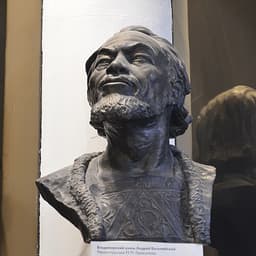
Andrei Bogolyubsky
Emperor · Medieval
46.8Total
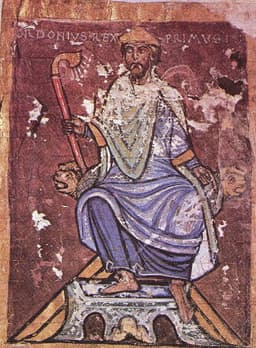
Ordoño I of Asturias
Emperor · Medieval
47.8Total
Basic Information
Born
1111
821
Died
1174
866
Era
Medieval
Medieval
Nationality
Vladimir-Suzdal
Asturias
Occupation
Emperor
Emperor
Civilization
Western
Western
Score Comparison
Military (10%)
10.0
20.0
Political (20%)
43.7
39.4
Influence (20%)
54.9
51.8
Legacy (20%)
46.7
44.2
Leadership (15%)
62.2
65.7
Strategy (15%)
45.0
60.0
TOTAL
46.8
47.8
Andrei Bogolyubsky — Complete Timeline
1157 AD
Transfer of the Capital to VladimirPolitical Action
After becoming Grand Prince, Andrei moved his capital from Kiev to Vladimir, a city in the northeast. He made Vladimir the political and religious center of his realm, building the Assumption Cathedral and Golden Gate.
Capital MoveVladimirPolitical Shift
Impact: regionalconstructive
1165 AD
Construction of the Church of the Intercession on the NerlCultural◆ Major
Andrei commissioned the Church of the Intercession on the Nerl River near Vladimir. This white-stone church is a masterpiece of medieval Russian architecture and a symbol of the Vladimir-Suzdal principality's cultural flourishing.
ArchitectureChurchCultural Symbol
Impact: regionalconstructive
1169 AD
Sack of KievWar
Andrei Bogolyubsky led a coalition of Rus princes in sacking Kiev, the traditional capital. His forces looted and burned the city, marking a decline in Kiev's power and the rise of Vladimir-Suzdal as a new center.
Sack of KievDeclineVladimir-Suzdal
Impact: regionaldestructive
1174 AD
Assassination by BoyarsPolitical Action◆ Major
Andrei was assassinated by a group of boyars in his palace at Bogolyubovo. The conspiracy was driven by his autocratic rule and conflicts with the nobility. His death led to a period of civil strife in Vladimir-Suzdal.
AssassinationBoyar RevoltCivil Strife
Impact: nationaltragic
Ordoño I of Asturias — Complete Timeline
850 AD
Expansion into the Duero ValleyWar◆ Major
Ordoño I led military campaigns to expand the Kingdom of Asturias southward into the Duero River valley, securing territory that had been depopulated during the early Reconquista. This expansion established a buffer zone against Muslim raids and laid the foundation for future Christian settlement.
ReconquistaTerritorial ExpansionDuero Valley
Impact: regionalconstructive
856 AD
Repopulation of LeonReform◆ Major
Ordoño I initiated the repopulation of the city of Leon, which had been abandoned after the Muslim conquest. He brought settlers from the Asturian mountains and granted them land and privileges, transforming Leon into a key Christian stronghold and future capital of the kingdom.
RepopulationLeonSettlement
Impact: regionalconstructive
859 AD
Battle of AlbeldaWar◆ Major
Ordoño I defeated a combined Muslim force under Musa ibn Musa of the Banu Qasi at Albelda in La Rioja. The victory broke the power of the Banu Qasi dynasty and secured Asturian control over the upper Ebro valley, though the fortress of Albelda was later retaken.
BattleBanu QasiReconquista
Impact: regionalconstructive
Expert Analysis
Origins
Andrei Bogolyubsky (c. 1111–1174) was the son of Yuri Dolgoruky, founder of Moscow. Born into the Rurikid dynasty, he grew up in the northeastern principality of Vladimir-Suzdal, far from the traditional power center of Kiev. His early years were shaped by the shifting alliances and conflicts among Rus' princes, and he received a sound education in Orthodox Christianity and military tactics. Ordoño I of Asturias (c. 821–866) was the son of Ramiro I, king of Asturias. He was raised in the Christian kingdom of northern Iberia, which had resisted Muslim rule since the 8th century. Ordoño's formative years were spent in the mountainous Asturian heartland, where he learned the arts of war and governance in a frontier society constantly threatened by Muslim raids.
Rise to Power
Andrei rose to prominence by exploiting the fragmentation of Kievan Rus'. In 1169, he led a coalition of Rus' princes in a devastating sack of Kiev, the traditional capital. His forces looted and burned the city, marking a turning point as Kiev's preeminence ended. Andrei then moved his capital to Vladimir, a city in the northeast, making it the political and religious center of his realm. He also transferred the revered icon of the Mother of God from Vyshgorod to Vladimir, symbolizing the transfer of divine favor. Ordoño I ascended to the throne in 850 after his father's death. He quickly launched campaigns to expand the Kingdom of Asturias southward into the Duero River valley, which had been depopulated during the Muslim conquest. He repopulated the city of Leon in 856, bringing settlers from the Asturian mountains to secure the frontier. In 859, he defeated a combined Muslim force under Musa ibn Musa of the Banu Qasi at the Battle of Albelda, breaking the power of that dynasty and opening the way for further Christian expansion.
Leadership & Governance
Andrei ruled as an autocrat, centralizing power and reducing the influence of the boyar aristocracy. He built the magnificent Church of the Intercession on the Nerl, a masterpiece of white-stone architecture, to assert Vladimir's cultural and religious supremacy. However, his heavy-handed governance alienated the nobility, leading to his assassination in 1174 by a boyar conspiracy at his palace in Bogolyubovo. Ordoño I, by contrast, combined military leadership with effective repopulation strategies. He granted land and privileges to settlers in the Duero valley, creating a buffer zone against Muslim incursions. His governance was more collaborative, working with local counts and bishops to consolidate royal authority. Ordoño's leadership style was pragmatic, focusing on territorial expansion and demographic consolidation rather than centralization.
Triumph & Tragedy
Andrei's greatest triumph was the sack of Kiev (1169) and the transfer of the capital to Vladimir, which shifted the center of Rus' power to the northeast. This laid the groundwork for the rise of Moscow. His construction of the Church of the Intercession on the Nerl remains a symbol of medieval Russian architecture. His greatest tragedy was his assassination, which plunged his realm into chaos and highlighted the dangers of his autocratic rule. Ordoño's triumph was the expansion into the Duero valley and the repopulation of Leon, which doubled the size of his kingdom and secured a strategic frontier. His victory at Albelda (859) broke the Banu Qasi and weakened Muslim control in the Ebro valley. His tragedy was that his achievements were overshadowed by his more famous successor, Alfonso III, who completed the Reconquista's early phase. Ordoño died peacefully in 866, but his son Alfonso III later faced internal revolts.
Character & Destiny
Andrei's character was marked by ambition and a desire for independence from Kiev. He was a builder and a patron of the Church, but his autocratic tendencies made him enemies among the boyars. Historical assessments depict him as a transitional figure who accelerated the fragmentation of Kievan Rus' but also laid foundations for a new power center. His assassination was a direct result of his refusal to share power. Ordoño I was a pragmatic and effective ruler, focused on consolidation and expansion. He was less flamboyant than Andrei but more successful in achieving lasting results. His reign was a period of steady growth for Asturias, and he is remembered as a capable leader who strengthened the kingdom despite limited resources. His character, less confrontational than Andrei's, allowed him to avoid internal conflict.
Legacy
Andrei's legacy is mixed. He scored 46.8 overall, with military 10.0 and leadership 62.2. His transfer of the capital to Vladimir shifted the political center of Rus', influencing the rise of Moscow. The Church of the Intercession on the Nerl is a UNESCO World Heritage site. However, his autocratic rule and assassination weakened his immediate successors. Ordoño I scored 47.8 overall, with military 20.0 and leadership 65.7. His expansion into the Duero valley and repopulation of Leon set the stage for the later Reconquista. Leon became a major Christian kingdom, and his victory at Albelda broke the Banu Qasi, a key Muslim dynasty. Ordoño's legacy is more directly tied to the long-term Christian reconquest of Iberia.
Conclusion
Ordoño I had a greater impact than Andrei Bogolyubsky, despite the narrow score gap of 1.0 points. Ordoño's achievements—territorial expansion, repopulation, and a decisive victory—were more enduring and contributed to a centuries-long movement (the Reconquista) that reshaped Iberia. Andrei's actions, while significant for Rus', were more disruptive and less sustainable. His assassination and the subsequent fragmentation of his realm limited his legacy. Ordoño's pragmatic leadership and strategic focus on consolidation yielded lasting results, making him the more effective ruler.
Rankings
🥇
Ordoño I of AsturiasLeader
Mil: 20.0Pol: 39.4Inf: 51.8
47.8
🥈
Andrei Bogolyubsky
Mil: 10.0Pol: 43.7Inf: 54.9
46.8
+1.0 behind
How This Comparison Works
Algorithm
Each figure is scored on 6 dimensions (0—100 scale) based on structured historical data: Military (10%), Political (20%), Influence (20%), Legacy (20%), Leadership (15%), Strategy (15%). The weighted total produces the final ranking.
Data Sources
Scores are computed from structured sub-indicators in the database. Scale factors adjust for era (Ancient ×0.85, Modern ×1.0) and civilization size (Eastern ×1.05, Other ×0.80) to account for differences in population and military scale.
Maximum 3 Figures
Comparisons are limited to 2—3 figures to ensure readability and statistical meaningfulness.
Error Margins
±5 points per dimension — Sub-scores are derived from historical records with inherent uncertainty. Two figures within 5 points on a dimension should be considered roughly equivalent in that area.
Total Score Accuracy
±3 points overall — The weighted combination of 6 dimensions produces a total score with approximately ±3 points of uncertainty. Differences of less than 3 points are not statistically significant— the figures are effectively tied.
Known Limitations
- Historical records are incomplete and uneven across civilizations
- Figures from oral-tradition societies may be underrepresented
- Occupation labels can misclassify multi-role figures
- Scores measure capability and impact, not moral character
- Quantitative scoring is a comparison tool, not absolute truth
Capability Radar
Military (10%) — Battles & Warfare
Battles
35
35
Win Rate
40
40
Expansion
45
50
Political (20%) — Governance & Reform
Reform
45
40
Diplomacy
40
30
Economy
35
35
Influence (20%) — Cultural & Global Reach
Cultural
40
30
Global
30
20
Legacy (20%) — Historical Impact
Historical
45
35
Longevity
35
30
Leadership (15%) — Power & Stability
Tenure
50
45
Stability
30
40
Strategy (15%) — Tactics & Innovation
Strategy
35
45
Tactics
30
30
Reform
20
20
Similar Comparisons
Comments & Discussion
No comments yet. Be the first to share your thoughts!