Loading...
Andrei Bogolyubsky vs John III of Cleves
John III of Cleves leads by 3.8 pts · 2 figures compared
…
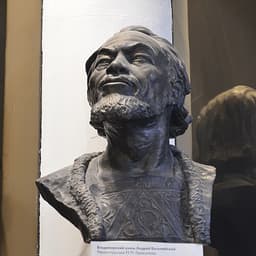
Andrei Bogolyubsky
Emperor · Medieval
46.8Total
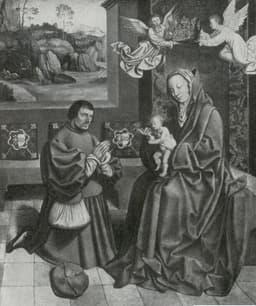
John III of Cleves
Emperor · Medieval
50.6Total
Basic Information
Born
1111
1490
Died
1174
1539
Era
Medieval
Medieval
Nationality
Vladimir-Suzdal
Cleves
Occupation
Emperor
Emperor
Civilization
Western
Western
Score Comparison
Military (10%)
10.0
25.9
Political (20%)
43.7
68.0
Influence (20%)
54.9
50.2
Legacy (20%)
46.7
40.0
Leadership (15%)
62.2
72.0
Strategy (15%)
45.0
45.0
TOTAL
46.8
50.6
Andrei Bogolyubsky — Complete Timeline
1157 AD
Transfer of the Capital to VladimirPolitical Action
After becoming Grand Prince, Andrei moved his capital from Kiev to Vladimir, a city in the northeast. He made Vladimir the political and religious center of his realm, building the Assumption Cathedral and Golden Gate.
Capital MoveVladimirPolitical Shift
Impact: regionalconstructive
1165 AD
Construction of the Church of the Intercession on the NerlCultural◆ Major
Andrei commissioned the Church of the Intercession on the Nerl River near Vladimir. This white-stone church is a masterpiece of medieval Russian architecture and a symbol of the Vladimir-Suzdal principality's cultural flourishing.
ArchitectureChurchCultural Symbol
Impact: regionalconstructive
1169 AD
Sack of KievWar
Andrei Bogolyubsky led a coalition of Rus princes in sacking Kiev, the traditional capital. His forces looted and burned the city, marking a decline in Kiev's power and the rise of Vladimir-Suzdal as a new center.
Sack of KievDeclineVladimir-Suzdal
Impact: regionaldestructive
1174 AD
Assassination by BoyarsPolitical Action◆ Major
Andrei was assassinated by a group of boyars in his palace at Bogolyubovo. The conspiracy was driven by his autocratic rule and conflicts with the nobility. His death led to a period of civil strife in Vladimir-Suzdal.
AssassinationBoyar RevoltCivil Strife
Impact: nationaltragic
John III of Cleves — Complete Timeline
1490 AD
Inherited the Duchy of ClevesPolitical Action◆ Major
John III inherited the Duchy of Cleves upon the death of his father, John II. This succession placed him as ruler of a strategically important territory in the Lower Rhine region, setting the stage for his later territorial acquisitions.
SuccessionCleves
Impact: regional
1510 AD
Marriage to Maria of Jülich-BergPolitical Action◆ Major
John III married Maria, daughter of William IV of J
MarriageDynastic UnionTerritorial Expansion
Impact: regionalconstructive
1521 AD
Inherited the Duchies of Jülich and BergPolitical Action
Upon the death of his father-in-law, William IV, John III inherited the Duchies of J
InheritanceTerritorial MergerJülich-Berg
Impact: regionalconstructive
1532 AD
Issued the Cleves Church OrdinanceReform◆ Major
John III issued a church ordinance for the Duchy of Cleves, introducing moderate Protestant reforms while maintaining a degree of Catholic structure. This ordinance aimed to regulate religious practice and assert ducal authority over the church.
Religious ReformChurch OrdinanceProtestantism
Impact: regionalconstructive
Expert Analysis
Origins
Andrei Bogolyubsky (c. 1111–1174) was born as the second son of Yuri Dolgoruky, Prince of Suzdal and Grand Prince of Kiev. His early life was shaped by the dynastic struggles of the Rurikid princes, who constantly vied for control of Kiev. Andrei received a typical princely education in warfare and governance, but his formative years were marked by his father's campaigns to secure Kiev. Unlike many of his contemporaries, Andrei showed little attachment to the southern capital, preferring the forests and towns of the northeast. His mother was a Polovtsian princess, which gave him connections to the steppe nomads. He was raised in Suzdal and later governed the town of Vyshgorod, but his heart remained in the north.
John III of Cleves (1490–1539) was born into the House of La Marck, rulers of the Duchy of Cleves. His father, John II, was a capable but unremarkable duke. John III's mother was Matilda of Hesse, and he received a humanist education, learning Latin, law, and theology. His marriage to Maria of Jülich-Berg in 1510 was arranged to unite the territories of Cleves, Jülich, and Berg. This dynastic union was his ticket to power. John III grew up in the shadow of the Reformation, which deeply influenced his later policies. He was known for his piety and moderation, earning the epithet "the Peaceful."
Rise to Power
Andrei's rise began when his father Yuri Dolgoruky became Grand Prince of Kiev in 1149. Yuri gave Andrei the town of Vyshgorod, but Andrei abandoned it without permission in 1155, moving to Vladimir, a town he favored. This act of defiance was a turning point. In 1157, Yuri died, and Andrei claimed the title of Grand Prince of Kiev, but he did not move to Kiev. Instead, he installed his brother Gleb as ruler in Kiev and governed from Vladimir. His key event was the Sack of Kiev in 1169: Andrei led a coalition of 11 princes, including his son, in a brutal assault on Kiev. The city was looted and burned for three days, a humiliation that shattered Kiev's prestige. Andrei then declared Vladimir the new capital of the Rus, transferring the seat of power to the northeast.
John III's rise was smoother. He inherited the Duchy of Cleves in 1521 upon his father's death. Already, through his marriage to Maria, he had secured the inheritance of Jülich and Berg when her father, William IV, died in 1511. By 1521, John III ruled a consolidated bloc of territories along the Rhine: the Duchies of Cleves, Jülich, and Berg, along with the County of Mark and Ravensberg. This made him one of the most powerful princes in the Lower Rhine region. He did not need to conquer; his rise was through dynastic planning and legal inheritance.
Leadership & Governance
Andrei Bogolyubsky was an autocratic ruler. He centralized power in Vladimir, reducing the influence of the boyars (nobility) and the veche (town assembly). He moved the icon of the Virgin of Vladimir, a revered relic, from Kiev to Vladimir, symbolizing the transfer of religious authority. He constructed the Church of the Intercession on the Nerl (1165), a masterpiece that showcased his wealth and piety. However, his governance alienated the boyars, who saw him as a tyrant. He executed opponents and confiscated lands. In 1174, a conspiracy of boyars assassinated him in his palace at Bogolyubovo, stabbing him to death. His rule was marked by conflict with the nobility and a failure to establish a stable succession.
John III governed with a moderate hand. He issued the Cleves Church Ordinance in 1533, which introduced Lutheran reforms but retained Catholic elements, such as bishops and traditional liturgy. He sought to balance religious factions and maintain peace. He also reformed the administration, merging the chanceries of his territories and standardizing coinage. His leadership scored 72.0 in leadership, significantly higher than Andrei's 62.2. John III's governance was pragmatic and conciliatory, avoiding the violent conflicts that plagued Andrei.
Triumph & Tragedy
Andrei's greatest triumph was the Sack of Kiev (1169) and the transfer of the capital to Vladimir. This shifted the center of Rus power from the Dnieper to the Volga-Oka region, laying the foundation for the rise of Moscow. His construction projects, like the Church of the Intercession, remain architectural treasures. His tragedy was his assassination, which plunged Vladimir-Suzdal into civil war. His autocratic style created enemies, and his failure to secure a successor led to instability. His military score of 10.0 reflects his reliance on coalitions rather than personal command.
John III's triumph was the peaceful merger of Cleves, Jülich, and Berg, creating a powerful duchy that would later play a role in the War of the Jülich Succession. His church ordinance was a model of religious compromise. His tragedy was the eventual loss of his territories: his son William V (the Rich) inherited, but his daughter Anne of Cleves became the fourth wife of Henry VIII, a marriage that ended in annulment and humiliation. John III's legacy was overshadowed by his son's mismanagement and the later fragmentation of his lands.
Character & Destiny
Andrei was ambitious, proud, and uncompromising. He saw himself as the sole ruler of the Rus, above the other princes. His character led him to isolate himself from the boyars and even his own family. His destiny was a violent end, a common fate for autocratic medieval rulers. Historians note his strategic vision but his tactical failures in personal relationships. John III was cautious, diplomatic, and devout. He earned the nickname "the Peaceful" for avoiding war. His destiny was to build a stable state through marriage and law, but his moderate policies failed to create a lasting dynasty.
Legacy
Andrei's legacy is profound: he shifted the political and religious center of the Rus from Kiev to the northeast, paving the way for Moscow's dominance. His capital Vladimir became a model for later Russian princes. The white-stone churches he built influenced Russian architecture. However, his assassination highlighted the fragility of autocratic rule. His total score of 46.8 reflects his mixed impact: high on influence (54.9) and legacy (46.7), but low on military (10.0).
John III's legacy is more localized. He created a unified Lower Rhenish state that lasted until 1609. His church ordinance was a precursor to the Peace of Augsburg. However, his dynasty's extinction and the subsequent war over his inheritance diminished his long-term impact. His total score of 50.6 is higher, but his influence (50.2) and legacy (40.0) are comparable to Andrei's.
Conclusion
Andrei Bogolyubsky had a greater historical impact despite his lower total score. His actions fundamentally altered the trajectory of Eastern Europe by moving the center of Rus power from Kiev to Vladimir, which eventually led to the rise of Moscow and the Russian state. John III's achievements were significant but regional; his unified duchy did not survive the next century. Andrei's legacy, though marred by his assassination, shaped the political geography of Russia for centuries. Therefore, Andrei Bogolyubsky is the more consequential figure in world history.
Rankings
🥇
John III of ClevesLeader
Mil: 25.9Pol: 68.0Inf: 50.2
50.6
🥈
Andrei Bogolyubsky
Mil: 10.0Pol: 43.7Inf: 54.9
46.8
+3.8 behind
How This Comparison Works
Algorithm
Each figure is scored on 6 dimensions (0—100 scale) based on structured historical data: Military (10%), Political (20%), Influence (20%), Legacy (20%), Leadership (15%), Strategy (15%). The weighted total produces the final ranking.
Data Sources
Scores are computed from structured sub-indicators in the database. Scale factors adjust for era (Ancient ×0.85, Modern ×1.0) and civilization size (Eastern ×1.05, Other ×0.80) to account for differences in population and military scale.
Maximum 3 Figures
Comparisons are limited to 2—3 figures to ensure readability and statistical meaningfulness.
Error Margins
±5 points per dimension — Sub-scores are derived from historical records with inherent uncertainty. Two figures within 5 points on a dimension should be considered roughly equivalent in that area.
Total Score Accuracy
±3 points overall — The weighted combination of 6 dimensions produces a total score with approximately ±3 points of uncertainty. Differences of less than 3 points are not statistically significant— the figures are effectively tied.
Known Limitations
- Historical records are incomplete and uneven across civilizations
- Figures from oral-tradition societies may be underrepresented
- Occupation labels can misclassify multi-role figures
- Scores measure capability and impact, not moral character
- Quantitative scoring is a comparison tool, not absolute truth
Capability Radar
Military (10%) — Battles & Warfare
Battles
35
10
Win Rate
40
10
Expansion
45
20
Political (20%) — Governance & Reform
Reform
45
40
Diplomacy
40
60
Economy
35
50
Influence (20%) — Cultural & Global Reach
Cultural
40
30
Global
30
10
Legacy (20%) — Historical Impact
Historical
45
30
Longevity
35
20
Leadership (15%) — Power & Stability
Tenure
50
60
Stability
30
60
Strategy (15%) — Tactics & Innovation
Strategy
35
10
Tactics
30
10
Reform
20
10
Similar Comparisons
Comments & Discussion
No comments yet. Be the first to share your thoughts!