Loading...
Charles I of Spain vs Henry III of England
Charles I of Spain leads by 23.7 pts · 2 figures compared
…

Charles I of Spain
Emperor · Medieval
75.0Total
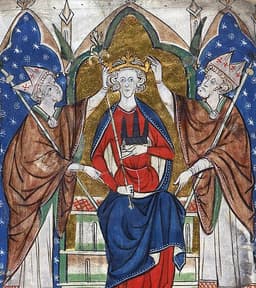
Henry III of England
Emperor · Medieval
51.3Total
Basic Information
Born
1500
1207
Died
1558
1272
Era
Medieval
Medieval
Nationality
Spain
England
Occupation
Emperor
Emperor
Civilization
Western
Western
Score Comparison
Military (10%)
74.0
50.0
Political (20%)
72.0
37.9
Influence (20%)
85.0
56.4
Legacy (20%)
68.0
47.5
Leadership (15%)
78.0
74.0
Strategy (15%)
68.1
35.7
TOTAL
75.0
51.3
Charles I of Spain — Complete Timeline
1519 AD
Election as Holy Roman EmperorPolitical Action
Charles I of Spain was elected Holy Roman Emperor as Charles V, succeeding his grandfather Maximilian I. This election united the Spanish kingdoms, the Habsburg domains in Austria and the Low Countries, and the Holy Roman Empire under a single ruler, creating a vast European empire.
Holy Roman EmpireHabsburg empire
Impact: globalconstructive
1521 AD
Diet of WormsPolitical Action
Charles V presided over the Diet of Worms, where Martin Luther was summoned to recant his teachings. Luther refused, and Charles V issued the Edict of Worms, declaring Luther an outlaw and banning his writings. This event deepened the religious divide in Europe and sparked the Protestant Reformation.
Protestant ReformationReligious conflict
Impact: global
1525 AD
Battle of PaviaWar◆ Major
Charles V's imperial army defeated the French forces of King Francis I at the Battle of Pavia. Francis I was captured and taken prisoner to Spain. The victory solidified Habsburg dominance in Italy and forced France to renounce its claims to Milan and Naples in the Treaty of Madrid.
Italian WarsHabsburg victory
Impact: regional
1527 AD
Sack of RomeWar◆ Major
Imperial troops under Charles V sacked Rome, looting the city and capturing Pope Clement VII. The sack was a brutal event that shocked Europe and led to the temporary dominance of Charles V over the Papacy. It also marked a turning point in the Italian Wars.
Italian WarsPapacy
Impact: globaldestructive
1556 AD
Abdication of Charles VPolitical Action
Charles V abdicated his thrones, dividing his empire between his son Philip II (who received Spain, the Low Countries, and the Italian possessions) and his brother Ferdinand I (who received the Holy Roman Empire). This abdication was a major event in European politics, reshaping the balance of power.
AbdicationEmpire division
Impact: global
Henry III of England — Complete Timeline
1245 AD
Rebuilding of Westminster AbbeyCultural◆ Major
Henry III began the rebuilding of Westminster Abbey in the Gothic style, dedicating it to Edward the Confessor. This project became a major architectural achievement and a symbol of royal piety and power.
ArchitectureReligionWestminster
Impact: nationalconstructive
1258 AD
Provisions of OxfordPolitical Action◆ Major
Under baronial pressure, Henry III agreed to the Provisions of Oxford, which established a council of barons to oversee royal governance. This reform limited royal power and created a precedent for parliamentary oversight.
ReformBaronial CouncilParliament
Impact: nationalconstructive
1264 AD
Second Barons' WarWar◆ Major
Henry III faced the Second Barons' War led by Simon de Montfort. He was captured at the Battle of Lewes, but later restored after the royalist victory at the Battle of Evesham, where de Montfort was killed.
Civil WarSimon de MontfortBattle
Impact: nationaldestructive
1265 AD
Battle of EveshamWar◆ Major
Royalist forces under Prince Edward defeated Simon de Montfort's army at the Battle of Evesham. De Montfort was killed, ending the baronial rebellion and restoring Henry III's full authority.
BattleBaronial RevoltRoyalist Victory
Impact: national
1266 AD
Dictum of KenilworthPolitical Action
Henry III issued the Dictum of Kenilworth, a compromise that allowed rebel barons to reclaim their lands by paying fines. This helped reconcile the kingdom after the Second Barons' War.
ReconciliationCompromise
Impact: nationalconstructive
Expert Analysis
Origins
Charles I of Spain, born in 1500 in Ghent, was the son of Philip the Handsome and Joanna the Mad. He inherited a vast empire from his grandparents: the Spanish kingdoms from Ferdinand and Isabella, and the Habsburg lands from Maximilian I. His upbringing was in the Burgundian court, which shaped his chivalric ideals. Henry III of England, born in 1207 in Winchester, was the son of King John and Isabella of Angoulême. He ascended the throne at age nine after his father's disastrous reign, which had seen the loss of Normandy. His minority was dominated by regents, notably William Marshal and later Hubert de Burgh.
Rise to Power
Charles's rise was meteoric. In 1516, he became King of Spain after Ferdinand's death, and in 1519, he was elected Holy Roman Emperor, defeating Francis I of France. This election, scoring 85.0 in influence, united the Spanish kingdoms with the Habsburg domains, creating an empire where the sun never set. Henry III's rise was more precarious. He assumed full control in 1227, but his early reign was marked by conflict with the barons who sought to limit royal power. His marriage to Eleanor of Provence in 1236 brought foreign favorites, fueling resentment.
Leadership & Governance
Charles V's governance was characterized by constant travel and delegation. He ruled over a polyglot empire through viceroys and councils, spending much of his reign in Germany and the Low Countries. His political score of 72.0 reflects his ability to manage diverse realms, but he faced rebellions like the Comuneros in Spain. Henry III's leadership was weaker, scoring only 37.9 in politics. He was pious and generous, but indecisive and prone to favoritism. His reliance on foreign relatives and the Papacy alienated English barons, leading to the Provisions of Oxford in 1258, which imposed a baronial council to control governance.
Triumph & Tragedy
Charles's greatest triumph was the Battle of Pavia in 1525, where his forces captured Francis I, securing dominance in Italy. He also managed the Diet of Worms in 1521, where he condemned Martin Luther, though the Edict of Worms was not enforced. His tragedy was the Sack of Rome in 1527, which horrified Catholic Europe and led to a temporary break with the Pope. Henry III's triumph was the rebuilding of Westminster Abbey, a Gothic masterpiece that remains his legacy. His tragedy was the Second Barons' War, where he was captured at Lewes in 1264. He was restored after the royalist victory at Evesham in 1265, but his authority was permanently weakened.
Character & Destiny
Charles V was a pragmatic and devout ruler, who ultimately abdicated in 1556, exhausted by the burden of empire. He retired to a monastery, dividing his realms between his son Philip II and his brother Ferdinand. This decision, scoring 78.0 in leadership, reflected his strategic foresight. Henry III was a more passive figure, deeply religious but politically inept. His character led to constant baronial opposition, and his destiny was to preside over the birth of parliamentary government, albeit against his will. The Provisions of Oxford foreshadowed later constitutional developments.
Legacy
Charles V's legacy is immense. He left a global empire that shaped European politics for centuries. His reign saw the expansion of the Spanish Empire in the Americas and the consolidation of Habsburg power. His military score of 74.0 and influence of 85.0 underscore his impact. Henry III's legacy is more modest, scoring 47.5 overall. He is remembered for Westminster Abbey and the evolution of Parliament. The Dictum of Kenilworth (1266) provided a model for reconciling rebellion, but his reign was a prelude to the more effective rule of his son, Edward I.
Conclusion
Clearly, Charles V had a far greater impact than Henry III. With a total score of 75.0 against Henry's 51.3, Charles's empire shaped the modern world, while Henry's reign was a struggle for survival. Charles's military and political achievements dwarf Henry's, and his influence on European history is undeniable. Henry III's contributions are localized and symbolic, whereas Charles V's reach was global and transformative. The data supports Charles V as the superior historical figure.
Rankings
🥇
Charles I of SpainLeader
Mil: 74.0Pol: 72.0Inf: 85.0
75.0
🥈
Henry III of England
Mil: 50.0Pol: 37.9Inf: 56.4
51.3
+23.7 behind
How This Comparison Works
Algorithm
Each figure is scored on 6 dimensions (0—100 scale) based on structured historical data: Military (10%), Political (20%), Influence (20%), Legacy (20%), Leadership (15%), Strategy (15%). The weighted total produces the final ranking.
Data Sources
Scores are computed from structured sub-indicators in the database. Scale factors adjust for era (Ancient ×0.85, Modern ×1.0) and civilization size (Eastern ×1.05, Other ×0.80) to account for differences in population and military scale.
Maximum 3 Figures
Comparisons are limited to 2—3 figures to ensure readability and statistical meaningfulness.
Error Margins
±5 points per dimension — Sub-scores are derived from historical records with inherent uncertainty. Two figures within 5 points on a dimension should be considered roughly equivalent in that area.
Total Score Accuracy
±3 points overall — The weighted combination of 6 dimensions produces a total score with approximately ±3 points of uncertainty. Differences of less than 3 points are not statistically significant— the figures are effectively tied.
Known Limitations
- Historical records are incomplete and uneven across civilizations
- Figures from oral-tradition societies may be underrepresented
- Occupation labels can misclassify multi-role figures
- Scores measure capability and impact, not moral character
- Quantitative scoring is a comparison tool, not absolute truth
Capability Radar
Military (10%) — Battles & Warfare
Battles
85
25
Win Rate
70
20
Expansion
90
10
Political (20%) — Governance & Reform
Reform
80
40
Diplomacy
90
30
Economy
75
30
Influence (20%) — Cultural & Global Reach
Cultural
85
50
Global
95
30
Legacy (20%) — Historical Impact
Historical
90
45
Longevity
80
40
Leadership (15%) — Power & Stability
Tenure
85
80
Stability
60
25
Strategy (15%) — Tactics & Innovation
Strategy
85
20
Tactics
75
15
Reform
80
10
Similar Comparisons
Comments & Discussion
No comments yet. Be the first to share your thoughts!