Loading...
This comparison has not been analyzed yet.
One-time AI generation (~1 minute). Scores and timeline are already available below.
Andrzej Duda vs Julius Chan
Julius Chan leads by 1.9 pts · 2 figures compared
…

Andrzej Duda
Politician · Modern
49.0Total
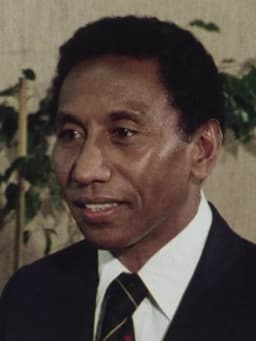
Julius Chan
Politician · Modern
50.9Total
Basic Information
Born
1972
1939
Died
—
—
Era
Modern
Modern
Nationality
Poland
Papua New Guinea
Occupation
Politician
Politician
Civilization
Western
Other
Score Comparison
Military (10%)
23.8
23.3
Political (20%)
68.0
68.0
Influence (20%)
53.3
50.2
Legacy (20%)
40.0
40.0
Leadership (15%)
68.0
74.0
Strategy (15%)
29.1
47.2
TOTAL
49.0
50.9
Andrzej Duda — Complete Timeline
2015 AD
Elected President of PolandPolitical Action◆ Major
Duda won the Polish presidential election as the candidate of the Law and Justice party, defeating incumbent Bronis
ElectionPresidentLaw and Justice
Impact: nationalconstructive
Constitutional Court CrisisPolitical Action◆ Major
Duda refused to swear in three judges appointed by the previous government to the Constitutional Tribunal, sparking a constitutional crisis. The Law and Justice government's judicial reforms were criticized by the EU.
Judicial ReformConstitutional CrisisEU Criticism
Impact: nationaldestructive
2016 AD
Veto of Media LawPolitical Action
Duda vetoed a controversial law that would have given the government control over public media appointments. The veto was seen as a rare check on the Law and Justice party's legislative agenda.
MediaVetoChecks and Balances
Impact: nationalconstructive
2020 AD
Re-elected President of PolandPolitical Action◆ Major
Duda won re-election in a closely contested runoff against Rafa
ElectionRe-electionPolarization
Impact: national
2022 AD
Support for Ukraine During Russian InvasionPolitical Action◆ Major
Duda strongly supported Ukraine after Russia's invasion, advocating for EU sanctions and NATO assistance. Poland became a key hub for military aid and refugees, though relations later strained over grain imports.
UkraineNATOForeign Policy
Impact: globalconstructive
Julius Chan — Complete Timeline
1994 AD
1994 Appointment as Prime MinisterPolitical Action◆ Major
Chan became Prime Minister of Papua New Guinea for the first time, serving until 1997. His government focused on economic development and infrastructure projects.
GovernmentLeadershipEconomic Development
Impact: national
1997 AD
1997 Sandline AffairPolitical Action◆ Major
Chan's government hired the mercenary group Sandline International to suppress a rebellion on Bougainville Island. The deal sparked a political crisis, leading to protests and Chan's resignation in 1997.
MercenaryBougainvillePolitical Crisis
Impact: nationaldestructive
1997 Resignation as Prime MinisterPolitical Action◆ Major
Chan resigned as Prime Minister in July 1997 following the Sandline Affair and a vote of no confidence. He was succeeded by Bill Skate.
ResignationPolitical CrisisNo Confidence
Impact: national
1999 AD
1999 Return as Prime MinisterPolitical Action◆ Major
Chan returned as Prime Minister in 1999, serving until 2002. His second term focused on economic reforms and improving relations with Australia.
Return to PowerGovernmentEconomic Reform
Impact: national
2002 AD
2002 General Election DefeatPolitical Action◆ Major
Chan's government was defeated in the 2002 general election. He stepped down as Prime Minister, marking the end of his political career at the national level.
Election DefeatGovernment ChangeEnd of Career
Impact: national
This comparison has not been analyzed yet.
One-time AI generation (~1 minute). Scores and timeline are already available below.
Rankings
🥇
Julius ChanLeader
Mil: 23.3Pol: 68.0Inf: 50.2
50.9
🥈
Andrzej Duda
Mil: 23.8Pol: 68.0Inf: 53.3
49.0
+1.9 behind
How This Comparison Works
Algorithm
Each figure is scored on 6 dimensions (0—100 scale) based on structured historical data: Military (10%), Political (20%), Influence (20%), Legacy (20%), Leadership (15%), Strategy (15%). The weighted total produces the final ranking.
Data Sources
Scores are computed from structured sub-indicators in the database. Scale factors adjust for era (Ancient ×0.85, Modern ×1.0) and civilization size (Eastern ×1.05, Other ×0.80) to account for differences in population and military scale.
Maximum 3 Figures
Comparisons are limited to 2—3 figures to ensure readability and statistical meaningfulness.
Error Margins
±5 points per dimension — Sub-scores are derived from historical records with inherent uncertainty. Two figures within 5 points on a dimension should be considered roughly equivalent in that area.
Total Score Accuracy
±3 points overall — The weighted combination of 6 dimensions produces a total score with approximately ±3 points of uncertainty. Differences of less than 3 points are not statistically significant— the figures are effectively tied.
Known Limitations
- Historical records are incomplete and uneven across civilizations
- Figures from oral-tradition societies may be underrepresented
- Occupation labels can misclassify multi-role figures
- Scores measure capability and impact, not moral character
- Quantitative scoring is a comparison tool, not absolute truth
Capability Radar
Military (10%) — Battles & Warfare
Battles
23
23
Win Rate
28
30
Expansion
30
32
Political (20%) — Governance & Reform
Reform
40
45
Diplomacy
50
50
Economy
45
40
Influence (20%) — Cultural & Global Reach
Cultural
30
20
Global
30
20
Legacy (20%) — Historical Impact
Historical
30
25
Longevity
20
15
Leadership (15%) — Power & Stability
Tenure
55
55
Stability
50
35
Strategy (15%) — Tactics & Innovation
Strategy
30
36
Tactics
31
36
Reform
38
41
Similar Comparisons
Comments & Discussion
No comments yet. Be the first to share your thoughts!