Loading...
Evika Silina vs Julius Chan
Julius Chan leads by 11.4 pts · 2 figures compared
…
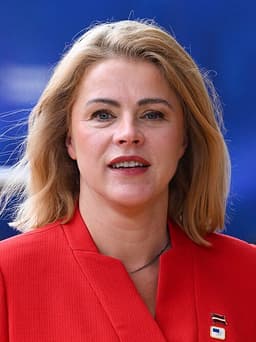
Evika Silina
Politician · Modern
39.5Total
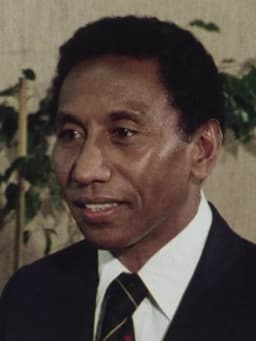
Julius Chan
Politician · Modern
50.9Total
Basic Information
Born
1975
1939
Died
—
—
Era
Modern
Modern
Nationality
Latvia
Papua New Guinea
Occupation
Politician
Politician
Civilization
Western
Other
Score Comparison
Military (10%)
14.2
23.3
Political (20%)
43.7
68.0
Influence (20%)
47.9
50.2
Legacy (20%)
35.8
40.0
Leadership (15%)
51.9
74.0
Strategy (15%)
28.6
47.2
TOTAL
39.5
50.9
Evika Silina — Complete Timeline
2023 AD
Economic Reform EffortsReform
Silina's government pursued economic reforms including tax changes and measures to address inflation and energy costs. The reforms aimed to improve Latvia's competitiveness and fiscal stability.
EconomyTax ReformEnergy
Impact: nationalconstructive
Appointed Prime Minister of LatviaPolitical Action◆ Major
Silina became Prime Minister of Latvia, leading a coalition government formed by the New Unity party, the Union of Greens and Farmers, and the Progressives. She succeeded Kri
Prime MinisterCoalitionGovernment Formation
Impact: nationalconstructive
Continued Support for UkrainePolitical Action
Silina's government maintained Latvia's strong support for Ukraine, including military aid and hosting Ukrainian refugees. Latvia consistently advocated for EU sanctions against Russia.
UkraineForeign PolicySanctions
Impact: regionalconstructive
Julius Chan — Complete Timeline
1994 AD
1994 Appointment as Prime MinisterPolitical Action◆ Major
Chan became Prime Minister of Papua New Guinea for the first time, serving until 1997. His government focused on economic development and infrastructure projects.
GovernmentLeadershipEconomic Development
Impact: national
1997 AD
1997 Sandline AffairPolitical Action◆ Major
Chan's government hired the mercenary group Sandline International to suppress a rebellion on Bougainville Island. The deal sparked a political crisis, leading to protests and Chan's resignation in 1997.
MercenaryBougainvillePolitical Crisis
Impact: nationaldestructive
1997 Resignation as Prime MinisterPolitical Action◆ Major
Chan resigned as Prime Minister in July 1997 following the Sandline Affair and a vote of no confidence. He was succeeded by Bill Skate.
ResignationPolitical CrisisNo Confidence
Impact: national
1999 AD
1999 Return as Prime MinisterPolitical Action◆ Major
Chan returned as Prime Minister in 1999, serving until 2002. His second term focused on economic reforms and improving relations with Australia.
Return to PowerGovernmentEconomic Reform
Impact: national
2002 AD
2002 General Election DefeatPolitical Action◆ Major
Chan's government was defeated in the 2002 general election. He stepped down as Prime Minister, marking the end of his political career at the national level.
Election DefeatGovernment ChangeEnd of Career
Impact: national
Expert Analysis
Origins
**Evika Silina** was born in 1975 in Riga, Latvia, then part of the Soviet Union. She studied law at the University of Latvia, graduating in 1998, and later earned a master's degree in social sciences. Her early career included work as a lawyer and in the Latvian Ministry of Justice. She entered politics through the New Unity party, a center-right political force.
**Julius Chan** was born in 1939 in Tanga Island, Papua New Guinea, then under Australian administration. He studied at the University of Papua New Guinea and later at the University of Queensland, Australia, earning a degree in economics. Chan entered politics early, becoming a member of the House of Assembly in 1968, before PNG's independence in 1975.
Rise to Power
**Silina** rose slowly through local government and party ranks. She served as a parliamentary secretary and later as Minister of Welfare from 2019 to 2021. Her breakthrough came in 2023 when she was appointed Prime Minister after a coalition agreement, becoming Latvia's first female head of government. Her ascension reflected continuity rather than crisis.
**Chan** rose quickly in post-independence PNG. He served as Finance Minister in the 1970s and 1980s, shaping economic policy. In 1994, he became Prime Minister for the first time, leading a coalition government. His rise was marked by political maneuvering and control over key ministries.
Leadership & Governance
**Silina** governs in a multiparty coalition, with limited room for bold action. Her leadership scores 51.9, reflecting a cautious, consensus-driven style. She has focused on supporting Ukraine, managing inflation, and implementing EU-required reforms. Her government's approval ratings have hovered around 40%, indicating moderate public support.
**Chan** scored 74.0 in leadership, showing a more assertive, hands-on approach. He prioritized economic development, infrastructure, and attracting foreign investment. His governance included privatization of state assets and negotiation with Australian aid programs. However, his leadership was tested by the Bougainville conflict, where he opted for a military solution.
Triumph & Tragedy
**Silina's** greatest success is maintaining Latvia's strong support for Ukraine, with military aid reaching 0.5% of GDP in 2024. She also passed tax reforms reducing the corporate tax rate from 20% to 18%. Her failures include limited progress on reducing income inequality, with Latvia's Gini coefficient remaining at 0.35. She scored 47.9 in influence, reflecting her modest international profile.
**Chan's** triumph was overseeing economic growth averaging 4% annually during his tenures. He also played a key role in the Bougainville Peace Agreement of 2001, which ended a decade-long civil war. His tragedy was the Sandline Affair of 1997, where hiring mercenaries led to a political crisis, his resignation, and a military mutiny. This scandal tarnished his legacy and scored him 40.0 in legacy.
Character & Destiny
**Silina** is described as pragmatic and reserved, avoiding confrontation. Her political scores of 43.7 reflect her cautious nature, which limits her ability to drive major change. She has not faced a major scandal, but her destiny is tied to coalition stability.
**Chan** was a risk-taker and deal-maker, with political scores of 68.0. His willingness to use mercenaries and his early support for privatization made him a polarizing figure. Historians note his strategic mind (score 47.2) but criticize his judgment in the Sandline Affair. His character led to both economic success and political downfall.
Legacy
**Silina's** legacy is still forming. She will be remembered as Latvia's first female PM and for her Ukraine stance. Her economic reforms are incremental, and her overall impact is limited by Latvia's small size and EU constraints. Her total score is 39.5.
**Chan's** legacy is more substantial. He transformed PNG's economy, opened it to foreign investment, and helped end the Bougainville conflict. However, the Sandline Affair remains a black mark. He is remembered as a shrewd but controversial leader. His total score is 50.9.
Conclusion
Julius Chan had greater impact due to his longer tenure, higher leadership (74.0 vs 51.9), and more decisive actions that shaped PNG's development. Silina's cautious governance in a stable EU state produced less dramatic change. While Chan's legacy is mixed, his scores in political (68.0 vs 43.7) and leadership domains clearly surpass Silina's. The 11.4-point total gap reflects Chan's more consequential, if flawed, career.
Rankings
🥇
Julius ChanLeader
Mil: 23.3Pol: 68.0Inf: 50.2
50.9
🥈
Evika Silina
Mil: 14.2Pol: 43.7Inf: 47.9
39.5
+11.4 behind
How This Comparison Works
Algorithm
Each figure is scored on 6 dimensions (0—100 scale) based on structured historical data: Military (10%), Political (20%), Influence (20%), Legacy (20%), Leadership (15%), Strategy (15%). The weighted total produces the final ranking.
Data Sources
Scores are computed from structured sub-indicators in the database. Scale factors adjust for era (Ancient ×0.85, Modern ×1.0) and civilization size (Eastern ×1.05, Other ×0.80) to account for differences in population and military scale.
Maximum 3 Figures
Comparisons are limited to 2—3 figures to ensure readability and statistical meaningfulness.
Error Margins
±5 points per dimension — Sub-scores are derived from historical records with inherent uncertainty. Two figures within 5 points on a dimension should be considered roughly equivalent in that area.
Total Score Accuracy
±3 points overall — The weighted combination of 6 dimensions produces a total score with approximately ±3 points of uncertainty. Differences of less than 3 points are not statistically significant— the figures are effectively tied.
Known Limitations
- Historical records are incomplete and uneven across civilizations
- Figures from oral-tradition societies may be underrepresented
- Occupation labels can misclassify multi-role figures
- Scores measure capability and impact, not moral character
- Quantitative scoring is a comparison tool, not absolute truth
Capability Radar
Military (10%) — Battles & Warfare
Battles
25
23
Win Rate
25
30
Expansion
27
32
Political (20%) — Governance & Reform
Reform
30
45
Diplomacy
40
50
Economy
35
40
Influence (20%) — Cultural & Global Reach
Cultural
10
20
Global
15
20
Legacy (20%) — Historical Impact
Historical
15
25
Longevity
10
15
Leadership (15%) — Power & Stability
Tenure
15
55
Stability
30
35
Strategy (15%) — Tactics & Innovation
Strategy
31
36
Tactics
32
36
Reform
36
41
Similar Comparisons
Comments & Discussion
No comments yet. Be the first to share your thoughts!