Loading...
Anedjib vs Napoleon Bonaparte
Napoleon Bonaparte leads by 34.2 pts · 2 figures compared
…
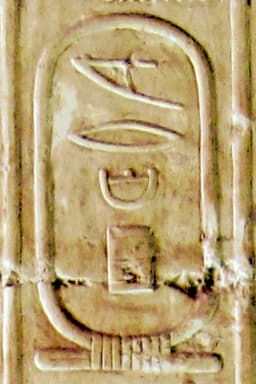
Anedjib
Emperor · Ancient
36.7Total

Napoleon Bonaparte
General · Modern
70.9Total
Basic Information
Born
-2930
1769
Died
-2920
1821
Era
Ancient
Modern
Nationality
Early Egypt
France
Occupation
Emperor
General
Civilization
Middle Eastern
Western
Score Comparison
Military (10%)
10.2
94.0
Political (20%)
32.1
72.0
Influence (20%)
43.2
40.0
Legacy (20%)
32.5
80.0
Leadership (15%)
49.9
78.0
Strategy (15%)
45.0
90.0
TOTAL
36.7
70.9
Anedjib — Complete Timeline
2930 BC
Reigned During a Period of InstabilityPolitical Action◆ Major
Anedjib's reign was marked by internal strife and possible challenges to his authority. His tomb at Abydos is smaller and less elaborate than his predecessors, suggesting a decline in royal power.
InstabilityDeclineTomb
Impact: nationaldestructive
Built a Tomb at AbydosCultural
Anedjib constructed a tomb at Abydos, but it was smaller and less well-built than those of earlier pharaohs. The tomb contained few subsidiary burials, reflecting reduced resources or prestige.
TombAbydosReduced
Faced Rebellion or UsurpationPolitical Action◆ Major
Historical records suggest Anedjib faced a rebellion or usurpation attempt, possibly by Semerkhet. The Palermo Stone notes a 'year of fighting the northerners,' indicating conflict within Egypt.
RebellionConflictUsurpation
Impact: nationaldestructive
Napoleon Bonaparte — Complete Timeline
1799 AD
Coup of 18 BrumaireOther◆ Major
Napoleon Bonaparte, with support from his brother Lucien and key political figures, overthrew the Directory in a bloodless coup. He established the Consulate with himself as First Consul, effectively becoming the ruler of France. This event ended the French Revolution's most unstable period.
French RevolutionCoupRise to Power
Impact: regional
1804 AD
Promulgation of the Napoleonic CodeOther◆ Major
Napoleon enacted the Civil Code of the French, known as the Napoleonic Code, a comprehensive set of laws that replaced the fragmented feudal legal systems. The code established legal equality, protected property rights, and secularized law. It became the basis for legal systems in many European and world countries.
Legal ReformNapoleonic CodeCivil Law
Impact: globalconstructive
1805 AD
Battle of AusterlitzWar◆ Major
Napoleon's Grande Arm
Napoleonic WarsBattleDecisive Victory
Impact: global
1812 AD
Invasion of RussiaWar◆ Major
Napoleon led the Grande Arm
Napoleonic WarsInvasionDisaster
Impact: globaldestructive
1815 AD
Battle of WaterlooWar◆ Major
Napoleon's French army was defeated by the combined forces of the Duke of Wellington's Anglo-Allied army and Gebhard Leberecht von Bl
Napoleonic WarsBattleFinal Defeat
Impact: globaldestructive
Expert Analysis
anedjib-vs-napoleon-bonaparte
# The Emperor and the Pharaoh: Two Faces of Power in Crisis
In the spring of 1815, Napoleon Bonaparte stood on the field of Waterloo, commanding the most formidable army Europe had ever seen. Four thousand years earlier and two thousand miles away, the Pharaoh Anedjib sat in his palace at Abydos, struggling to hold together a kingdom that was slipping through his fingers. One would reshape the world; the other would be all but forgotten. What separates a titan from a footnote? The answer lies not in talent alone, but in the interplay of character, circumstance, and the unforgiving logic of power.
Origins
Napoleon was born in 1769 on the island of Corsica, a place that had just passed from Genoese to French control. His family was minor nobility, but his father’s connections secured him a place at French military academies. There, the awkward, accented outsider devoured history and mathematics, learning not only how to command men but how to command events. The French Revolution, which erupted when he was twenty, shattered the old order and opened every path to a young man of ambition. His era was one of chaos and opportunity—a world where a brilliant artillery officer could become emperor in a decade.
Anedjib reigned around 2930 BC, in the dawn of Egyptian civilization. The First Dynasty was barely a century old, and the pharaoh’s power was still being invented. Anedjib inherited a throne that was less a secure institution than a precarious claim. His name appears on the Palermo Stone, but the records are fragmentary, suggesting a reign troubled by internal dissent. Unlike Napoleon, who entered a world of revolutionary upheaval that rewarded audacity, Anedjib entered a world where the very concept of the state was fragile, and the tools of power—bureaucracy, army, legitimacy—were still being forged.
Rise to Power
Napoleon’s ascent was meteoric. At twenty-four, he drove the British out of Toulon and was promoted to brigadier general. In 1796, at twenty-six, he took command of the French army in Italy and, with a series of lightning campaigns, forced Austria to sue for peace. Each victory fed the next. He understood that in revolutionary France, success was the only credential that mattered. His 1799 coup, the 18 Brumaire, made him First Consul. By 1804, he crowned himself Emperor of the French. His path was a straight line of ambition, calculation, and relentless action.
Anedjib’s rise is opaque. He was likely the son of his predecessor, Den, but the succession was not automatic. The smaller size of his tomb at Abydos—a crucial symbol of royal authority—suggests he lacked the resources or the consensus of earlier pharaohs. Where Napoleon seized power, Anedjib appears to have inherited a weakening claim. The Palermo Stone notes that during his reign, a rebellion or usurpation attempt occurred, possibly led by a figure named Semerkhet. Anedjib did not rise; he merely held on.
Leadership & Governance
Napoleon ruled with a blend of military genius and political vision. His scores of 94 in military and 93 in strategy are not abstractions; they reflect campaigns that rewrote the rules of war. At Austerlitz in 1805, he destroyed a combined Russian and Austrian army, a masterpiece of deception and timing. But he was also a reformer. The Napoleonic Code, implemented across his empire, standardized law, protected property, and enshrined merit over birth. He built schools, roads, and a centralized state. He was a conqueror who also built—a rare combination.
Anedjib’s governance, by contrast, was a holding action. His political score of 33.8 and leadership score of 28.4 suggest a ruler unable to project authority. The rebellion he faced was not a foreign invasion but a domestic challenge—perhaps a rival claiming the throne. His tomb, smaller and less well-built than those of his predecessors, is the physical evidence of decline. Where Napoleon expanded his domain, Anedjib could barely secure his own capital. The difference is not merely one of scale; it is one of capacity. Napoleon had the tools of modern statecraft; Anedjib had only tradition, and tradition was failing him.
Triumph & Tragedy
Napoleon’s greatest triumph was his empire at its height in 1810—from Spain to Poland, from the Baltic to the Adriatic. His greatest tragedy was the invasion of Russia in 1812. He led 600,000 men into the vastness; fewer than 100,000 returned. That defeat shattered his aura of invincibility. He was exiled to Elba, escaped, and then met final defeat at Waterloo in 1815. His tragedy was hubris—the belief that his genius could overcome geography, logistics, and the limits of human endurance.
Anedjib’s triumphs, if any, are lost. His tragedy is that he presided over a dynasty’s decline. After his death, his successor Semerkhet—possibly his usurper—took the throne. Anedjib’s name appears in later king lists, but his reign was a prelude to obscurity. His tragedy is not a dramatic fall but a quiet erosion—the slow collapse of a house built on sand.
Character & Destiny
Napoleon was driven by an insatiable will. “Impossible,” he once said, “is a word to be found only in the dictionary of fools.” He believed he could impose order on chaos through sheer force of intellect and ambition. That belief made him emperor, and that same belief destroyed him. He could not stop, because stopping was not in his nature. His character was his destiny.
Anedjib’s character is unknowable. We have no letters, no memoirs, no recorded words. But his actions—or the actions taken against him—suggest a ruler who lacked the ruthlessness or the resources to crush opposition. Where Napoleon overreached, Anedjib underreached. One burned too bright; the other barely flickered.
Legacy
Napoleon’s legacy is immense. The Napoleonic Code influenced legal systems across Europe and the Americas. His military innovations are still studied. He reshaped the map of Europe and accelerated the rise of nationalism. His legacy score of 78 reflects a figure who is remembered not as a footnote but as a force that changed the course of history—for better and for worse.
Anedjib’s legacy is a few lines on an ancient stone. His tomb is a ruin; his name is known only to specialists. His legacy score of 42.9 is a measure of near-total obscurity. He is remembered not for what he did, but for what he failed to do—a warning that power, once weakened, rarely recovers.
Conclusion
Napoleon and Anedjib stand at opposite ends of the spectrum of historical memory. One conquered an empire; the other could not hold a kingdom. But the difference between them is not merely a matter of talent or luck. It is a matter of the age they lived in and the tools they had. Napoleon had the French Revolution, the printing press, the cannon, and the nation-state. Anedjib had a mud-brick palace, a few scribes, and a tradition still being written. The gap between a 94 and a 39 in military score is not just personal—it is historical. In the end, both men faced the same challenge: to impose order on chaos. One succeeded brilliantly, then failed spectacularly. The other failed quietly, and was forgotten. That, perhaps, is the most sobering lesson of all.
Rankings
🥇
Napoleon BonaparteLeader
Mil: 94.0Pol: 72.0Inf: 40.0
70.9
🥈
Anedjib
Mil: 10.2Pol: 32.1Inf: 43.2
36.7
+34.2 behind
How This Comparison Works
Algorithm
Each figure is scored on 6 dimensions (0—100 scale) based on structured historical data: Military (10%), Political (20%), Influence (20%), Legacy (20%), Leadership (15%), Strategy (15%). The weighted total produces the final ranking.
Data Sources
Scores are computed from structured sub-indicators in the database. Scale factors adjust for era (Ancient ×0.85, Modern ×1.0) and civilization size (Eastern ×1.05, Other ×0.80) to account for differences in population and military scale.
Maximum 3 Figures
Comparisons are limited to 2—3 figures to ensure readability and statistical meaningfulness.
Error Margins
±5 points per dimension — Sub-scores are derived from historical records with inherent uncertainty. Two figures within 5 points on a dimension should be considered roughly equivalent in that area.
Total Score Accuracy
±3 points overall — The weighted combination of 6 dimensions produces a total score with approximately ±3 points of uncertainty. Differences of less than 3 points are not statistically significant— the figures are effectively tied.
Known Limitations
- Historical records are incomplete and uneven across civilizations
- Figures from oral-tradition societies may be underrepresented
- Occupation labels can misclassify multi-role figures
- Scores measure capability and impact, not moral character
- Quantitative scoring is a comparison tool, not absolute truth
Capability Radar
Military (10%) — Battles & Warfare
Battles
5
95
Win Rate
5
90
Expansion
5
95
Political (20%) — Governance & Reform
Reform
10
95
Diplomacy
10
80
Economy
10
85
Influence (20%) — Cultural & Global Reach
Cultural
10
85
Global
5
90
Legacy (20%) — Historical Impact
Historical
10
95
Longevity
5
90
Leadership (15%) — Power & Stability
Tenure
10
85
Stability
5
70
Strategy (15%) — Tactics & Innovation
Strategy
5
95
Tactics
5
98
Reform
5
92
Similar Comparisons
Comments & Discussion
Corsican Thunderbolt6/17/2026
Calling this a "comparison" is like comparing a hydrogen bomb to a firecracker. Napoleon didn't just win battles—he rewrote the laws of Europe and made his enemies dance to his tune. Anedjib is only remembered because we found a few broken jars with his name on them. That's not a "pharaoh in crisis," that's a historical footnote who couldn't even keep his own dynasty together. Napoleon commanded destiny; Anedjib got erased by it.
铭文侦探6/17/2026
拿拿破仑跟阿涅德吉布比?纯粹是数据膨胀。安纳迪布的名字出现在阿拜多斯王表上,没错,但你知道那上面遗漏了多少法老吗?同位素碳测年显示他的统治可能不到十年,曼涅托记载中甚至没提他。拿破仑留下的军法典、民法典、行政体系,至今还在用。一个连自己名字都没刻全的国王,怎么跟世界征服者比?数据不会撒谎,历史定位差距太大了。
Dynasty Detective6/17/2026
Here's what the Waterloo fetishists refuse to see: Napoleon inherited revolutionary momentum; Anedjib had to *invent* pharaonic kingship from scratch. The Abydos seal impressions show he carried out a Sed festival, the ritual renewal of the king's divine power. That's not weakness—it's innovation in sacred statecraft. Napoleon stood on the shoulders of gunpowder and mass mobilization; Anedjib built the theological scaffolding for a civilization that would last 3,000 years. Context matters, not j
沙丘遗骨6/17/2026
阿涅德吉布根本就是个悲剧人物。墓葬规模缩水,陪葬品质量断崖下跌,玛斯塔巴墓里连像样的石碑都没几块。相比之下,拿破仑在圣赫勒拿岛流放时还在写回忆录来重塑自己的历史形象。一个连死后名声都控制不了的法老,凭什么站在历史的聚光灯下?要不是考古学家在乌姆·卡布挖出那些碎陶片,我们可能都不知道这位"法老"存在过。拿破仑输了滑铁卢,但赢了历史。