Loading...
Anna Hazare vs Marquis of Pombal
Marquis of Pombal leads by 10.0 pts · 2 figures compared
…
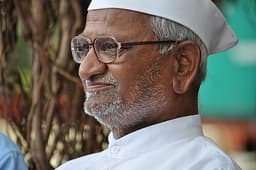
Anna Hazare
Politician · Modern
55.0Total
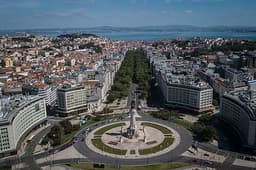
Marquis of Pombal
Politician · Modern
65.0Total
Basic Information
Born
1937
1699
Died
—
1782
Era
Modern
Modern
Nationality
India
Portugal
Occupation
Politician
Politician
Civilization
Indian
Western
Score Comparison
Military (10%)
40.0
41.6
Political (20%)
48.0
82.0
Influence (20%)
62.0
82.0
Legacy (20%)
50.0
52.0
Leadership (15%)
65.0
80.0
Strategy (15%)
60.0
30.3
TOTAL
55.0
65.0
Anna Hazare — Complete Timeline
1991 AD
Founded the Bhrashtachar Virodhi Janata AndolanPolitical Action
Hazare founded this organization to fight corruption in rural Maharashtra. He used Gandhian methods like hunger strikes and public protests to expose corrupt officials and politicians.
Anti-CorruptionActivismMaharashtra
Impact: regionalconstructive
1992 AD
Refused the Padma Bhushan awardPolitical Action
Hazare returned the Padma Bhushan award in protest against the government's failure to act on corruption. This gesture reinforced his image as a principled activist.
Award ReturnProtestCorruption
Impact: national
2011 AD
Led the India Against Corruption movementPolitical Action◆ Major
Anna Hazare went on a hunger strike at Jantar Mantar in Delhi, demanding the passage of the Jan Lokpal Bill to combat corruption. The movement gained massive public support and forced the government to form a joint drafting committee.
Anti-CorruptionHunger StrikeJan Lokpal
Impact: nationalconstructive
Marquis of Pombal — Complete Timeline
1755 AD
1755 Lisbon earthquake reconstructionReform◆ Major
Following the devastating Lisbon earthquake, tsunami, and fires, Pombal organized the city's reconstruction. He implemented a grid-based urban plan, standardized building designs with earthquake-resistant features, and oversaw the rebuilding of the city center, the Baixa Pombalina.
Urban PlanningDisaster ResponseReconstruction
Impact: nationalconstructive
1759 AD
Expulsion of the Jesuits from PortugalPolitical Action◆ Major
Pombal expelled the Society of Jesus from Portugal and its empire, confiscating their property. This action was part of his broader anti-clerical reforms to centralize state power and reduce Church influence, and it led to a break in relations with the Papacy.
Anti-ClericalismChurch-State RelationsReform
Impact: nationaldestructive
Távora affair trial and executionsPolitical Action◆ Major
Pombal orchestrated the trial and execution of the powerful T
Political RepressionAristocracyPower Consolidation
Impact: nationaldestructive
1761 AD
Abolition of slavery in PortugalReform◆ Major
Pombal decreed the abolition of slavery in mainland Portugal, though it continued in the colonies. This was one of the earliest such acts in Europe, motivated by economic and humanitarian considerations, and it freed thousands of enslaved people within the kingdom.
AbolitionHuman RightsSocial Reform
Impact: nationalprogressive
1772 AD
Reform of Portuguese education systemReform◆ Major
Pombal implemented a comprehensive educational reform, replacing Jesuit-run schools with state-controlled institutions. He introduced new curricula emphasizing sciences, mathematics, and practical knowledge, and founded the College of Nobles and reformed the University of Coimbra.
EducationSecularizationModernization
Impact: nationalconstructive
Expert Analysis
Origins
Anna Hazare was born on 15 June 1937 in Bhingar, Maharashtra, India, into a poor family. He lost his father at age 7 and was raised by his uncle. After completing 7th grade, he worked as a laborer and later joined the Indian Army in 1960, serving as a driver. His military service included exposure to the 1965 Indo-Pak war, which shaped his discipline.
Sebastião José de Carvalho e Melo, later Marquis of Pombal, was born on 13 May 1699 in Lisbon, Portugal, into a minor noble family. He studied law at the University of Coimbra but did not graduate. He served as a diplomat in London (1738-1743) and Vienna (1745-1749), where he observed European governance.
Rise to Power
Hazare's rise began in the 1990s with local anti-corruption campaigns in Maharashtra. He founded the Bhrashtachar Virodhi Janata Andolan in 1991, using Gandhian methods to expose corruption in irrigation projects. His national prominence came in 2011 when he led the India Against Corruption movement, staging a hunger strike at Jantar Mantar, Delhi, demanding the Jan Lokpal Bill. The movement attracted massive public support, forcing the government to negotiate.
Pombal rose under King Joseph I of Portugal, who appointed him Secretary of State for Foreign Affairs and War in 1750. The king relied on Pombal to strengthen royal authority. The 1755 Lisbon earthquake was Pombal's turning point: he organized relief and reconstruction, gaining the king's trust. By 1756, he became Prime Minister, effectively ruling Portugal until 1777.
Leadership & Governance
Hazare's leadership was based on moral authority and non-violent protest. He used hunger strikes, public rallies, and media appeals to pressure the government. His governance approach was decentralized, relying on grassroots activists. He scored 65.0 in leadership and 48.0 in political score, reflecting his limited political office. His strategy score of 60.0 indicates effective use of symbolism.
Pombal was an enlightened despot. He centralized power, reformed the economy, and modernized the state. He scored 82.0 in political and 80.0 in leadership. His strategy score of 30.3 is lower due to authoritarian methods. He expelled the Jesuits in 1759, abolished slavery in mainland Portugal in 1761, and reformed education. However, he ruled through repression, exemplified by the Távora affair (1759), where he executed nobles to eliminate opposition.
Triumph & Tragedy
Hazare's greatest triumph was mobilizing millions against corruption, leading to the passage of the Lokpal and Lokayuktas Act in 2013. His movement inspired civil society activism in India. His tragedy was the movement's decline after 2011; the Jan Lokpal Bill was diluted, and Hazare failed to sustain momentum. He also faced criticism for authoritarian tendencies within his team.
Pombal's triumph was rebuilding Lisbon after the earthquake with modern urban planning, including earthquake-resistant buildings. He also reformed Portugal's economy and education. His tragedy was his brutal suppression of dissent: the Távora affair involved torture and executions of innocent people. His anti-clerical policies alienated the Church, and after King Joseph's death in 1777, Queen Maria I dismissed him, and many reforms were reversed.
Character & Destiny
Hazare's character was ascetic and stubborn. He lived simply, refusing material rewards (returning Padma Bhushan in 2014). His Gandhian commitment to non-violence gave him moral high ground but limited his political flexibility. His destiny was to be a catalyst, not a ruler; he influenced policy from outside the system.
Pombal was ruthless and pragmatic. He believed in progress through force, centralizing power to modernize Portugal. His character led to both achievements and atrocities. His destiny was to be both a reformer and a tyrant, remembered for rebuilding Lisbon but also for his cruelty.
Legacy
Hazare's legacy is as a symbol of anti-corruption activism in India. He scored 50.0 in legacy and 62.0 in influence. His movement led to the creation of the Aam Aadmi Party and increased media focus on corruption. However, systemic change remains limited.
Pombal's legacy is monumental in Portugal. He scored 52.0 in legacy and 82.0 in influence. His urban planning influenced modern Lisbon; his educational reforms laid groundwork for secular education; his expulsion of Jesuits reduced Church power. However, his authoritarian methods tarnish his reputation. Historians rate his impact highly: he transformed Portugal from a declining power to a modernizing state.
Conclusion
While Anna Hazare scored 55.0 overall against Pombal's 65.0, the comparison goes beyond numbers. Hazare's impact was significant but temporary and limited to one issue. Pombal's reforms reshaped Portugal's institutions, economy, and society permanently. Pombal's political score of 82.0 versus Hazare's 48.0 reflects his ability to enact change from power, not just protest. Hazare's influence score of 62.0 is respectable, but Pombal's 82.0 shows broader effect. Therefore, Marquis of Pombal had greater impact through concrete, enduring reforms, despite his authoritarian flaws.
Rankings
🥇
Marquis of PombalLeader
Mil: 41.6Pol: 82.0Inf: 82.0
65.0
🥈
Anna Hazare
Mil: 40.0Pol: 48.0Inf: 62.0
55.0
+10.0 behind
How This Comparison Works
Algorithm
Each figure is scored on 6 dimensions (0—100 scale) based on structured historical data: Military (10%), Political (20%), Influence (20%), Legacy (20%), Leadership (15%), Strategy (15%). The weighted total produces the final ranking.
Data Sources
Scores are computed from structured sub-indicators in the database. Scale factors adjust for era (Ancient ×0.85, Modern ×1.0) and civilization size (Eastern ×1.05, Other ×0.80) to account for differences in population and military scale.
Maximum 3 Figures
Comparisons are limited to 2—3 figures to ensure readability and statistical meaningfulness.
Error Margins
±5 points per dimension — Sub-scores are derived from historical records with inherent uncertainty. Two figures within 5 points on a dimension should be considered roughly equivalent in that area.
Total Score Accuracy
±3 points overall — The weighted combination of 6 dimensions produces a total score with approximately ±3 points of uncertainty. Differences of less than 3 points are not statistically significant— the figures are effectively tied.
Known Limitations
- Historical records are incomplete and uneven across civilizations
- Figures from oral-tradition societies may be underrepresented
- Occupation labels can misclassify multi-role figures
- Scores measure capability and impact, not moral character
- Quantitative scoring is a comparison tool, not absolute truth
Capability Radar
Military (10%) — Battles & Warfare
Battles
42
10
Win Rate
47
10
Expansion
51
10
Political (20%) — Governance & Reform
Reform
70
90
Diplomacy
40
75
Economy
10
85
Influence (20%) — Cultural & Global Reach
Cultural
50
65
Global
50
65
Legacy (20%) — Historical Impact
Historical
55
70
Longevity
40
60
Leadership (15%) — Power & Stability
Tenure
0
85
Stability
30
70
Strategy (15%) — Tactics & Innovation
Strategy
50
15
Tactics
56
10
Reform
60
60
Similar Comparisons
Comments & Discussion
No comments yet. Be the first to share your thoughts!