Loading...
Anna Hazare vs Napoleon Bonaparte
Napoleon Bonaparte leads by 15.9 pts · 2 figures compared
…
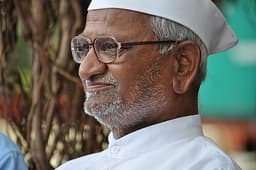
Anna Hazare
Politician · Modern
55.0Total

Napoleon Bonaparte
General · Modern
70.9Total
Basic Information
Born
1937
1769
Died
—
1821
Era
Modern
Modern
Nationality
India
France
Occupation
Politician
General
Civilization
Indian
Western
Score Comparison
Military (10%)
40.0
94.0
Political (20%)
48.0
72.0
Influence (20%)
62.0
40.0
Legacy (20%)
50.0
80.0
Leadership (15%)
65.0
78.0
Strategy (15%)
60.0
90.0
TOTAL
55.0
70.9
Anna Hazare — Complete Timeline
1991 AD
Founded the Bhrashtachar Virodhi Janata AndolanPolitical Action
Hazare founded this organization to fight corruption in rural Maharashtra. He used Gandhian methods like hunger strikes and public protests to expose corrupt officials and politicians.
Anti-CorruptionActivismMaharashtra
Impact: regionalconstructive
1992 AD
Refused the Padma Bhushan awardPolitical Action
Hazare returned the Padma Bhushan award in protest against the government's failure to act on corruption. This gesture reinforced his image as a principled activist.
Award ReturnProtestCorruption
Impact: national
2011 AD
Led the India Against Corruption movementPolitical Action◆ Major
Anna Hazare went on a hunger strike at Jantar Mantar in Delhi, demanding the passage of the Jan Lokpal Bill to combat corruption. The movement gained massive public support and forced the government to form a joint drafting committee.
Anti-CorruptionHunger StrikeJan Lokpal
Impact: nationalconstructive
Napoleon Bonaparte — Complete Timeline
1799 AD
Coup of 18 BrumaireOther◆ Major
Napoleon Bonaparte, with support from his brother Lucien and key political figures, overthrew the Directory in a bloodless coup. He established the Consulate with himself as First Consul, effectively becoming the ruler of France. This event ended the French Revolution's most unstable period.
French RevolutionCoupRise to Power
Impact: regional
1804 AD
Promulgation of the Napoleonic CodeOther◆ Major
Napoleon enacted the Civil Code of the French, known as the Napoleonic Code, a comprehensive set of laws that replaced the fragmented feudal legal systems. The code established legal equality, protected property rights, and secularized law. It became the basis for legal systems in many European and world countries.
Legal ReformNapoleonic CodeCivil Law
Impact: globalconstructive
1805 AD
Battle of AusterlitzWar◆ Major
Napoleon's Grande Arm
Napoleonic WarsBattleDecisive Victory
Impact: global
1812 AD
Invasion of RussiaWar◆ Major
Napoleon led the Grande Arm
Napoleonic WarsInvasionDisaster
Impact: globaldestructive
1815 AD
Battle of WaterlooWar◆ Major
Napoleon's French army was defeated by the combined forces of the Duke of Wellington's Anglo-Allied army and Gebhard Leberecht von Bl
Napoleonic WarsBattleFinal Defeat
Impact: globaldestructive
Expert Analysis
anna-hazare-vs-napoleon-bonaparte
# The Conqueror and the Crusader
On a summer day in 1815, Napoleon Bonaparte stood on a muddy field in Belgium, watching his imperial guard fall for the first time in history. A hundred and ninety-six years later, an old man in a white cap sat cross-legged on a platform in Delhi, refusing food and water, as a nation held its breath. One sought to reshape the world through cannon and code; the other through fasting and moral force. What drove a Corsican artilleryman to crown himself emperor, and a village activist from Maharashtra to become the conscience of a billion people? The answer lies not in their differences alone, but in the strange kinship of ambition and the radically different worlds that shaped them.
Origins
Napoleon Buonaparte was born in 1769 on the Mediterranean island of Corsica, a land recently sold to France by Genoa. His family was minor nobility, but poor enough that young Napoleon entered a French military academy on scholarship. The other cadets mocked his accent and his island manners. He responded by burying himself in mathematics, artillery manuals, and the lives of Alexander and Caesar. France in the 1780s was a powder keg of revolution, and Napoleon absorbed the era's restless energy—the belief that talent, not birth, could remake society.
Anna Hazare was born in 1937 in the village of Bhivpuri, in what is now Maharashtra, British India. His family was Dalit, landless laborers who pulled carts for a living. His father died when Anna was a child, and he was raised by his uncle in Mumbai, where he sold flowers on the street. He never finished high school. But in 1963, after a near-death experience in a bus accident, Hazare underwent a conversion: he began reading the works of Mahatma Gandhi and Vinoba Bhave, and decided to dedicate his life to village uplift and moral reform. The India he grew up in was newly independent, struggling with poverty, bureaucracy, and the corruption that seeped into the cracks of a young democracy.
The difference in their origins is not just one of geography or class. Napoleon grew up in a Europe of collapsing monarchies, where a man with a cannon could rewrite the map. Hazare grew up in an India of rising expectations, where a man with a hunger strike could shake a government.
Rise to Power
Napoleon’s rise was meteoric, violent, and breathtaking. At 24, he drove the British out of Toulon with a brilliant artillery placement. At 26, he saved the French Republic from a royalist uprising with a "whiff of grapeshot." By 30, he had conquered Italy and Egypt, and returned to France to seize power in the coup of 18 Brumaire (November 1799). His path was paved with victories—Austerlitz in 1805, Jena in 1806, Friedland in 1807. Each battle was a stepping stone, each treaty a new crown.
Hazare’s rise was slow, patient, and rooted in the soil. In 1991, he founded the Bhrashtachar Virodhi Janata Andolan—the Anti-Corruption People's Movement—in his home district of Ahmednagar. His methods were Gandhian: fasts, marches, and the relentless filing of right-to-information requests. In 1992, he refused the Padma Bhushan, India's third-highest civilian award, in protest against government inaction on corruption. It was a gesture that went largely unnoticed at the time. For two decades, he worked at the village level, exposing corrupt officials, forcing the construction of roads and schools, and building a reputation as an incorruptible, stubborn, and deeply moral force.
Their rises could not be more different: Napoleon’s was the ascent of a comet; Hazare’s was the slow erosion of a rock.
Leadership & Governance
Napoleon governed through genius and iron. He centralized the French state, created the Bank of France, and established the Napoleonic Code—a civil law system that abolished feudal privileges and enshrined meritocracy, property rights, and secular governance. His military leadership was extraordinary: he read terrain like a poet reads a page, and his speed and deception left enemies bewildered. At Austerlitz, he lured the Russian and Austrian armies into a trap on the Pratzen Heights, then shattered them. His score of 94 in military strategy reflects a near-unchallenged mastery.
But his political wisdom was flawed. He crowned himself emperor in 1804, betraying the revolutionary ideals he claimed to champion. He invaded Spain, Russia, and ultimately all of Europe, creating enemies faster than he could defeat them. His score of 75 in political acumen suggests a man who knew how to seize power but not how to sustain peace.
Hazare governed through example and shame. He had no army, no treasury, no official position. He led by sitting on a platform, refusing food, and forcing the media and the public to watch. In 2011, at age 74, he launched the India Against Corruption movement, demanding the Jan Lokpal Bill—an independent anti-corruption ombudsman. His hunger strike at Jantar Mantar in Delhi drew millions of supporters, paralyzed Parliament, and forced the government to negotiate. His leadership score of 77 reflects a man who could mobilize a nation without firing a shot.
But his political effectiveness was limited. The Jan Lokpal Bill was never passed in its original form. Hazare’s movement, for all its moral force, lacked the institutional machinery to translate public anger into lasting law. His political score of 60.8 is a reminder that moral authority, however powerful, is not the same as governance.
Triumph & Tragedy
Napoleon’s greatest triumph was the Napoleonic Code, which remains the foundation of civil law across Europe and beyond. His greatest tragedy was the invasion of Russia in 1812. He marched with 600,000 men and returned with barely 100,000. The Russian winter, the scorched-earth tactics, and his own hubris destroyed the Grand Armée. Exiled to Elba in 1814, he escaped and returned for the Hundred Days, only to meet his final defeat at Waterloo on June 18, 1815. He died in exile on Saint Helena in 1821, a prisoner of the British.
Hazare’s greatest triumph was the 2011 movement itself—a moment when a frail old man in a white cap became the symbol of a nation’s demand for accountability. His greatest tragedy is that the movement did not achieve its core legislative goal. The Jan Lokpal Bill was diluted, delayed, and ultimately shelved. The corruption that Hazare fought continues to plague India. He returned to his village, still respected, but aware that the machine of power had outlasted the moral storm.
Character & Destiny
Napoleon was driven by an insatiable hunger for glory. “I love power as a musician loves his violin,” he once said. His personality was a blend of brilliance, ambition, and a deep insecurity born of his Corsican origins and his outsider status. He needed to prove himself, constantly, to himself and to the world. That need made him unstoppable—and ultimately, uncontainable.
Hazare is driven by a different hunger: the hunger for justice, shaped by his own experience of poverty and humiliation. He is ascetic, stubborn, and deeply traditional. He wears the white cap of a Gandhian, drinks only water during his fasts, and refuses to compromise on principle. “If you want to change the world,” he once said, “change yourself first.” His personality is the opposite of Napoleon’s—where Napoleon expanded outward, Hazare turned inward.
Their characters shaped their destinies. Napoleon’s ambition built an empire and destroyed it. Hazare’s integrity built a movement, but could not build a government.
Legacy
Napoleon’s legacy is written in law codes, national boundaries, and the very concept of modern meritocracy. He is remembered as a military genius, a reformer, and a tyrant. His score of 82 in influence and 78 in legacy places him among the most consequential figures in Western history. But his legacy is contested: he restored slavery in the French colonies, suppressed women’s rights, and left Europe scarred by war.
Hazare’s legacy is more fragile and more intimate. He is remembered as a symbol of moral resistance, a reminder that ordinary people can challenge power. His score of 72.9 in influence and 68.4 in legacy reflects a man who shook a nation but did not transform it. Yet, in an age of cynicism and corruption, his example remains a quiet, stubborn light.
Conclusion
Napoleon and Hazare are not comparable in scale. One conquered continents; the other conquered consciences. But they share something deeper: both were outsiders who rose through sheer will, who believed that one man could change the course of history. Napoleon changed it through force; Hazare through fasting. One built a code of laws; the other built a code of conduct. One died in exile, the other lives in a village. Their stories remind us that power takes many forms—the cannon and the hunger strike, the throne and the platform. The question is not which is greater, but which we choose to follow.
Rankings
🥇
Napoleon BonaparteLeader
Mil: 94.0Pol: 72.0Inf: 40.0
70.9
🥈
Anna Hazare
Mil: 40.0Pol: 48.0Inf: 62.0
55.0
+15.9 behind
How This Comparison Works
Algorithm
Each figure is scored on 6 dimensions (0—100 scale) based on structured historical data: Military (10%), Political (20%), Influence (20%), Legacy (20%), Leadership (15%), Strategy (15%). The weighted total produces the final ranking.
Data Sources
Scores are computed from structured sub-indicators in the database. Scale factors adjust for era (Ancient ×0.85, Modern ×1.0) and civilization size (Eastern ×1.05, Other ×0.80) to account for differences in population and military scale.
Maximum 3 Figures
Comparisons are limited to 2—3 figures to ensure readability and statistical meaningfulness.
Error Margins
±5 points per dimension — Sub-scores are derived from historical records with inherent uncertainty. Two figures within 5 points on a dimension should be considered roughly equivalent in that area.
Total Score Accuracy
±3 points overall — The weighted combination of 6 dimensions produces a total score with approximately ±3 points of uncertainty. Differences of less than 3 points are not statistically significant— the figures are effectively tied.
Known Limitations
- Historical records are incomplete and uneven across civilizations
- Figures from oral-tradition societies may be underrepresented
- Occupation labels can misclassify multi-role figures
- Scores measure capability and impact, not moral character
- Quantitative scoring is a comparison tool, not absolute truth
Capability Radar
Military (10%) — Battles & Warfare
Battles
42
95
Win Rate
47
90
Expansion
51
95
Political (20%) — Governance & Reform
Reform
70
95
Diplomacy
40
80
Economy
10
85
Influence (20%) — Cultural & Global Reach
Cultural
50
85
Global
50
90
Legacy (20%) — Historical Impact
Historical
55
95
Longevity
40
90
Leadership (15%) — Power & Stability
Tenure
0
85
Stability
30
70
Strategy (15%) — Tactics & Innovation
Strategy
50
95
Tactics
56
98
Reform
60
92
Similar Comparisons
Comments & Discussion
TheCorsicanDynamo6/17/2026
Comparing Napoleon to Anna Hazare is like comparing a lion to a lamb. Sure, both challenged the status quo, but Napoleon turned Europe into a battlefield for his ego, while Hazare turned India into a movement for the people. One conquered nations with cannons; the other conquered corruption with a hunger strike. Napoleons legacy is a trail of war, while Hazares is a blueprint for protest. Give me the fasting villager over the conquering emperor any day.
数据怀疑论者6/17/2026
这个对比简直就是胡扯。拿破仑在40岁前指挥了60多场战役,改变了整个欧洲的政治版图;而哈扎雷最大的成就呢?在德里搭个台子绝食12天,通过了那个被批评家称为“纸老虎”的《公民申诉法》?别拿数量级上的天壤之别来混淆视听。一个是要统治世界的军事天才,另一个是地方性的社会活动家,根本不在一个维度上。
LegionLogician6/17/2026
Both men understood the power of starvation, but to different ends. Napoleon famously said an army marches on its stomach; Hazare knew a nation marches on its conscience. One used hunger to fuel conquest, the other to fuel reform. The irony? Napoleon’s 1812 Russian campaign lost 400,000 men partly to starvation, while Hazare’s 2011 fast mobilized 50,000 supporters without a single casualty. That’s the real victory of moral force over brute force.
历史考据党6/17/2026
你们别忘了,拿破仑在滑铁卢的失败,很大程度上是因为他拖延了决策,而哈扎雷在2011年印度反腐败运动中,也是类似的拖泥带水。哈扎雷绝食期间,政府就是靠拖延和谈判来瓦解他的支持。两者的共同点不是成就有多伟大,而是在历史的关键时刻都犯了同样的错误——未能及时抓住机会。滑铁卢的雨和德里夏天的热,都是改变历史的沉默因素。
TheScepticalSpectator6/17/2026
This comparison reeks of forced romanticism. Napoleon’s “ambition” was just a euphemism for 3 million battle deaths across Europe. Hazare’s “moral force”?