Loading...
Marquis of Pombal vs Napoleon Bonaparte
Napoleon Bonaparte leads by 5.9 pts · 2 figures compared
…
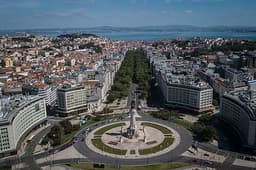
Marquis of Pombal
Politician · Modern
65.0Total

Napoleon Bonaparte
General · Modern
70.9Total
Basic Information
Born
1699
1769
Died
1782
1821
Era
Modern
Modern
Nationality
Portugal
France
Occupation
Politician
General
Civilization
Western
Western
Score Comparison
Military (10%)
41.6
94.0
Political (20%)
82.0
72.0
Influence (20%)
82.0
40.0
Legacy (20%)
52.0
80.0
Leadership (15%)
80.0
78.0
Strategy (15%)
30.3
90.0
TOTAL
65.0
70.9
Marquis of Pombal — Complete Timeline
1755 AD
1755 Lisbon earthquake reconstructionReform◆ Major
Following the devastating Lisbon earthquake, tsunami, and fires, Pombal organized the city's reconstruction. He implemented a grid-based urban plan, standardized building designs with earthquake-resistant features, and oversaw the rebuilding of the city center, the Baixa Pombalina.
Urban PlanningDisaster ResponseReconstruction
Impact: nationalconstructive
1759 AD
Expulsion of the Jesuits from PortugalPolitical Action◆ Major
Pombal expelled the Society of Jesus from Portugal and its empire, confiscating their property. This action was part of his broader anti-clerical reforms to centralize state power and reduce Church influence, and it led to a break in relations with the Papacy.
Anti-ClericalismChurch-State RelationsReform
Impact: nationaldestructive
Távora affair trial and executionsPolitical Action◆ Major
Pombal orchestrated the trial and execution of the powerful T
Political RepressionAristocracyPower Consolidation
Impact: nationaldestructive
1761 AD
Abolition of slavery in PortugalReform◆ Major
Pombal decreed the abolition of slavery in mainland Portugal, though it continued in the colonies. This was one of the earliest such acts in Europe, motivated by economic and humanitarian considerations, and it freed thousands of enslaved people within the kingdom.
AbolitionHuman RightsSocial Reform
Impact: nationalprogressive
1772 AD
Reform of Portuguese education systemReform◆ Major
Pombal implemented a comprehensive educational reform, replacing Jesuit-run schools with state-controlled institutions. He introduced new curricula emphasizing sciences, mathematics, and practical knowledge, and founded the College of Nobles and reformed the University of Coimbra.
EducationSecularizationModernization
Impact: nationalconstructive
Napoleon Bonaparte — Complete Timeline
1799 AD
Coup of 18 BrumaireOther◆ Major
Napoleon Bonaparte, with support from his brother Lucien and key political figures, overthrew the Directory in a bloodless coup. He established the Consulate with himself as First Consul, effectively becoming the ruler of France. This event ended the French Revolution's most unstable period.
French RevolutionCoupRise to Power
Impact: regional
1804 AD
Promulgation of the Napoleonic CodeOther◆ Major
Napoleon enacted the Civil Code of the French, known as the Napoleonic Code, a comprehensive set of laws that replaced the fragmented feudal legal systems. The code established legal equality, protected property rights, and secularized law. It became the basis for legal systems in many European and world countries.
Legal ReformNapoleonic CodeCivil Law
Impact: globalconstructive
1805 AD
Battle of AusterlitzWar◆ Major
Napoleon's Grande Arm
Napoleonic WarsBattleDecisive Victory
Impact: global
1812 AD
Invasion of RussiaWar◆ Major
Napoleon led the Grande Arm
Napoleonic WarsInvasionDisaster
Impact: globaldestructive
1815 AD
Battle of WaterlooWar◆ Major
Napoleon's French army was defeated by the combined forces of the Duke of Wellington's Anglo-Allied army and Gebhard Leberecht von Bl
Napoleonic WarsBattleFinal Defeat
Impact: globaldestructive
Expert Analysis
marquis-of-pombal-vs-napoleon-bonaparte
# The Conqueror and the Rebuilder
In the summer of 1815, Napoleon Bonaparte stood on the deck of the *Bellerophon*, watching the coast of France recede into the Atlantic mist. He was a prisoner now, bound for the remote island of Saint Helena. Thirty-two years earlier, across the continent in Lisbon, another man had faced his own final reckoning. The Marquis of Pombal, once the absolute master of Portugal, died in 1782 at his country estate, shunned by the royal family he had served for decades. Both men rose from modest beginnings to wield extraordinary power. Both transformed their nations. Yet one left a trail of corpses across Europe, while the other rebuilt a city from rubble. What drove these two titans of the eighteenth century down such different paths?
Origins
Napoleon was born in 1769 on Corsica, an island that had become French only months before his birth. His family were minor nobility, struggling and proud. From childhood, he carried the chip of a provincial outsider on his shoulder. At the military academy of Brienne, his schoolmates mocked his Corsican accent. He responded with ferocious ambition, devouring books on military strategy and the history of conquerors. The French Revolution, erupting when he was twenty, shattered the old order and created opportunities unknown under the monarchy. A young artillery officer of talent could rise faster than ever before.
The Marquis of Pombal—born Sebastião José de Carvalho e Melo in 1699—came from a different world entirely. His father was a rural gentleman, his family well-connected but not rich. Portugal in the early eighteenth century was a decaying empire, clinging to its Brazilian gold mines while the rest of Europe surged ahead. Young Sebastião learned law and diplomacy, not warfare. He spent years as ambassador in London and Vienna, observing how modern states actually worked. Where Napoleon learned to destroy, Pombal learned to administer.
Rise to Power
Napoleon’s ascent was a series of explosions. At twenty-four, he captured Toulon from British forces in 1793, earning promotion to brigadier general. In 1796, at twenty-six, he took command of the French army in Italy and turned starving, mutinous troops into a conquering force. Victory after victory—Lodi, Arcole, Rivoli—made him a national hero. The Directory, France’s corrupt ruling body, sent him to Egypt in 1798 to get him out of Paris. Instead, he returned more famous than ever, and in November 1799 staged a coup d’état. By 1804, he crowned himself Emperor of the French.
Pombal’s rise was slower, quieter, but no less ruthless. He caught the attention of King José I in 1750, becoming Secretary of State for Foreign Affairs and War. His moment came on November 1, 1755—All Saints’ Day—when an earthquake estimated at magnitude 8.5 struck Lisbon. The tremors, followed by a tsunami and fires, destroyed much of the city and killed tens of thousands. While the king asked what to do about God’s punishment, Pombal famously replied: “Bury the dead and feed the living.” He took control of reconstruction with dictatorial powers, proving his competence in crisis.
Leadership & Governance
Napoleon ruled through charisma, fear, and ceaseless motion. He reorganized French law into the Napoleonic Code, establishing principles of equality before the law and protection of property that influenced legal systems worldwide. He centralized the French state, created the Bank of France, and reformed education with lycées. But his governance was inseparable from war. Between 1805 and 1809, he defeated Austria, Prussia, and Russia in stunning campaigns—Austerlitz in 1805 was his masterpiece. Yet he could not stop. His military genius, with a strategic score of 93, was matched only by his political blindness.
Pombal governed through institutions, not armies. He rebuilt Lisbon with wide boulevards and earthquake-resistant buildings—the first planned city center in modern Europe. He expelled the Jesuits in 1759, seizing their wealth and breaking the church’s grip on education. He abolished slavery in mainland Portugal in 1761, decades ahead of most European states. He reformed the University of Coimbra and created state-run primary schools. His leadership score of 82 reflects his ability to impose order, but his methods were brutal. The Távora affair of 1759 saw him torture and execute an entire noble family on flimsy evidence of an assassination plot.
Triumph & Tragedy
Napoleon’s greatest triumph was also the seed of his tragedy. In 1812, he invaded Russia with the largest army Europe had ever seen—over 600,000 men. By December, fewer than 100,000 stumbled back. The disaster shattered his aura of invincibility. He was exiled to Elba in 1814, escaped in 1815, raised another army, and met Wellington at Waterloo on June 18. The battle was close—so close—but Napoleon lost. He spent his final six years on Saint Helena, dictating memoirs and dying slowly of stomach cancer.
Pombal’s tragedy was different. He saved Portugal from backwardness and rebuilt its capital, but his methods created enemies. When King José I died in 1777, the queen regent immediately dismissed Pombal. He was tried for abuses of power, though spared execution. He died in obscurity five years later, his reforms partially reversed.
Character & Destiny
Napoleon was driven by an insatiable hunger for glory. “I live only for posterity,” he once said. His character was a paradox: a brilliant administrator who could not govern in peace, a military genius who could not stop fighting. His destiny was to be consumed by his own ambition.
Pombal was driven by a different force: the Enlightenment belief that reason could remake society. He was cold, calculating, and merciless toward enemies. But he built for the long term. Lisbon’s grid-pattern streets still bear his mark. His abolition of slavery in Portugal, though incomplete, was a moral step few contemporaries took.
Legacy
Napoleon’s legacy is a contradiction. He spread revolutionary ideals of nationalism and legal equality across Europe, yet he was a tyrant. The Napoleonic Code survives in dozens of countries. His military campaigns are still studied in war colleges. But his conquests cost millions of lives and ultimately collapsed.
Pombal’s legacy is quieter but more durable. Lisbon stands as a monument to his vision. His educational reforms, though limited, broke the Jesuit monopoly. Modern Portugal owes its administrative structure largely to him. He is remembered as both a reformer and a despot—but his city remains, while Napoleon’s empire vanished.
Conclusion
Standing in Lisbon’s Praça do Comércio today, one sees Pombal’s hand in every straight line and uniform building. Walking through the Invalides in Paris, one sees Napoleon’s tomb, grand and isolated. Both men seized history by the throat. One tried to conquer the world; the other tried to rebuild it. Perhaps the difference is not just in their talents, but in their conception of power. Napoleon believed power was something to wield over others. Pombal believed it was something to build with. In the end, the builder’s work outlasted the conqueror’s.
Rankings
🥇
Napoleon BonaparteLeader
Mil: 94.0Pol: 72.0Inf: 40.0
70.9
🥈
Marquis of Pombal
Mil: 41.6Pol: 82.0Inf: 82.0
65.0
+5.9 behind
How This Comparison Works
Algorithm
Each figure is scored on 6 dimensions (0—100 scale) based on structured historical data: Military (10%), Political (20%), Influence (20%), Legacy (20%), Leadership (15%), Strategy (15%). The weighted total produces the final ranking.
Data Sources
Scores are computed from structured sub-indicators in the database. Scale factors adjust for era (Ancient ×0.85, Modern ×1.0) and civilization size (Eastern ×1.05, Other ×0.80) to account for differences in population and military scale.
Maximum 3 Figures
Comparisons are limited to 2—3 figures to ensure readability and statistical meaningfulness.
Error Margins
±5 points per dimension — Sub-scores are derived from historical records with inherent uncertainty. Two figures within 5 points on a dimension should be considered roughly equivalent in that area.
Total Score Accuracy
±3 points overall — The weighted combination of 6 dimensions produces a total score with approximately ±3 points of uncertainty. Differences of less than 3 points are not statistically significant— the figures are effectively tied.
Known Limitations
- Historical records are incomplete and uneven across civilizations
- Figures from oral-tradition societies may be underrepresented
- Occupation labels can misclassify multi-role figures
- Scores measure capability and impact, not moral character
- Quantitative scoring is a comparison tool, not absolute truth
Capability Radar
Military (10%) — Battles & Warfare
Battles
10
95
Win Rate
10
90
Expansion
10
95
Political (20%) — Governance & Reform
Reform
90
95
Diplomacy
75
80
Economy
85
85
Influence (20%) — Cultural & Global Reach
Cultural
65
85
Global
65
90
Legacy (20%) — Historical Impact
Historical
70
95
Longevity
60
90
Leadership (15%) — Power & Stability
Tenure
85
85
Stability
70
70
Strategy (15%) — Tactics & Innovation
Strategy
15
95
Tactics
10
98
Reform
60
92
Similar Comparisons
Comments & Discussion
废墟重建者6/17/2026
别被拿破仑的军事光环骗了。庞巴尔侯爵才是真正的革命者——里斯本地震后他仅用一年就重建了整座城市,而拿破仑连莫斯科的废墟都没碰过。拿铁蹄和史诗比务实,笑话。庞巴尔用地震残骸铺了条现代葡萄牙的路,拿破仑却把自己的帝国埋在了滑铁卢泥地里。一个造,一个毁,高下立判。